We describe a search for Z boson pair production in p (cid:1) p collisions at ffiffiffi s p ¼ 1 : 96 TeV with the D0 detector at the Fermilab Tevatron Collider using a data sample corresponding to an integrated luminosity of 2 : 7 fb (cid:1) 1 . Using the final state decay ZZ ! ‘ þ ‘ (cid:1) (cid:1) (cid:1) (cid:1) (where ‘ ¼ e or (cid:2) ) we find a signal with a 2.6 standard deviations significance (2.0 expected) corresponding to a cross section of (cid:3) ð p (cid:1) p ! ZZ þ X Þ ¼ 2 : 01 (cid:2) 0 : 93 ð stat Þ (cid:2) 0 : 29 ð sys Þ pb .
The reconstruction and calibration algorithms used to calculate missing transverse momentum ([Formula: see text] ) with the ATLAS detector exploit energy deposits in the calorimeter and tracks reconstructed in the inner detector as well as the muon spectrometer. Various strategies are used to suppress effects arising from additional proton-proton interactions, called pileup, concurrent with the hard-scatter processes. Tracking information is used to distinguish contributions from the pileup interactions using their vertex separation along the beam axis. The performance of the [Formula: see text] reconstruction algorithms, especially with respect to the amount of pileup, is evaluated using data collected in proton-proton collisions at a centre-of-mass energy of 8 [Formula: see text] during 2012, and results are shown for a data sample corresponding to an integrated luminosity of [Formula: see text]. The simulation and modelling of [Formula: see text] in events containing a Z boson decaying to two charged leptons (electrons or muons) or a W boson decaying to a charged lepton and a neutrino are compared to data. The acceptance for different event topologies, with and without high transverse momentum neutrinos, is shown for a range of threshold criteria for [Formula: see text] , and estimates of the systematic uncertainties in the [Formula: see text] measurements are presented.
The centrality dependence of the mean charged-particle multiplicity as a function of pseudorapidity is measured in approximately 1 mu b(-1) of proton-lead collisions at a nucleon-nucleon centre-of-mass energy of root s(NN) = 5.02 TeV using the ATLAS detector at the Large Hadron Collider. Charged particles with absolute pseudorapidity less than 2.7 are reconstructed using the ATLAS pixel detector. The p + Pb collision centrality is characterised by the total transverse energy measured in the Pb-going direction of the forward calorimeter. The charged-particle pseudorapidity distributions are found to vary strongly with centrality, with an increasing asymmetry between the proton-going and Pb-going directions as the collisions become more central. Three different estimations of the number of nucleons participating in the p + Pb collision have been carried out using the Glauber model as well as two Glauber-Gribov inspired extensions to the Glauber model. Charged-particle multiplicities per participant pair are found to vary differently for these three models, highlighting the importance of including colour fluctuations in nucleon-nucleon collisions in the modelling of the initial state of p + Pb collisions.
The production rates of prompt and non-prompt [Formula: see text] and [Formula: see text] mesons in their dimuon decay modes are measured using 2.1 and 11.4 fb[Formula: see text] of data collected with the ATLAS experiment at the Large Hadron Collider, in proton-proton collisions at [Formula: see text] and 8 respectively. Production cross-sections for prompt as well as non-prompt sources, ratios of [Formula: see text] to [Formula: see text] production, and the fractions of non-prompt production for [Formula: see text] and [Formula: see text] are measured as a function of meson transverse momentum and rapidity. The measurements are compared to theoretical predictions.
A search is presented for the pair production of a heavy vector-like quark T , together with its antiparticle, targetting a T quark decay to a W boson and a b quark. The search is based on 14.7 ± 0.4 fb−1 of pp collisions at √s = 13 TeV recorded in 2015 and early 2016 with the ATLAS detector at the CERN Large Hadron Collider. Data are analysed in the lepton plus jets final state, characterised by a high-transverse-momentum isolated electron or muon, large missing transverse momentum, multiple jets, of which at least one is b-tagged, and a single large-radius jet or system of two small-radius jets identified as originating from the hadronic decay of a W boson. No significant deviation from the Standard Model expectation is observed in the reconstructed mass distribution of the leptonically-decaying vector-like T quark candidate. Under two different assumptions, that of a branching ratio BR(T → W b) = 1 or an SU(2) singlet, an observed (expected) 95% confidence level lower limit on the vectorlike quark mass of 1090 GeV (980 GeV) or 810 GeV (870 GeV) is obtained, respectively. For vector-like T quarks, under the assumption that only the T → W b, T → Zt and T → Ht decay modes contribute, 95% confidence level upper limits are derived for various masses in the two-dimensional plane of BR(T → Ht) versus BR(T → W b). © 2016 CERN for the benefit of the ATLAS Collaboration. Reproduction of this article or parts of it is allowed as specified in the CC-BY-4.0 license.
The inclusive top quark pair (tt) production cross-section σtt has been measured in proton–proton collisions at
The ATLAS experiment has performed extensive searches for the electroweak production of charginos, neutralinos and staus. This article summarizes and extends the search for electroweak supersymmetry with new analyses targeting scenarios not covered by previously published searches. New searches use vector-boson fusion production, initial-state radiation jets, and low-momentum lepton final states, as well as multivariate analysis techniques to improve the sensitivity to scenarios with small mass splittings and low-production cross-sections. Results are based on 20 fb$^{-1}$ of proton-proton collision data at $\sqrt{s}$=8 TeV recorded with the ATLAS experiment at the Large Hadron Collider. No significant excess beyond Standard Model expectations is observed. The new and existing searches are combined and interpreted in terms of 95% confidence-level exclusion limits in simplified models, where a single production process and decay mode is assumed, as well as within phenomenological supersymmetric models.
Event-shape observables measured using charged particles in inclusive Z-boson events are presented, using the electron and muon decay modes of the Z bosons. The measurements are based on an integrated luminosity of [Formula: see text] of proton-proton collisions recorded by the ATLAS detector at the LHC at a centre-of-mass energy [Formula: see text] [Formula: see text]. Charged-particle distributions, excluding the lepton-antilepton pair from the Z-boson decay, are measured in different ranges of transverse momentum of the Z boson. Distributions include multiplicity, scalar sum of transverse momenta, beam thrust, transverse thrust, spherocity, and [Formula: see text]-parameter, which are in particular sensitive to properties of the underlying event at small values of the Z-boson transverse momentum. The measured observables are compared with predictions from Pythia 8, Sherpa, and Herwig 7. Typically, all three Monte Carlo generators provide predictions that are in better agreement with the data at high Z-boson transverse momenta than at low Z-boson transverse momenta, and for the observables that are less sensitive to the number of charged particles in the event.
This paper describes the data acquisition and high level trigger system of the ATLAS experiment at the Large Hadron Collider at CERN, as deployed during Run 1. Data flow as well as control, configuration and monitoring aspects are addressed. An overview of the functionality of the system and of its performance is presented and design choices are discussed.
A search for the flavour-changing neutral-current decay [Formula: see text] is presented. Data collected by the ATLAS detector during 2012 from proton-proton collisions at the Large Hadron Collider at a centre-of-mass energy of [Formula: see text] TeV, corresponding to an integrated luminosity of 20.3 fb[Formula: see text], are analysed. Top-quark pair-production events with one top quark decaying through the [Formula: see text] ([Formula: see text]) channel and the other through the dominant Standard Model mode [Formula: see text] are considered as signal. Only the decays of the Z boson to charged leptons and leptonic W boson decays are used. No evidence for a signal is found and an observed (expected) upper limit on the [Formula: see text] branching ratio of [Formula: see text] ([Formula: see text]) is set at the 95 % confidence level.
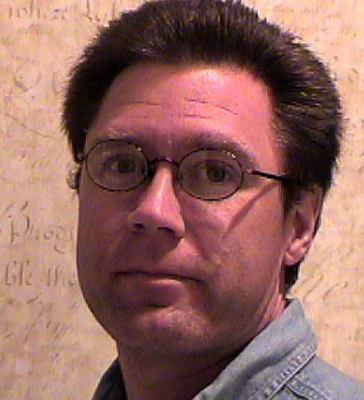 Brad Abbott合作论文数Homer L. Dodge Department of Physics and Astronomy, Dodge Family College of Arts and Sciences, The University of Oklahoma884
 B. S. Acharya合作论文数Department of High Energy Physics, Natural Sciences Faculty, Tata Institute of Fundamental Research827
 Andrew Brandt合作论文数Department of Physics, College of Science, The University of Texas at Arlington595
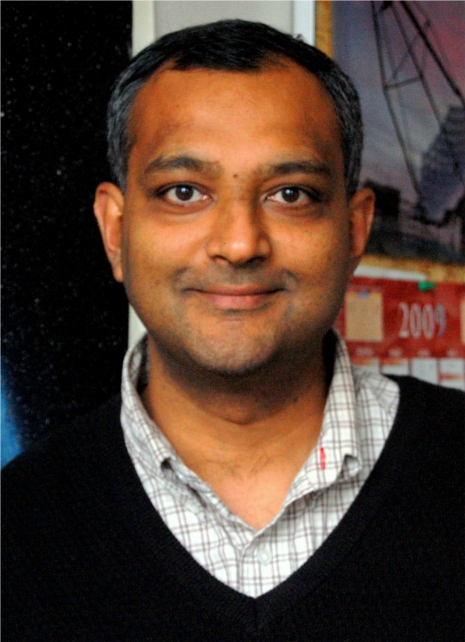 Dhiman Chakraborty合作论文数Department of Physics, Northern Illinois University595
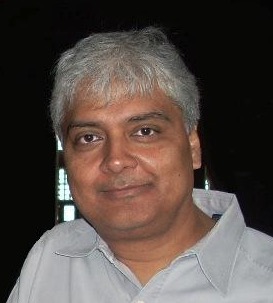 Kaushik De合作论文数Department of Physics, College of Science, Univeristy of Texas at Arlington519
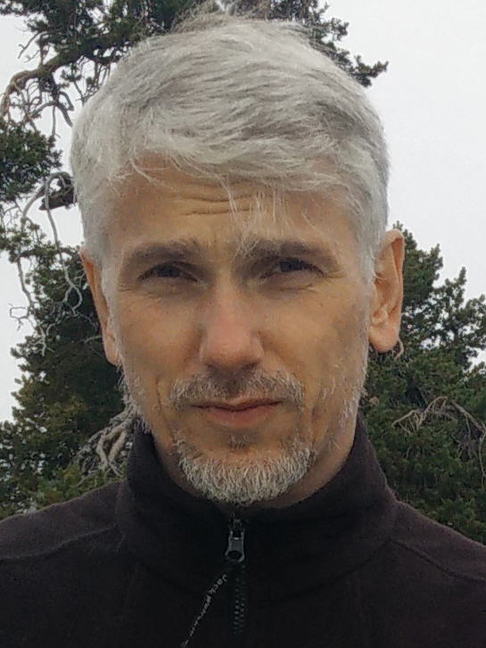 Sergiy Denysov合作论文数Department of Computer Science, Faculty of Technology, Art and Design, Oslo Metropolitan University512
 Boris Yu Baldin合作论文数510
 Raymond Brock合作论文数Department of Physics and Astronomy, Michigan State University;Department of Physics, Arizona State University500V. Bezzubov合作论文数499Gelio A. Alves合作论文数Centro Brasileiro de Pesquisas Fisicas, Rio de Janeiro, Brazil499M Adams合作论文数499
 Gerald C. Blazey合作论文数Department of Physics, College of Liberal Arts and Sciences, Northern Illinois University496
 James T Linnemann合作论文数Department of Physics and Astronomy, College of Natural Science, Michigan State University495Michael Begel合作论文数Department of Physics, Brookhaven National Laboratory493Daniel Edmunds合作论文数Department of Physics and Astronomy, Michigan State University492
 Gustaaf Brooijmans合作论文数Department of Physics, Columbia University490
 Vipin Bhatnagar合作论文数Department of Physics, Panjab University484P. Gutierrez合作论文数481
 Anna Goussiou合作论文数Department of Physics, University of Washington480D. Adams合作论文数472
 Susan K Blessing合作论文数Department of Physics, College of Arts & Sciences, Florida State University471
 Stuart Fuess合作论文数Scientific Computing Division, Fermi National Accelerator Laboratory469
 Amber S. Boehnlein合作论文数Computational Sciences and Technology Division, Jefferson Laboratory469L. Dudko合作论文数Skobeltsyn Inst Nucl Phys, Lomonosov Moscow State Univ464
 a ross合作论文数Fermi National Accelerator Laboratory463
 Dmitri Denisov合作论文数Brookhaven National Laboratory463
 Michael Diesburg合作论文数Fermi National Accelerator Laboratory462
 John Ellison合作论文数Department of Physics and Astronomy, University of California, Riverside461H. Eugene Fisk合作论文数Fermilab460T. Ferbel合作论文数460
 D. Bruce Buchholz合作论文数Department of Materials Science and Engineering, Northwestern University456H. Thomas Diehl合作论文数Fermilab456B. Åsman合作论文数454J Frederick Bartlett合作论文数Fermi National Accelerator Laboratory453
 Chandrashekhara M. Bhat合作论文数Fermi National Accelerator Laboratory453
 David Hedin合作论文数Department of Physics, College of Liberal Arts and Sciences, Northern Illinois University449
 Iain Bertram合作论文数Physics Department, Lancaster University449
 Suman Bala Beri合作论文数Department of Physics, Panjab University447Herbert B. Greenlee合作论文数Fermilab446
 Marcel W Demarteau合作论文数Physics Division, Oak Ridge National Laboratory445
 Serban Protopopescu合作论文数Physics Department, Brookhaven National Laboratory440
 Emanuela Barberis合作论文数College of Science, Northeastern University439R. Piegaia合作论文数438
 Elizaveta K. Shabalina合作论文数University of Gottingen438A. Ito合作论文数437R. Kehoe合作论文数435
 Greg Landsberg合作论文数Department of Physics, Brown University433J. Kohli合作论文数432S. Snyder合作论文数431




