To explore the immune microenvironment of RAS‐mutated (RASmt) microsatellite stable (MSS) colon cancer (CC), we retrospectively performed whole exome sequencing, RNA sequencing, and robust digital pathology analyses and studied immune markers in a cohort of 161 patients treated with standard‐of‐care therapies with early stage disease (both fresh frozen and formalin‐fixed paraffin‐embedded [FFPE] samples) or 121 patients with metastatic setting (primary tumor FFPE samples). Only a small proportion of cases exhibited a highly infiltrated immune microenvironment, with a strong association between Immunoscore® (IS)‐high (13% of the samples) and Tumor Lymphocytes Infiltrating Score (TuLIS)‐high scores (25% of the samples). Immunoscore Immune‐Checkpoint (ISIC)‐high tumors (52% of the samples) shared a similar microenvironment composition to IS‐high and TuLIS‐like high tumors and displayed higher mutational burdens than ISIC‐low tumors. In conclusion, a substantial proportion of MSS RASmt CCs exhibit high ISIC scores, meriting evaluation in prospective trials of immunotherapy‐based combination regimens.
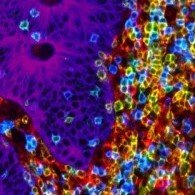
Cell competition is an emerging mechanism in which mammalian tissues maintain homeostasis by eliminating less fit (loser) cells through direct interactions with fitter (winner) neighbouring cells. In cancer, these competitive interactions may drive tumour evolution; however, spatial organisation and clinical relevance of these events remain poorly understood. One mechanism by which winner cells eliminate loser cells is engulfment, resulting in cell-in-cell (CIC) formation. Although CICs have been observed in many tumour types for over a century, their cellular composition, spatial context, interactions with the tumour microenvironment, and biological significance in human cancers remain unclear. Here, we systematically characterised the cellular identity and functional states of CICs in situ, examined their spatial interactions within the tumour microenvironment, and assessed their clinical relevance using spatially resolved single-cell data from a large cohort of colorectal cancer patients. We demonstrated that CICs occurred predominantly between cancer cells but also involved cancer stem cell (CSC)-like populations and cytotoxic T cells. Engulfed (inner) cancer and CSC-like cells displayed molecular features consistent with a loser-cell phenotype, including increased apoptosis and reduced proliferation, whereas outer cancer cells exhibited winner-cell features such as upregulated glycolysis. Live-cell time-lapse experiments demonstrated that glucose accumulated in inner cells during lysosomal degradation following cell engulfment. Spatial analysis further revealed distinct CIC neighbourhoods, which we defined based on proximity to engulfment events. Cells within these regions, particularly CSC-like cells and cytotoxic T cells, exhibited increased metabolic stress, suggesting local competition for nutrients. Importantly, the presence of cytotoxic T cells within CIC neighbourhoods and spatial co-occurrence between cancer cells and CSC-like populations were associated with improved patient outcomes. Together, our findings demonstrate that cell engulfment defines spatially organised competitive niches and may reflect cell competition within complex tumour microenvironments.
We performed a pilot study in which Illumina (ILMN) and nanopore (ONT) whole genome sequencing (WGS) was generated for samples obtained from a 37-year-old patient with locally advanced rectal cancer who did not respond to neoadjuvant chemoradiotherapy (nCRT). Pre-treatment and post-treatment tumour biopsy, adjacent normal tissue, and matched pre-treatment blood samples were sequenced to identify somatic alterations. We used DNA methylation from ONT WGS to detect changes in the tumour epigenomes compared to adjacent normal tissue. We employed established pipelines for the identification of somatic alterations to assess the concordance of SNV, short indel, copy number and structural variation from the short-read and long-read tumour genome data. Overall, 69.4% and 30.1% of SNVs were concordant between technologies in the pre-and post-treatment tumours, respectively. A multinomial logistic regression was performed to further understand discordant SNV calls, highlighting tumour purity, presence in a repetitive region, strand bias, and germline variant allele frequency as factors contributing to discordance. Indel concordance was poor (26.8% and 9.2% in the pre-and post-treatment tumour, respectively). Copy number alteration profiles were highly similar while minimal concordance was reported for structural variants (2.4% and 0.3% for pre-and post-treatment tumours, respectively). Finally, we used the ONT data to detect DNA modifications (5-methylcytosine and 5-hydroxymethylcytosine) between tumour and matched adjacent normal tissue. Based on genome-wide average CpG modification rates, global hypomethylation was observed in tumours compared to adjacent normal tissues. Biologically relevant epigenomic changes related to epithelial-mesenchymal transition were detected in the post-treatment tumour, as well as potential radiation-induced changes in the post-treatment adjacent normal tissue.
We introduce a comprehensive multi-step machine-learning driven pipeline which fuses multi-modal omics datasets and clinical outcomes with survival and treatment response to predict patient outcome following anti-angiogenic therapy in the metastatic colorectal cancer (mCRC) setting. The approach encompasses the following steps: a) employing a sparse Bayesian factor analysis method (PhenMap) to select significant mapping-variables (MVs) and associated biomarkers (features) through joint multivariable modelling of copy number aberrations (CNA) and clinical covariates, including mutations and clinical demographics/outcomes; b) utilizing Cox-proportional hazard analysis on the MVs to select those associated with progression-free survival (PFS); and c) employing elastic net Cox regression analysis on the prognostic features selected by PhenMap to delineate risk groups associated with bevacizumab (BVZ) response. Through this approach, we have identified three putative features (CNA—15q21.1 and 1p36.31 deletions and BRAF mutation) from two prognostically-significant MVs to stratify N = 117 mCRC patients, who received BVZ combination therapy, into 3 (low, medium, high) prognostic risk groups that were significantly associated with PFS and treatment response. Mortality risk was significantly greater in the high-risk group with 100% (n = 12) of patients showing no response to BVZ, compared to the low-risk group where 10 out of 12 patients (88%) showed a response to BVZ. The risk groups were independently negative predictors of survival in BVZ-treated mCRC patients. Overall, Wwe have established a machine learning pipeline integrating multi-modal omics data with response, and have implicated a putative combined CNA/mutation candidate biomarker with associated risk scores that could, in the future, help stratify mCRC patients unlikely to benefit from BVZ combination therapy. Our novel precision medicine approach applies disruptive advancements in artificial intelligence and bioinformatics methodologies to tumour biology datasets.
Background Currently no guidelines exist for the development of surgical handover educational curricula. This critical review synthesises the relevant literature to identify best approaches to handover education and develop an evidence-based framework for teaching and assessing surgical handover skills. Methods The following resources were critically reviewed by two independent researchers to identify key educational components; (1) all published studies primarily utilising an educational intervention to improve surgical handover up to May 2023, (2) key international guidelines and (3) reviews of all handover interventions published within the last 10 years. Results A total of eight comparative studies, two systematic reviews, and four handover guidelines were included. Findings were reported across eight domains; including educational setting, approach, format, content, resources used, assessment, student feedback, and follow-up training. A framework for developing surgical handover curricula was also reported. Conclusion The reported educational framework or ‘blueprint’ aims to assist educators across multiple settings to develop evidence-based surgical handover curricula for undergraduate and postgraduate learners. Future studies need to achieve higher Kirkpatrick levels to demonstrate both effectiveness and sustainability of educational interventions, ensuring safer patient care.
Background:Identification of the consensus molecular subtypes (CMS) opened significant potential for understanding the tumor biology and intertumoral heterogeneity of colorectal cancer (CRC). However, molecular subtyping in CRC traditionally relies on bulk transcriptomics, therefore, lacks spatial and single-cell level aspect. Methods:We constructed tissue microarrays using tumor cores from 222 CRC patients. Arrays were stained and imaged using 54 cell identity and cancer hallmark markers, delivering spatially resolved protein profiles of >2 million cells. RNA sequencing data and CMS classification were also available for these patients. After segmentation of cancer, stromal and immune cells, we investigated intratumoral heterogeneity within CMS subtypes using spatially resolved single-cell protein profiling (>2 million cells). We compared cell types, their spatial organization and their expression of cancer hallmark-related proteins in CMS 1-4 subtypes. Results:We revealed tissue atlases illustrating the cell types/states, spatial heterogeneity, cellular neighborhoods, cellular network, and single-cell protein profiles of CMS tumors. CMS1 tumors had more CD3+, CD8+, and PD1+ immune cells that were found in the epithelial layer frequently. CMS1 was also associated with higher levels of metabolic reprogramming markers such as upregulated glycolysis. CMS2 showed immune segregation, reactive stroma patterns and higher levels of apoptotic and proliferative signaling proteins. CMS3 exhibited clustered cancer cells with high RIP3 levels, suggesting a pro-inflammatory microenvironment. CMS4 displayed stromal-centric and immune-evasive tumors characterized by decreased HLA-1 levels and regulatory T-cell exclusion from epithelium. Conclusion:We present a spatial protein atlas of CRC at single-cell resolution and demonstrate novel aspects of CMS tumour structures.
Proctectomy is frequently deferred at index colectomy for ulcerative colitis due to acuity or immunosuppressive treatments. The retained rectum remains symptomatic in over 50
BACKGROUND:Effective handover communication is a core professional competency in graduate medical education, yet very few junior doctors working in surgery receive formal training. A structured curriculum was developed and piloted to teach best practices in surgical handover, based on a recognised curricular framework. METHODS:The study was carried out at two academic tertiary hospitals in Dublin, Ireland. Interns attending mandatory weekly teaching sessions participated in a 60-minute intervention combining didactic teaching, video demonstration, small group simulation, and facilitated discussion. Self-reported confidence in delivering and participating in handover was assessed using pre- and post-session surveys. Post-session feedback on curriculum content and format was also collected. RESULTS:A total of 59 interns attended the teaching sessions, with 35 providing paired pre- and post-session data. Self-reported confidence significantly improved across all assessed domains assessed (p<0.001), including confidence in handing over to peers and senior colleagues, asking clarifying questions during handover, and providing a summary or 'readback' at the end of handover. Feedback from 46 participants indicated that the session was well-received, with video demonstrations and simulated practice rated most helpful. Didactic teaching and peer feedback were rated least helpful. A majority (76.1%; n=35) reported that the session would lead to changes in their handover practice. CONCLUSIONS:This pilot study showed that a simulation-based curriculum is effective in improving interns' self-reported confidence in delivering and receiving surgical handover. The teaching session was well-received, easily integrated into existing institutional infrastructure, and required minimal resources to carry out.
BACKGROUND:Implementation Science (IS) frameworks facilitate definition of core and optional components of innovations, interventions and programmes, which increases the likelihood of successful implementation and sustainment. We used IS frameworks to characterise a hospital-based interdisciplinary quality improvement learning collaborative (QILC) which was established to develop quality improvement (QI) capability among front-line staff. The aim was to identify factors that supported implementation, potential threats to sustainability and elements that may influence dissemination into other settings. METHODS:Of five IS frameworks evaluated, two were selected, the Active Implementation Framework (action-oriented, dependent on feedback loops and improvement cycles) and the Consolidated Framework for Implementation Research (enabled definition of core components). The QILC was mapped against the drivers and constructs of each. RESULTS:Factors relating to the QILC's leadership; the generation of tension for change; and the use of both internal and external networks were central features in implementation. Key drivers included the characteristics of front-line ownership, iterative development and tribality of the QILC, each being central to QI methodology. Risks to sustainability included patchy implementation, a requirement for greater alignment with organisational priorities, requirement for coaching and recruitment of additional leaders to support succession planning. CONCLUSIONS:IS provided frameworks for retrospective analysis of a QI learning collaborative and identified factors that threaten sustainability. This analysis should help guide formative evaluations of similar QI learning collaboratives and offer an organisational framework to facilitate successful replication within different parts of an organisation and across multiple settings.
Importance:Ineffective patient handover leads to patient harm, yet no criterion standard exists for safe and effective practice in surgery. Objective:To determine whether the SIPS (sickest patients first; introduction, situation, background, assessment, recommendation; prioritize; summarize) surgical handover system is associated with improved patient physiology and safety. Design, Setting, and Participants:This prospective interventional cohort study included an effectiveness-implementation hybrid design and was carried out between January 2023 and June 2024 at the general surgery departments of 2 tertiary academic hospitals. Physicians participating in postcall (emergency) general surgery handover meetings were included. Data were collected for consecutive patients admitted for emergency general surgery before and after implementation of the intervention, providing they had a minimum of 6 hours of Early Warning Score data available following the time of the handover meeting. Data were analyzed from November 27, 2023, to May, 8, 2025. Exposure:Staff were trained in the use of a 4-step approach to handover meetings, SIPS, which defines the minimum steps required for safe surgical handover. Main Outcomes and Measures:Handover quality, changes in vital signs, length of stay, mortality, escalations in care, staff perceptions of safety, and implementation success were evaluated through handover observations, a retrospective review of patient records, and staff surveys. Results:Data were collected for 2261 patients, including 1469 patients before the intervention (708 [48.2%] female; mean [SD] age 54.6 [20.3] years) and 792 patients after the intervention (411 [51.9%] female; mean [SD] age 52.8 [20.6] years). A total of 182 residents took part in handovers during the study period, during which time 126 handover meetings were observed. After the intervention, handover quality improved across multiple domains without prolonging meeting duration and was associated with significant improvements in patient vital signs at 12 hours (170 patients [21.5%] vs 247 patients [16.8%]; difference, 4.6 [95% CI, 1.2 to 8.1] percentage points; P = .007) and 24 hours (212 patients [26.8%] vs 294 patients [20.0%]; difference, 6.7 [95% CI, 3.0 to 10.4] percentage points; P < .001). Staff-reported handover-related patient safety events also decreased after the intervention (13 days with events [19.7%] vs 4 days with events [4.6%]; difference, -15.1 [95% CI -4.5 to -25.6] percentage points; P = .004), with improvements in staff-perceived handover safety and quality. Successful implementation was confirmed by high rates of adoption, fidelity, and sustainability. Conclusions and Relevance:In this cohort study, implementation of the SIPS surgical handover system was associated with improvements in handover quality, patient physiology, and staff perceptions of safety without prolonging handover meetings.
Surgical handover remains a high-risk process with no gold standard for practice despite 20 years of available guidance. Variability in practice is common, and poorly performed handover poses significant, yet avoidable, risk to patients. Research in this domain is underfunded with widely heterogenous methodology, meaning that the evidence base for better handover is deficient. In this correspondence, recommendations are made to address these shortcomings, including standardised operating procedures supported by electronic health records to enable staff training and audit. Prioritisation of the sickest patients at the handover outset and two-way, verbal communication, including a “read-back” to confirm that information is both transmitted and received. Rigorous evaluation of handover interventions before use, and discontinuation of practices that add no value. Lastly, a core outcome set for surgical handover is urgently needed to improve the comparability of studies. By clearly defining best practices and demonstrating the impact of interventions on patient outcomes, surgeons will be more inclined to adopt meaningful improvements in handover processes.
BACKGROUND:Surgical handover is a key risk area in patient care, yet the impact of junior team member involvement in the process is not well understood. This study aims to assess the level of intern involvement in emergency general surgery (EGS) handover and its impact on daily tasks. METHODS:Overt, structured, non-participant observations of morning EGS handover meetings were carried out to assess intern involvement. The same interns were then observed over the course of the day-shift immediately following the handover. During these observation periods, details of all patient care queries addressed to the interns were recorded. RESULTS:Five general surgery interns (42%) were observed across six EGS handover meetings. A total of 100 clinical queries were recorded during 25 h of observation. Only 2/6 handover meetings had full intern involvement. While all appeared to be actively listening during handover, questions were asked, and readbacks were provided by interns during 4/6 and 3/6 handovers, respectively. Clinical queries directed at interns who were fully involved in the morning handover were more likely to be answered immediately (96.6 %,n = 29 vs. 78.6 %,n = 55; p = 0.024) and using memory of the verbal handover (50 %,n = 15 vs 24.3 %,n = 17; p = 0.012). One incidence of negligible harm occurred, due to omission of a patient's allergy information from the handover. CONCLUSION:Interns who are fully involved in handover show evidence of learning and are more likely to respond to queries faster and from memory. Reduced involvement in the post-call handover process has the potential to delay, and therefore negatively impact, patient care.
Transversus abdominis plane (TAP) block has been shown to be an effective technique in providing post-operative analgesia across a range of intra-abdominal surgeries. Laparoscopic-assisted TAP (LTAP) block is a recent advancement of this technique. This study aimed to evaluate the effectiveness of LTAP block compared to port site infiltration (PSI) in patients undergoing laparoscopic appendicectomy. A single-blinded randomised controlled trial was performed to compare LTAP to standard PSI after completing laparoscopic appendicectomy. Patients diagnosed with acute appendicitis, clinically or radiologically, were randomised to either group (1:1). Patients in both groups received the same perioperative analgesic regimen. The primary outcome measure was to compare post-operative pain using a visual-analogue scale (VAS). Secondary outcomes included length of hospital stay (LOS), post-operative opioid requirement and a follow up quality of life (QOL) questionnaire at 1 week and 1 month post discharge. A total of 174 patients were enrolled and randomly allocated to the study arms; 85 in LTAP and 82 in control (PSI) group were eligible for analysis. The LTAP group had significantly lower VAS pain scores at 6 hours (p<0.001), 12 hours (p<0.001) and 24 hours (p=0.002) post-operatively. There was no significant difference in VAS scores at 3 hours post-operatively (p=0.1527), in LOS (p=0.45) or in opioid requirements on the ward (p=0.42). QOL scores were better in LTAP group at 1 week follow up (p=0.043). LTAP block significantly improved post-operative analgesia outcomes in patients undergoing laparoscopic appendicectomy and holds promise as part of an effective post-operative analgesic regimen.
Responses to neoadjuvant chemoradiotherapy for locally advanced rectal cancer are not uniform. The phosphatidylinositol-3 kinase (PI3K) and mitogen-activated protein kinase (MAPK) pathways are involved in tumorigenesis and treatment resistance in many cancers; therefore, targeting these pathways could enhance response to chemoradiotherapy.A panel of colorectal cancer (CRC) cell lines (n = 10) with varying PI3K and MAPK mutational backgrounds were treated with combinations of 5-Flourouracil (5-FU), radiation, the PI3K inhibitor copanlisib, and/or the MEK inhibitor refametinib, and their effects on proliferation in vitro were measured. BALB/c SCID mice were implanted with CRC cell lines representative of each mutational background, treated with copanlisib and/or chemoradiotherapy, and monitored for tumor growth.In vitro, PIK3CA mutated cell lines were most sensitive to copanlisib (IC50=28 nM) and KRAS mutated cell lines were most sensitive to refametinib (IC50 = 36 nM), while the combination of copanlisib and refametinib was synergistic in 9/10 cell lines tested. The addition of copanlisib to 5-FU chemoradiotherapy inhibited cell growth compared to 5-FU chemoradiotherapy alone, an effect that was most notable in LS-1034 (KRAS mutated) and Caco-2 (PIK3CA/KRAS wild-type) cell lines. In vivo copanlisib and 5-FU chemoradiotherapy reduced tumor growth in all xenograft models and increased overall survival in LS-1034 and Caco-2 xenografts.Our results suggest that activation of the kinase signalling pathway may modulate PI3K/MEK inhibitor responsiveness in colorectal cancer. Furthermore, the addition of copanlisib to 5-FU chemoradiotherapy resulted in an enhanced anti-proliferative cytotoxic effect compared to 5-FU chemoradiotherapy alone, regardless of the background mutational status, and supports further clinical development of this regimen.
Cell-in-cell (CIC) structures, in which one cell is entirely engulfed by another, have been associated with poor outcomes in cancers. However, the mechanisms underlying this association remain poorly understood. We performed multiplex imaging of 56 cell identity, cell ‘state’ and cancer ‘hallmark’ proteins to characterise CICs, map their spatial interactions, and assess clinical associations across 444 tumour cores from 148 colorectal cancer patients, which contained over one million spatially resolved cells. We found that tumour regions containing CICs were associated with lower levels of cytotoxic T cells. We identified upregulated glucose metabolism as a consistent metabolic hallmark of CICs independent of cell type. Spatial analyses revealed that T cells adjacent to CICs underwent selective remodeling with distinct apoptotic and metabolic signatures. Finally, the presence of T cells within CIC neighbourhoods identified a subset of patients with improved survival. Our findings suggest that CICs may be a feature of metabolically competitive niches and a potential factor contributing to T-cell exclusion in tumours.
 John P Burke合作论文数69
 Jochen H. M. Prehn合作论文数67Elaine W. Kay合作论文数55
 Ian Reynolds合作论文数Department of Colorectal Surgery, Beaumont Hospital36
 Lindner Andreas U合作论文数Centre for Systems Medicine, Royal College of Surgeons28Bryan T. Hennessy合作论文数24McCawley Niamh合作论文数Department of Physiology and Medical Physics, Royal College of Surgeons in Ireland23Manuela Salvucci合作论文数22J. Deasy合作论文数21Orna Bacon合作论文数21
 Daniel B. Longley合作论文数Centre for Cancer Research and Cell Biology, Queen's University Belfast18
 Sinead Toomey合作论文数UCD Conway Institute of Biomolecular & Biomedical Research, University College Dublin16E. O'Connell合作论文数15Flanagan Lorna合作论文数15
 Patrick G Johnston合作论文数14
 Sandra Van Schaeybroeck合作论文数14Resler Alexa J合作论文数14
 Mattia Cremona合作论文数14
 Markus Rehm合作论文数14Pierre Laurent-Puig合作论文数14
 Furney Simon J合作论文数Mol Oncol Grp, Canc Res UK Manchester Inst13Sarah Curry合作论文数12Clare Morgan合作论文数12Sophie Camilleri-Broët合作论文数12Concannon Caoimhín G合作论文数12
 Manuel Salto-Tellez合作论文数School of Medicine, Dentistry and Biomedical Sciences12Robert O'Byrne合作论文数11Jessica M Ryan合作论文数11Joanna Fay合作论文数11Richard Wilson合作论文数11Dara O. Kavanagh合作论文数Department of Surgery, Mayo General Hospital11Suzanne Hector合作论文数Centre for Human Proteomics, Royal College of Surgeons in Ireland11Áine C. Murphy合作论文数10
 Walter Eppich合作论文数Collaborative Practice Centre, Faculty of Medicine, Dentistry and Health Sciences, University of Melbourne;School of Health Professions Education, Faculty of Health, Medicine and Life Sciences, Maastricht University10
 Frank Murray合作论文数Departments of Gastroenterology/Hepatology, Beaumont Hospital10
 Mark Lawler合作论文数School of Medicine, Dentistry and Biomedical Sciences, Queen’s University Belfast10Batuhan Kisakol合作论文数9
 Fidelma Fitzpatrick合作论文数Department of Clinical Microbiology, Royal College of Surgeons in Ireland9
 Maximilian L Wurstle合作论文数Centre for Systems Medicine, Royal College of Surgeons in Ireland9Elisabeth Zink合作论文数8Nadege Rice合作论文数8Sonali Dasgupta合作论文数8Lisa M. Schöller合作论文数8Brian O'Neill合作论文数8Elizabeth McDonough合作论文数8
 Clancy Cillian合作论文数National University of Ireland, University College Hospital Galway8Niamh Mccawley合作论文数8
 Heinrich Huber合作论文数Siemens Medical Division, Siemens Ireland8




