This chapter draws together the findings of this book. It comments on the transformation of land tenure and aboriginal society in Taiwan, reflects on the different styles of colonisation of the Qing and Japan, extends the comparison to Qing colonisation and colonisation by Western states where relevant, and considers the relationship between colonisation and the legal tradition.
The doom of the Later Han northwestern military elite was spelt, however, long before Ma Chao's tragic end. When Dong Zhuo moved the imperial capital from Luoyang to Chang'an, the northwestern powers kept a distance from him and maintained a fragile balance between the two sides. The murder of Dong in 192 CE, however, set off a power struggle among the northwestern military strongmen and threw the region into chaos again. The northwestern borderlands were always a restive region in imperial China. As a frontier region of the Qin-Han empire, the northwest constituted a new territory to the Chinese realm. Until the Later Han times, some portions of the northwestern region had only been part of the imperial realm for 100 years. Comparing and contrasting the varying conditions of the militarization of different frontiers of the Later Han empire will also provide important insights into the understanding of the …
This book describes how the Chinese government, between about 620 and 850, developed an official organization designed to select, process, and edit material for inclusion in official historical works eventually to be incorporated in an official history of the dynasty. The first part gives a detailed account of the establishment of the official apparatus designed to produce a record of the T'ang dynasty, which would remain standard for more than a millennium, with some analysis of the individuals who served in these offices. The second part gives all available detail about the various works produced by this apparatus, divided among its various genres, and listing all known titles, their authorship, and their relationships to one another. The third part shows the cumulative process by which a dynastic history came into being, and the way in which we can detect various elements in the completed history.
The Inner Quarters: Marriage and Lives of Chinese Women in the Sung Period. By Patricia Buckley Ebrey. [Berkeley: University of California Press, 1993. xviii + 332 pp. Hard cover $54.95. ISBN 0-521-41964-6.] - Volume 140
General editor's preface List of maps Preface to Volume 6 Acknowledgements List of abbreviations A-pao-chi's descent and the structure of the Yeh-lu clan Outline genealogy of Liao Liao emperors and their regnal titles Genealogy of the Hsia ruling house Hsia gegnal titles Genealogy of the early Jurchen rulers Genealogy of the Chin emperors Chin regnal titles Chart of Mongolian rulers Regnal titles of Mongolian rulers Capital cities Introduction 1. The Liao 2. The Hsi Hsia 3. The Chin 4. The rise of the Mongolian Empire 5. The reign of Khubilai 6. Mid-Yuan politics 7. Shun-ti and the end of Yuan rule in China 8. The Yuan government and society 9. Chinese society under Mongol rule, 1215-1368 Bibliographic notes Bibliography Glossary Index.
Volume 7 of The Cambridge History of China, edited by Frederick W. Mote and Denis Twitchett and published by Cambridge University Press in 1988, was translated into Chinese and published by the Chinese Social Sciences Publishing House in 1992 under the title Jianqiao Zhongguo Mingdai shi ( ►.1rn EP 0 ETA 1 ). Its translation and publication provide Chinese readers with a window through which they can catch a glimpse of Western scholarship in terms of research on Chinese history. Chinese who have read the book have been impressed and enlightened by Western scholars' mode of thought, their perspectives and study methods, their language, and, in particular, by their views and brilliant depiction of historical figures and events; for example, they have provided an integrated framework within which Ming political history is placed against the larger background of world history, as well as including the history of the Southern Ming within their frame of reference. The book has, so to speak, achieved the goal of "providing a substantial account of the history of China that will act as a benchmark for Western readers of history." The publication of this book will therefore prove very useful for those Western readers wanting to know more of the history of China. However, it must be said that Western scholars' conceptions and values have been formed by historical conditions, and therefore, whether consciously or unconsciously, they observe and assess Chinese history from the standpoint of Western values. As a result, their understanding of Ming historical events often fails to get to the root of the matter. Volume 7 of The Cambridge History of China therefore only provides a history of the Ming as it exists in the minds of Western scholars.
T'angStudies 7 (1989) Po Chu-i's "Government OX" DENIS TWITCHETI PRINCETON UNIVERSITY The forty-first of Po Chii-i's 8 15~ "New Yiieh-fu" 1fi ~ Jif poems is entitled the Government Ox (Kuan-niu) 13 !F.1 It reads as follows: Government ox, government ox, yoked to a government wagon, Driven to cart sand from the banks of the Ch'an. A bushel of sand, how many pounds does it weigh! Morning to evening he carts the sand: what will it be used for? He is taking it west of the official street at the Five Gates, To be spread on the gravelled path under the shade of the locust trees. Yesterday a new Chancellor of the Righe was appointed, And they fear the mud in the roads will sully his horses' hooves. Oh Chancellor of the Right, Your horses may tread upon sand and remain spotless; But the ox's neck under your yoke will stream with blood. Oh Chancellor of the Right, Are you only able to benefit the people, bring the state to order, and harmonize the yin and yang? Can't you also prevent the galls on the neck of your governmentox ? Po Chii-i's own comment to the title of the poem says that it is a satire against "those directing the government,,,3 that is, on the Chief Ministers. It can, of course, be read at one level simply as an attack in general terms on an oppressive government's placing intolerable burdens upon the population in order to pay for unnecessary expenditures on behalf of the ruling elite. But it 1 See Po Cha-i chi (Peking: Chung-hua, 1984),4.85. 2 Literally the "Assistant Chancellor of the Right" (yu ch 'eng-hsiang:ti iE :m ). 3 See Po Cha-i chi, 3.54. 23 Twitchett: Po Chu-;'s "Government Ox" seems likely, particularly since its target, "the new Assistant Chancellor of the Right," is so clearly and repeatedly pinpointed, that it is also an attack directed against a particular individual. Ch'en Yin-k'o, in his brilliant and wide-ranging comnlentary on these poenls,4 also accepted this, and pointed out that in 809 (to which date he somewhat arbitrarily assigned this poem) there were five persons holding office either as Chief Minister (tsaihsiang ) or as one of the Senior Statesmen (san-kung, san-shih). One of these, Tu Yu tt 1ti, who had been Grand Minister for Education (ssu-t'u) since the fourth month of 806, was semi-retired , and had in any case already been the target of an earlier poem in the series, "The Royal Observatory."s Li Fan ~ flf (754-811t who served as ad hominem Chief Minister from the second month 809 until the second month 811, had replaced Cheng Yin ~tJ!] (752-829)7 who served from the end of 805 until 809. Neither they nor P' ei Chi ~ j:ft (d. 811),8 ad hominem Chief Minister from the ninth month 808 until the eleventh month 810 had, so far as we know, done anything to deserve Po Chii-i's harsh censure. This left only Yii Ti T~ (d. 818).9 Yii Ti, whose career I have dealt with in detail elsewhere,10 certainly filled the role. By the time Po wrote this poem, Yii was 4 See Ch'en Yin-k'o, YUan Po shih chien cheng kao (Peking: Chung-hua, 1955; rpt., 1959) 280-82. 5 Ibis is the eleventh of the New YUeh-fu. See Po Cha-i chi, 3.64. For a discussion and the identification of the poem's subject as Tu Yu, see Ch'en Yin-k'o, YUan-Po shih chien cheng kao, 179-81; also Margaret T. South, "Po ChU·i's 'The Observatory Tower'," Journal of the Oriental Society of Australia 9.12 (1972-73), 3-13. 6 Biographies: CTS, 148.3997-4001; FITS, 169-5150-52. 7 Biographies: CTS, 159.4180-81; FITS, 165.5074-76. 8 Biographies: CTS, 148.3989-92; FITS, 169.5147-50. 9 Biographies: CTS, 156.4129-33; FITS, 172.5199-201. 10 See Denis Twitchett, "The Seamy Side of Late Tang Political...
 Frederick W. Mote合作论文数6
 Mark C. Elliott合作论文数Department of East Asian Languages and Civilizations, Harvard University;Department of History, Harvard University3Nicola Di Cosmo合作论文数3Michael Loewe合作论文数2yang pinquan (品泉 杨)合作论文数2jerome alan cohen合作论文数2Willard J. Peterson合作论文数2Charles O. Hucker合作论文数2Pamela Kyle Crossley合作论文数2
 Tonio Andrade合作论文数2Rafe De Crespigny合作论文数2Sima Biao (彪 司馬)合作论文数1John K Fairbank合作论文数1Mark R. Peattie合作论文数1Hans Bielenstein合作论文数1Darrell Tryon合作论文数1John K. Fairbank合作论文数1john king fairbank合作论文数1Albert Feuerwerker合作论文数1michel oksenberg合作论文数1brian hook合作论文数1fumei chang chen合作论文数1r randle edwards合作论文数1xie liangsheng (亮生 謝)合作论文数1hou renzhi (仁之 侯)合作论文数1T'ung-tsu Ch'u合作论文数1Hui Tsun (Tsun 惠邨 Hui)合作论文数1Patterson C Giersch合作论文数1Chien-Chao Hung合作论文数1Goang-jih Horng合作论文数1Chin-Teh Chuang合作论文数1Su-Chuan Chan合作论文数1Lecheng Fu (付乐程)合作论文数1Catherine Churchman合作论文数1andrew erueti合作论文数1
 L. Wang合作论文数1
 Bin Chen合作论文数1R. Kent Guy合作论文数1jonathan spence合作论文数1F Wakeman合作论文数1
 Thomas Barfield合作论文数Anthropol, Boston Univ1chiyun chen合作论文数1huang mo (沫 黄)合作论文数1Paul D. Barclay合作论文数1Fan Ye (飯野)合作论文数1Di Chen (第 陳)合作论文数1
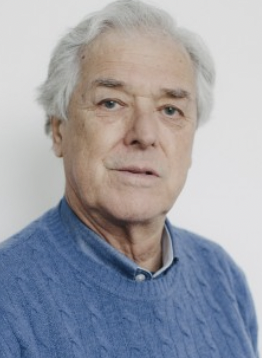 James Fox合作论文数Department of Pacific Affairs, Coral Bell School of Asia Pacific Affairs, College of Asia and the Pacific, The Australian National University1
 Stephen Aron合作论文数History Department, College of Social Sciences, University of California, Los Angeles;Autry Museum of the American West1ShuSheng Hao (郝树声)合作论文数1




