The SSPACE Astrobiology Payload (SAP) series, starting with the SAP-1 project is designed to conduct in-situ microbiology experiments in low earth orbit. This payload series aims to understand the behaviour of microbial organisms in space, particularly those critical for human health, and the corresponding effects due to microgravity and solar/galactic radiation. SAP-1 focuses on studying Bacillus clausii and Bacillus coagulans, bacteria beneficial to humans. It aims to provide a space laboratory for astrobiology experiments under microgravity conditions. The hardware developed for these experiments is indigenous and tailored to meet the unique requirements of autonomous microbiology experiments by controlling pressure, temperature, and nutrition flow to bacteria. A rotating platform, which forms the core design, is innovatively utilised to regulate the flow and mixing of nutrients with dormant bacteria. The technology demonstration models developed at SSPACE have yielded promising results, with ongoing efforts to refine, adapt for space conditions, and prepare for integration with nanosatellites or space modules. The anticipated payload will be compact, approximately 1U in size (10cm x 10cm x 10cm), consume less than 5W power, and offer flexibility for various microbiological studies.
The aerothermodynamic characteristics are necessary for designing an inherently stable and thermally safe re-entry vehicle. This paper studies the aerothermal characteristics of a typical configuration of a re-entry/crew module in hypersonic flow regimes through numerical simulation in CFD++, using RANS solver with transient solution scheme. Flow regime is simulated for isothermal cold wall perfect and non-equilibrium chemical non-equilibrium flows. 7-species reacting flow model is invoked over super catalytic wall for chemical nonequilibrium flows. Flowfield is analysed for variation of Mach number, pressure, temperature, density, and ratio of specific heats. Stagnation-point heat flux variation for a range of Mach numbers throughout the re-entry trajectory is analysed. Species variation at peak heat flux is analysed. Shock standoff distance is analysed for various Mach numbers and its variation is studied for both perfect and chemical nonequilibrium solutions.
Following the Indian Space Research Organisation’s (ISRO) novel idea of using the spent PS4 stage of the PSLV as a platform for scientific experiments and technology demonstrations, a unique opportunity has been created to develop and test small-satellite subsystems and instruments as PS4-OP (PSLV 4th Stage Orbital Platform) payloads, prior to the launch of the small satellite itself. The PiLOT (PS4 in-orbital OBC and TTC) payload has been developed with an engineering objective of flight qualifying the in-house developed small-satellite subsystems, which are the OBC (On-Board Computer) and TTC (Telemetry and Telecommand) subsystems. The PiLOT payload also contains a RADFET (Radiation Field Effect Transistor) sensor for monitoring radiation dosage. Mapping the temporal and spatial distribution of the radiation dosage will help improve the understanding of the space weather in the low earth orbit. This paper describes in detail the development of the PiLOT PS4-OP payload including a description of the different subsystems of the payload, which are the RADFET sensor board, the OBC, the TTC board, and the PS4-OP interface board. The paper concludes with a description of the integration, testing methodology, and the current developmental status of the payload.
Understanding the radiation environment of the low earth orbit (LEO) is of considerable scientific interest, due to its unpredictable nature and variability. Temporal and spatial distribution of the ionizing as well as non-ionizing radiation levels in the LEO are especially important considering the negative impact these radiation have on the spacecraft avionics by causing Single Event Upsets (SEUs) and single-event latchups (SELs). With in-situ data about the radiation environment, we can gain an insight on the reliability of various Commercial off-the-shelf (COTS) in the space environment, as ground-based testing with simulated radiation levels for a long duration is often not practical. Further, the data collected about the ionizing radiation levels can also prove useful for the upcoming human space flight mission planning, wherein shielding against ionizing radiation is an important aspect to consider regarding the safety of the astronaut. With this primary objective of in-situ radiation dosimetry, the Ahan 3U CubeSat has been developed with a mass of around 2 kg and a nominal power consumption of less than 3 Watts. The satellite contains two different sensors, a Geiger-Muller Counter and a Radiation Field Effect Transistor (RADFET) to monitor radiation dosage in the LEO. This paper describes the design and development of the above-mentioned CubeSat mission.
The determination of aerodynamic characteristics is necessary for designing a re-entry vehicle. This is an essential input to study the static and dynamic stability of the configuration and to provide inputs for structural, thermal and trajectory design and analysis. Studies related to the flow field simulation based on CFD and the aerodynamic characteristics of a typical re-entry body, crew module, in supersonic flow regimes, are presented in this paper, along with the detailed analysis. CFD++, a commercial RANS solver with 2-equation realizable k-ε turbulence model is used for the 3-D simulations, and Pointwise is used for structured grid generation. The effect of Mach number ranging from 1.2 to 4, and angle of attack ranging from 0° to -15°, on CL, CD, and Cmcg, is thoroughly studied, after validation of the results at M= 4. Surface contributions of different parts of module are analysed along with effect of centre-of-gravity location on trim angle of attack.
 Anantha Datta Dhruva合作论文数3P. Suhail合作论文数2Joji John Varghese合作论文数2G Vidya合作论文数2Divyansh Prakash合作论文数2T. K. Anant Kumar合作论文数2Mallikarjun Kompella合作论文数2
 Sabavath Janakiram合作论文数2M. S Harsha Simha合作论文数2H. Priyadarshan合作论文数2
 Raveendranath P.合作论文数2V. S. Sooraj合作论文数2Manoj T. Nair合作论文数2Priyanshu Jain合作论文数1
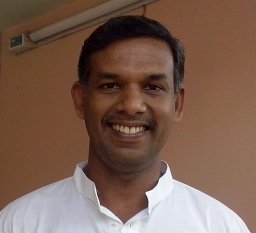 c r bijudas合作论文数Indian Inst Space Sci & Technol1
 Vikram Khaire合作论文数Indian Inst Space Sci & Technol1
 Kandenkaniath Viswanathan合作论文数HECR Group, Tata Institute of Fundamental Research1
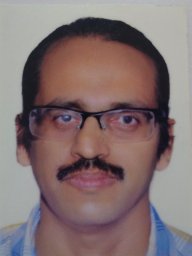 Umesh Kadhane合作论文数Tata Institute of Fundamental Research1
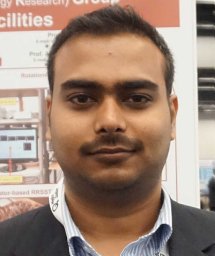 Sudharshan Kaarthik合作论文数Department of Electrical Engineering;National Institute of Technology;Department of Electrical Engineering, National Institute of Technology1
 P. Pramod Chakravarthy合作论文数Department of Mathematics, Kakatiya Institute of Technology & Science1
 Anand Narayanan合作论文数Department of Biology, Texas A&M University1Aloke Kumar合作论文数School of Mechanical Engineering;Purdue University;School of Mechanical Engineering, Purdue University1




