TikTok is a popular platform allowing users to view and make short videos. The platform's embeddedness among youth cultures is key to TikTok’s commercial success, to attract and sustain a diverse array of international users. The discourse around children and social media especially TikTok is laced with technopanics, as is the case in India. Although sparse, literature shows children in India want to explore social media but parental mediation usually follows a restrictive style. Using a qualitative approach and multimodal methods, we unpack how children (10–18 years) in a large Indian metropolitan city use TikTok for self-presentation and creative expression while navigating restrictive parental mediation. This article helps gain in-depth understanding of children’s TikTok cultures in India by foregrounding their voices and contributes to larger scholarship on youth digital cultures by focusing on their: (a) vernacular cultures on TikTok, (b) deliberations on safety and wellbeing, and (c) negotiations regarding agency and resistance.
Research Article| April 01 2023 From the Self to the Community: Experiences of a First-Generation Researcher in India Devina Sarwatay Devina Sarwatay Devina Sarwatay is senior research fellow (UGC-NET) and PhD candidate in the Department of Communication, University of Hyderabad, India. She researches young people and social media with Professor Usha Raman. She is also webinar series manager of the Media Education Lab, University of Rhode Island, USA, and research associate, FemLab and CDMC-MICA working on Digital Creativity and Global Kids Online-India. Her latest lead- and co-authored work is published in Information, Communication & Society (won the ICA CAM Best Published Article Award 2023), Media International Australia, Frontiers in Human Dynamics, Journal of Communication, as well as in Routledge and Wiley-Blackwell Handbooks. She regularly presents her work at conferences like ICA, IAMCR, and AoIR. You can reach her at Twitter: @DevinaSarwatay. email: devina.sarwatay@gmail.com Search for other works by this author on: This Site PubMed Google Scholar email: devina.sarwatay@gmail.com Journal of Autoethnography (2023) 4 (2): 298–304. https://doi.org/10.1525/joae.2023.4.2.298 Views Icon Views Article contents Figures & tables Video Audio Supplementary Data Peer Review Share Icon Share Facebook Twitter LinkedIn Email Tools Icon Tools Get Permissions Cite Icon Cite Search Site Citation Devina Sarwatay; From the Self to the Community: Experiences of a First-Generation Researcher in India. Journal of Autoethnography 1 April 2023; 4 (2): 298–304. doi: https://doi.org/10.1525/joae.2023.4.2.298 Download citation file: Ris (Zotero) Reference Manager EasyBib Bookends Mendeley Papers EndNote RefWorks BibTex toolbar search Search Dropdown Menu toolbar search search input Search input auto suggest filter your search All ContentJournal of Autoethnography Search I believe I have been extremely fortunate in my research career so far: being at the right place at the right time and finding the right people to guide me into the right opportunities or helping me to create them. As far as I know, I am a first-generation researcher who happened to have the best time of my life during my master’s when I was introduced to research. My contributions in the first practical rural immersion research project and the final master’s dissertation were received well by expert examiners, giving me the confidence needed to go through the selection process for an MPhil. I imagined this second exclusively research-oriented master’s degree would act as a trial run before I signed up for a longer commitment of a PhD. In the meantime, I also cleared a competitive national examination1 that would fund my PhD. As I am writing this... You do not currently have access to this content.
As uncertainty about university reopening turned into anxiety about managing, teaching, and learning in the era of COVID-19, teachers had to scramble to reconfigure courses to accommodate new modes of managing classes and students had to cope with learning at a distance. This has been particularly challenging for media schools that offer programs that emphasize skills training, from reporting and writing to audiovisual and multimedia production. Experiential learning is crucial in such programs, and teachers build in opportunities for such engagement in the classroom as students learn from hands-on training with equipment and collaboration with peers. In India, when schools reopened in August 2020 after the government-imposed lockdown, with online classes, it was clear that teaching and learning would have to be re-thought, and experienced anew. Given the diversity of the student body, the relative unfamiliarity of faculty with online teaching, and the perceived impossibility of acquiring practical skills without access to physical infrastructure, how are teachers thinking about how they build newsroom competencies in this changed scenario, and how are students experiencing it? This paper describes the case of a media studies department in India, where teachers and students discovered possibilities of engagement and learning while navigating a new pedagogy of care.
Young people's lives are inextricably tied in with the digital, whether it is for education, engagement, leisure, or work. Studies from the Global North have examined children and social media from several perspectives, with discourse now veering towards a rights-based approach to foreground young people's voices in a digital and social media world, something that is missing in countries like India. This paper drew on deep interactions with young people from a large Indian city to gain preliminary insights into social media practices and modes of engagement with particular reference to management of access, privacy, safety, and negotiating challenges or problem solving. Our study suggests that conversations about digital platforms, particularly social media spaces, in relation to children's everyday life practices need to begin early, at the point when children begin interacting with these technologies. Critical digital literacy must recognize the agency of young people, their naturalized interactions with the digital world, as well as the complexities of family and school life that moderate such interactions. These contextual nuances become significant when framing regulatory policies, parental advisories and critical digital literacy and media education programs. This article adds to the slowly growing literature from the Global South that enhances and diversifies our understanding of how the 'born digital' generation lives with/in social media.
The Global South in general and South Asia in particular are fertile grounds for studying media, policies, and policymaking. The demographic dividend, potential for growth, and rich histories and c...
The ubiquity of digital and social media has led to considerable academic debate regarding their role in the lives of children and adolescents. The Global North, especially United States and Europe, has largely led this discussion in matters of research methods and approaches, as well as on conversations around screen time, wellbeing, media literacy, and digital citizenship. However, it is not clear to what extent and how these Anglo-Eurocentric approaches to digital literacy and social connectedness translate to the various local realities of the Global South, where increasing numbers of young people have either direct or indirect access to social media and the internet, but occupy very different social contexts. In India, for instance, low cost mobile phones, cheap data plans, and vernacularization of content have furthered access cutting across socioeconomic strata. What specific research priorities might emerge in this context? Which methods can be employed to study these issues? How can we contextualize existing knowledge to help support young people and their parents maximize the benefits of this digital/social world even as we take into account the nuances of the local? In this paper, we mapped local stakeholders and shared insights from in-depth personal interviews with community leaders from civil society, research and advocacy as well as professionals working with young people and parents in India as their work addresses some of these important questions. A thematic analysis of interview data helped the researchers scope out issues like lack of child-centered-design, dearth of knowledge about the opportunities and risks of social media among parents, and confusion on how to navigate this digital/social world. Suggestions about children's wellbeing, including what parents could do about this, the possibility of and the problems with regulation, and the need to focus on how parents can foster trust and a meaningful connection with young people that would frame their engagement with technology are made. Future research should consider these relationships within the new context of the COVID-19 pandemic and related issues such as degrees of digital connectivity and access, social isolation, virtual schooling, and parents working from home.
Global events like a pandemic or climate change are massive in scope but experienced at the local, lived, microscopic level. What sorts of methodologies and mindsets can help critical internet researchers, functioning as interventionists or activists, find traction by oscillating between these levels? How can we push (further) against the boundaries of research methods to build stronger coalitions and more impactful outcomes for social change among groups of scholars/researchers? This panel presents four papers addressing these questions based on a large scale online autoethnography in 2020. This “Massive/Micro” project simultaneously used and studied the angst and novelty of isolation during a pandemic, activating researchers, activists, and artists to explore the massive yet microscopic properties of COVID-19 as a “glocal” phenomenon. The challenge? Working independently and microscopically through intense focus on the Self but also working with distributed, largely unknown collaborators, in multiple platforms. The emerging shape of the project itself showcases the challenges and possibilities of how research projects at scale can (or don’t) reflect and build social movements. The panel’s four papers situate the project through a kaleidoscope of perspectives featuring participants from 7 countries, who variously explore: the value of the project for precarious or early career researchers, how MMS worked as both collaborative space and critical pedagogy, how non-institutional or playful experimentation in asynchronous collaborations can lead to new synergies; and how MMS developed an independent life of its own, beyond studying COVID to generating multiple communities of future digital research practice.
Hegemonic Open Science, emergent from the circuits of knowledge production in the Global North and serving the economic interests of platform capitalism, systematically erase the voices of the subaltern margins from the Global South and the Southern margins inhabiting the North. Framed within an overarching emancipatory narrative of creating access for and empowering the margins through data exchanged on the global free market, hegemonic Open Science processes co-opt and erase Southern epistemologies, working to create and reproduce new enclosures of extraction that serve data colonialism-capitalism. In this essay, drawing on our ongoing negotiations of community-led culture-centered advocacy and activist strategies that resist the racist, gendered, and classed structures of neocolonial knowledge production in the metropole in the North, we attend to Southern practices of Openness that radically disrupt the whiteness of hegemonic Open Science. These decolonizing practices foreground data sovereignty, community ownership, and public ownership of knowledge resources as the bases of resistance to the colonial-capitalist interests of hegemonic Open Science.
Chapter 6 "We Don't Do That Here" and "Isme Tera Ghata, Mera Kuch Nahi Jata" Young People's Meme Cultures in India Devina Sarwatay, Devina SarwataySearch for more papers by this author Devina Sarwatay, Devina SarwataySearch for more papers by this author Book Editor(s):Divina Frau-Meigs, Divina Frau-MeigsSearch for more papers by this authorSirkku Kotilainen, Sirkku KotilainenSearch for more papers by this authorManisha Pathak-Shelat, Manisha Pathak-ShelatSearch for more papers by this authorMichael Hoechsmann, Michael HoechsmannSearch for more papers by this authorStuart R. Poyntz, Stuart R. PoyntzSearch for more papers by this author First published: 25 August 2020 https://doi.org/10.1002/9781119166900.ch6 AboutPDFPDF ToolsRequest permissionExport citationAdd to favoritesTrack citation ShareShareShare a linkShare onFacebookTwitterLinked InRedditWechat Summary With increasing access to smartphones and mobile internet, youth in India are certainly clued in to global trends on social media and are ardent followers and makers of memes. This chapter discusses two viral memes that recently captured the attention of youth in India and around the world. The famous "We don't do that here" scene from Marvel's Black Panther film was creatively "memefied" by young people in India to comment on social issues or for comedic relief. "Tera ghata," a song by Gajendra Verma, gained attention after a sexualized musically video went viral and was memefied. Using these two cases, the chapter provides an understanding of how memes operate as part of online youth cultures in India and how global themes are appropriated and assimilated by local youth to produce a distinctly local articulation of popular global memes. The Handbook of Media Education Research RelatedInformation
Memory helps invoke stories of past in the present and for future. Exploration of memory is not something that is or can be finite. One cannot begin to open up memory and reach a point where the exercise is done and can be laid to rest. Every historical moment that offers us the possibility of looking at it through the prism of memory demonstrates that the more you search, the more there is that opens up (Jalil, et al., 2017). Memory can weave past into the present and can bring into play temporal hybridity which is enhanced by digital and social media. Temporally hybrid media and media objects inspire new kind of narratives (Outka, 2011; Engstrom, et al., 2010). Stories can help in building awareness, comprehension, recognition and empathy (Singh & Sonnenburg, 2012). Stories can be used to empower, humanise and repair broken dignity (Adichie, 2009). Inclusive storytelling helps piece together a fragmented narrative of society by including often excluded people/ groups and build a community (Fajer, 1991). Couldry (2008) brings to focus the role of digital and social media in storytelling and how production, dissemination and reception of stories has changed with the emergence of new media; storytelling has evolved and become an activity of co-creation. Humans of Bombay uses the social media platform of Facebook (among others) to bring us people’s stories and has slowly grown to a formidable force that uses memory, temporal hybridity and storytelling with digital and social media to give voice to people: ordinary and yet extraordinary, included and yet excluded, common and yet uncommon which is what this article is attempting to unpack through content analysis of its posts in the month of December 2018.
Shakuntala Rao (Ed.), Indian Journalism in a New Era: Changes, Challenges, and Perspectives. New Delhi, India: Oxford University Press, 2019, 396 pp., ₹995 (hbk). ISBN 9780199490820.
Shakuntala Rao (Ed.), Indian Journalism in a New Era: Changes, Challenges, and Perspectives. New Delhi, India: Oxford University Press, 2019, 396 pp., (sic)995 (hbk). ISBN 9780199490820.
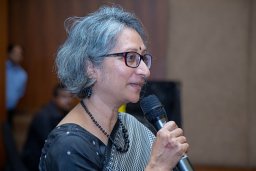 Usha Raman合作论文数Univ Hyderabad5
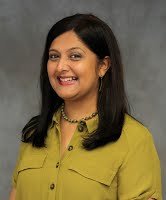 Srividya Ramasubramanian合作论文数Pennsylvania State University2
 Indranil Mandal合作论文数1
 Jennifer Lisy合作论文数1Mereana Barrett合作论文数1Sneha Samaddar合作论文数1Dhriti Bhattacharjee合作论文数1Victoria Minson合作论文数1Andrew Hutcheon合作论文数1
 Kathleen A. Paciga合作论文数Columbia College Chicago1
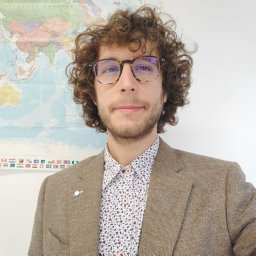 Riccardo Pronzato合作论文数Dept Commun Arts & Media, IULM Univ1
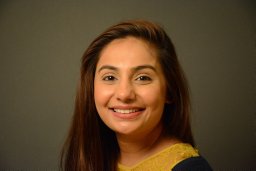 Satveer Kaur-Gill合作论文数Dartmouth Coll1
 Jiaxi Hou合作论文数School of Media and Communication, RMIT University1
 Shiv Ganesh合作论文数Department of Communication Studies, Moody College of Communication, University of Texas at Austin1
 Jess Hardley合作论文数Murdoch Univ1
 Christine Elers合作论文数Massey Univ1Pooja Jayan合作论文数1
 D. Bondy Valdovinos Kaye合作论文数Univ Leeds1
 Ashwini Falnikar合作论文数Media & Cultural Studies, CHRIST Deemed Be Univ1
 Marco Pellitteri合作论文数Sch Journalism & Commun, Shanghai Int Studies Univ1
 Jin Lee合作论文数Internet Studies, Curtin Univ1
 Edwin Tallam合作论文数1
 Yonty Friesem合作论文数Columbia Coll Chicago1Fiona J. Stirling合作论文数1
 Debalina Dutta合作论文数Sch Commun Journalism & Mkt, Massey Univ1
 Karen J Mclean合作论文数Australian Catholic Univ, Sydney, NSW 2059, Australia1
 Mary Elizabeth Luka合作论文数School of Cities, Faculty of Arts and Science, University of Toronto1
 Dazzelyn Baltazar Zapata合作论文数University of the Philippines Diliman;GMA Network, Inc.1
 Asha Rathina Pandi合作论文数Monash University Malaysia1
 Md Mahbubur Rahman合作论文数1
 Mohan J. Dutta合作论文数School of Communication, Journalism and Marketing, Massey University/Center for Culture-Centered Approach to Research & Evaluation, Massey University1
 Uttaran Dutta合作论文数1
 Susan Edwards合作论文数Learning Sci Inst Australia, Australian Catholic Univ1
 Natasha Casey合作论文数1Andrew Herman合作论文数Cornell University1
 Rebecca Carlson合作论文数The American College of Obstetricians and Gynecologists1
 T.T. Sreekumar合作论文数1
 Vinod Pavarala合作论文数1
 Cheryll Soriano合作论文数Faculty of Arts & Social Sciences, National University of Singapore1
 Iccha Basnyat合作论文数Department of Communications and New Media, National University of Singapore1
 Preeti Raghunath合作论文数Department of Sociological Studies, University of Sheffield1
 Annette Markham合作论文数University of Illinois at Chicago1




