The Amontons-Coulomb friction law assumes that the frictional force between materials is independent of sliding velocity. However, as Coulomb noted, this is a rough approximation, and a second-order dependence of friction on the logarithm of sliding velocity is incorporated in a commonly used "rate- and state-dependent" friction representation. Here, we conduct shear experiments on mica, a layer-structured mineral, at temperatures ranging from 22 to 200 °C and under normal stress of 100 MPa. The friction coefficient clearly depends on the logarithmic sliding velocity at 22 °C, but rate sensitivity decreases with increasing temperature until at 200 °C, the friction coefficient is independent of sliding velocity. Our findings could initiate the development of velocity-independent frictional materials, realizing the ideal Amontons-Coulomb friction.
Determining why earthquake ruptures stop is a central challenge in earthquake science and seismic hazard assessment. The P & uuml;t & uuml;rge segment of the East Anatolian Fault Zone, T & uuml;rkiye, exhibits shallow creep ( 6.5 earthquake ruptures at greater depth. Here, we evaluate whether variations in frictional stability along this segment aided arrest of the 2020 M 6.7 Elazi & gbreve; and 2023 M 7.8 Pazarc & imath;k earthquake ruptures. Analysis of Sentinel-1 Synthetic Aperture Radar imagery indicates the 2023 M 7.8 rupture propagated laterally into a metamorphic massif within the P & uuml;t & uuml;rge segment, where slip rapidly decayed below detection limits. Creepmeters along this segment recorded no significant surface afterslip (<3 mm) in the following year. To investigate this fault-slip behavior, we conducted triaxial friction experiments on P & uuml;t & uuml;rge fault gouge sampled from an outcrop exposure. The gouge, composed primarily of muscovite, quartz, and calcite, is velocity strengthening at conditions approximating 0-2.5 km depth and velocity weakening at 4-5 km depth. This transition to velocity-weakening friction is associated with enhanced comminution and shear localization observed microstructurally. Our results suggest that depth-dependent frictional stability of the P & uuml;t & uuml;rge fault segment facilitates rupture nucleation and propagation at depth while maintaining rupture-arresting behavior near Earth's surface.
First posted April 27, 2023 For additional information, contact: Earthquake Science CenterU.S. Geological Survey350 N. Akron Road Moffett Field, CA 94035 We present new X-ray fluorescence compositions of 27 core samples from Phase 3, Hole G of the San Andreas Fault Observatory at Depth, nearly doubling the published dataset for the core. The new analyses consist of major and trace element compositions and the first published data for rare earth elements from Hole G. Whole-rock compositions were obtained to further the analysis of active geochemical processes within the creeping section of the San Andreas Fault in central California. In this report, we plot the new data along with previously published analyses to illustrate some of the compositional features of the Hole G core and to relate them to the core mineralogy.
Abstract The evolution of a fault's frictional strength during the interseismic period is a critical component of the earthquake cycle, yet there have been relatively few studies that examine the time‐dependent evolution of strength at conditions representative of seismogenic depths. Using a simulated fault in Westerly granite, we examined how frictional strength evolves under hydrothermal conditions up to 250°C during slide‐hold‐slide experiments. At temperatures ≤100°C, frictional strength generally increases with hold duration but, at 200 and 250°C, an initial increase in strength transitions to rapid time‐dependent weakening for holds longer than 14 hr. Forward modeling of long hold periods at 250°C using the rate and state friction constitutive equations requires a second, strongly negative, state variable with a long evolution distance. This implies that significant hydrothermal alteration is occurring at 250°C, consistent with microstructural observations of dissolution and secondary mineral precipitation.
The Hayward fault in California's San Francisco Bay area produces large earthquakes, with the last occurring in 1868. We examine how physics‐based dynamic rupture modeling can be used to numerically simulate large earthquakes on not only the Hayward fault, but also its connected companions to the north and south, the Rodgers Creek and Calaveras faults. Equipped with a wealth of images of this fault system, including those of its 3D geology and 3D geometry, in addition to inferences about its interseismic creep‐rate pattern and rock‐friction behavior, we use a finite‐element computer code to perform 3D dynamic earthquake rupture simulations. We find that the rock properties affect the locations and amount of slip produced in our simulated large earthquakes. Crucial factors that control rupture behavior in our modeling are the earthquake nucleation locations, the fault geometry, and the data that reveal where the fault system is creeping or locked. Our findings suggest that large Rodgers Creek‐Hayward‐Calaveras‐Northern Calaveras (RC‐H‐C‐NC) fault‐system earthquakes may result from dynamic rupture that starts in a locked part of the fault system, but is then stopped by the creeping parts, leading to high‐magnitude‐6 earthquakes; or, from dynamic rupture that starts in a locked part of the fault system, then cascades through some of the creeping parts, leading to magnitude‐7 earthquakes.
The Rodgers Creek-Hayward-Calaveras-Northern Calaveras fault system in California dominates the hazard posed by active faults in the San Francisco Bay Area. Given that this fault system runs through a densely populated area, a large earthquake in this region is likely to affect millions of people. This study produced scenarios of large earthquakes in this fault system, using spontaneous (dynamic) rupture simulations. These types of physics-based computational simulations require information about the 3D fault geometry, physical rock properties, fault friction, and initial stress conditions. In terms of fault geometry, the well-connected multi-fault system includes the Hayward fault, at its southern end the Central and Northern Calaveras faults, and at its northern end the Rodgers Creek fault. Geodetic investigations of the fault system’s slip-rate pattern provide images of where the fault surfaces at depth are creeping or locked interseismically, and this helped us choose appropriate initial stress conditions for our simulations. A 3D geologic model of the fault system provides the 3D rock units and fault structure at depth, while field samples from rocks collected at Earth’s surface provide frictional parameters. We used this suite of information to investigate the behavior of large earthquake ruptures nucleating at various positions along this partially creeping fault system. We found that large earthquakes starting on the Hayward fault or on the Rodgers Creek fault may be slowed, stopped, or unaffected in their progress, depending on how much energy is released by the creeping regions of the Hayward and Central Calaveras faults during the time between large earthquakes. Large earthquakes starting on either the Hayward fault or the Rodgers Creek faults will likely not rupture the Northern Calaveras fault, and large earthquakes starting on either the Northern Calaveras fault or the Central Calaveras fault will likely remain confined to those fault segments.
Abstract We conducted triaxial friction tests at hydrothermal conditions (25°C–350°C) on gouges of peridotite and its principal mineral constituents olivine and orthopyroxene. Pore‐fluid chemistry was varied by the use of peridotite, granite, or quartzite driving blocks (representing wall rock) housing the gouge layer. Samples sheared at slow rates initially strengthen to a peak value, and then weaken toward a residual strength. The transition is accompanied by a change from velocity‐weakening to velocity‐strengthening behavior marked by a series of small stress drops. The extent of weakening varies with the ultramafic mineralogy and with the chemical environment established by the driving block lithology. The strengths of olivine and olivine‐rich peridotite gouges decrease substantially (to μ ∼ 0.25–0.30), and that of orthopyroxene to a lesser extent, at temperatures ≥200°C when sheared between crustal driving blocks. Less weakening is observed in the peridotite‐block experiments; the minimum strength of the peridotite gouges (μ ∼ 0.5) occurs at 250°C, the temperature at which olivine hydration rates are near their maximum in ultramafic rocks. The strength reductions in all experiments are attributed to solution‐transfer (pressure solution) processes that come to predominate over cataclastic mechanisms during shear. The lower pH of fluids in contact with silica‐saturated crustal rocks enhances the weakening of olivine‐rich gouges. In these short‐duration experiments, secondary phyllosilicate mineral growth was of a limited extent and varied with gouge and wall‐rock mineralogy and with temperature. Over geologic time spans, however, the alteration assemblages will assume an increasingly important role in fault‐zone behavior.
Core samples from International Ocean Discovery Program (IODP) Expedition 366 were tested in the laboratory to determine permeability, porosity, density, and frictional strength and their relation to mineralogy as part of an effort to understand hydromechanical processes at convergent plate margins.Seven samples were tested from a depth range of 19.6 to 197.9 m below seafloor.The samples were derived from three serpentinite mud volcanoes in the Mariana forearc region that formed where slab-derived fluids and materials ascend along faults.The physical characteristics mirror compositional differences between predominantly serpentine-rich and saponite-rich samples.Permeability values ranged from 10 -17 to 10 -19 m 2 , low enough to facilitate the formation of high fluid pressures that have been observed in the Mariana and other subduction megathrust environments.Porosity ranged from 0.37 to 0.51 and density ranged from 1.66 to 2.01 g/cm 3 .Serpentine-rich samples have coefficients of friction of 0.2-0.4,consistent with crustal serpentinite from a variety of fault zones, whereas saponite-rich samples have friction values less than 0.2, consistent with saponite fault gouge from the San Andreas Fault Observatory at Depth (SAFOD) drill hole in California (USA).
New Zealand's Alpine Fault (AF) ruptures quasi-periodically in large-magnitude earthquakes. Paleoseismological evidence suggests that about half of all recognized AF earthquakes terminated at the boundary between the Central and South Westland sections of the fault. There, fault geometry and the polarity of uplift change. The South Westland AF exhibits oblique-normal fault motion on a structure oriented 052 degrees/82 degrees SE that, for at least 35 km along strike, contains saponite-rich principal slip zone gouges. New hydrothermal friction experiments reveal that the saponite fault gouge is frictionally weak, exhibiting friction coefficients between mu = 0.12 and mu = 0.16 for a range of temperatures (T = 25-210 degrees C) and effective normal stresses (sigma(n)' = 31.2-93.6 MPa). The saponite gouge is rate-strengthening in all velocity steps performed at velocities between 0.01 and 3.0 m/s, behavior conducive to aseismic creep. A three-dimensional stress analysis shows that the South Westland AF is favorably oriented with respect to the regional stress field for slip within the frictionally weak saponite fault gouge. Geometrically, the fault is severely misoriented for slip in any fault-forming materials with friction coefficients exceeding mu similar to 0.5. The combination of weak gouges prone to aseismic creep, strong asperities, and low resolved shear stress may impede earthquake rupture propagation along the South Westland Alpine Fault.
An exposure of a creeping segment of the Bartlett Springs Fault (BSF), part of the San Andreas Fault system in northern California, is a 1.5-m-wide zone of serpentinite-bearing fault gouge cutting through Late Pleistocene fluvial deposits. The fault gouge consists of porphyroclasts of antigorite serpentinite, talc, chlorite, and tremolite-actinolite, along with some Franciscan metamorphic rocks, in a matrix of the same materials. The Mg-mineral assemblage is stable at temperatures above 250-300 degrees C. The BSF gouge is interpreted to have been tectonically incorporated into the fault from depths near the base of the seismogenic zone and to have risen buoyantly to the surface where it is now undergoing right-lateral displacement. The ultramafic-rich composition, frictional properties, and inferred mode of emplacement of the BSF serpentinitic gouge correspond to those of the creeping traces of the San Andreas Fault identified in the SAFOD (San Andreas Fault Observatory at Depth) drill hole. This suggests a common origin for creep at both locations. A tectonic model for the source of the ultramafic-rich materials in the BSF is proposed that potentially could explain the distribution of creep throughout the northernmost San Andreas Fault system.
 David A. Lockner (D. A. Lockner)合作论文数Rock Physics Laboratory, United States Geological Survey;Earthquake Science Center, United States Geological Survey75
 C. A. Morrow合作论文数25James D Byerlee合作论文数19
 Stephen H. Hickman合作论文数12John G. Solum合作论文数Evans and Evans11R. Summers合作论文数9
 Johanna M Nevitt合作论文数6
 Benjamin A. Brooks合作论文数6
 Michael J Rymer合作论文数6
 Frederick M. Chester (Frederick Chester)合作论文数Center for Tectonophysics, Texas A&M University;Department of Geology & Geophysics, College of Arts and Sciences, Texas A&M University6Jg Liou合作论文数5j paul o evans合作论文数5N. M. Beeler合作论文数5David A. Ponce合作论文数5
 Judith S. Chester合作论文数Center for Tectonophysics, Texas A&M University5d l kirschner合作论文数4
 Todd L Ericksen合作论文数4
 John Townend合作论文数School of Geography, Environment and Earth Sciences, Victoria University of Wellington4
 Craig Glennie合作论文数Dept Civil & Environm Engn, Univ Houston4
 Brian Kilgore合作论文数U. S. Geological Survey4
 Anja M. Schleicher合作论文数Evans and Evans4
 Rufus Catchings合作论文数US Geol Survey4David Kirschner合作论文数3cherilynn a morrow合作论文数3Coyn J. Criley合作论文数3
 Ben van der Pluijm合作论文数Department of Earth & Environmental Sciences, College of Literature, Science, and the Arts, University of Michigan3
 Gareth Funning合作论文数Berkeley Seismological Laboratory3
 Teng-Fong Wong (黃庭芳)合作论文数Stony Brook University;Faculty of Science, The Chinese University of Hong Kong3
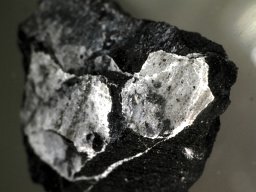 Kelly Keighley Bradbury合作论文数3
 Carolyn Boulton合作论文数Queens Medical Centre, Nottingham University Hospitals NHS Trust3Sarah E. Minson合作论文数US Geol Survey3
 Virginia G. Toy合作论文数Geology Department;University of Otago;Geology Department, University of Otago3M. Barall合作论文数2
 Jerlyn Swiatlowski合作论文数2Ma Shengli合作论文数2Robert J. McLaughlin合作论文数2
 Aida Farough合作论文数Dept Geol, Kansas State Univ2
 Ze'ev Reches合作论文数Department of Geology, School of Geophysics, University of Oklahoma2Hisao Ito合作论文数2Ruth Harris合作论文数United States Geological Survey2
 Hidemi Tanaka合作论文数2
 Mark Zoback合作论文数Department of Geophysics, Stanford University;Precourt Institute for Energy, Stanford University2
 Roger Bilham合作论文数Department of Geological Sciences, College of Arts and Sciences, University of Colorado, Boulder;Cooperative Institute for Research in Environmental Sciences, University of Colorado, Boulder2S Tembe合作论文数2
 Barbara A. Bekins合作论文数U.S. Geological Survey, Water Resources Division2Sheryl Tembe合作论文数2
 James P. Evans (James Evans)合作论文数Department of Earth Sciences, College of Science, Utah State University2James D. Byerlee合作论文数2




