This paper introduces a modular testbed to simulate AC/DC microgrids. The testbed is implemented in Matlab Simulink and is based on the energetic macroscopic representation (EMR) formalism. It is designed to be a tool to evaluate energy management strategies in AC/DC microgrids. The microgrid simulation model includes a photovoltaic generator, a fuel cell system, ultracapacitors, and batteries on the DC side. It includes voltage source converters (VSC) to couple the DC side with the AC side of the microgrid, which includes a variable AC load and a synchronous generator. Two case studies illustrate the use of the testbed. The model is implemented in Matlab Simulink and made openly available for the scientific community. Using this model, researchers can develop and evaluate energy management strategies in AC/DC microgrids.
This work aims to compare the transient response of four models of wind generators present in the DIgSILENT PowerFactory software; two of them are based on the international standard IEC 61400-27-1 and the others are own templates of the program. Three types of disturbances are proposed to study wind turbine models: first, a three-phase short circuit at the terminals of the generator transformer; subsequently, a step reduction in loads; finally, a step reduction in generation. The variables observed are active and reactive power, voltage and frequency. Finally, we find to observe the advantages and disadvantages of each model studied. For the short-circuit event the models bring to the failure with reactive injection. With the modification in the load the IEC models exceed some frequency limits and disconnect, the same happens with a change in the generation only that the lower limit is passed.
Microgrids with renewable distributed generation appears to be a good alternative to provide electricity for rural areas and isolated zones. However, these microgrids presents relatively low robustness due to their distributed generation topology with lack of dominant nodes to absorb and compensate instabilities, and intermittent energy availability. This work presents a novel strategy to model microgrids in an extended graph model, generating additional model embedded information, essential for optimization processes in the quest of robustness and economy, among other objectives. The traditional impedance model of microgrid is complemented by an extended graph integrating additional information of grids elements such as saturation, current and voltage limits or energy resource availability. This paper presents the extended graph developed model, which yields to a concise representation of an entire microgrid system, as well as a set of graph metrics usable for electrical grid evaluation. The presented model and metrics show to be useful to store, in a single and simple model, valuable information for design, evaluation and operation of microgrid systems.
This paper introduces a programmable modular laboratory for undergraduate courses on power electronics and control engineering systems. The proposed system helps the students to get an integral vision about control of power electronics devices. The hardware and software are presented and then a case of study, the implementation of a fuzzy logic based voltage controller of a DC/DC converter, is introduced and results are commented. The prototype was conceived as a modular design. The proposed system is also able to contribute to practical activities related to feedback control and power electronics, and, it allows a better understanding of power converters operation.
 Javier Solano合作论文数3
 Andres Hernandez合作论文数2
 Rafael M. Gutierrez合作论文数1Cristian Andrés Flores Cadena合作论文数1
 Juan Caballero合作论文数1
 Angie katherine Reyes合作论文数Universidad Antonio Nariño, Cll 22 Sur # 12D – 81, Bogotá, Colombia1
 Maria A. Mantilla合作论文数1
 Solano, J.合作论文数Univ. Ind. de Santander;c;Univ. Ind. de Santander1
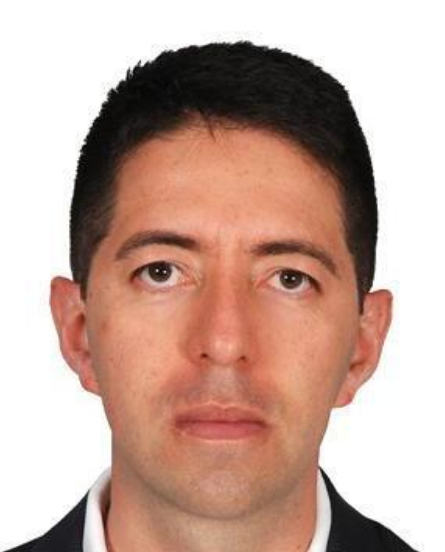 Juan David Bastidas Rodríguez合作论文数Departamento de Ingeniería Eléctrica, Electrónica y Computación, Facultad de Ingeniería y Arquitectura, Universidad Nacional de Colombia1
 Alexander Sepúlveda合作论文数Signal Processing and Recognition Group, Universidad Nacional de Colombia1
 Adrian Ilinca合作论文数Wind Energy Research Laboratory, Université du Québec à Rimouski1




