Visual channel is a very import input for human recognition during complex tasks. The critical challenge is to tell exactly how well the visual capability of a subjects in real time dynamically. In this research, we assume that the visual capability of a subject varies according to the real task situation, and that the performance of the subject on the task is a very important measurement for estimation of the visual capability of the subject. We use the motor action pattern as the indicator to investigate the level of visual capability of the subjects in relation to the characteristics of the visual information, the nature of the task and state of the subject in a simulated task environment. The research found there was a strong indication that variation of the visual capability was related to the nature of the task and the state of the subject. The motor action pattern was good indicator for visual capability.
The variation of modality of a specimen plays an important role in a buckling experiment. However, it is not easy to obtain a whole field measurement by most traditional manners in some particular experimental condition. In this paper, we develop a simple method for out-of-plane displacement measurement on a curved surface using one camera. An algorithm based on LDC (Line Detection using Contours) is used to detect corners. The out-of-plane displacement is then determined by a geometrical method on the captured images. And by using multiple scales method, the problem of the variable prospective shrink rate on a curved surface is simplified. Experiments of buckling specimens with curved surface demonstrate that this method is simple, accurate and suitable for measurement of out-of-plane displacement in the limited experimental conditions.
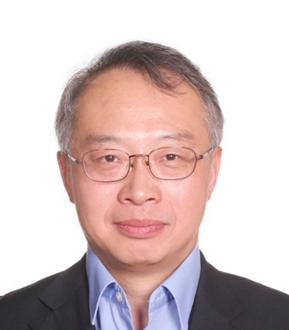 Shan Fu (傅山)合作论文数Shanghai Jiao Tong University2
 Xuesen Gu合作论文数1
 Biting Yu合作论文数Univ Wollongong, Sch Comp & Informat Technol, Wollongong, NSW, Australia1Jiayang Huang合作论文数1
 Edmond Qi Wu (吴奇)合作论文数School of Computer Science, Shanghai Jiao Tong University1
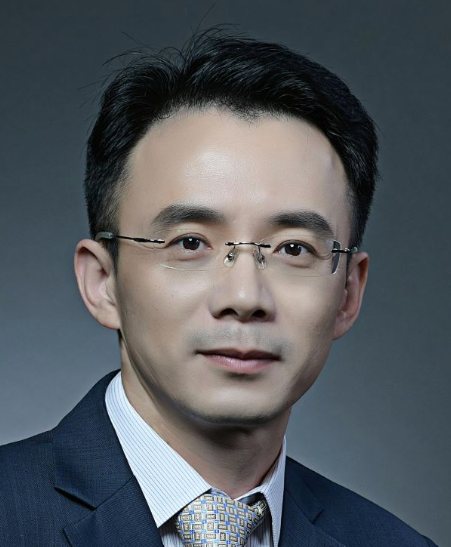 Dan Huang (黄丹)合作论文数School of Aeronautics and Astronautics, Shanghai Jiao Tong University1
 Zhengxiang Cai合作论文数Sch. of Aeronaut. & Astronaut., Shanghai Jiao Tong Univ.;c;Sch. of Aeronaut. & Astronaut., Shanghai Jiao Tong Univ.1
 Rob Law (羅振雄)合作论文数Faculty of Business Administration, University of Macau;Asia-Pacific Academy of Economics and Management, University of Macau1Luyan Sun合作论文数1
 Yanyu Lu合作论文数1




