Mammograms are widely used for breast cancer screening, diagnosis, and follow-ups. The Breast Imaging Reporting and Data System (BI-RADS) provides standardized terminology, reporting structure, and classification for mammography findings. Certain characteristics, such as shape, margins, calcifications, asymmetry, and architectural distortion, can indicate different BI-RADS scores corresponding to malignancy. Leveraging multi-label learning, this paper introduces M2Net, a Two-stage Multi-label Breast Cancer Detection Network that simultaneously addresses lesion localization, lesion type and BI-RADS detection. Additionally, inspired by how radiologists examine mammograms, we propose the sliding windows approach to the training pipeline to enhance breast cancer diagnostic performance. M2Net outperforms single-label models in comprehensive lesion detection and precise BI-RADS detection in an In-house and the CBIS-DDSM dataset. This work represents a novel strategy that bridges AI and clinical practice for more accurate breast malignancy diagnosis.
Objectives:Osteoporotic fracture is a significant public health burden associated with increased mortality risk and substantial healthcare costs. Accurate and early identification of high-risk individuals and mitigation of their risks is a core part of the treatment and prevention of fractures. Here we introduce a digital tool called 'BONEcheck' for personalized assessment of bone health.Methods:The development of BONEcheck primarily utilized data from the prospective population-based Dubbo Osteoporosis Epidemiology Study and the Danish Nationwide Registry. BONEcheck has 3 modules: input data, risk estimates, and risk context. Input variables include age, gender, prior fracture, fall incidence, bone mineral density (BMD), comorbidities, and genetic variants associated with BMD.Results:Based on the input variables, BONEcheck estimates the probability of any fragility fracture and hip fracture within 5 years, subsequent fracture risk, skeletal age, and time to reach osteoporosis. The probability of fracture is shown in both numeric and human icon array formats. The risk is also contextualized within the framework of treatment and management options on Australian guidelines, with consideration given to the potential fracture risk reduction and survival benefits. Skeletal age was estimated as the sum of chronological age and years of life lost due to a fracture or exposure to risk factors that elevate mortality risk.Conclusions:BONEcheck is an innovative tool that empowers doctors and patients to engage in well-informed discussions and make decisions based on the patient's risk profile. Public access to BONEcheck is available via https://bonecheck.org and in Apple Store (iOS) and Google Play (Android).
One of the most challenging issues in the utilisation of machine learning in face datasets is the lack of data, especially when there is inadequate collection of datasets. On one hand, the cost of collecting new face images could be very costly and it depend heavily on the resources and the availability of the data collection. On the other hand, insufficient face datasets could lead to over-fitting issues in any deep learning models especially in the face verification tasks as it requires adequate amount of face dataset. Nevertheless, Generative Adversarial Networks (GANs) offers a better way to augment the data by generating synthetic face images based on the close-distributed pixels of real images. With this intention, GAN inversion was introduced to produce better performance comparing to the previous GAN concepts; by inverting a given face image back into the latent space of a pretrained GAN model with low loss transmissions. This paper demonstrates the feasibility of GAN inversion during the face verification process. We will also illustrate the comparison between previous GAN models, and traditional machine learning augmentation methods in face images generation.
Speaker recognition is the process of identifying an individual from their voices, and it has been widely applied in many real-world applications. Recently, deep learning has instigated a revolutionary high success rate in speaker recognition. The major advantage of deep learning over conventional methods for speaker recognition is attributed to its representation ability, and the ability to produce highly abstract embedding features from utterances. Recent researches had revealed that deep learning method in learning speaker features from raw data, is strongly depending on a speaker's language. However, only minimal researches had done on deep learning over Vietnamese speaker recognition to present. Nevertheless, this paper has proposed a deep transfer learning method which integrates both transfer learning and deep learning to build models for Vietnamese speaker recognition. Our experimental results indicated that the proposed method is able to build accurate models for Vietnamese speaker recognition.
Missing values present as the most common problem in real-world data science. Inadequate treatment of missing values could often result in mass errors. Hence missing values should be managed conscientiously for classification. Generative Adversarial Networks (GANs) have been applied for imputing missing values in most recent years. This paper proposes a multiple imputation method to estimate missing values for classification through the integration of GAN and ensemble learning. Our propose method MIGAN utilises GAN to generate different training observations which are then used to conduct ensemble classifiers for classification with missing data. We conducted our experiments examine MIGAN on various data sets as well as comparing MIGAN with the state-of-the-art imputation methods. The experimental results show significant results, which highlights the accuracy of MIGAN in classifying the missing data.
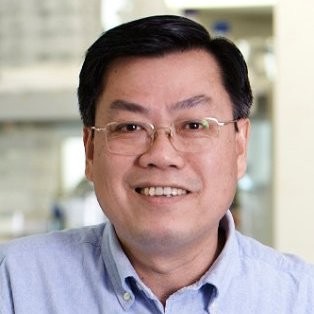 Tuan V. Nguyen合作论文数School of Biomedical Engineering, University of Technology Sydney;School of Population Health, University of New South Wales;School of Medicine Sydney, University of Notre Dame Australia8
 Thach Tran合作论文数Global & Womens Hlth, Monash Univ4
 Huy G Nguyen合作论文数Bone & Muscle Res Grp, Ton Duc Thang Univ2
 Tien-Dat Hoang合作论文数2Thao P Ho-Le合作论文数2
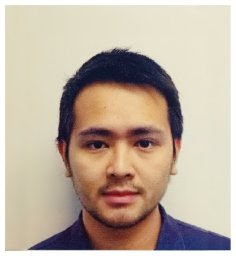 Thanh Huy Nguyen合作论文数Dept Geomat, Univ Laval1
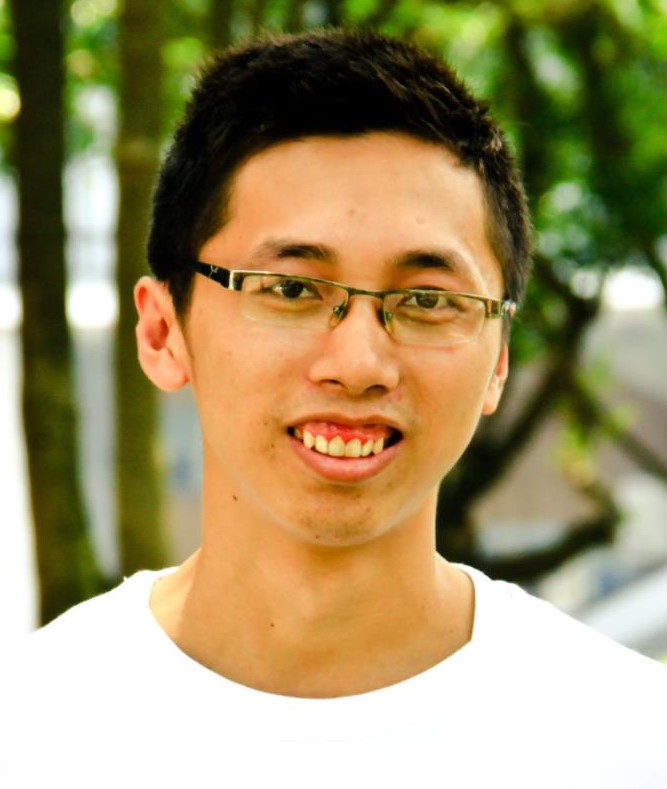 Le Nguyen Quoc Khanh合作论文数College of Medicine, Taipei Medical University1
 Nancy E. Lane合作论文数Division of Rheumatology, Allergy and Clinical Immunology, Department of Internal Medicine, University of California, Davis Medical Center;School of Medicine, University of California, Davis1
 Lisa Langsetmo合作论文数CaMos National Coordinating Centre, McGill University1
 Steven A. Frost合作论文数Liverpool Hospital1




