A first principles 6D kinetic model is developed to study the earliest times of unassisted plasma breakdown in an International Thermonuclear Experimental Reactor (ITER)-scale tokamak. This is then used for a comparative study of the predicted ionisation rate and the electron parallel velocity between the standard model for tokamak breakdown, assuming a zero-D (OD) Townsend avalanche, and the new kinetic model. The detailed model allows us to study the influence of the magnetic field configurations on the formation of plasma while explicitly resolving the electron trajectories. We introduce a 'back-traced' connection length L bt as a useful predictive tool for the spatial distribution of charged particles during the breakdown process. It is also found that the ionisation rate and the mean electron parallel velocity from the kinetic model generally exceed the 0D model predictions, demonstrating a growth in the total electron population from 103 to the order of 108 in approximately 1 ms. This implies that the 0D model can still serve as a conservative prediction for the first plasma campaign on ITER.
Townsend discharge theory is commonly used to describe and approximate the ionisation fraction growth rate in the very early phase of plasma initiation in tokamak devices via ohmic breakdown. The prediction of the ionisation fraction growth rate is done most commonly with continuum or kinetic models, which in turn boil down to the relation between the first Townsend’s coefficient α, pressure p and electric field strength E (namely, α/p and E/p). To date there are few computational models that attempt to simulate the ionisation fraction growth rate via explicit modelling of each ionisation event through electron-neutral collisions. This is largely due to the challenge of addressing the exponential growth of charged particles from ionisation processes, combined with the high computational cost of N-body simulation. In this work, a new fully three-dimensional, first-principles model of a Townsend hydrogen discharge is demonstrated and benchmarked against prior experimental findings. These tests also include comparisons of three separate models for the scattering angle and their impact on the obtained α/p and mean electron drift velocity. It is found that isotropic scattering combined with restricting the freed electron’s scattering angle along the incident electron’s velocity vector during ionisation events gives the closest agreement of α/p compared to experimental measurements.
Julich Supercomputing Centre (JSC) started running (extreme) scaling workshops with its first IBM Blue Gene supercomputer, finally spanning three generations each seeing an increase in the number of cores and available threads. Over the years, this workshop series attracted numerous international code teams and resulted in many applications capable of running on all available cores of each system. This article reviews some of the knowledge gained with running and tuning highly-scalable applications, focussing on JUQUEEN, the IBM Blue Gene/Q at JSC. The ability to execute successfully on all 458752 cores with up to 1.8 million processes or threads may qualify codes for the High-Q Club, which serves as a showcase for diverse codes scaling to the entire 28 racks, effectively defining a collection of the highest scaling codes on JUQUEEN. The intention was to encourage other developers to invest in tuning and scaling their codes while identifying the necessary key aspects for that goal. As this era closes, it is timely to compare the characteristics of the 32 High-Q Club member codes, considering their strong and/or weak scaling, exploitation of hardware threading, and whether/how intra-node multi-threading is employed combined with message-passing. We also identify the obstacles for scaling such as inefficient use of limited compute node memory and file I/O as key governing factors. Overall, the analysis provides guidance as to how applications may (need to) be designed in future to exploit expected exa-scale computer systems.
Particle-in-cell (PIC) methods are widely used on today’s supercomputers. In this paper we consider JuSPIC, an application for which good scaling properties could be demonstrated on a 6PFlop/s BlueGene/Q system. We report on efforts to port this application to emerging supercomputing architectures based on IBM POWER processors and NVIDIA graphics processing units.
Future supercomputer systems are expected to employ very large numbers of processors/cores and possibly to become more heterogeneous. Application scalability has therefore become a critical requirement
Julich Supercomputing Centre has offered Extreme Scaling Workshops since 2009, with the latest edition in February 2015 giving seven international code teams an opportunity to (im)prove the scaling of their applications to all 458 752 cores of the JUQUEEN IBM Blue Gene/Q. Each of them successfully adapted their application codes and datasets to the restricted compute-node memory and exploit the massive parallelism with up to 1.8 million processes or threads. They thereby qualified to become members of the High-Q Club which now has over 24 codes demonstrating extreme scalability. Achievements in both strong and weak scaling are compared, and complemented with a review of program languages and parallelisation paradigms, exploitation of hardware threads, and file I/O requirements.
High-performance computing (HPC) is recognized as one of the pillars for further progress in science, industry, medicine, and education. Current HPC systems are being developed to overcome emerging architectural challenges in order to reach Exascale level of performance, projected for the year 2020. The much larger embedded and mobile market allows for rapid development of intellectual property (IP) blocks and provides more flexibility in designing an application-specific system-on-chip (SoC), in turn providing the possibility in balancing performance, energy-efficiency, and cost. In the Mont-Blanc project, we advocate for HPC systems being built from such commodity IP blocks, currently used in embedded and mobile SoCs. As a first demonstrator of such an approach, we present the Mont-Blanc prototype; the first HPC system built with commodity SoCs, memories, and network interface cards (NICs) from the embedded and mobile domain, and off-the-shelf HPC networking, storage, cooling, and integration solutions. We present the system's architecture and evaluate both performance and energy efficiency. Further, we compare the system's abilities against a production level supercomputer. At the end, we discuss parallel scalability and estimate the maximum scalability point of this approach across a set of applications.
High-performance computing (HPC) is recognized as one of the pillars for further advance of science, industry, medicine, and education. Current HPC systems are being developed to overcome emerging challenges in order to reach Exascale level of performance,which is expected by the year 2020. The much larger embedded and mobile market allows for rapid development of IP blocks, and provides more flexibility in designing an application-specific SoC, in turn giving possibility in balancing performance, energy-efficiency and cost. In the Mont-Blanc project, we advocate for HPC systems be built from such commodity IP blocks, currently used in embedded and mobile SoCs. As a first demonstrator of such approach, we present the Mont-Blanc prototype; the first HPC system built with commodity SoCs, memories, and NICs from the embedded and mobile domain, and off-the-shelf HPC networking, storage, cooling and integration solutions. We present the system’s architecture, and evaluation including both performance and energy efficiency. Further, we compare the system’s abilities against a production level supercomputer. At the end, we discuss parallel scalability, and estimate the maximum scalability point of this approach across a set of HPC applications.
Feedback from the previous year's very successful workshop motivated the organisation of a three-day workshop from 1 to 3 February 2016, during which the 28-rack JUQUEEN BlueGene/Q system with 458 752 cores was reserved for over 50 hours. Eight international code teams were selected to use this opportunity to investigate and improve their application scalability, assisted by staff from JSC Simulation Laboratories and Cross-Sectional Teams. Ultimately seven teams had codes successfully run on the full JUQUEEN system. Strong scalability demonstrated by Code_Saturne and Seven-League Hydro, both using 4 OpenMP threads for 16 MPI processes on each compute node for a total of 1 835 008 threads, qualify them for High-Q Club membership. Existing members CIAO and iFETI were able to show that they had additional solvers which also scaled acceptably. Furthermore, large-scale in-situ interactive visualisation was demonstrated with a CIAO simulation using 458 752 MPI processes running on 28 racks coupled via JUSITU to VisIt. The two adaptive mesh refinement utilities, ICI and p4est, showed that they could respectively scale to run with 458 752 and 971 504 MPI ranks, but both encountered problems loading large meshes. Parallel file I/O issues also hindered large-scale executions of PFLOTRAN. Poor performance of a NEST-import module which loaded and connected 1.9 TiB of neuron and synapse data was tracked down to an internal data-structure mismatch with the HDF5 file objects that prevented use of MPI collective file reading, which when rectified is expected to enable large-scale neuronal network simulations. Comparative analysis is provided to the 25 codes in the High-Q Club at the start of 2016, which includes five codes that qualified from the previous workshop. Despite more mixed results, we learnt more about application file I/O limitations and inefficiencies which continue to be the primary inhibitor to large-scale simulations.
 Brian J. N. Wylie合作论文数12
 Paul Gibbon合作论文数Focused Energy Inc;KU Leuven12Wolfgang Frings合作论文数12
 Dirk Pleiter合作论文数John von Neumann-Institut fur Computing11
 Andreas Schäfer合作论文数Lehrstuhl Schafer Fakultät für Physik, Universität Regensburg10
 Gerrit Schierholz合作论文数John von Neumann-Institut fur Computing10James M. Zanotti合作论文数School of Physics;University of Edinburgh;School of Physics, University of Edinburgh9Meinulf Göckeler合作论文数Universität Regensburg9B. Steinbusch合作论文数8
 Roger Horsley合作论文数School of Physics, University of Edinburgh8Hinnerk Stüben合作论文数8Rene Halver合作论文数Forschungszentrum Julich, Inst Adv Simulat, Julich Supercomp Ctr, D-52425 Julich, Germany7
 Yasunobu Nakamura合作论文数Department of Applied Physics, Graduate School of Engineering,;The University of Tokyo;RIKEN Center for Quantum Computing7
 Paul Rakow合作论文数7
 Daniele Tafani合作论文数5
 Momme Allalen合作论文数5
 J. Romazanov合作论文数http://irfm.cea.fr/en/west/WESTteam/.5Andreas Kirschner合作论文数Institute , and Nuclear Waste Management, Forschungszentrum Jülich5
 Christian Linsmeier合作论文数Research Centre Jülich GmbH, Institute for Energy and Climate Research-Plasma Physics, Faculty of Physics and Astronomy, Ruhr University Bochum;Institute for Fusion Energy and Nuclear Waste Management, Forschungszentrum Jülich GmbH5
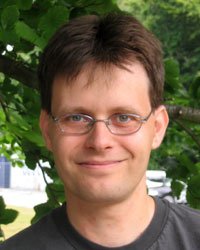 Jan H. Meinke合作论文数Department of Physics;Syracuse University;Department of Physics, Syracuse University5
 D. Borodin合作论文数5Ph. Hagler合作论文数4
 Volker Weinberg合作论文数Bayerischen Akademie der Wissenschaften4Wolfram Schroers合作论文数4
 Sandipan Mohanty合作论文数Department of Theoretical Physics;Lund University;Department of Theoretical Physics, Lund University4
 Nico Sanna合作论文数3
 Constantino Gomez合作论文数Barcelona Supercomputing Center3Luna Backes合作论文数3Eric Boyer合作论文数3
 Said Derradji合作论文数3Chris Adeniyi-Jones合作论文数3Hugo Bufferand合作论文数3
 Thomas Lippert合作论文数Forschungszentrum Julich, Julich Supercomp Ctr3Mehdi Firdaouss合作论文数3
 Jesus Labarta Mancho合作论文数Computer Sciences Research Department, Barcelona Supercomputing Center;Universitat Politecnica de Catalunya3
 Daniel Ruiz合作论文数3
 Filippo Mantovani合作论文数Deutsches Elektronen Synchrotron (DESY), Zeuthen, Germany3Andreas Jüttner合作论文数School of Physics and Astronomy, University of Southampton3
 Enrique Vallejo合作论文数University of Cantabria3
 Alejandro Rico合作论文数Barcelona Supercomputing Center, Universitat Politècnica de Catalunya3
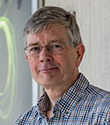 Jonathan Flynn合作论文数University of Southampton3
 Brice Videau合作论文数Nanosim (LIG), France3
 Michael Donnellan合作论文数3
 Christopher T. Sachrajda合作论文数Department of Physics and Astronomy, University of Southampton3
 Bernd Mohr合作论文数Jülich Supercomputing Centre, Forschungszentrum Jülich GmbH3
 Harald Servat合作论文数Barcelona Supercomputing Center3Nikola Rajovic合作论文数Barcelona Supercomputing Center, Universitat Politècnica de Catalunya3
 Piero Lanucara合作论文数3Jean-François Méhaut合作论文数University of Grenoble3




