Recent experimental data show an unexpectedly large spin alignment of ϕ mesons in high-energy heavy-ion collisions, which can be explained by short-distance fluctuations of strong-force fields (vector ϕ fields) within the constituent-quark model. We calculate the hyperon spin correlations within the same model, taking into account hydrodynamic effects and a ϕ field fluctuating in space-time according to a Gaussian distribution. The ΛΛ[over ¯] spin correlation induced by the ϕ field is shown to be negative as opposed to that of ΛΛ or Λ[over ¯]Λ[over ¯]. We thus propose a new net spin-correlation observable as a sensitive probe to separate strong-force effects from hydrodynamic ones. With the strength of the field fluctuations extracted from the observed ϕ spin alignment, we predict the collision-energy dependence of the hyperon spin correlations and also investigate the dependence of the net spin correlation on azimuthal-angle and rapidity difference.
The role of spin degrees of freedom in the quark-gluon plasma (QGP) has attracted significant interest in recent years. Spin hydrodynamics extends conventional hydrodynamics by incorporating spin via the spin tensor. In the mean-field limit of the Nambu-Jona-Lasinio (NJL) model under rigid rotation, spin degrees of freedom manifest naturally as axial-vector, or spin, condensate. We investigate the interplay between chiral and spin condensates in this framework. While rotation typically suppresses the formation of a chiral condensate, the presence of a spin condensate may counteract this effect, enhancing the chiral condensate. Moreover, it can alter the nature of the chiral transition from second to first order.
We compute the expectation value of the energy-momentum tensor of a real scalar field in an approximation which accounts for space-time gradients of the hydrodynamical variables in local thermodynamical equilibrium. We show that the energy-momentum tensor receives corrections with respect to the standard local-equilibrium result. Notably, the relation between the energy density and pressure, i.e., the equation of state, is modified with respect to the one in global equilibrium. The obtained corrections might be relevant for systems created in relativistic hadron and heavy-ion collisions.
A simple effective model for the intermediate-density regime is constructed from the high-density effective theory of quantum chromodynamics (QCD). In the effective model, under a renormalization group (RG) scaling toward low momenta, the original QCD interactions lead to four-quark contact interactions for the relevant quark and hole modes around the Fermi surface. The contact interaction in the scalar channel can be traced back to zero-sound-type collinear quark scattering near the Fermi surface in an instanton background. The quark and hole states in opposite directions of a given Fermi velocity form the collective scalar bosonic mode 6. The magnitude of 6 is investigated via the nonperturbative functional renormalization group evolution of the effective average action from the ultraviolet to the infrared (IR). In the mean-background-field approximation for 6, nontrivial minima (6 not equal 0) are found in the IR limit of the effective average action. A nonvanishing 6 corresponds to condensation of quark and hole states in opposite directions of a given Fermi velocity, in a thin shell-like structure in momentum space around the Fermi surface. This looks similar to the shell-like baryon distribution in momentum space assumed in the quarkyonic-matter concept. However, when including a dynamic bosonic 6 mode in the RG flow, we find that its diffusive nature destroys the quark-hole condensate, i.e., the IR potential does not show any minima beyond the trivial one.
Using the statistical operator in the local-equilibrium approximation, we calculate the mean value of the energy-momentum tensor of a real scalar field. We show that the energy-momentum tensor has additional terms with respect to the one in a state of global thermodynamical equilibrium. Notably, the relation between the energy density and pressure, i.e., the effective equation of state, is modified with respect to the homogeneous equilibrium case. The obtained corrections are of non-equilibrium origin and might be relevant for systems created in relativistic hadron and heavy-ion collisions.
We present BHAc-QGP, a new numerical code to simulate the evolution of matter created in heavy-ion collisions in the presence of electromagnetic fields. It is derived from the Black Hole Accretion Code (BHAc), which has been designed to model astrophysical processes in a general-relativistic magnetohydrodynamical description. As the original Black Hole Accretion Code, BHAc-QGP benefits from the use of adaptive mesh refinement, which allows us to dynamically adjust the resolution where necessary and makes use of time-dependent Milne coordinates and the ultrarelativistic equation of state, P = e/3. We demonstrate that BHAc-QGP accurately passes a number of systematic and rigorous tests.
We apply the method of moments to the relativistic Boltzmann-Vlasov equation and derive the equations of motion for the irreducible moments of arbitrary tensor-rank of the invariant single-particle distribution function. We study two cases, in the first of which the moments are taken to be irreducible with respect to the little group associated with the time-like fluid four-velocity, while in the second case they are assumed to be also irreducible with respect to a space-like four-vector orthogonal to the fluid four-velocity, which breaks the spatial isotropy to a rotational symmetry in the plane transverse to this vector. A systematic truncation and closure of the general moment equations leads, in the first case, to a theory of relativistic higher-order dissipative resistive magnetohydrodynamics. In the second case, we obtain a novel theory of dissipative resistive anisotropic magnetohydrodynamics, where the momentum anisotropy is in principle independent from that introduced by the external magnetic field.
We show that, in ideal-spin hydrodynamics, the components of the spin tensor follow damped wave equations. The damping rate is related to nonlocal collisions of the particles in the fluid, which enter at first order in h in a semiclassical expansion. This rate provides an estimate for the timescale of spin equilibration and is computed by considering a system of spin-1/2 fermions interacting via a quartic self-interaction as well as via (screened) one-gluon exchange. It is found that the relaxation times of the components of the spin tensor can become very large compared to the usual dissipative timescales of the system. Our results suggest that the spin degrees of freedom in a heavy-ion collision may not be in equilibrium by the time of freeze-out, and thus should be treated dynamically.
Relativistic dissipative fluid dynamics finds widespread applications in high-energy nuclear physics and astrophysics. However, formulating a causal and stable theory of relativistic dissipative fluid dynamics is far from trivial; efforts to accomplish this reach back more than 50 years. In this review, we give an overview of the field and attempt a comparative assessment of (at least most of) the theories for relativistic dissipative fluid dynamics proposed until today and used in applications.
We study the effect of isospin-symmetry breaking in the framework of the extended linear σ model in vacuum. In this model, several particles mix with each other at tree level, due to the three nonzero scalar condensates (nonstrange, strange, isospin). We resolve these mixings with the help of various field transformations. We compute all possible meson mixings and decay widths at tree level and perform a χ2 fit to PDG data. A very good fit is found if we exclude the (very small ∼130 keV) ω→ππ decay. We also investigate the violation of Dashen’s theorem. Published by the American Physical Society 2024
In this paper, we study all transport coefficients of second-order dissipative fluid dynamics derived by V. E. Ambrus et al. [Phys. Rev. D 106, 076005 (2022)] from the relativistic Boltzmann equation in the relaxation-time approximation for the collision integral. These transport coefficients are computed for a classical ideal gas of massive particles, with and without taking into account the conservation of intrinsic quantum numbers. Through rigorous comparison between kinetic theory, second-order dissipative fluid dynamics, and leading-order anisotropic fluid dynamics for a (0+1)--dimensional boost-invariant flow scenario, we show that both fluid-dynamical theories describe the early far-from-equilibrium stage of the expansion reasonably well.
We present BHAC-QGP, a new numerical code to simulate the evolution of matter created in heavy-ion collisions. BHAC-QGP is based on the Black Hole Accretion Code (BHAC), which has been designed to model astrophysical processes through the solution of the equations of general-relativistic magnetohydrodynamics. Like the mother code, BHAC-QGP uses Adaptive Mesh Refinement (AMR), which allows for a dynamic adjustment of the resolution in regions of the computational domain where a particularly high accuracy is needed. We here discuss a number of applications of BHAC-QGP to Au-Au collisions at Relativistic Heavy-Ion Collider (RHIC) energies and show that the code is able to reproduce results of other simulations of these scenarios, but with much higher accuracy.
We study charge diffusion in relativistic resistive second-order dissipative magnetohydrodynamics. In this theory, charge diffusion is not simply given by the standard Navier-Stokes form of Ohm's law, but by an evolution equation which ensures causality and stability. This, in turn, leads to transient effects in the charge diffusion current, the nature of which depends on the particular values of the electrical conductivity and the charge-diffusion relaxation time. The ensuing equations of motion are of so-called stiff character, which requires special care when solving them numerically. To this end, we specifically develop an implicit-explicit Runge-Kutta method for solving relativistic resistive second-order dissipative magnetohydrodynamics and subject it to various tests. We then study the system's evolution in a simplified 1+1-dimensional scenario for a heavy-ion collision, where matter and electromagnetic fields are assumed to be transversely homogeneous, and investigate the cases of an initially non-expanding fluid and a fluid initially expanding according to a Bjorken scaling flow. In the latter case, the scale invariance is broken by the ensuing self-consistent dynamics of matter and electromagnetic fields. However, the breaking becomes quantitatively important only if the electromagnetic fields are sufficiently strong. The breaking of scale invariance is larger for smaller values of the conductivity. Aspects of entropy production from charge diffusion currents and stability are also discussed.
The equations of multicomponent relativistic second-order dissipative fluid dynamics from the Boltzmann equations for a reactive mixture of Nspec particle species with Nq intrinsic quantum numbers such as electric charge, baryon number, and strangeness are presented. We discuss the "single-fluid" description of a multicomponent fluid, which consists of 4+N-q conservation laws closed by 6+3N(q) equations of motion for the dissipative quantities in the (10 + 4N(q))-moment approximation.
We propose a novel method to find local plane-wave solutions of the linearized equations of motion of relativistic hydrodynamics in inhomogeneous equilibrium configurations, i.e., when a fluid in equilibrium is rigidly moving with nonzero thermal vorticity. Our method is based on extending the conserved currents to the tangent bundle, using a type of Wigner transformation. The Wigner-transformed conserved currents can then be Fourier-transformed into the cotangent bundle to obtain the dispersion relations for the space-time dependent eigenfrequencies. We show that the connection between the stability of hydrodynamics and the evolution of plane waves is not as straightforward as in the homogeneous case, namely, it is restricted to the equilibrium-preserving directions in the cotangent bundle. We apply this method to Mueller-Israel-Stewart (MIS) theory and show that the interplay between the bulk viscous pressure and the shear-stress tensor with acceleration and rotation leads to novel modes, as well as modifications of the already known ones. We conclude that, within the domain of applicability, i.e., when boundary effects are negligible and the vorticity is not too large, MIS theory is stable and causal, with the same stability and causality conditions as for homogeneous equilibrium configurations.
Dense strongly interacting matter can exhibit regimes with spatial modulations, akin to crystalline phases. In this case particles can have a moat spectrum with minimal energy at nonzero momentum. We show that particle interferometry is a sensitive probe of such a regime in heavy-ion collisions. To this end, we develop a field-theoretical formalism that relates particle spectra to in-medium real-time correlation functions of quantum fields on curved hypersurfaces of spacetime. This is then applied to the study of Bose-Einstein correlations in a moat regime in heavy-ion collisions. The resulting two-particle spectra exhibit peaks at nonzero average pair momentum, in contrast to the two-particle spectra in a normal phase, which peak at zero momentum. These peaks lead to nontrivial structures in the ratio of two-particle correlation functions, which should be experimentally measurable if the resolution in the direction of average pair momentum is sufficiently large. We propose these structures in the correlation-function ratios as clear signature of a moat regime and spatially modulated phases in quantum chromodynamics (QCD).
We compute the critical exponents of the O(N) model within the Functional Renormalization Group (FRG) approach. We use recent advances which are based on the observation that the FRG flow equation can be put into the form of an advection-diffusion equation. This allows to employ well-tested hydrodynamical algorithms for its solution. In this study we work in the local potential approximation (LPA) for the effective average action and put special emphasis on estimating the various sources of errors. Our results complement previous results for the critical exponents obtained within the FRG approach in LPA. Despite the limitations imposed by restricting the discussion to the LPA, the results compare favorably with those obtained via other methods.
Linear stability of Israel-Stewart theory in the presence of net-charge diffusion was investigated in [Phys.~Rev.~D 102 (2020) 116009] for the case of a massless, classical gas of noninteracting particles. However, in that work only a vanishing net-charge background was considered. In this work, we extend that study to the case of a nonvanishing background charge. We find that this effectively results in a change of the numeric value of the charge-diffusion coefficient, in a way that when the background charge goes to infinity, this coefficient can become at most four times its value at zero background charge. We also extend the analysis of [Phys.~Rev.~D 102 (2020) 116009] by performing a systematic parameter study in the plane of charge-diffusion coefficient vs.\ the coupling term between shear-stress and net-charge diffusion. In this plane, we identify regions where the solutions remain stable and causal and where they become acausal and/or unstable.
We study a relativistic fluid with longitudinal boost invariance in a quantum-statistical framework as an example of a solvable non-equilibrium problem. For the free quantum field, we calculate the exact form of the expectation values of the stress-energy tensor and the entropy current. For the stress-energy tensor, we find that a finite value can be obtained only by subtracting the vacuum of the density operator at some fixed proper time \tau_0. As a consequence, the stress-energy tensor acquires non-trivial quantum corrections to the classical free-streaming form.
 Francesco Giacosa合作论文数Institut fur Theoretische;Physik, Universitat Frankfurt;Institut fur Theoretische, Physik Universitat Frankfurt37
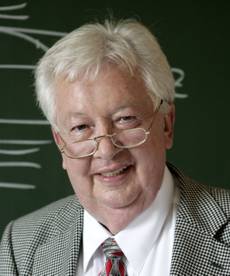 Walter Greiner合作论文数Frankfurt Institute for Advanced Studies26
 Gabriel S. Denicol合作论文数Instituto de F ´ isica;Universidade Federal do Rio de Janeiro;Rio de Janeiro;Instituto de F ´ isica, Universidade Federal do Rio de Janeiro26
 Horst Stöcker合作论文数Frankfurt Institute for Advanced Studies;Goethe-Universität Frankfurt am Main21
 H. Niemi合作论文数19Joachim A. Maruhn合作论文数18
 Eszter Molnar合作论文数Section for Theoretical and Computational Physics;University of Bergen;Section for Theoretical and Computational Physics, University of Bergen16
 Igor A. Shovkovy合作论文数College of Integrative Sciences & Arts, Arizona State University14
 Denis Parganlija合作论文数12
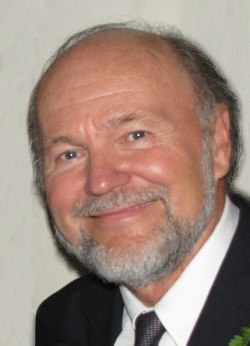 Miklos Gyulassy合作论文数Department of Physics, Columbia University11
 Carsten Greiner合作论文数Institut fur theoretische Physik, Goethe-Universitat Frankfurt am Main;Helmholtz International Center for FAIR10
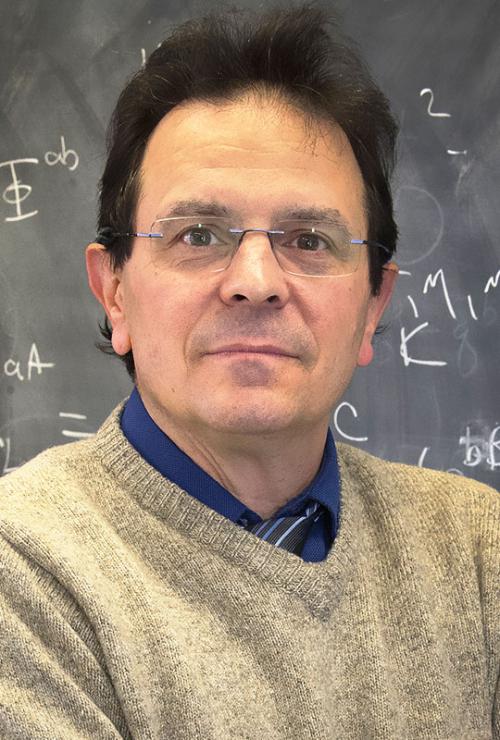 Rob Pisarski合作论文数Department of Physics, Brookhaven National Laboratory10
 Armen Sedrakian合作论文数Frankfurt Institute for Advanced Studies;Wroclaw University10
 Qun Wang (王群)合作论文数Department of Modern Physics, School of Physical Sciences, University of Science and Technology of China9
 Jorge Leite Noronha合作论文数Department of Physics, The Grainger College of Engineering, University of Illinois at Urbana-Champaign9Etele Molnar合作论文数8Nora Weickgenannt合作论文数8
 Adrian Dumitru合作论文数Department of Natural Sciences, Baruch College, City University of New York8
 Peter Kovacs合作论文数7Xin-li Sheng合作论文数7
 Luciano Rezzolla合作论文数Institute for Theoretical Physics, Goethe University;Trinity College Dublin7
 Mark Gorenstein合作论文数Department of High-Density Energy Physics, Bogolyubov Institute for Theoretical Physics, National Academy of Sciences of Ukraine7Harri Niemi合作论文数7
 Enrico Speranza合作论文数Dept Phys, Univ Illinois6u katscher合作论文数6Barbara Betz合作论文数6Achim Heinz合作论文数6I. Bouras合作论文数6David Wagner合作论文数5
 Xuguang Huang (黄旭光)合作论文数Department of Physics, Fudan University5Ilya Nikolaevich Mishustin合作论文数National Research Centre Kurchatov Institute5
 Michael Buballa合作论文数Theoriezentrum, Institut Für Kernphysik, Technische Universität Darmstadt5Oliver Fochler合作论文数5Stefan Struber合作论文数5Stefan Bernhard Ruster合作论文数5
 Ashutosh Dash合作论文数Inst Theoret Phys, Goethe Univ4
 Shi Pu (浦实)合作论文数Department of Modern Physics, School of Physical Sciences, University of Science and Technology of China4
 Zhe Xu (徐喆)合作论文数Department of Physics, Tsinghua University4
 Gyorgy Wolf合作论文数4
 Giorgio Torrieri合作论文数Institut fur Theoretische4Pasi Huovinen合作论文数4Stefan Bernard合作论文数4Masakiyo Kitazawa合作论文数Department of Physics;Osaka University;Department of Physics, Osaka University4T. Koide合作论文数3mara grahl合作论文数3stanislaus janowski合作论文数3Phillip Lakaschus合作论文数3Florian Divotgey合作论文数3Jürgen Eser合作论文数3




