There were great changes in agriculture in Britain following the Second World War. One of these was the advent of chemical farming with widespread use of insecticides, fungicides and herbicides as well as fertilisers. The organochlorine insecticides, first DDT, then BHC and the 'second generation' and much more toxic cyclodienes, dieldrin and aldrin, were soon adopted in order to increase crop yields. These were very effective insecticides which were particularly valuable as they remained active for a very long time after application. For example, it takes 25 years for 95% of dieldrin in soil to disappear and 30 years for DDT (SHAROM and SOLOMON, 1981). However, this very persistence was the cause of their downfall as it allowed them to become global environmental contaminants. In addition, far from being only insecticides, they were found to be biocides, affecting all forms of animal life. The first wildlife casualties appeared in the late 1950s and soon the dead bodies of birds started to litter the fields and woods. This was worst in the Eastern counties of England. Further, persistence within tissues allowed secondary poisoning to occur and avian and mammalian predators began to be found dead as well. I (DJJ) saw my first casualties in 1959 with the obliteration of my local rookery (Corvus frugilegus) in Oxfordshire, and soon became deeply involved. With official scepticism that all this could be due to poisoning rather than wildlife diseases, the Nature Conservancy set up the Toxic Chemicals and Wildlife Section in 1959 under Dr Norman Moore in order to provide the essential information required to obtain bans on their uses. I joined the Section as one of the first ecological toxicologists when it became based at the then new research station at Monks Wood. The full history of the 'battle' to prove the connection between insecticides and casualties and Monks Woods part in it has been written by SHEAIL (1985) and MOORE (1987). Although employed to concentrate on the obvious avian casualties such as the peregrine falcon (Falco peregrinus), kestrel (Falco tinnunculus), sparrowhawk (Accipiter nisus) and heron (Ardea cinerea), I extended the research and analyses to British mammals. I had a longstanding interest in the otter (Lutra lutra) since the 1940s and could see that if the heron was seriously contaminated and foxes (Vulpes vulpes) were dying, then the otter population too could be affected. Indeed, the first people to notice that fewer otters were being caught were the otter hunters (LLOYD, 1962). However, otter bodies were very difficult to find in the early 1960s. The first one analysed by paper chromatography was a road casualty from Dorset in 1962, but this method did not allow accurate determination and all later organs were analysed by gas liquid chromatography. There followed over 200 post mortem examinations and 122 chemical analyses between 1965 and 1989. The overall results from the first 31 analyses up to 1973 were reported by JEFFERIES, FRENCH and STEBBINGS
The relationship between microsatellite diversity and geographical fragmentation and isolation was studied in Scottish populations of the Eurasian otter, Lutra lutra. The geographic range of the study encompassed isolated archipelagos, islands adjacent to the Scottish mainland and both fragmented and continuous mainland populations. Tissue samples of 496 individuals from across Scotland were assayed for polymorphism at ten microsatellites. The isolation of populations on Shetland, and to a lesser degree on Orkney, was associated with reduced levels of microsatellite diversity. Most of the remaining island and fragmented mainland populations contained levels of microsatellite diversity similar to the high levels observed in die continuous mainland populations. Unexpectedly, both island and continuous mainland populations showed similar rates of departures from mutation-drift equilibrium. Such departures could have arisen from a variety of local demographic processes besides population bottlenecks. Gene flow appeared to be a major factor maintaining microsatellite diversity in all of these populations except the one on Shedand.
In Britain, the water vole ( Arvicola terrestris ) has declined in numbers and distribution (Jefferies, Morris & Mulleneux, 1989; Strachan & Jefferies, 1993). This species now enjoys a higher profile than hitherto and many local surveys have been initiated, following published methods. To monitor the status of the population or the effectiveness of habitat restoration projects, a method for estimating numbers of water voles is often needed, preferably based on latrines (a characteristic field sign of this species). Unfortunately, the published literature includes two potentially misleading components. In view of the significance of population size in a declining species, and the heightened interest in this animal, we felt it would be helpful to publish clarification and corrections in the hope of forestalling erroneous reports and conclusions in future investigations.
Craniometric variation between otters Lutra lutra (L.) from Ireland, Scotland, Shetland, Norway, and Czechoslovakia was examined using multivariate statistical analyses. Significant sexual dimorphism in cranial size and shape occurred in all samples, although the degree of dimorphism varied between samples, with the Irish sample exhibiting the most. Morphological differences were also observed across samples. Three groups were observed; Irish, Scottish, (Mainland and Shetland), and Mainland European, though within the two composite groups the samples were still differentiable. There was a good agreement between the patterns of variation between male and female samples, but morphological differentiation was not significantly correlated with geographic separation. These results are discussed in the light of our current knowledge of the ecology of the species in Europe. It is argued that, while there is morphological evidence for subspecific status of the Irish otter (as L. l. roensis), further investigations of morphological and genetic variation across Eurasia are clearly required.
Journal of Chemical Technology & BiotechnologyVolume 62, Issue 2 p. 207-207 Book Review Chaos and complexity. by Brian H. Kaye, VCH, Weinheim, 1993, xxii + 593 pp., price DM78.00. ISBN 3-527-29007-9 D. J. Jefferies, D. J. JefferiesSearch for more papers by this author D. J. Jefferies, D. J. JefferiesSearch for more papers by this author First published: February 1995 https://doi.org/10.1002/jctb.280620216AboutPDF ToolsRequest permissionExport citationAdd to favoritesTrack citation ShareShare Give accessShare full text accessShare full-text accessPlease review our Terms and Conditions of Use and check box below to share full-text version of article.I have read and accept the Wiley Online Library Terms and Conditions of UseShareable LinkUse the link below to share a full-text version of this article with your friends and colleagues. Learn more.Copy URL Share a linkShare onFacebookTwitterLinkedInRedditWechat No abstract is available for this article. Volume62, Issue2February 1995Pages 207-207 RelatedInformation
Mammal ReviewVolume 23, Issue 3-4 p. 155-166 Recovery plans for British mammals of conservation importance, their design and value D. J. JEFFERIES, D. J. JEFFERIES Joint Nature Conservation Committee, Monkstone House, City Road, Peterborough PE1 1JYSearch for more papers by this authorA. J. MITCHELL-JONES, A. J. MITCHELL-JONES *English Nature, Northminster House, Peterborough PE1 1UA, UKSearch for more papers by this author D. J. JEFFERIES, D. J. JEFFERIES Joint Nature Conservation Committee, Monkstone House, City Road, Peterborough PE1 1JYSearch for more papers by this authorA. J. MITCHELL-JONES, A. J. MITCHELL-JONES *English Nature, Northminster House, Peterborough PE1 1UA, UKSearch for more papers by this author First published: September 1993 https://doi.org/10.1111/j.1365-2907.1993.tb00428.xCitations: 5AboutPDF ToolsRequest permissionExport citationAdd to favoritesTrack citation ShareShare Give accessShare full text accessShare full-text accessPlease review our Terms and Conditions of Use and check box below to share full-text version of article.I have read and accept the Wiley Online Library Terms and Conditions of UseShareable LinkUse the link below to share a full-text version of this article with your friends and colleagues. Learn more.Copy URL Citing Literature Volume23, Issue3-4September 1993Pages 155-166 RelatedInformation
In recent years there has been a considerable increase in the numbers of both veterinary surgeons and wildlife rehabilitators involved in the care and rescue of wildlife. Several publications are available offering practical advice on what to do, but many of the people working in this field are unclear as to which laws apply to wildlife rehabilitation. This paper provides a summary of the legal position as it relates to the rehabilitation of wild mammals in Britain.
Journal of ZoologyVolume 221, Issue 2 p. 316-321 The prevalence of Pseudoterranova decipiens (Nematoda) and Corynosoma strumosum (Acanthocephala) in otters Lutra lutra from coastal sites in Britain D. J. Jefferies, D. J. Jefferies Nature Conservancy Council, Northminster House, Peterborough PE1 1UASearch for more papers by this authorH. M. Hanson, H. M. Hanson Institute of Terrestrial Ecology, Monks Wood Experimental Station, Abbots Ripton, Huntingdon PE17 2LSSearch for more papers by this authorE. A. Harris, E. A. Harris British Museum (Natural History), Cromwell Road, London SW7 5BDSearch for more papers by this author D. J. Jefferies, D. J. Jefferies Nature Conservancy Council, Northminster House, Peterborough PE1 1UASearch for more papers by this authorH. M. Hanson, H. M. Hanson Institute of Terrestrial Ecology, Monks Wood Experimental Station, Abbots Ripton, Huntingdon PE17 2LSSearch for more papers by this authorE. A. Harris, E. A. Harris British Museum (Natural History), Cromwell Road, London SW7 5BDSearch for more papers by this author First published: June 1990 https://doi.org/10.1111/j.1469-7998.1990.tb04003.xCitations: 12AboutPDF ToolsRequest permissionExport citationAdd to favoritesTrack citation ShareShare Give accessShare full text accessShare full-text accessPlease review our Terms and Conditions of Use and check box below to share full-text version of article.I have read and accept the Wiley Online Library Terms and Conditions of UseShareable LinkUse the link below to share a full-text version of this article with your friends and colleagues. Learn more.Copy URL Citing Literature Volume221, Issue2June 1990Pages 316-321 RelatedInformation
Over the past 150 years the badger is believed to have undergone major changes in status, and possibly also in distribution. In the last century persecution by gamekeepers in particular had an impact on badger numbers, especially in East Anglia. More recent changes in badger numbers and the need for a quantified base line survey against which to monitor future population changes provided the stimulus for a quantified national badger survey. This was achieved in the mid-1980s by a stratified survey in which pre-selected one kilometre squares used in the Institute of Terrestrial Ecology land classification system were surveyed for badgers. A total of 2455 squares (1.05%) of the land area of Britain) was surveyed, and this provided a means to (a) assess the current distribution and status of the badger, (b) assess the current levels of persecution of badgers and (c) monitor future badger population changes. Currently there are approximately 43 000 badger social groups in Britain. Sett blocking and badger digging were found to he widespread, and their effects on the badger population are discussed, as are the effects of the current TB control operations in south-west Britain. Future patterns of land use, particularly in response to changes in farming practice, could have significant effects on badger numbers. These are discussed in relation to potential changes in the Common Agricultural Policy. The effects of an expansion of forestry and the spread of urban areas on badger numbers are also estimated.
An enquiry was conducted into the changing status of the Water Vole Arvicola terrestris in Britain using an analysis of the data contained in County Mammal Reports. These were supplemented by a questionnaire survey and site descriptions from the Waterways Bird Survey organized by the British Trust for Ornithology. There was close conformity between the results obtained from these differing sources. There are indications that the Water Vole population has suffered a long-term decline this century, possibly due to adverse habitat changes. Pollution of rivers in the 1950s by organochlorine insecticides, compounded in the 1960s and ′70s by the spread of the introduced American Mink Mustela vison have apparendy exacerbated the situation in recent years. All sources agreed that predation by Mink was considered to be the most important single threat to the Water Vole population. An objective survey is required to form the basis for a conservation plan and future monitoring of the Water Vole's status.
Otters Lutra lutra were persecuted increasingly in Britain for fishery protection and for sport throughout the 18th and 19th centuries. There are indications of a population recovery occurring during the 1914–1918 war with the temporary cessation of hunting and keepering. Intensive otter hunting with packs of hounds throughout the 1920s and 1930s appears to have stressed the population by altering the age structure. A catastrophic decline occurring simultaneously over England, Wales and southern Scotland, but most severe in the south-east and starting in 1957–1958, appears to have been triggered in this stressed population by a single new factor, pollution of the rivers by organochlorine insecticides. The trough in the decline may have occurred around 1977— 1979. The first signs of rivers being re-occupied by otters have been seen by the early 1980s and partial recovery seems possible with legal protection and improved water quality.
The Wildlife and Countryside Act 1981 protected all species of bat and required that, in certain circumstances, advice be sought about them. Analysis of these enquiries produced data about their geographic distribution, the types of problem that arose, the acceptability of the advice provided, the species of bat involved and the organisations receiving the enquiries. The great majority of enquiries related to dwelling-houses and, of these, most resulted from the discovery of bats roosting in the roof.
The British population of the Eurasian Otter Lutra lutra has shown a serious decline since 1957–1958. In England the surviving population is broken into small fragments which may not be viable. One way to strengthen the population to enable it to recover would be to insert breeding units into the gaps. A practical methodology using captive-bred Otters in groups of three is described. This was tested successfully in 1983–1985 in East Anglia, with the first two release groups now breeding. The male in the 1983 group was tracked using a radio harness to be sure of survival and to monitor behaviour and use the environment. Data were obtained on die development of a home range in the new environment. Also, useful information was gathered on swimming and hunting speeds, time of emergence, distance travelled each night, activity periods and time spent in each habitat. This behaviour is compared to that of previously tracked wild Otters in Scotland. The very close similarity of many features is encouraging and results may be taken as indicative of the behaviour of wild Otters in lowland Britain.
 J.L.F. Parslow合作论文数8Mary C French合作论文数5H. M. Hanson合作论文数4P. B. Cornwell合作论文数4e j banham合作论文数3A. J. Mitchell-Jones合作论文数3MC FRENCH合作论文数3Robin a Strachan合作论文数3j b pendlebury合作论文数2
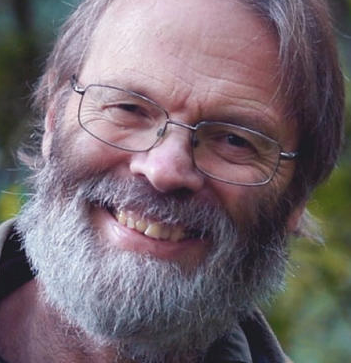 David Macdonald合作论文数Department of Biology, University of Oxford2
 Stephen A. Harris合作论文数Department of Plant Sciences, University of Oxford2Ian Prestt合作论文数2Penny Cresswell合作论文数2Jwh Conroy合作论文数2
 Guillermo R. Barreto合作论文数Wildlife Management and Conservation Laboratory;Department of Organisms Biology;Department of Organisms Biology, Wildlife Management and Conservation Laboratory2Ch Walker合作论文数1PA RACEY合作论文数1Philip J. Bacon合作论文数1FREDA MARSHALL合作论文数1J. F. Dallas合作论文数1PRF CHANIN合作论文数1
 H. Kruuk合作论文数1N.W. Moore合作论文数1P. A. Morris合作论文数1
 Thomas H. Kunz合作论文数Department of Biology,Boston University1
 John Lynch合作论文数1
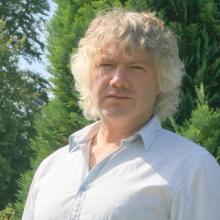 David N. Carss合作论文数UK Centre for Ecology & Hydrology1G. L. Woodroffe合作论文数1P. Wayre合作论文数1R.G.H. Bunce合作论文数1H.R. Arnold合作论文数1
 Chris H C Lyal合作论文数Dept Entomol, Nat Hist Museum1Chris L Cheeseman合作论文数1Thomas J Hayden合作论文数1L. J. Antheunisse合作论文数1Rosie Green合作论文数1N. P. Van Den Hoven合作论文数1
 Will Cresswell合作论文数School of Biology, University of St Andrews1J. O. Bull合作论文数1
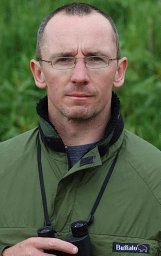 Stuart Piertney合作论文数School of Biological Sciences;University of Aberdeen;School of Biological Sciences, University of Aberdeen1Andrew C. Kitchener合作论文数Department of Wildlife and National Parks, Peninsular Malaysia1




