We initiate a study of centrally extended (anomalous) symmetries in Kähler geometry, focusing on the simplest, and most ubiquitous, Abelian case. In particular, we provide a local description of the geometry admitting such isometries. A long-standing no-go theorem asserts that there is an obstruction to gauging such symmetries in the purely Kähler framework. Utilizing the language of sypersymmetry, we then show that these symmetries may be gauged within the setup of generalized Kähler geometry. Our results may be applied to quotients, T-dualities, etc.
We present a holomorphic quantization scheme for free point particles on two-dimensional constant curvature Riemannian backgrounds. The procedure is based on a Lagrangian embedding of the particle configuration space into a product of coadjoint orbits of the background isometry group. Examples are provided by particles on the plane, torus, sphere, and hyperbolic plane, with or without a monopole field. We elaborate the method by recovering the Hamiltonian spectrum and the wave functions on such spaces. As a by-product, we obtain a geometric and physical interpretation of Repka's result on the decomposition of tensor products of 𝐒𝐋(2,ℝ) discrete series representations.
We solve the classical and quantum problems for the 1D sigma model with target space the flag manifold U(3)U(1)^3 , equipped with the most general invariant metric. In particular, we explicitly describe all geodesics in terms of elliptic functions and demonstrate that the spectrum of the Laplace–Beltrami operator may be found by solving polynomial (Bethe) equations. The main technical tool that we use is a mapping between the sigma model and a Gaudin model, which is also shown to hold in the U(n) case.
We investigate a class of Ricci-flat Kähler metrics on generalized conifolds constructed via gauged linear sigma models (GLSMs) with indefinite signature. By introducing shadow coordinates (superfields) entering the sigma model with negative signature kinetic term, we show that these GLSMs yield explicit Ricci-flat metrics on complex cones over products of projective spaces. We provide a general formula for the resulting Kähler potentials, along with detailed examples. Our results suggest new directions for the study of Calabi-Yau metrics and toric geometry, and raise interesting questions about the geometric meaning of indefinite signature models. We also give an interpretation in terms of a novel generalized Kähler gauging.
We revisit the classical aspects of 𝒩=(2,2) supersymmetric sigma models with Hermitian symmetric target spaces, using the so-called Gross–Neveu (“first-order GLSM”) formalism. We reformulate these models for complex Grassmannians in terms of simple supersymmetric Lagrangians with polynomial interactions. For maximal isotropic Grassmannians we propose two types of equivalent Lagrangians, which make either supersymmetry or the geometry of target space manifest. These reformulations can be seen as current–current deformations of curved βγ systems. The ^1 supersymmetric sigma model is our prototypical example.
We consider quantum mechanical systems of spin chain type, with finite-dimensional Hilbert spaces and 𝒩=2 or 𝒩=4 supersymmetry, described in 𝒩=2 superspace in terms of nonlinear chiral multiplets. We prove that they are natural truncations of 1D sigma models, whose target spaces are (n) (co)adjoint orbits. As a first application, we compute the Witten indices of these finite-dimensional models showing that they reproduce the Dolbeault and de Rham indices of the target space. The problem of finding the exact spectra of generalized Laplace operators on such orbits is shown to be equivalent to the diagonalization of spin chain Hamiltonians.
We study the situation when the T-dual of a toric Kähler geometry is a generalized Kähler geometry involving semi-chiral fields. We explain that this situation is generic for polycylinders, tori and related geometries. Gauging multiple isometries in this case requires the introduction of semi-chiral gauge fields on top of the standard ones. We then apply this technology to the generalized Kähler geometry of the η-deformed ℂℙ^n-1 model, relating it to the Kähler geometry of its T-dual.
We show that sigma models with orthogonal and symplectic Grassmannian target spaces admit chiral Gross-Neveu model formulations, thus extending earlier results on unitary Grassmannians. As a first application, we calculate the one-loop $\beta$-functions in this formalism, showing that they are proportional to the dual Coxeter numbers of the respective symmetry algebras.
In the present paper we consider two related problems, i.e. the description of geodesics and the calculation of the spectrum of the Laplace-Beltrami operator on a flag manifold. We show that there exists a family of invariant metrics such that both problems can be solved simply and explicitly. In order to determine the spectrum of the Laplace-Beltrami operator, we construct natural, finite-dimensional approximations (of spin chain type) to the Hilbert space of functions on a flag manifold.
We prove that the supersymmetric deformed CP1 sigma model (the generalization of the Fateev-Onofri-Zamolodchikov model) admits an equivalent description as a generalized Gross-Neveu model. This formalism is useful for the study of renormalization properties and particularly for calculation of the one- and two-loop beta-function. We show that in the UV the superdeformed model flows to the superThirring CFT, for which we also develop a superspace approach. It is then demonstrated that the super-Thirring model is equivalent to a sigma model with the cylinder R x S-1 target space by an explicit computation of the correlation functions on both sides. Apart from that, we observe that the original model has another interesting conformal limit, given by the supercigar model, which as well could be described in the Gross-Neveu approach.
We find the spectra and eigenfunctions of both ordinary and supersymmetric quantum-mechanical models describing the motion of a charged particle over the $\mathbb{CP}^{n-1}$ manifold in the presence of a background monopole-like gauge field. The states form degenerate $SU(n)$ multiplets and their wave functions acquire a very simple form being expressed via homogeneous coordinates. Their relationship to multidimensional orthogonal polynomials of a special kind is discussed. By the well-known isomorphism between the twisted Dolbeault and Dirac complexes, our construction also gives the eigenfunctions and eigenvalues of the Dirac operator on complex projective spaces in a monopole background.
We summarize some (mostly geometric) facts underlying the relation between 2D integrable sigma models and generalized Gross-Neveu models, emphasizing connections to the theory of nilpotent orbits, Springer resolutions and quiver varieties. This is meant to shed light on the general setup when this correspondence holds.
We explain that the supersymmetric CPn-1 sigma model is directly related to the level-zero chiral Gross-Neveu (cGN) model. In particular, beta functions of the two theories should coincide. This is consistent with the one-loop-exactness of the CPn-1 beta function and a conjectured all-loop beta function of cGN models. We perform an explicit four-loop calculation on the cGN side and discuss the renormalization scheme dependence that arises.
We consider quantum aspects of a class of generalized Gross-Neveu models, which in special cases reduce to sigma models. We show that, in the case of gauged models, an admissible gauge is A_μ=0, which is a direct analogue of the conformal gauge in string models. Chiral anomalies are a gauge counterpart of the Weyl anomaly, and are required to vanish. Topological effects on the worldsheet lead to an integration over moduli spaces of connections on a Riemann surface. This is an initial step in studying the effects of worldsheet geometry and topology in integrable sigma models.
We elaborate the formulation of the CP n´1 sigma model with fermions as a gauged Gross-Neveu model.This approach allows to identify the super phase space of the model as a supersymplectic quotient.Potential chiral gauge anomalies are shown to receive contributions from bosons and fermions alike and are related to properties of this phase space.Along the way we demonstrate that the worldsheet supersymmetric model is a supersymplectic quotient of a model with target space supersymmetry.Possible generalizations to other quiver supervarieties are briefly discussed.
This review is dedicated to two-dimensional sigma models with flag manifold target spaces, which are generalizations of the familiar $CP^{n-1}$ and Grassmannian models. They naturally arise in the description of continuum limits of spin chains, and their phase structure is sensitive to the values of the topological angles, which are determined by the representations of spins in the chain. Gapless phases can in certain cases be explained by the presence of discrete 't Hooft anomalies in the continuum theory. We also discuss integrable flag manifold sigma models, which provide a generalization of the theory of integrable models with symmetric target spaces. These models, as well as their deformations, have an alternative equivalent formulation as bosonic Gross-Neveu models, which proves useful for demonstrating that the deformed geometries are solutions of the renormalization group (Ricci flow) equations, as well as for the analysis of anomalies and for describing potential couplings to fermions.
We elaborate the formulation of the CPn-1 sigma model with fermions as a gauged Gross-Neveu model. This approach allows to identify the super phase space of the model as a supersymplectic quotient. Potential chiral gauge anomalies are shown to receive contributions from bosons and fermions alike and are related to properties of this phase space. Along the way we demonstrate that the worldsheet supersymmetric model is a supersymplectic quotient of a model with target space supersymmetry. Possible generalizations to other quiver supervarieties are briefly discussed.
We show that flag manifold σ -models (including ℂℙ^n-1 , Grassmannian models as special cases) and their deformed versions may be cast in the form of gauged bosonic Thirring/Gross-Neveu-type systems. Quantum mechanically the gauging is violated by chiral anomalies, which may be cancelled by adding fermions. We conjecture that such models are integrable and check on some examples that the trigonometrically deformed geometries satisfy the generalized Ricci flow equations.
It is shown that the Pohlmeyer map of a $$\sigma $$ -model with a toric two-dimensional target space naturally leads to the ‘sausage’ metric. We then elaborate the trigonometric deformation of the $$\mathbb {CP}^{n-1}$$ -model, proving that its T-dual metric is Kähler and solves the Ricci flow equation. Finally, we discuss a relation between flag manifold $$\sigma $$ -models and Toda field theories.
We construct explicit complete Ricci-flat metrics on the total spaces of certain vector bundles over flag manifolds of the group SU(n), for all Kahler classes. These metrics are natural generalizations of the metrics of Candelas-de la Ossa on the conifold, Pando Zayas-Tseytlin on the canonical bundle over CP1xCP1 as well as the metrics on canonical bundles over flag manifolds, recently constructed by van Coevering.
 Andrei A. Slavnov合作论文数4Viacheslav Krivorol合作论文数3
 Gleb Arutyunov合作论文数II. Institut für Theoretische Physik, Faculty of Mathematics, Informatics and Natural Sciences, Universität Hamburg3
 Luis Fernando Alday合作论文数Mathematical Institute, University of Oxford3Andrew Kuzovchikov合作论文数2R. N. Baranov合作论文数2Андрей Алексеевич Славнов合作论文数1d v bykov合作论文数1
 Anton Pribytok合作论文数1Ismail Achmed-Zade合作论文数1Sergei Yur'evich Dobrokhotov合作论文数1
 Kyle Wamer合作论文数Department of Physics and Astronomy and Stewart Blusson Quantum Matter Institute, University of British Columbia1Paul Zinn-Justin合作论文数School of Mathematics and Statistics, Faculty of Science, The University of Melbourne1
 Sergey Frolov合作论文数School of Mathematics, Trinity College Dublin, The University of Dublin1Victor Antonovich Sadovnichii合作论文数1A. A. Logunov合作论文数1
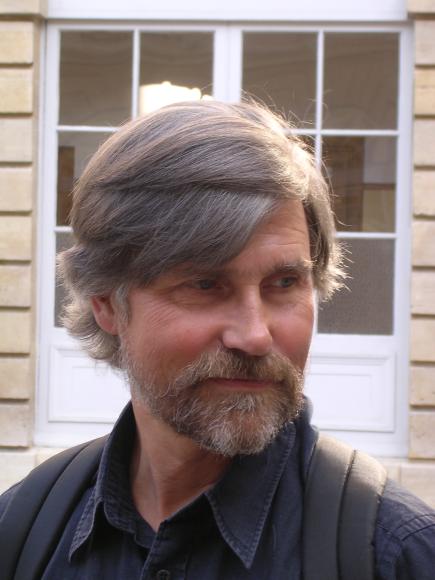 Ulf Lindström合作论文数Department of Physics and Astronomy, Theoretical Physics, Uppsala Universitet1Rikard Von Unge合作论文数Institute for Theoretical Physics;Masaryk University1Konstantin Zarembo合作论文数Niels Bohr Institute, Copenhagen University/KTH Royal Institute of Technology and Stockholm University1Yurii S Osipov合作论文数1
 Andrei Smilga合作论文数Département Mathématiques, Universite de Nantes/Département de Physique, Universite de Nantes1
 Mikhail Karasev合作论文数Department of Applied Mathematics, Moscow Institute of Electronics and Mathematics1
 Ian Affleck合作论文数Department of Physics & Astronomy, University of British Columbia;Quantum Matter Institute, University of British Columbia1
 Martin Rocek合作论文数C.N. Yang Institute for Theoretical Physics, Stony Brook University1




