In this paper, we study the Gauss map of a holomorphic codimension one foliation on the projective space $\mathbb{P}^n$, $n\ge 2$, mainly the case $n=3$. Among other things, we will investigate the case where the Gauss map is birational.
We study the exceptional component of the space 𝔽(2,ℙ^3), of codimension-one foliations of degree two on ℙ^3. We describe the geometry of its boundary and prove that it has four irreducible components, all of dimension 12. Three of these components contain a dense subset given by the orbit of a logarithmic foliation of type (1,1,2), while the fourth contains a family of pull-back type foliations from ℙ^2 whose orbits have dimension 11.
We study the $p$-tuples of holomorphic vector fields $(X_1,X_2,\ldots,X_p)$ satisfying the barycentric property $\displaystyle\sum_k\exp tX_k=p\cdot\mathrm{id}$, where $\exp tX$ denotes the flow of $X$.
We establish some algebraic properties of the group $\mathrm{Diff}(\mathbb{C}^n,0)$ of germs of analytic diffeomorphisms of $\mathbb{C}^n$, and its formal completion $\widehat{\mathrm{Diff}}(\mathbb{C}^n,0)$. For instance we describe the commutator of $\mathrm{Diff}(\mathbb{C}^n,0)$, but also prove that any finitely generated subgroup of $\mathrm{Diff}(\mathbb{C}^n,0)$ is residually finite; we thus obtain some constraints of groups that embed into $\mathrm{Diff}(\mathbb{C}^n,0)$. We show that $\widehat{\mathrm{Diff}}(\mathbb{C}^n,0)$ is an Hopfian group, and that $\mathrm{Diff}(\mathbb{C}^n,0)$ and $\widehat{\mathrm{Diff}}(\mathbb{C}^n,0)$ are not co-Hopfian. We end by the description of the automorphisms groups of $\widehat{\mathrm{Diff}}(\mathbb{C},0)$, and $\mathrm{Diff}(\mathbb{C},0)$.
Given a holomorphic singular foliation F of (C-n, 0), we define Iso(F) as the group of germs of biholomorphisms on (C-n, 0) preserving F: Iso(F)={Phi is an element of Diff(C-n, 0) vertical bar Phi*(F)=F}. The normal subgroup of Iso(F), of biholomorphisms sending each leaf of F into itself, will be denoted as Fix(F). The corresponding groups of formal biholomorphisms will be denoted as ( Iso) over cap (F) and (Fix) over cap (F), respectively. The purpose of this paper will be to study the quotients Iso(F)/Fix(F) and (Iso) over cap (T)/(Fix) over cap (F), mainly in the case of codimension one foliation.
In this work we classify foliations on ℂℙ^3 of codimension 1 and degree 2 that have a line as singular set. To achieve this, we do a complete description of the components. We prove that the boundary of the exceptional component has only 3 foliations up to change of coordinates, and this boundary is contained in a logarithmic component. Finally we construct examples of foliations on ℂℙ^3 of codimension 1 and degree s ≥ 3 that have a line as singular set and such that they form a family with a rational first integral of degree s+1 or they are logarithmic foliations where some of them have a minimal rational first integral of degree not bounded.
We prove that any holomorphic codimension 1 foliation on the complex projective plane has at most one singularity up to the action of an ad-hoc birational map. Consequently, any algebraic foliation on the affine plane has no singularities up to the action of a suitable birational self map of the complex projective plane into itself.
We study analytic deformations of holomorphic differential 1-forms. The initial 1-form is exact homogeneous and the deformation is by polynomial integrable 1-forms. We investigate under which conditions the elements of the deformation are still exact or, more generally, exhibit a first integral. Our results are related to natural extensions of classical results of Ilyashenko on limit cycles of perturbations of hamiltonian systems in two complex variables.
The purpose of this paper is to study singular holomorphic foliations of arbitrary codimension defined by logarithmic forms on projective spaces.
We construct embeddings of surface groups into the group of germs of analytic diffeomorphisms in one variable.
This paper is devoted to the study of codimension two holomorphic foliations and distributions. We prove the stability of complete intersection of codimension two distributions and foliations in the local case. Converserly we show the existence of codimension two foliations which are not contained in any codimension one foliation. We study problems related to the singular locus and we classify homogeneous foliations of small degree.
A classical theorem due to Borel asserts that any formal series with real coefficients is the Taylor expansion of a germ of a C-infinity - function. We study such a problem in the context of Lie algebras of vector fields or of groups of diffeomorphisms.
We study analytic integrable deformations of the germ of a holomorphic foliation given by $df=0$ at the origin $0 \in \mathbb C^n, n \geq 3$. We consider the case where $f$ is a germ of an irreducible and reduced holomorphic function. Our central hypotheses is that, {\em outside of a dimension $\leq n-3$ analytic subset $Y\subset X$, the analytic hypersurface $X_f : (f=0)$ has only normal crossings singularities}. We then prove that, as germs, such deformations also exhibit a holomorphic first integral, depending analytically on the parameter of the deformation. This applies to the study of integrable germs writing as $\omega = df + f \eta$ where $f$ is quasi-homogeneous. Under the same hypotheses for $X_f : (f=0)$ we prove that $\omega$ also admits a holomorphic first integral. Finally, we conclude that an integrable germ $\omega = adf + f \eta$ admits a holomorphic first integral provided that: (i) $X_f: (f=0)$ is irreducible with an isolated singularity at the origin $0 \in \mathbb C^n, n \geq 3$; \, (ii) the algebraic multiplicities of $\omega$ and $f$ at the origin satisfy $\nu(\omega) = \nu (df)$. In the case of an isolated singularity for $(f=0)$ the writing $\omega = adf + f \eta$ is always assured so that we conclude the existence of a holomorphic first integral. Some questions related to Relative Cohomology are naturally considered and not all of them answered.
We study the group of polynomial automorphisms of $\mathbb{C}^3$ (resp. birational self-maps of $\mathbb{P}^3_\mathbb{C}$) that preserve the contact structure.
Un théorème classique de Borel affirme que chaque série formelle à coefficients réels est le jet Taylorien d'un germe de fonction C ∞ .Nous étudions ce type de problème en particulier pour des algèbres de Lie de champs de vecteurs ou des groupes de difféomorphismes.
A classical theorem due to Borel asserts that any formal serie with real coefficients is the Taylor expansion of a germ of 𝒞^∞- function. We study such a problem in the context of Lie algebras of vector fields or of groups of diffeomorphisms.
We describe the singularities of dicritical holomorphic foliations of small multiplicity in dimension 3. In particular we connect the existence of non trivial deformations and deployments to problems of Liouvillian integrability.
Nous décrivons les singularités de feuilletages holomorphes dicritiques de petite multiplicité en dimension 3. En particulier nous relions l'existence de déformations et de déploiements non triviaux à des problèmes d'intégrabilité liouvillienne. We describe the singularities of dicritical holomorphic foliations of small multiplicity in dimension 3. In particular we connect the existence of non trivial deformations and deployments to problems of liouvillian integrability.
 Julie Déserti合作论文数20A. Lins Neto合作论文数12D. Garba Belko合作论文数10
 Alcides Lins Neto合作论文数8R. Meziani合作论文数8
 Bruno Scardua合作论文数4
 Michel Berthier合作论文数4F. Cano合作论文数3Robert Moussu合作论文数3
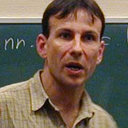 Frank Loray合作论文数IRMAR3Paulo Sad合作论文数Instituto de Matemática Pura e Aplicada, Estrada Dona Castorina3Marianna Ravara-Vago合作论文数2Serge Cantat合作论文数2
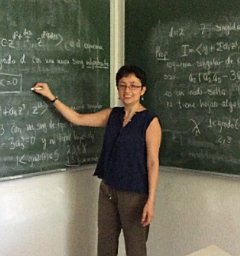 Claudia R. Alcántara合作论文数Facultad de Matemáticas Callejón Jalisco s/n, Universidad de Guanajuato2
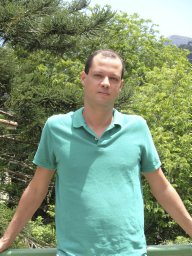 Jorge Vitorio Pereira合作论文数Instituto de Matematica Pura e Aplicada2Jorge Mozo-Fernández合作论文数2
 Xavier Caruso合作论文数1
 Marc Yor (马克·约尔)合作论文数Universite Paris VI1
 Juan Souto合作论文数1
 Nicole El Karoui合作论文数Ecole Polytechnique1Vincent Guirardel合作论文数1Fabien Morel合作论文数1
 Laurent Lafforgue合作论文数Institut des Hautes Études Scientifiques, Université Paris-Saclay1Sebastien Gouezel合作论文数1Bernard Teissier合作论文数1Albert Raugi合作论文数1Jean-François Mattei合作论文数1Frédéric Touzet合作论文数1J. P. Conze合作论文数1




