Deep multi-view clustering (MVC) has gained widespread attention as it can effectively mine consistent information from multiple views and improve clustering performance. However, view bias often exists between views (i.e., the quality differences between views). Treating all views equally inevitably destroys structural information when simply concatenating or summing the embedded representation of multiple views. To alleviate this issue, we propose a deep multi-view clustering with intra-view similarity and cross-view correlation learning (MISCC), facilitating the intra-view discriminability and inter-view complementarity. Specifically, we utilize the intra-view inherent structure information to dynamically identify semantically similar samples within each view. By aggregating their embedding representations, fine-grained structures are enhanced to boost intra-cluster compactness and inter-cluster separation. Then, we construct a cross-view correlation learning module to align semantically related views while preserving the distinctive features of irrelevant views. Based on them, a centralized clustering alignment strategy is proposed to align the similarity distribution and clustering structure between each view and the unified view, balancing the diverse information among multiple views. By jointly training these modules, the unified representation is optimized to capture more discriminative information from multiple views. Extensive experiments conducted on eleven multi-view datasets demonstrate that MISCC outperforms the state-of-the-art clustering methods.
Deep multi-view clustering has demonstrated remarkable efficacy by leveraging the powerful feature extraction capabilities of autoencoders. However, existing autoencoder-based methods typically rely solely on final-layer embeddings of the encoder for downstream tasks, ignoring rich hierarchical information embedded in intermediate layers. To address this, we propose a novel Hierarchical-Aware Multi-view Clustering (HAMVC) framework that integrates complementarity across layers to promote intra-cluster compactness and inter-cluster separability. Specifically, we design a cross-layer affinity propagation module that implements a shallow-to-deep refinement strategy. By leveraging a multi-step diffusion mechanism, this module progressively integrates fine-grained structural patterns from shallow layers into semantic-rich deep features, establishing a robust progressive refinement path. Furthermore, to regulate interactions among heterogeneous views, we introduce a manifold-invariant diversity learning module. This module enforces a decentralized alignment strategy to capture the shared intrinsic manifold across views, while simultaneously imposing a diversity constraint to preserve view-specific complementary information and prevent representation collapse. Extensive experiments on several real-world datasets demonstrate that HAMVC achieves substantial improvements over state-of-the-art methods.
The real-world data is relatively complex, generally formed by the interaction of different latent factors. Disentanglement of these latent factors can effectively improve the robustness and interpretability of sample representation. However, most existing disentangled multi-view clustering methods focus on the irrelevance of disentangled representations, ignoring the semantic relevance invariance between different latent factors. To address this issue, we propose a disentangled contrastive multi-view clustering via semantic relevance invariance (DMVCS) to learn the disentangled representations and maintain their semantic relevance. Specifically, we first decompose each view into consistent and specific representations by maximizing semantic consistency and minimizing the correlation between multiple views. Meanwhile, to ensure that different disentangled representations have similar semantic relevance, a cross-component semantic relevance alignment module is proposed. Combined with the hierarchical sampling strategy, the learned semantic relevances are aligned progressively in a locally structure-aware manner. Besides, to learn a clustering-friendly unified representation, we propose a multi-hop neighbor contrastive learning to extend the range of positive samples. Comprehensive experiments on ten public multi-view datasets demonstrate that DMVCS outperforms the state-of-the-art clustering methods.
Tensor-based multi-view clustering is a popular approach. It can enhance representation learning by exploring higher-order correlations among views. However, two key issues remain unsolved. First, minimizing the tensor rank is a complex multi-objective optimization problem, so finding a suitable optimization strategy is an open problem. Moreover, most tensor methods require two phases to obtain the consensus matrix, which usually leads to suboptimal performance. To address these issues, we propose a Tensorial Multi-view Clustering via Alternative Rank Minimization and Inter-view Alignment (ARIA), in which multiple low-rank matrices and the consistent matrix are jointly optimized in a unified framework. Specifically, we stack the representations obtained from different views into a higher-order tensor. Then, a non-convex alternative rank-minimizing regularization is introduced to achieve a tighter approximation of the rank function. Besides, we impose intra-view alignment constraints to establish a connection between inter-view and intra-view. Unlike the previous method, it is a one-step strategy to obtain the consensus representation. Notably, our approach requires only linear complexity, and thus it can be successfully applied in large-scale clustering tasks. Extensive experiments validate the effectiveness and scalability of the proposed method.
Deep Multi-View Clustering (MVC) aims to extract a unified semantic consensus from diverse data sources without supervision. However, current approaches relying on flat Euclidean embeddings often fail to model data uncertainty, resulting in rigid alignment where high-quality views are forced to drift toward corrupted ones. To address these challenges, we propose the Hyperbolic Asymmetric Multi-view Clustering (HAMC) framework. By embedding features into the Poincaré ball model, HAMC leverages the exponential volume growth of hyperbolic geometry to optimize cluster separability. It pushes high-confidence representations toward the boundary while retaining noisy ones near the origin. To mitigate noise, we introduce an asymmetric view alignment mechanism, enabling reliable views to unidirectionally guide unreliable ones. Furthermore, a consensus-aware cluster learning strategy is designed to construct robust global pseudo-labels via a confidence-based screening scheme, refining the cluster structure. Extensive experiments against 13 baselines demonstrate that HAMC achieves state-of-the-art performance.
While anchor-based methods are widely acclaimed for their efficiency and effectiveness in capturing intrinsic data structures, they inevitably suffer from anchor misalignment in unsupervised multi-view scenarios. However, existing methods tend to ignore this problem, and models often use mismatched anchors for representation learning, which leads to representation confusion and thus weakens the quality of the representation. To address this problem, we propose a novel Augmented Tensorized consensus learning model for Multi-view Clustering with Anchor-aligned (ATMCA), which aims to resolve the representation confusion caused by anchor mismatch. Specifically, we introduce a reordering alignment mechanism to reduce the impact of representation confusion. This mechanism seamlessly integrates anchor learning and matching into a united optimization process, adaptively learning the optimal cross-view correspondences. Furthermore, we propose an augmented Tensorized Consensus Learning strategy. Unlike simply stacking representations to construct tensors, ATMCA constructs higher-order tensors by fusing aligned view-specific representations with a learned shared representation. This strategy effectively mitigates the impact of representation confusion caused by misaligned anchors on subsequent low-rank approximation. By decomposing this tensor within our unified framework, ATMCA can efficiently capture higher-order correlations across views, resulting in high-quality representations. Extensive experiments validate the effectiveness and efficiency of ATMCA, demonstrating its ability to outperform state-of-the-art methods. Codes and datasets are available at https://github.com/zskong/ATMCA.
Incremental Multi-view Clustering (IMvC) has received increasing attention due to its ability to handle dynamically arriving views. However, most existing IMvC methods enforce a unified representation to facilitate cross-view knowledge transfer, which inevitably suppresses view-specific characteristics. To overcome this, we propose a novel Anchor-based Disentanglement Framework for Incremental Multi-view Clustering (ADIMC), which introduces disentanglement representation learning to enable conflict-free knowledge transfer under view-incremental scenarios. Specifically, for each newly arrived view, an anchor graph is first learned to extract the latent semantic information. Subsequently, the anchor graph is decomposed into view-consistent and view-specific components to explicitly disentangle the shared semantics and private information of each view. Based on these, knowledge transfer is restricted to the view-consistent components to maintain cross-view coherence, while the view-specific components are preserved to retain the uniqueness of each view. Combined with an efficient iterative optimization algorithm, ADIMC ensures stable and efficient model updating with limited computing resources. Extensive experiments on multiple benchmark datasets validate the superiority and effectiveness of ADIMC over state-of-the-art methods.
Anchor-based multi-view clustering has emerged as a promising paradigm for analyzing large-scale datasets, offering significant improvements in computational and space efficiency compared to traditional multi-view clustering methods. However, existing anchor learning strategies are often difficult to adapt to the heterogeneity among different views, which leads to inadequate expression of anchors and affects the clustering performance. To address this issue, we propose a novel Local Geometry-Enhanced Anchor Learning for Multi-View Clustering (LGEAC) model. Specifically, the coarse-grained anchor learning mechanism maps the view anchors to the consensus space through a transformation matrix to avoid the forced sharing of single anchors, thus enhancing the effectiveness and expressiveness of the framework. In addition, we introduce Laplace Regularization to effectively model fine-grained geometric structures, enabling the capture of local geometric patterns within the samples. Furthermore, a novel regularization strategy is proposed to pursue a more discriminative representation. By integrating these innovations, LGEAC ensures a seamless unification of anchor generation and representation learning, improving the discrimination and quality of the learned representation. Extensive experimental results demonstrate the superior performance and effectiveness of the proposed method on multiple evaluation metrics.
Recently, 3D object detection algorithms based on radar and camera fusion have shown excellent performance, setting the stage for their application in autonomous driving perception tasks. Existing methods have focused on dealing with feature misalignment caused by the domain gap between radar and camera. However, existing methods either neglect inter-modal features interaction during alignment or fail to effectively align features at the same spatial location across modalities. To alleviate the above problems, we propose a new alignment model called Radar Camera Alignment (RCAlign). Specifically, we design a Dual-Route Alignment (DRA) module based on contrastive learning to align and fuse the features between radar and camera. Moreover, considering the sparsity of radar BEV features, a Radar Feature Enhancement (RFE) module is proposed to improve the densification of radar BEV features with the knowledge distillation loss. Experiments show RCAlign achieves a new state-of-the-art on the public nuScenes benchmark in radar camera fusion for 3D Object Detection. Furthermore, the RCAlign achieves a significant performance gain (4.3% NDS and 8.4% mAP) in real-time 3D detection compared to the latest state-of-the-art method (RCBEVDet).
In the field of multi-view multi-label learning, the challenges of incomplete views and missing labels are prevalent due to the complexity of manual labeling and data acquisition errors. These challenges significantly reduce the quality of latent representations and hinder prediction by multi-label classification. To address this issue, we propose a novel Category-driven Semi-supervised Contrastive Recovery (CSCR) framework in this study. Our framework aims to fully integrate existing label information into incomplete representation learning and classification. Specifically, to address the limitations posed by incomplete views and labels, we construct a label coincidence matrix based on existing labels, which serves as a similarity matrix in subsequent semi-supervised contrastive learning and multi-view classification. By leveraging this matrix, we design a semi-supervised multi-view contrastive learning module, which constructs sample pairs on the basis of inter-view correspondences and label similarity. It learns discriminative latent representations without the need for data augmentation. A weighted multi-label classification module is subsequently employed to integrate the predictions from each view to obtain the final classification result. Experimental evaluations on five challenging datasets demonstrate the superiority of our model over existing state-of-the-art methods.
Incremental multi-view clustering aims to achieve stable clustering results while addressing the stability-plasticity dilemma (SPD) in view-incremental scenarios. The core challenge is that the model must have enough plasticity to quickly adapt to new data, while maintaining sufficient stability to consolidate long-term knowledge. To address this challenge, we propose a novel Evolutionary Memory-Enhanced Incremental Multi-View Clustering (EMIMC), inspired by the memory regulation mechanisms of the human brain. Specifically, we design a rapid association module to establish connections between new and historical views, thereby ensuring the plasticity required for learning new knowledge. Second, a cognitive forgetting module with a decay mechanism is introduced. By dynamically adjusting the contribution of the historical view to optimize knowledge integration. Finally, we propose a knowledge consolidation module to progressively refine short-term knowledge into stable long-term memory using temporal tensors, thereby ensuring model stability. By integrating these modules, EMIMC achieves strong knowledge retention capabilities in scenarios with growing views. Extensive experiments demonstrate that EMIMC exhibits remarkable advantages over existing state-of-the-art methods.
Anchor-based methods are popular for their low computational complexity and high efficiency. Existing solutions either construct anchors on each view and fuse them, or directly obtain a consistent view structure. However, these strategies do not fully utilize the information between views. To address this, we propose a Dual-space Co-training (DSCMC) model for Large-scale Multi-view Clustering, which learns the consistent anchor graph using a dual-space co-training strategy. Specifically, we introduce an orthogonal projection matrix in the original space enabling the learned consistent anchor graph to capture the inherent relationships in each view. Meanwhile, the feature transformation matrix maps samples to a shared latent space, facilitating information alignment and comprehensive data distribution understanding. The proposed joint optimization strategy allows us to construct a discriminative anchor graph that effectively captures the essential features of multi-view data. Extensive experiments demonstrate that our method reduces computational complexity while outperforming existing approaches in clustering performance.
Recently, object detection methods based on multi-modal fusion have gained widespread adoption in autonomous driving, proving to be valuable for detecting objects in dynamic environments. Among them, millimeter wave (mmWave) radar is commonly utilized as an effective complement to cameras, as it is almost unaffected by harsh weather conditions. However, current approaches that fuse mmWave radar and camera often overlook the correlation between the two modalities, failing to fully exploit their complementary features. To address this, we propose a temporal-enhanced radar and camera fusion network to explore the correlation between these two modalities and learn a comprehensive representation for object detection. In our model, a temporal fusion model is introduced to fuse mmWave radar features from different moments, thus mitigating the problem of mmWave radar point-object mismatch due to object movement. Moreover, a new correlation-based fusion strategy using the dedicated mask cross-attention is proposed to fuse mmWave radar and vision features more effectively. Finally, we design a gate feature pyramid network that selects shallow texture information based on deep semantic information to obtain more representative features. The experimental results on the nuScenes benchmark demonstrate the effectiveness of our proposed method.
Multi-view clustering, which aims to divide data into different categories that are unsupervised in respect to information from different views, plays an important role in the field of computer vision. Contrastive learning is widely used in deep multi-view clustering methods to learn more discriminative representations. However, most existing multi-view clustering methods based on contrastive learning use only a single positive sample and do not fully utilize the category information in the learning process. To address the above issues, we propose a novel dual contrastive multi-view clustering (DCMVC) method, which uses pseudo-labels to refine the embedded features to make them more suitable for clustering tasks. Specifically, an inter-view correlation contrastive module is designed to learn more compact clustering assignments through a shared clustering prediction layer. Then, on the basis of the clustering predictions, we propose an intra-view consistency contrastive module, which dynamically selects the samples with the same pseudo label as positive samples and sets the other samples as negative samples to construct contrastive learning. The proposed model can alleviate the constraints of a single positive sample on contrastive learning by fully considering the latent category information to regularize the representation structure. Extensive experiments conducted on nine real datasets demonstrate the superiority of the proposed method.
Most current multi-view clustering methods necessitate that a sample's features be view-aligned or at least partially aligned across different views. Regrettably, real-world applications often fail to meet this requirement due to spatial, temporal, or spatiotemporal mismatches, resulting in the view-unaligned issue. To tackle this issue, we conceptualize the view-unaligned problem and demonstrate that it can be transformed into a view-aligned problem through reordering. Building on this concept, we introduce an innovative reorder matrix that realigns view-unaligned features. Utilizing these realigned features, we develop a sophisticated and efficient approach called Reordered k-means (RKM), which merges NMF with k-means. Unlike traditional k-means, our method converts the binary challenge into an l(0) problem, confirming the merit of this advancement. Furthermore, RKM's efficacy is affirmed on benchmarks, indicating substantial enhancements in handling the view-unaligned issue and maintaining competitive results with view-aligned problems.
Multi-view clustering (MVC) has gained extensive attention for its capacity to handle heterogeneous data. However, current autoencoder-based MVC methods suffer from a limitation: embedding space exhibits severe imbalances in the efficacy of feature direction, creating a long-tailed singular value distribution where few directions dominate. To mitigate this, we introduce a novel Activate-Then-Eliminate Strategy for Multi-View Clustering (AEMVC), inspired by the observation that balanced feature directions can facilitate enhancing discrimination of learned representations. AEMVC dynamically adjusts the contributions of different feature directions through two keys: a Feature Activation Module that narrows singular value discrepancies to prevent dominant directions from controlling clustering decisions, and an Inter-view Mutual Supervision strategy that filters redundant information by adaptively determining view-specific thresholds based on cross-view consistency. By activating more feature directions and eliminating each view's adverse factors, AEMVC achieves more balanced and discriminative embedding representations. Extensive experiments on seven multiview benchmarks validate AEMVC's effectiveness, demonstrating substantial improvements over state-of-the-art methods.
Multi-view clustering aims to enhance clustering performance by leveraging information from diverse sources. However, its practical application is often hindered by a barrier: the lack of correspondences across views. This paper focuses on the understudied problem of fully incomplete multi-view clustering (FIMC), a scenario where existing methods fail due to their reliance on partial alignment. To address this problem, we introduce the Contrastive Prototype Matching Network (CPMN), a novel framework that establishes a new paradigm for cross-view alignment based on matching high-level categorical structures. Instead of aligning individual instances, CPMN performs a more robust cluster prototype alignment. CPMN first employs a correspondence-free graph contrastive learning approach, leveraging mutual $k$-nearest neighbors (MNN) to uncover intrinsic data structures and establish initial prototypes from entirely unpaired views. Building on the prototypes, we introduce a cross-view prototype graph matching stage to resolve category misalignment and forge a unified clustering structure. Finally, guided by this alignment, we devise a prototype-aware contrastive learning mechanism to promote semantic consistency, replacing the reliance on the initial MNN-based structural similarity. Extensive experiments on benchmark datasets demonstrate that our method significantly outperforms various baselines and ablation variants, validating its effectiveness.
Contrastive multi-view clustering (CMvC) has attracted increasing attention for its semantic mining capacity. However, existing CMvC methods often process pairwise views to explore consistency, inevitably ignoring the joint information and inherent redundancy among multiple views. In this paper, we propose a novel Bipartite Contrastive Multi-view Clustering with Singular Value Modulation (BCMVC) that reformulates contrastive learning as a binary classification problem. Specifically, unlike existing pairwise-view sequential processing methods, we construct a correlation learning module that simultaneously mines consistent information across multiple views. This module effectively explores joint information at both the instance level and category level, with each level equipped with a dedicated correlation learner. By leveraging the concat and random shuffle strategy to encapsulate the positive and negative sample sets, the level-specific correlation learner is effectively optimized to enhance the discrimination of samples. Meanwhile, a deep singular value weighting module is introduced to refine the learned representations through a weighted singular value reconstruction strategy, mitigating the adverse effects of noisy information. Extensive experiments on seven benchmark datasets demonstrate that our method achieves substantial advancements compared with other state-of-the-art approaches. The code is available at https://github.com/zhangt-make/BCMVC.
Multi-view representation learning, aimed at uncovering the inherent structure within multi-view data, has developed rapidly in recent years. In practice, due to temporal and spatial desynchronization, it is common that only part of the data is aligned between views, which leads to the Partial View Alignment (PVA) problem. To address the challenge of representation learning on partially view-aligned multi-view data, we propose a new cross-view graph contrastive learning network, which integrates multi-view information to align data and learn latent representations. First, view-specific autoencoders are used to construct an end-to-end multi-view representation learning framework for learning specific view representations. Furthermore, to achieve cluster-level alignment, we introduce a cross-view graph contrastive learning module to guide the learning of discriminative representations. Compared to the existing methods, the proposed cluster-level alignment method successfully extends the view alignment to more than two views. Meanwhile, the results of clustering and classification experiments on several popular multi-view datasets can also illustrate the effectiveness and superiority of the proposed method.
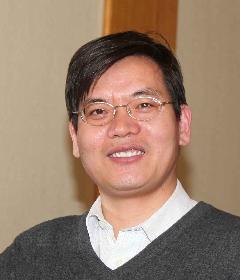 Yao Zhao (赵耀)合作论文数School of Computer and Information Technology, Beijing Jiaotong University;Institute of Information Science of Beijing Jiaotong University48
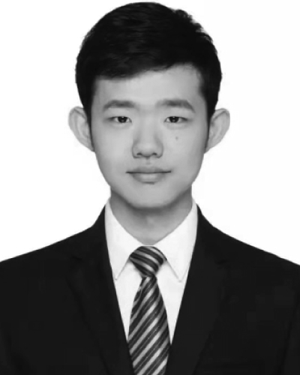 Zhiqiang Fu合作论文数Institute of Information Science, Beijing Jiaotong University, Beijing, 100044, China18
 Zhenfeng Zhu (朱振峰)合作论文数School of Computer and Information Technology, Beijing Jiaotong University6
 Changwen Zheng (郑昌文)合作论文数National Key Laboratory of Integrated Information System Technology, Institute of Software, Chinese Academy of Sciences;University of Chinese Academy of Sciences6
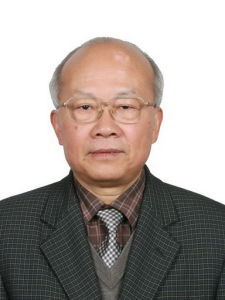 Xianda Zhang (张贤达)合作论文数Xidian University6
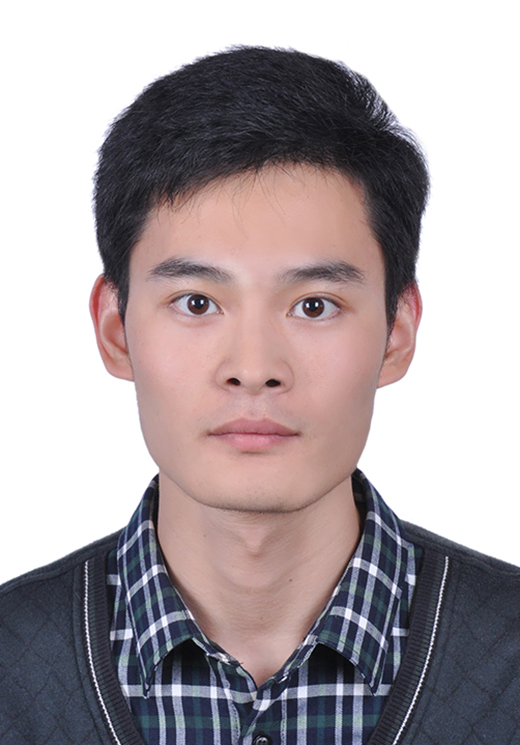 Yiming Wang (王义明)合作论文数School of Chemical Engineering, East China University of Science and Technology4
 Xingxing Zhang (张幸幸)合作论文数Qiyuan Lab4
 Da-Zheng Feng (冯大政)合作论文数School of Electronic Engineering, Xidian University4
 Zisen Kong合作论文数3
 Meiqin Liu (刘美琴)合作论文数Institute of Information Science, School of Computer and Information Technology, Beijing Jiaotong University3
 Yong Deng (邓勇)合作论文数Institute of Software,Chinese Academy of Sciences3
 Man Liu合作论文数School of Artificial Intelligence, Anhui University2
 Jiapeng Wang合作论文数2Shuang-shuang JIANG (蒋双霜)合作论文数2Liuwei Feng (冯柳伟)合作论文数2Ming-an Zhang合作论文数2
 Qun Li (李群)合作论文数School of Computer Science, Nanjing University of Posts and Telecommunications2
 Fu Xiao (肖甫)合作论文数School of Computer Science, Nanjing University of Posts and Telecommunications;Jiangsu Provincial Key Laboratory of Internet of Things Intelligent Perception and Computing, Nanjing University of Posts and Telecommunications2
 Wei Xing Zheng合作论文数School of Computing, Engineering and Mathematics, Western Sydney University2
 Huihui Bai (白慧慧)合作论文数Institute of Information Science, School of Computer and Information Technology, Beijing Jiaotong University;Beijing Key Laboratory of Advanced Information Science and Network Technology, School of Computer and Information Technology, Beijing Jiaotong University2Pengyuan Li合作论文数1Junpeng Qi (齐俊鹏)合作论文数1Xd Zhang合作论文数1Lian Liu合作论文数1
 Ji Liu (刘霁)合作论文数Meta1Zhao-Wei CHEN (陈朝威)合作论文数1TANG Jingyuan (汤静远)合作论文数1Li YUAN (袁莉)合作论文数1
 Hua Dai (戴华)合作论文数School of Computer Science, Nanjing University of Posts and Telecommunications1YanHui Xiao (肖延辉)合作论文数1Shan Lu合作论文数1
 Rongrong Ni (倪蓉蓉)合作论文数School of Computer and Information Technology, Beijing Jiaotong University1
 Jie Wen (文杰)合作论文数Institute of Animal Sciences, Chinese Academy of Agricultural Sciences1Baopeng Zhang (张宝鹏)合作论文数1
 Zhenjiang Miao (苗振江)合作论文数Center for Ethnic and Folk Literature and Art Development, Ministry of Culture and Tourism, P.R.C.;Beijing Jiaotong University1
 Guodong Guo合作论文数Department of Computer Science and Electrical Engineering, Benjamin M. Statler College of Engineering and Mineral Resources, West Virginia University;Computer Vision Laboratory, Center for Identification Technology Research, West Virginia University1Qian Guo (郭倩)合作论文数1
 Lili Wan (万丽莉)合作论文数School of Computer and Information Technology, Beijing Jiaotong University1Daoming Zhang (张道明)合作论文数1
 Lei Li (李雷)合作论文数Academy of Mathematics and Systems Science, Chinese Academy of Sciences;University of Chinese Academy of Sciences1
 Yigang Cen (岑翼刚)合作论文数Institute of Information Science, School of Computer and Information Technology, Beijing Jiaotong University1




