CDMA is the most efficient multiple access scheme since it has neither frequency limitation like FDMA nor time limitation as in TDMA. Since all the users in CDMA uses the same frequency it is highly prone to interference. Interference decreases the capacity of the system. Estimation of the amount of interference is essential in network design so the interference factor is calculated with the help of distance ratio in various cases such as the user remaining stationary, and the user moving randomly in this paper.
A hyper-star is a graph consisting of the union of some hypercubes with at least one common vertex. The graph induced by a linearly separable Boolean function is a hyper-star. We obtain some properties of hyper-stars and give a decomposition algorithm of a hyper-star. We give a determination condition for a hyper-star. The determination condition yields an algorithm of constructing all hyper-stars of n vertices in time O(n(3)).
A main problem of cognitive radio (CR) is how to optimize the spectrum sensing and power allocation parameters.In the traditional CR,spectrum sensing is only performed in the sensing phase,however,information in the decision-making and transmission phases are also useful for spectrum sensing.In this paper,a decoding information-based spectrum sensing strategy for transmission phase was proposed for CR system and the transmission power for the next phase was optimized correspondingly.In the transmission phase,after receiving the signals from the sec-ondary transmitter,decoding was performed and the secondary transmission signals were removed.Then,the state of the primary user (PU) were detected based on the remainder signals,and the transmission power were optimized correspondingly.The simulation results showed that,on the case of certain average interference power to the PU,the proposed model provided better system performance and made better use of the channel.By fully using the signals in the transmission phase,the transmission parameters of the SU can be optimized and more information for spectrum sensing can be collected,leading to higher detection accuracy of the state of PU.
Vehicle stability control system features obvious nonlinear characteristics.It is difficult for fault diagnosis of its sensor and actuator.The eight degree of freedom model of vehicle is simplified and the virtual input is established.Aiming at the virtual input model,the actuator fault is considered as part of augmented state vector,and an augmented system is constructed.The observer is designed by using Lyapunov theory;the asymptotic estimation of the state of original system and the virtual actuator fault is obtained,and the stability and convergence of the augmented observer is analyzed.Through LMI technology,the solution of inequalities of linear matrix is realized,the design of observer is completed.By adopting simple filter,a new state vector is selected as low-pass 1 st order filter;the sensor fault is transformed into actuator fault;the 2nd augmented system is constructed,then the fault estimation of sensor is implemented by directly using actuator fault estimation.The feasibility of this method is verified by Simulink.Comparing with other methods,this method can obtain the fault signals of virtual actuator and sensor simultaneously for warning the system,and provide reliable data for subsequent design of fault tolerant control.
In this paper, we present a novel approach for studying Boolean function in a graph-theoretic perspective. In particular, we first transform a Boolean function f of n variables into an induced subgraph Hf of the n -dimensional hypercube, and then, we show the properties of linearly separable Boolean functions on the basis of the analysis of the structure of Hf . We define a new class of graphs, called hyperstar, and prove that the induced subgraph Hf of any linearly separable Boolean function f is a hyperstar. The proposal of hyperstar helps us uncover a number of fundamental properties of linearly separable Boolean functions in this paper.
In order to solve the problem of engine misfire fault, a diagnosis method based on cylinder pressure identified by Fourier Transform (FT) and L-M optimized BP neural network is proposed.The BP neural network is trained by the steady state simulation data from AMESim to obtain the relationship between open value of valve and frequency, and FT is used to identify the cylinder pressure.The misfire failure can be diagnosed by comparison of the FT identified pressure with the pressure mapped from crank speed.By offsetting the phase and frequency of the identified model, the accuracy and generalization of the identified model are improved.When misfire fault occurs, high tracking ability can be obtained by re-offsetting the phase and frequency of the identified model.Two random and independent open values of the valve are used to verify the proposed method, Results show that no matter engine at high speed with light load condition or at low speed with heavy load condition, this method can precisely diagnose the signal-cylinder continuous misfire fault and multi-cylinder random misfire fault.
This balanced and comprehensive study presents the theory, methods and applications of matrix analysis in a new theoretical framework, allowing readers to understand second-order and higher-order matrix analysis in a completely new light. Alongside the core subjects in matrix analysis, such as singular value analysis, the solution of matrix equations and eigenanalysis, the author introduces new applications and perspectives that are unique to this book. The very topical subjects of gradient analysis and optimization play a central role here. Also included are subspace analysis, projection analysis and tensor analysis, subjects which are often neglected in other books. Having provided a solid foundation to the subject, the author goes on to place particular emphasis on the many applications matrix analysis has in science and engineering, making this book suitable for scientists, engineers and graduate students alike.
We investigate the joint optimization of the group power allocation and prebeamformer for joint spatial division and multiplexing (JSDM) in massive MIMO downlink systems. In contrast with the approximated block diagonalization (ABD) prebeamformer which is derived by heuristic method in the original JSDM scheme and is restricted to semi-unitary matrix, general prebeamforming matrix together with group power is optimized in the framework of per-user ergodic rate balancing. Thus, both flexibility and optimality are integrated in our work. To ease the difficulty in optimizing the exact ergodic rate, the deterministic approximation is employed. Based on the uplink-downlink duality approach, an iterative algorithm alternatively updating group power and prebeamformers is designed. It is shown that the optimization subproblems of the algorithm can be solved efficiently. Compared with the classic signal-to-noise-and-interference ratio (SINR) balancing algorithm for MISO downlink, the proposed algorithm has similar properties of both convergence and optimality. Numerical experiments are conducted to validate the effectiveness of the proposed algorithm.
In cognitive radio, restricted by the conventional concept of spectrum sensing and power allo-cation, the spectrum utilization and channel rate are both small. Conventional cognitive radio framework was analyzed. A continuous sensing information based generalized framework was proposed, where after obtaining the sensing information, the secondary user won' t make decision on the presence of the primary user but directly decide the power allocation parameters under the power constraints. Cases of continuous and multiple-level power allocation rules were modeled and treated separately. It is shown that the pro-posed framework provides the upper bound of the theoretical capacity and the conventional architectures are its special cases.
This paper studies robust interference mitigation against the imperfectness of channel knowledge involved in the interference link of a multiple-input-multiple-output (MIMO) cognitive radio (CR) system that coexists with a primary radio (PR) system via opportunistic spectrum-sharing (OSS) scheme. The robust design leads to a seemingly complicated matrix-valued problem. Nevertheless, we show that it can be equivalently converted into two convex semidefinite programs (SDPs). One of them is identified as a null-forcing approach with closed-form power allocation, and the other can be reduced to a convex scalar power allocation subproblem by properly relaxing the interference constraint. Numerical results demonstrate significant performance gain of the robust design over previous nonrobust strategies.
It is recognized that, for digital symbols taken from a discrete and finite alphabet, perfect transmultiplexing at a signaling rate larger than the Nyquist rate can be achieved by modulation with overcomplete frame pulses. By invoking the spectral distribution theory of large random matrix, the spectral efficiency of digital transmission scheme via overcomplete frames in band-limited additive white Gaussian noise (AWGN) channel with discrete, finite, and uniform alphabets is investigated in this paper. It is shown that the proposed digital signaling scheme can asymptotically achieve the maximum spectral efficiency dictated by the Shannon capacity theorem for reliable transmission without employing signal shaping techniques. The extension to the case of non-white Gaussian noise/spectrally shaped channels is also considered. It is shown that the employment of Weyl-Heisenberg frames facilitates the optimal "water-filling" power allocation and rate adaptation by adjusting the signal amplitudes and energy-dispersion factors. Some numerical results are provided to support the theoretical finding.
In this paper, a novel linear precoding scheme is proposed for downlink multiuser multiple-input multiple-output (MIMO) systems. The new algorithm uses the penalty function method to mitigate the co-channel interference and is formulated as a convex problem with general linear constraints. The constraints can be sum power, per-antenna power or per-antenna-group power constraints, hence the new algorithm is general and can be used in both single-cell and fully cooperative multi-cell scenarios. Moreover, the famous block diagonalization (BD) precoding can be considered as a special case of our method when a very large penalty factor is used. We study the optimal solution of this convex problem and propose an iterative algorithm to obtain the optimum based on the Lagrange dual method. Simulation results show that the proposed method significantly outperforms the BD method at low and moderate SNR values in terms of the weighted sum rate.
In this paper, we study the robust relay beamformer design problem in the relay-eavesdropper network with imperfect knowledge of the eavesdropper's channel. In this network, the half-duplexing relay is equipped with multiple antennas and employs the amplify-and-forward (AF) relaying protocol. Assuming static legitimate links, we consider the relay beamforming problem under two models for the eavesdropper's channel: 1) the Rician fading channel model, where only statistical information of the eavesdropper's channel is known by the legitimate nodes; and 2) the deterministic uncertainty model, where the uncertainty region of the eavesdropper's channel vector is modeled as a sphere. As for the optimization criteria, we use an approximation of the ergodic secrecy rate under the Rician fading model and the worst-case secrecy rate under the deterministic uncertainty model. Under both models, the optimal rank-1, match-and-forward (MF), and zero-forcing (ZF) beamformers are developed, and the equivalence of the optimal rank-1 beamformer and the optimal MF beamformer is also established. Under the Rician fading model, it is shown that the optimal ZF beamformer may have a rank greater than 1 and, therefore, could outperform the optimal MF beamformer, whereas under the deterministic uncertainty model, the optimal ZF beamformer must be rank-1. Numerical results are presented to verify the effectiveness of the proposed relay beamformers.
In this letter, we consider a more practical scenario when the primary user (PU) transmits with multiple levels of power in a cognitive radio (CR) network. The optimal spectrum sensing algorithm at the secondary user (SU) that could discriminate the PU's' transmitting power is proposed and the related performance is analyzed. We also designed a new SU transmission strategy where one transmit power is found for each estimation of the PU's power. The strategy is further optimized according to the SU's achievable rate. In the end, we validate our study by various simulations.
We propose continuous power allocation strategies for secondary users (SUs) based on sensing the primary user (PU) channels in a multiband cognitive radio (CR) network. Unlike the conventional sensing-based spectrum sharing, where there are two transmit power levels corresponding to whether the PU is sensed present or not, in the proposed strategy, the power levels are continuous functions of the sensing statistics, and optimized with respect to the achievable rate of the SU. The continuous power allocation function is parameterized by some channel parameters of the PU and SU, and we treat the cases of perfect and quantized channel state information (CSI) separately, where the former provides an upper bound on the achievable rate with full channel information; and the latter constitutes an efficient practical power allocation method for the SU with statistic/partial channel information. The power control process consists of two phases: in the first phase, the SU listens to the multiple bands licensed to the PU and obtains the sensing statistics, e. g., the received signal energies on these bands; in the second phase, the SU adjusts its transmit power levels on these bands based on the sensing results. Optimal power allocation schemes are derived to maximize the achievable rate at the SU under several possible combinations of the peak/average transmit power constraints at the SU and the peak/average interference power constraints at the PU. Simulation results demonstrate that the proposed strategies can significantly improve the achievable throughput of the SU compared to the conventional methods.
As a promising solution to the spectrum scarcity problem, cognitive radio (CR) has received much attention recently, The key component of CR is the spectrum sensing technique that can detect the idling spectrum of the authorized user. Currently, the accuracy of spectrum sensing remains a significant constraint that limits the practical application of CR. In this paper, we propose an enhanced spectrum sensing scheme based on decoding feedback strategy, where the secondary receiver decodes the desired signal and utilizes the remaining part for spectrum sensing. Specifically, we embed this concept into the underlay scheme with no silent slot in order to improve the throughput of the secondary user. The corresponding sensing performance is analyzed, based on which we formulate the optimization problems and derive the optimal transmission parameters. Simulation results show that, the proposed scheme can significantly improve the achievable throughput of the secondary system comparing to the traditional underlay scheme.
 Xiaolong Zhu合作论文数Huawei Shanghai Research Institute, Shanghai, China24
 Xi-Lin Li (黎希林)合作论文数15
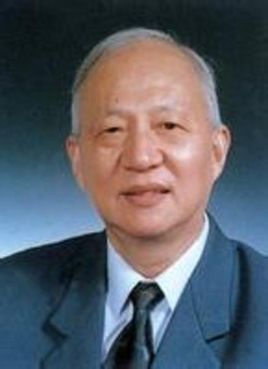 Zheng Bao (保铮)合作论文数School of Electronic Engineering, Xidian University14
 Qiubin Gao合作论文数14
 Zhong Chen合作论文数13
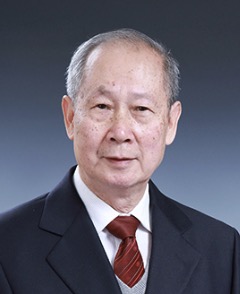 Yanda Li (李衍达)合作论文数Department of Automation, Tsinghua University13
 Li Zhang (张利)合作论文数Department of Electronic Engineering, Tsinghua University12
 Ying-Chang Liang (梁应敞)合作论文数National Key Laboratory of Wireless Communications, University of Electronic Science and Technology of China;The University of Sydney10Yongtao Su (苏泳涛)合作论文数10
 Feifei Gao (高飞飞)合作论文数Department of Automation, Tsinghua University10
 Fangming Han合作论文数10
 Kun Wang (王堃)合作论文数Department of Electrical and Computer Engineering, University of California, Los Angeles9
 Da-Zheng Feng (冯大政)合作论文数School of Electronic Engineering, Xidian University9
 Shuntian Lou (楼顺天)合作论文数School of Electronic Engineering, Xidian University9
 Ding Jianjiang合作论文数8
 Jimin Ye (冶继民)合作论文数School of Mathematics and Statistics, Xidian University8Heng Yang (杨恒)合作论文数8
 Zizhe Ding合作论文数8Wenjun ZENG合作论文数7
 Yafeng Hu合作论文数7Deguang Xie (谢德光)合作论文数7
 Tianxiang Luan合作论文数7Yu Shi合作论文数6
 Feng Zhu合作论文数Department of Physics, Heriot-Watt University6
 Ming Lei合作论文数NEC Lab, Beijing 100084, Peoples R China6Xiaobo Zhou (周晓波)合作论文数6Wu Lu (卢鹉)合作论文数6Peisheng Li合作论文数6Ying Jia合作论文数* Resource Centers6
 Dongxia Chang (常冬霞)合作论文数School of Computer and Information Technology, Beijing Jiaotong University6
 Xi-Kai Zhao合作论文数5
 Hongxing Zou (邹红星)合作论文数Department of Automation, Tsinghua University5Daoming Zhang (张道明)合作论文数5
 James C. F. Li合作论文数5Zhou Lei合作论文数4ZHOULei (周雷)合作论文数4LI Xiao-jun (李小军)合作论文数4
 Tao Cui (崔涛)合作论文数School of Information Science and Technology, Tsinghua University4
 Xiaodong Wang合作论文数Department of Electrical Engineering, Columbia University4Ling Zhang (张玲)合作论文数Department of Automation, College of Engineering, Ocean University of China4
 Xiyuan Wang (王熙元)合作论文数College of Fashion and Design, Donghua University4
 Changwen Zheng (郑昌文)合作论文数National Key Laboratory of Integrated Information System Technology, Institute of Software, Chinese Academy of Sciences;University of Chinese Academy of Sciences4
 Ming-Hao He合作论文数4
 B. Chen合作论文数3
 Tracey Ho合作论文数Second Spectrum, Inc.3
 Jian Li (李建)合作论文数Institute for Interdisciplinary Information Sciences, Tsinghua University3Zhengya He合作论文数2Yang Lanjuan合作论文数2Haihong Jin合作论文数2




