Large language models (LLMs) are increasingly used to make sense of unstructured data, but their use in contexts like conversation analysis, where sensemaking is often human-driven, iterative, and subjective, is underexplored. We introduce Forage, a retrieval-augmented generation (RAG) tool for making sense of conversation data through exploratory search. We report on user studies with 27 participants across four user groups—including NPR journalists and municipal staff—observing how Forage is used to explore and analyze conversation data. We find Forage supports insight confirmation and generation, providing structure and novel insight about search results compared to a non-LLM-enabled search tool. Driven by the goal of generating multiple perspectives in Forage, we present Wild Forage, a design provocation that generates and presents multiple interpretations of the same data along a specified axis of potential interpretive difference, like political orientation. Expert user studies show that exposure to other interpretations through Wild Forage can help users meaningfully consider their assumptions in sensemaking, but findings also highlight the importance of future work to leverage this opportunity while avoiding potential harms, like stereotyping.
We introduce Forage, a RAG-based and LLM-augmented search engine, which we apply to the problem of sensemaking for community conversation data. We report on formative user studies introducing Forage to two distinct user groups: NPR journalists and municipal staff in the city of Durham, North Carolina. We taxonomize the query types users make with the tool, use cases that include synthesizing insights across conversations and finding content about a particular subject. We find that users tend to gravitate towards using the system for synthesis more than for pure search. We report on challenges and opportunities surfaced by performing sensemaking with an open-ended interface like Forage, such as the benefits of finding content quickly, but also the challenges users face interacting with a system in natural language. Insights from this formative study confirm the usefulness of Forage for sensemaking, but also make follow-up work, such as systematically evaluating system performance and developing appropriate design, urgent.
Understanding and making use of audience feedback is important but difficult for journalists, who now face an impractically large volume of audience comments online. We introduce AudienceView, an online tool to help journalists categorize and interpret this feedback by leveraging large language models (LLMs). AudienceView identifies themes and topics, connects them back to specific comments, provides ways to visualize the sentiment and distribution of the comments, and helps users develop ideas for subsequent reporting projects. We consider how such tools can be useful in a journalist's workflow, and emphasize the importance of contextual awareness and human judgment.
The time at which a message is communicated is a vital piece of metadata in many real-world natural language processing tasks such as Topic Detection and Tracking (TDT). TDT systems aim to cluster a corpus of news articles by event, and in that context, stories that describe the same event are likely to have been written at around the same time. Prior work on time modeling for TDT takes this into account, but does not well capture how time interacts with the semantic nature of the event. For example, stories about a tropical storm are likely to be written within a short time interval, while stories about a movie release may appear over weeks or months. In our work, we design a neural method that fuses temporal and textual information into a single representation of news documents for event detection. We fine-tune these time-aware document embeddings with a triplet loss architecture, integrate the model into downstream TDT systems, and evaluate the systems on two benchmark TDT data sets in English. In the retrospective setting, we apply clustering algorithms to the time-aware embeddings and show substantial improvements over baselines on the News2013 data set. In the online streaming setting, we add our document encoder to an existing state-of-the-art TDT pipeline and demonstrate that it can benefit the overall performance. We conduct ablation studies on the time representation and fusion algorithm strategies, showing that our proposed model outperforms alternative strategies. Finally, we probe the model to examine how it handles recurring events more effectively than previous TDT systems.
Words often carry different meanings for people from diverse backgrounds. Today's era of social polarization demands that we choose words carefully to prevent miscommunication, especially in political communication and journalism. To address this issue, we introduce the Bridging Dictionary, an interactive tool designed to illuminate how words are perceived by people with different political views. The Bridging Dictionary includes a static, printable document featuring 796 terms with summaries generated by a large language model. These summaries highlight how the terms are used distinctively by Republicans and Democrats. Additionally, the Bridging Dictionary offers an interactive interface that lets users explore selected words, visualizing their frequency, sentiment, summaries, and examples across political divides. We present a use case for journalists and emphasize the importance of human agency and trust in further enhancing this tool. The deployed version of Bridging Dictionary is available at https://dictionary.ccc-mit.org/.
Educational data scientists often conduct research with the hopes of translating findings into lasting change through policy, civil society, or other channels. However, the bridge from research to practice can be fraught with sociopolitical frictions that impede, or altogether block, such translations-especially when they are contentious or otherwise difficult to achieve. Focusing on one entrenched educational equity issue in US public schools-racial and ethnic segregation-we conduct randomized email outreach experiments and surveys to explore how local school districts respond to algorithmically-generated school catchment areas ("attendance boundaries") designed to foster more diverse and integrated schools. Cold email outreach to approximately 4,320 elected school board members across over 800 school districts informing them of potential boundary changes reveals a large average open rate of nearly 40%, but a relatively small click-through rate of 2.5% to an interactive dashboard depicting such changes. Board members, however, appear responsive to different messaging techniques---particularly those that dovetail issues of racial and ethnic diversity with other top-of-mind issues (like school capacity planning). On the other hand, media coverage of the research drives more dashboard engagement, especially in more segregated districts. A small but rich set of survey responses from school board and community members across several districts identify data and operational bottlenecks to implementing boundary changes to foster more diverse schools, but also share affirmative comments on the potential viability of such changes. Together, our findings may support educational data scientists in more effectively disseminating research that aims to bridge educational inequalities through systems-level change.
Most U.S. school districts draw "attendance boundaries" to define catchment areas that assign students to schools near their homes, often recapitulating neighborhood demographic segregation in schools. Focusing on elementary schools, we ask: How much might we reduce school segregation by redrawing attendance boundaries? Combining parent preference data with methods from combinatorial optimization, we simulate alternative boundaries for 98 U.S. school districts serving over 3 million elementary-age students, minimizing White/non-White segregation while mitigating changes to travel times and school sizes. Across districts, we observe a median 14% relative decrease in segregation, which we estimate would require approximately 20% of students to switch schools and, surprisingly, a slight reduction in travel times. We release a public dashboard depicting these alternative boundaries and invite both school boards and their constituents to evaluate their viability. Our results show the possibility of greater integration without significant disruptions for families.
Analyzing open-ended survey responses is a crucial yet challenging task for social scientists, non-profit organizations, and educational institutions, as they often face the trade-off between obtaining rich data and the burden of reading and coding textual responses. This demo introduces FeedbackMap, a web-based tool that uses natural language processing techniques to facilitate the analysis of open-ended survey responses. FeedbackMap lets researchers generate summaries at multiple levels, identify interesting response examples, and visualize the response space through embeddings. We discuss the importance of examining survey results from multiple perspectives and the potential biases introduced by summarization methods, emphasizing the need for critical evaluation of the representation and omission of respondent voices.
As political attitudes have diverged ideologically in the United States, political speech has diverged lingusitically. The ever-widening polarization between the US political parties is accelerated by an erosion of mutual understanding between them. We aim to make these communities more comprehensible to each other with a framework that probes community-specific responses to the same survey questions using community language models CommunityLM. In our framework we identify committed partisan members for each community on Twitter and fine-tune LMs on the tweets authored by them. We then assess the worldviews of the two groups using prompt-based probing of their corresponding LMs, with prompts that elicit opinions about public figures and groups surveyed by the American National Election Studies (ANES) 2020 Exploratory Testing Survey. We compare the responses generated by the LMs to the ANES survey results, and find a level of alignment that greatly exceeds several baseline methods. Our work aims to show that we can use community LMs to query the worldview of any group of people given a sufficiently large sample of their social media discussions or media diet.
Social media data such as Twitter messages ("tweets") pose a particular challenge to NLP systems because of their short, noisy, and colloquial nature. Tasks such as Named Entity Recognition (NER) and syntactic parsing require highly domain-matched training data for good performance. To date, there is no complete training corpus for both NER and syntactic analysis (e.g., part of speech tagging, dependency parsing) of tweets. While there are some publicly available annotated NLP datasets of tweets, they are only designed for individual tasks. In this study, we aim to create Tweebank-NER, an English NER corpus based on Tweebank V2 (TB2), train state-of-the-art (SOTA) Tweet NLP models on TB2, and release an NLP pipeline called Twitter-Stanza. We annotate named entities in TB2 using Amazon Mechanical Turk and measure the quality of our annotations. We train the Stanza pipeline on TB2 and compare with alternative NLP frameworks (e.g., FLAIR, spaCy) and transformer-based models. The Stanza tokenizer and lemmatizer achieve SOTA performance on TB2, while the Stanza NER tagger, part-of-speech (POS) tagger, and dependency parser achieve competitive performance against non-transformer models. The transformer-based models establish a strong baseline in Tweebank-NER and achieve the new SOTA performance in POS tagging and dependency parsing on TB2. We release the dataset and make both the Stanza pipeline and BERTweet-based models available "off-the-shelf" for use in future Tweet NLP research. Our source code, data, and pre-trained models are available at: https://github.com/social-machines/TweebankNLP.
In this study, we present and apply a novel inductive approach that uses Google Search Trends data for public health surveillance of COVID-19 vaccine hesitancy from January to April 2021. In contrast to previous studies that use researcher-curated keywords, our study combed through over 2 million social media posts on Twitter to identify over 3,000 keywords related to vaccination, enabling us to capture potential sources of vaccine hesitancy that would otherwise be missed. These keywords were used to retrieve Google Search Trends for 774 queries that yielded nonzero search volumes for at least 45 U.S. states. We then used the CovidCast survey of vaccine acceptance at the U.S. state level to calculate a Spearman's rank correlation coefficient for each term. Negatively correlated queries, we argue, can help shed light on potential sources of vaccine hesitancy. As noted by Flahault et al. (2020), in order to achieve "precision global health" and "real-time action", researchers must creatively combine multiple data sources in order to deliver targeted interventions. We are hopeful that our approach will be useful for practitioners in addressing the problem of vaccine hesitancy.
Parents often select schools by relying on subjective assessments of quality made by other parents, which are increasingly becoming available through written reviews on school ratings websites. To identify relationships between review content and school quality, we apply recent advances in natural language processing to nearly half a million parent reviews posted for more than 50,000 publicly funded U.S. K–12 schools on a popular ratings website. We find: (1) schools in urban areas and those serving affluent families are more likely to receive reviews, (2) review language correlates with standardized test scores—which generally track race and family income—but not school effectiveness, measured by how much students improve in their test scores over time, and (3) the linguistics of reviews reveal several racial and income-based disparities in K–12 education. These findings suggest that parents who reference school reviews may be accessing, and making decisions based on, biased perspectives that reinforce achievement gaps.
We study how political polarization is reflected in the social media posts used by media outlets to promote their content online. In particular, we track the Twitter posts of several media outlets over the course of more than three years (566K tweets), and the engagement with these tweets from other users (104M retweets), modeling the relationship between the tweet text and the political diversity of the audience. We build a tool that integrates our model and helps journalists craft tweets that are engaging to a politically diverse audience, guided by the model predictions. To test the real-world impact of the tool, we partner with the PBS documentary series Frontline and run a series of advertising experiments on Twitter. We find that in seven out of the ten experiments, the tweets selected by our model were indeed engaging to a more politically diverse audience, reducing the gap in engagement between left- and right-leaning users by 20.3%, on average, and illustrating the effectiveness of our approach.
The essential task of Topic Detection and Tracking (TDT) is to organize a collection of news media into clusters of stories that pertain to the same real-world event. To apply TDT models to practical applications such as search engines and discovery tools, human guidance is needed to pin down the scope of an"event"for the corpus of interest. In this work in progress, we explore a human-in-the-loop method that helps users iteratively fine-tune TDT algorithms so that both the algorithms and the users themselves better understand the nature of the events. We generate a visual overview of the entire corpus, allowing the user to select regions of interest from the overview, and then ask a series of questions to affirm (or reject) that the selected documents belong to the same event. The answers to these questions supplement the training data for the event similarity model that underlies the system.
Today a large amount of information on the Web is available only via search interfaces-the users are required to type in the set of keywords in search form in order to get the desired results from some websites. These websites are generally referred to as the Hidden web or Deep Web. Traditional search engines crawlers cannot index such pages because there are no static links to them. But with continuous advancement in the search engine technologies, most of the traditional search engines can now locate these deep web sources. In this paper, a new approach of query recommendation in hidden web search engine is introduced that would recommend queries to users on the basis of the user browsing behavior.
We introduce RadioTalk, a corpus of speech recognition transcripts sampled from talk radio broadcasts in the United States between October of 2018 and March of 2019. The corpus is intended for use by researchers in the fields of natural language processing, conversational analysis, and the social sciences. The corpus encompasses approximately 2.8 billion words of automatically transcribed speech from 284,000 hours of radio, together with metadata about the speech, such as geographical location, speaker turn boundaries, gender, and radio program information. In this paper we summarize why and how we prepared the corpus, give some descriptive statistics on stations, shows and speakers, and carry out a few high-level analyses.
This paper describes unsupervised strategies for estimating relative accuracy differences between acoustic models or language models used for automatic speech recognition. To test acoustic models, the approach extends ideas used for unsupervised discriminative training to include a more explicit validation on held out data. To test language models, we use a dual interpretation of the same process, this time allowing us to measure differences by exploiting expected ‘truth gradients’ between strong and weak acoustic models. The paper shows correlations between supervised and unsupervised measures across a range of acoustic model and language model variations. We also use unsupervised tests to assess the non-stationary nature of mobile speech input. Index Terms: speech recognition, unsupervised testing, nonstationary distributions
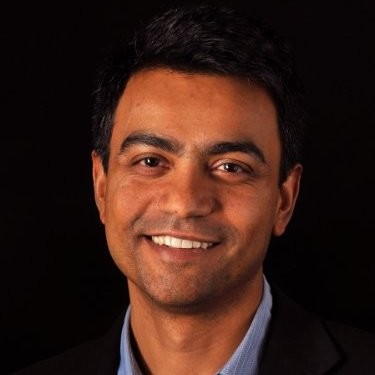 Deb Roy合作论文数MIT Center for Constructive Communication, Massachusetts Institute of Technology12
 Hang Jiang合作论文数Media Lab, Massachusetts Institute of Technology;Center for Constructive Communication, Massachusetts Institute of Technology;School of Architecture + Planning, Massachusetts Institute of Technology6
 adam h berger合作论文数5
 John Lafferty合作论文数Department of Statistics and Data Science, Yale University4
 Nabeel Gillani合作论文数Massachusetts Institute of Technology4
 William Brannon合作论文数Center for Constructive Communication, Massachusetts Institute of Technology3
 Francoise Beaufays合作论文数Google3
 Bill Byrne合作论文数Machine Intelligence Laboratory, Information Engineering Division, Department of Engineering, University of Cambridge;Clare College, University of Cambridge;Alexa Search, Alexa AI, Amazon3
 Brian P Strope合作论文数Music By Brian Patrick3
 Ciprian Chelba合作论文数Google DeepMind;Google Research;Speech Recognition Research Community3Johan Schalkwyk合作论文数Google3Andrew Heyward合作论文数2Cassandra Overney合作论文数2GOLDING ANDREW R合作论文数2Christine Vega-Pourheydarian合作论文数2
 Dimitra Dimitrakopoulou合作论文数Univ Zurich2
 Maryam Kamvar合作论文数Google Research2Adam L. Berger合作论文数1
 Hope Schroeder合作论文数Center for Constructive Communication, Massachusetts Institute of Technology;Media Lab, Massachusetts Institute of Technology1David McClure合作论文数1amit j patel合作论文数1nathan stoll合作论文数1michael h cohen合作论文数1
 Eric Chu合作论文数Google DeepMind1
 Yining Hua合作论文数Department of Epidemiology, Harvard T.H. Chan School of Public Health, Harvard University1
 Rima A. Abdul-Khalek合作论文数Sch Pharm, Lebanese Int Univ1
 Weiquan Mao合作论文数Inst Microelect, Tsinghua Univ1
 Larry Au合作论文数1Angel N Desai合作论文数1
 Xin Lei合作论文数1
 Martin Saveski合作论文数Department of Management Science and Engineering, Stanford University,1
 Majumder Maimuna S合作论文数Engineering Systems Division, Massachusetts Institute of Technology1
 Petros Zerfos合作论文数IBM Research1
 Pascal Van Hentenryck合作论文数School of Industrial and Systems Engineering, College of Engineering, Georgia Institute of Technology;NSF AI Institute for Advances in Optimization, Georgia Institute of Technology1
 Jayant Madhavan合作论文数Google Inc.1
 Shumeet Baluja合作论文数Google1
 Hector Garcia-Molina合作论文数Department of Computer Science, Stanford University;Department of Electrical Engineering, Stanford University1
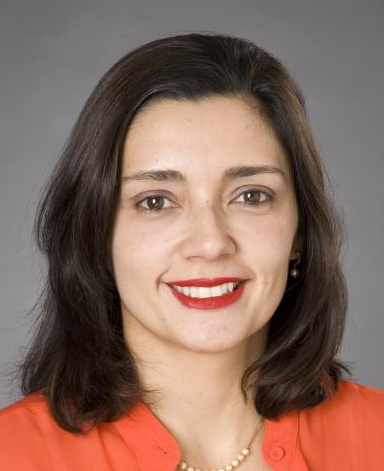 Juliana Freire合作论文数Department of Computer Science and Engineering, Tandon School of Engineering, New York University1
 Michael Witbrock合作论文数Strong AI Lab, School of Computer Science, Faculty of Science, The University of Auckland;NAOInstitute, The University of Auckland;NovuMind Inc;NZ.COM1David Ko合作论文数1
 Sriram Raghavan合作论文数IBM Almaden Research Center, San Jose, CA, USA. rsriram@us.ibm.com
1
Sriram Raghavan合作论文数IBM Almaden Research Center, San Jose, CA, USA. rsriram@us.ibm.com
1 Hal R. Varian合作论文数Department of Economics, College of Letters & Science, University of California, Berkeley;School of Information, University of California, Berkeley;Google1
 Rebecca Eynon合作论文数Oxford Internet Institute, University of Oxford1
 Gagan Aggarwal合作论文数Google Research1
 Luciano Barbosa合作论文数Universidade Federal de Pernambuco1
 Alexander Gruenstein合作论文数Google DeepMind1
 Lucja Kot合作论文数GrammaTech, Inc.;Cornell University1
 Neelam Duhan合作论文数Department of Computer Engineering, YMCA University of Science and Technology1Brandon Roy合作论文数MIT1




