The Max-Planck institutes for astronomy (MPIA) and for extraterrestrial physics (MPE) run an adaptive optics (AO) system with a laser guide star at the 3.5 m telescope on Calar Alto, Spain. This system, called ALFA, produces now scientific results and works ex- cellent with natural guide stars (NGS) as faint as 13th magnitude in R-band. The ultimate goal however is to achieve similar performances with the laser guide star (LGS) which is faint and extended. We introduce the Shack-Hartmann wavefront sensor implemented in ALFA and present our efforts in increasing its sensitivity by using advanced centroiding and wavefront reconstruction algorithms.
There will be one (2 hour) exam given during the semester and a final exam given during exam week. The midterm exam will be 30% of the course grade. The final exam will be worth 40% of the course grade. Homework: There will be approximately 8 assignments which will be due at the beginning of the lecture on the specified date. Late homework will not be accepted ‐ regardless of the excuse. Homework will constitute 30% of the grade.
The effects of a controller on the residual wavefront variance in an adaptive optics system can be represented by a discrete-time system. Consequently, the controller design is optimized by the solution of a discrete-time Linear- Quadratic-Gaussian (LQG) problem. This paper analyzes the structure of the LQG controller and the effects of varying loop delay and actuator lag on the controller. The loop delay is represented as a delay of actuator commands to emphasize the structure.
This paper models the incident wavefront of an AO system as being constant within each frame. The Linear-Quadratic-Gaussian (LQG) controller based on this model is compared with an LQG controller based on a continuous-time incident wavefront model. It has shown that the performance degradation is almost insignificant for astronomical AO applications.
This paper presents a linear-quadratic-Gaussian (LQG) design based on the equivalent discrete-time model of an adaptive optics (AO) system. The design model incorporates deformable mirror dynamics, an asynchronous wavefront sensor and zero-order hold operation, and a continuous-time model of the incident wavefront. Using the structure of the discrete-time model, the dimensions of the Riccati equations to be solved are reduced. The LQG controller is shown to improve AO system performance under several conditions.
The standard adaptive optics system can be viewed as a sampled-data feedback system with a continuous-time disturbance (the incident wavefront from the observed object) and discrete-time measurement noise. A common performance measure for adaptive optics systems is the time-average of the pupil variance of the residual wavefront. This performance can be related to that of a discrete-time system obtained by lifting the incident and residual wavefronts. This paper derives the corresponding discrete-time model and the computation of the adaptive optics system residual variance based on that model. The predicted variance of a single mode of an adaptive optics system is shown, as expected, to be the same as that obtained via simulation. The discrete-time prediction is also shown to be superior to a continuous-time approximation of the adaptive optics system.
A focus mode controller for an extremely large telescope can include an ability to off-load the defocus caused by variations in the sodium layer. This paper formulates the design of the altitude tracking controller as a discrete-time estimation problem.
This paper presents an equivalent discrete-time model that combines the D-A converter, DM, and WFS. The performance of the adaptive optics loop can then be evaluated in terms of the discrete-time (Z) closed-loop transfer functions of the feedback loop. The closed-loop transfer functions using this discrete-time model are compared to those obtained from an analog model. A simulation shows that the digital model produces accurate stability evaluations.
This paper presents a nonlinear modification of the standard linear adaptive optics controller that greatly reduces the startup lag due to saturation in pyramid wavefront sensors (or any wavefront sensor with 4-cell subapertures). Whenever the pyramid sensor is saturated (as determined by an internal model of the saturation in the controller), the deformable mirror signal is adjusted to quickly remove the saturation of the sensor. When the pyramid sensor is not saturated, a standard linear adaptive optics controller is used to generate the deformable mirror signal.The nonlinear controller is compared with a standard linear controller using a CAOS simulation. It is shown that the startup lag is significantly reduced, and that the steady-state performance is identical to the linear controller.
The W. M. Keck Observatory adaptive optics (AO) system uses the STRAP wavefront sensor to sense tip-tilt using a natural guidestar. The higher-order wavefront sensing can be done using light from either a laser guidestar (LGS) or a natural guidestar (NGS). The tip-tilt guidestar can be as bright as 10th or as faint as 19th magnitude. In both cases, as high a control bandwidth as possible is desired. Thus, it is of interest to determine the potential of various control algorithms over a wide range of signal-to-noise ratios (SNRs). This paper compares two control algorithms using a set of tip-tilt data taken with the STRAP wavefront sensor (a set of four avalanche diodes arranged as a quad cell). The two algorithms are the standard integral control and a minimum variance (LQG) control designed using the power spectral density (PSD) of the data. The bandwidths of the integral control and the minimum variance control are adjusted to produce the least RMS residual wavefront error. The controllers are compared for SNRs representative of the expected range of guidestars.
This paper considers systems that have a measurement that is computed from the post-processing of a short duration image. The measurement can be regarded as the integral of a linear function of the state variables of the system. The input to the system is assumed to be generated with a zero-order hold whose sampling frequency is the same as that of the measurement. The paper presents a discrete-time finite dimensional state variable model for such systems.
The performance of adaptive optics systems for existing as well as future giant telescopes heavily depends on the number of active wavefront compensating elements, the spatial, and the temporal sampling of the distorted incoming wavefront. In a phase-A study for an extreme adaptive optics system for the VLT (CHEOPS) as well as for LILAC-NIRVANA a fizeau interferometer aboard LBT with a multi-conjugated adaptive optics system, we investigate how today's off-the-shelf computers compare in terms of floating point computing power, memory bandwidth, input/output bandwidth and real-time behavior. We address questions like how level three cache can impact the memory bandwidth, what matrix-vector multiplication performance is achievable, and what can we learn from standard benchmarks running on different architectures.
The calibration process for an adaptive optics system using modal control computes the reconstructor matrix in terms of a matrix whose columns are the measurements from a wavefront sensor. Each column of wavefront sensor measurements corresponds to a mode that is applied to the mirror. Since the measured gradients are corrupted by errors, the accuracy of the computed reconstructor is degraded by large condition numbers of the gradient matrix. A common method used to limit the condition number of this matrix is to reject all higher order modes when the condition number reaches the maximum desired value. However, it is possible (even likely) that one or a few modes are responsible for much of the increase in the condition number. By rejecting only those modes, an increased number of modes could be controlled. Unfortunately, computing the condition number of the gradient matrix for all possible combinations of modes is prohibitive.This paper uses a genetic optimization algorithm to increase the number of modes that are retained for control. The genetic algorithm maximizes the number of modes retained. A bound on the condition number of the gradient matrix is imposed. The paper applies this method to both the ALFA adaptive optics system on Calar Alto (with 37 subapertures), and a proposed CHEOPS adaptive optics system with 1652 subapertures.
We present a new method of calibrating adaptive optics systems that greatly reduces the required calibration time or, equivalently, improves the signal-to-noise ratio. The method uses an optimized actuation scheme with Hadamard patterns and does not scale with the number of actuators for a given noise level in the wavefront sensor channels. It is therefore highly desirable for high-order systems and/or adaptive secondary systems on a telescope without a Gregorian focal plane. In the latter case, the measurement noise is increased by the effects of the turbulent atmosphere when one is calibrating on a natural guide star.
This paper develops a compensation algorithm based on Linear–Quadratic–Gaussian (LQG) control system design whose parameters are determined (in part) by a model of the atmosphere. The model for the atmosphere is based on the open-loop statistics of the atmosphere as observed by the wavefront sensor, and is identified from these using an auto-regressive, moving average (ARMA) model. The (LQG) control design is compared with an existing compensation algorithm for a simulation developed at ESO that represents the operation of MACAO adaptive optics system on the 8.2 m telescopes at Paranal, Chile.
Adaptive optics systems that use a single guide star can only accomplish their best atmospheric correction over a small area. Layer oriented MCAO has been proposed for extremely large telescopes as a method to achieve adaptive optics correction over a larger field of view. Diolaiti et al have analyzed the stability and steady-state performance properties of layer oriented MCAO system with a number of (reasonable) simplifying assumptions: no loop delay; no mirror dynamics; continuous and position-independent control action; significantly faster adaptive optics loop than turbulence; and performance assessed by the static response of the closed loop system. This paper will use dynamic analyses to investigate the effects of these assumptions on the overall system performance and stability.
The adaptive optics system ALFA differs in some aspects from systems like ADONIS and PUEO which have delivered scientific results since years. Interchangeable lenslet arrays with different numbers of subapertures and a deformable mirror with many more actuators than the number of corrected modesresult in some peculiarities in the calibration of the system and the reconstruction of incident wavefronts.We describe the design of ALFA's optics and its modal control architecture with a focus on a comparative study of the performance of different mode sets used to correct the wavefront aberrations. An outlook on our plans to improve and simplify the use of ALFA is given.The last section is dedicated to issues related to observing with ALFA in its present state. Expected Strehl ratios for different seeing conditions and guide star magnitudes are summarized in a table. AO observations in general, direct imaging and doing spectroscopywith ALFA in particular are discussed.
 Stefan Hippler合作论文数Max-Planck-Institut fur Astronomie10
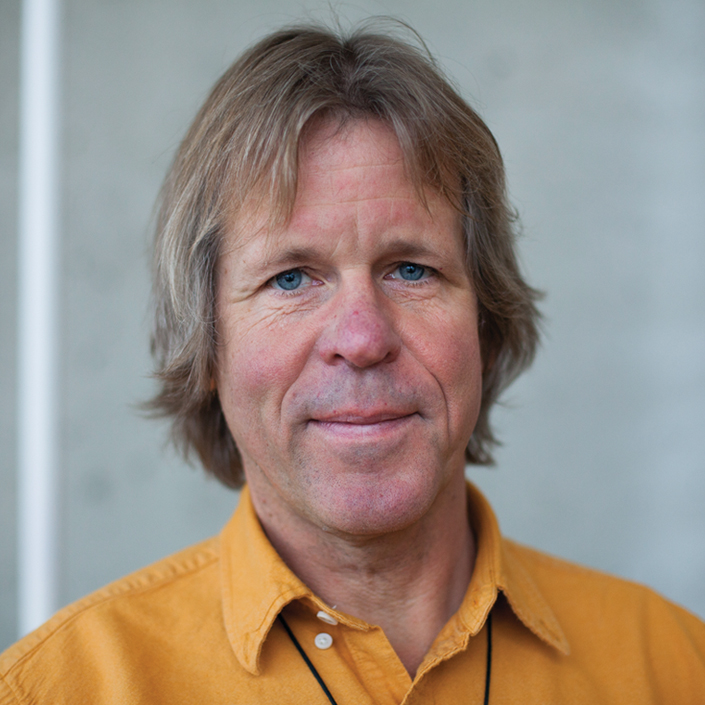 James Freudenberg合作论文数Electrical Engineering and Computer Science Department, University of Michigan7
 Weiss, J.L.合作论文数6M. Kasper合作论文数5
 Michael Athans合作论文数Department of Electrical Engineering and Computer Science, Massachusetts Institute of Technology4Andreas Glindemann合作论文数4T. Ott合作论文数3
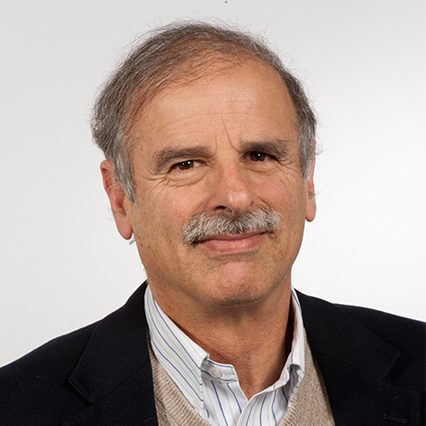 David Castañón合作论文数Department of Electrical and Computer Engineering, College of Engineering, Boston University;Center for Information and Systems Engineering, Boston University;ALERT Department of Homeland Security, Center of Excellence;SENTRY Department of Homeland Security, Center of Excellence3
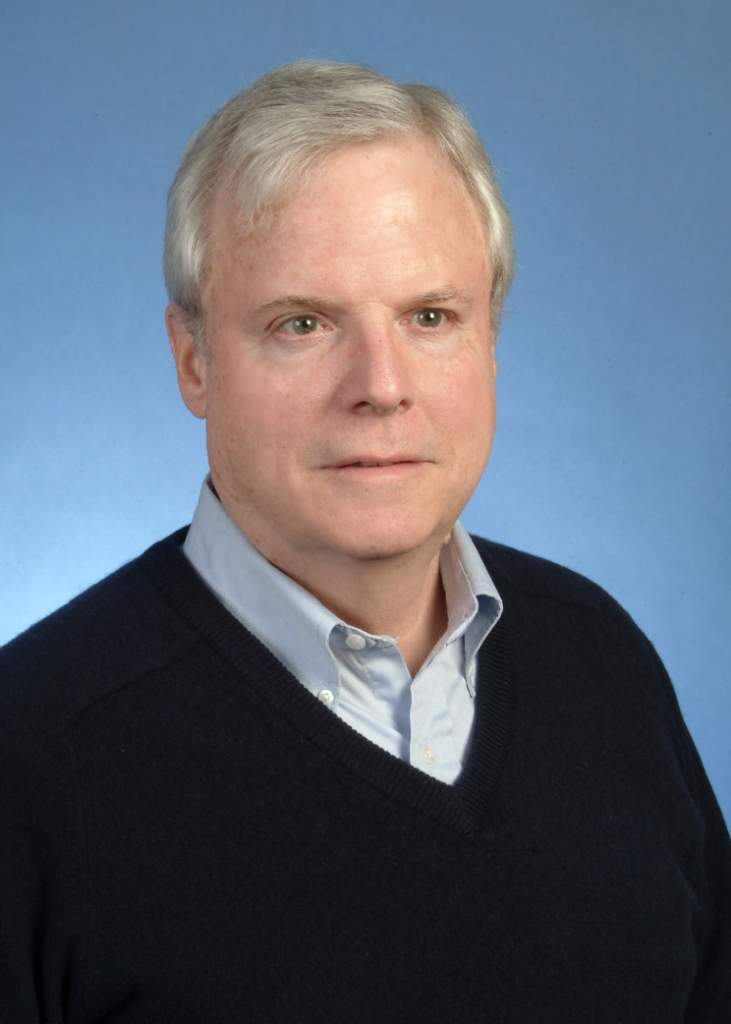 Paul K. Houpt合作论文数GE Global Research3
 Markus Kasper合作论文数3
 Paul Kalas合作论文数Department of Astronomy, University of California, Berkeley;Institute of Astrophysics in Heraklion;SETI Institute3Daniel Grunberg合作论文数CFM3
 Markus Feldt合作论文数Department of Planet and Star Formation, Max Planck Institute for Astronomy;Adaptive Optics Laboratory, Max Planck Institute for Astronomy3allan wirth合作论文数2R. R. Rohloff合作论文数2Krolewski, S.M.合作论文数2K. Wagner合作论文数2jimmy huang合作论文数2Hackenberg Wolfgang合作论文数2Theodore E. Djaferis合作论文数2
 Christos G. Cassandras合作论文数Center for Information & Systems Engineering, College of Engineering, Boston University;Division of Systems Engineering, College of Engineering, Boston University;Center for Intelligent and Networked Systems, Department of Automation, Tsinghua University2Orhan Beker合作论文数Maxtor Corporation2h c holstenberg合作论文数1Jy Wong合作论文数1Asif D. Gandhi合作论文数1robert weiss合作论文数1A Wirth合作论文数1john eterno合作论文数1T. Herbst合作论文数1R. Davies合作论文数1Jürgen Ackermann合作论文数1
 Sae Franklin合作论文数1Orlhac, D.合作论文数1
 Richard H. Middleton合作论文数School of Engineering, The University of Newcastle, Australia;The Hamilton Institute, National University of Ireland Maynooth1
 Richard Davies合作论文数Max Planck Institute for Extraterrestrial Physics1
 Reinhard Genzel合作论文数University of California, Berkeley;Max Planck Institute for Extraterrestrial Physics1
 Andreas Quirrenbach合作论文数Zentrum für Astronomie, Universität Heidelberg;Fakultät für Physik und Astronomie, Universität Heidelberg1
 Richard G. Weiss合作论文数Department of Chemistry, Georgetown University1Thomas Ott合作论文数1Robert Weiss合作论文数1Jeffrey A. Weiss合作论文数1S. V. W. Beckwith合作论文数1Bruce Bernstein合作论文数1Aaron J. Ostroff合作论文数1
 Sebastian Rabien合作论文数Max-Planck Institut für Extraterrestrische Physik1
 Julio H. Braslavsky合作论文数Universidad Nacional de Rosario;Universidad Nacional de Quilmes;Universidad Nacional de La Plata;Universidad Nacional de Quilmes, Universidad Nacional de La Plata1
 Andreas Eckart合作论文数I. Physikalisches Institut, Universitat zu Koln1D. J. Butler合作论文数1




