Today, policing in the United States is facing a crisis of legitimacy and calls for reform. This Element examines this crisis and describes the adverse effects of problematic police behavior on community members, police officers, and public safety. A critical analysis of past reform efforts is offered, including why they have had limited success in changing police operations, police culture, or styles of policing. The central thesis of this Element is that most police reforms have failed because we continue to use the wrong metrics to evaluate police performance. Cities have yet to systematically measure what matters to the public, namely how people are treated by the police. Hence, this Element proposes a new system of accountability using data from body-worn cameras and contact surveys to measure and incentivize procedural justice. Translating evidence into real organizational change should improve street-level policing, enhance police legitimacy, and improve public safety.
To describe and evaluate Chicago’s Quality Interaction Program (QIP) for police recruits. The training focused on procedural justice, interpersonal communication, decision-making, cultural awareness, and stress management during encounters with the public. Attention was given to emotions, empathy, and communication skills.
Purpose There is widespread interest in moving beyond crime statistics to measure police performance in new ways, especially the quality of police-community interactions that influence police legitimacy and public trust. The purpose of this paper is to introduce the Police-Community Interaction Survey (PCIS) developed by the National Police Research Platform. Design/methodology/approach The PCIS collected data from 53 police agencies around the USA in 2013-2014. The psychometric properties of the constructs measured are presented. This study also offers a preliminary test of the effects of an alternatively specified and expanded procedural justice model on willingness to cooperate with the police, mediated through perceptions of officer trustworthiness. Findings Scales were developed with good reliability and validity that measure various aspects of the police-community interactions. The authors find evidence that empathy is an important addition to the procedural justice model, and that the effects of procedural justice on willingness to cooperate with the police are partially mediated through perceptions of officer trustworthiness. Originality/value This is the first attempt to validate the measurement of police-community interactions on a large scale in the USA with policy implications at the local and national levels. The findings can help local police agencies incorporate new performance metrics at the individual, group, and agency levels. Nationally, the science of policing can be advanced by specifying the antecedents and consequences of respectful and empathic actions, including behavior that strengthens police-community relations.
Purpose The purpose of this paper is to explore the dimensions of organizational justice in police organizations and evaluate how they contribute to organizational commitment, job satisfaction and compliance with agency rules. Design/methodology/approach A survey of 15,236 sworn officers from a national sample of 88 agencies was used, as well as other agency- and community-level variables. Multi-level models assessed how four dimensions of organizational justice affected these outcomes. Findings More favorable perceptions of organizational justice were strongly related to increased commitment to the organization, job satisfaction and compliance with agency rules. Perceptions of organization-wide justice, leadership justice and diversity justice were especially important in predicting those outcome measures. Research limitations/implications While the sample of agencies was broad and diverse, it should not be considered representative of smaller municipal police departments and sheriff’s offices in the USA. Practical implications The findings suggest that “buy in” to reforms and police compliance with rules is much more likely when supervisors and leaders are fair, respectful, give officers input, provide growth opportunities and show concern for officers’ welfare. As such, agencies would benefit from leadership and leadership training that values the core principals of organizational justice. Originality/value The study provides clarity about how organizational justice is perceived by police officers, including women and officers of color, and provides an unprecedented test of organizational justice theory in diverse police agencies.
To introduce and evaluate the Police–Citizen Interaction (PCI) Survey, the electronic survey component of the National Police Research Platform, designed to measure the quality of police–citizen encounters at the local level.
To examine whether group capacity for problem solving and partnership building could be enhanced at police–community meetings by providing the results from community surveys and training for group facilitators.
Background and Problem Statement. Encounters with citizens, whether voluntary or involuntary, are at the heart of police work. On a daily basis, officers have interactions with citizens in numerous settings walk-ins at the front desk, crime reports by telephone, traffic or street stops, emergency and non-emergency calls for service, investigative interviews, community meetings, and other exchanges. The public’s expectations of the police when responding to these diverse (often noncriminal) incidents are very high. Officers are expected to effectively play multiple roles, including enforcer, social worker, marriage counselor, parent/disciplinarian, crowdcontrol manager, criminal investigator and group facilitator. One minute, an officer might be arresting a disrespectful gang member and, soon thereafter, taking a report from a traumatized elderly victim of armed robbery. In addition to physical prowess, officers are expected to have strong interpersonal skills and the ability to transition from one scenario to the next, while always treating everyone equally, respectfully, and professionally. Officers are also expected to exercise good judgment in terms of resolving or preventing conflict, gaining compliance, or solving problems using the least amount of force necessary.
Using a national probability sample of municipal police departments, this study provides the first systematic look at the prevalence, predictors, and content of municipal police websites in the United States. A content analysis revealed that police agencies with websites (42% of all police agencies nationwide in 2008) were more inclined to use websites to "push out" information rather than "pull in" information from the community. The results support the hypothesis that departments with a greater emphasis on community policing (defined by Law Enforcement Management and Administrative Statistics [LEMAS] data) would be more likely to have a website, exhibit greater transparency in the display of data and provide more opportunities for citizen input. Crime rate and population size were also important determinants of website creation and content, respectively. This study concludes that websites are underutilized by both the police and research communities.
This article describes an interdisciplinary center at the University of Illinois at Chicago focused on collaborative research on violence. Our center is unique in its emphasis on developing infrastructure and distinctive processes for overcoming obstacles to interdisciplinary research; the involvement of outside policy makers, advocates, and service providers in jointly discussing and developing research proposals; the breadth of commitments from leading violence researchers and administrators across five colleges; and the innovativeness of proposed research projects that support interdisciplinary activity and show promise for funding. The center has developed an infrastructure to address violence-related issues in both research and teaching. This article discusses the challenges of implementation and boundary spanning in a university context and makes recommendations for sustainability.
Conflict between the police and minorities is a consistent theme in inner city neighborhoods. Most studies focus on minorities’ attitudes toward the police and overlook police experiences and perceptions, thus neglecting a vital element in understanding this relationship. The objective of this study was to understand how police officers socially construct race within Latino or African American neighborhoods. A total of N = 40 police officers were interviewed. Through qualitative analysis, police officers’ comments reveal that they may not racialize but instead moralize African American neighborhoods; alternatively, police officers voiced positive racializations for the Mexican neighborhood. The implications of these findings for future research and police–minority relations are further discussed.
 Amie Schuck合作论文数School of Criminal Justice, The University at Albany12
 Daniel S Lawrence合作论文数CNA Corporation9
 Chad Posick合作论文数Dept Criminal Justice & Criminol, Georgia So Univ8
 Jack Mcdevitt合作论文数Northeastern University7Susan M. Hartnett合作论文数6
 Wesley G. Skogan合作论文数Department of Political Science, Northwestern University;Institute for Policy Research, Northwestern University4Lynn M. Olson合作论文数3Victoria E. Gwiasda合作论文数3S L Bailey合作论文数3cody d stephens合作论文数3Lisa M. Graziano合作论文数3Robert L Flewelling合作论文数3Susan J. Popkin合作论文数3
 Lorie Fridell合作论文数Reubin O'D. Askew School of Public Administration and Policy, Florida State University3timothy a lavery合作论文数2larry buron合作论文数2Paul J. Lavrakas合作论文数2
 Ruth Zschoche合作论文数2
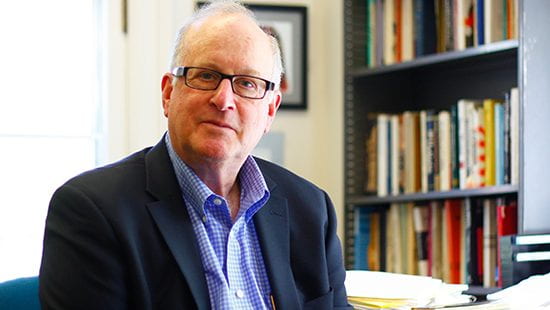 Dan Lewis合作论文数School of Education and Social Policy, Northwestern University2Megan Alderden合作论文数2Janice Roehl合作论文数2Jane A. Grant合作论文数2Ann Marie Rocheleau合作论文数2
 Darnell Felix Hawkins合作论文数2
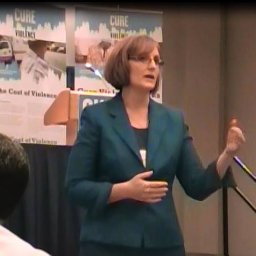 Deanna L. Wilkinson合作论文数Department of Criminal Justice;Temple University;Department of Criminal Justice, Temple University2
 David Robert Forde合作论文数Instructor of Sociology2
 Arthur J Lurigio合作论文数2Mona R. Hochberg合作论文数2Jeffrey A. Roth合作论文数2George L. Kelling合作论文数2Ralph Taylor合作论文数1St Ennett合作论文数1Gordon S Hanson合作论文数1gayle s bieler合作论文数1Cl Ringwalt合作论文数1Jennifer Friedman合作论文数1Marianne Ring合作论文数1Jean M. Amendolia合作论文数1Thomas E. Christoff合作论文数1Justin H. Escamilla合作论文数1Rebecca Gordon合作论文数1Claudio G. Vera Sanchez合作论文数Department of Justice Studies, San Jose State University1Georgina Enciso合作论文数1Patricia O'Brien合作论文数1
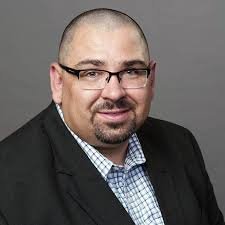 Jon Maskaly合作论文数Criminol Program, Univ Texas Dallas1William P. McCarty合作论文数1Barbara Simmons合作论文数1Heather J Risser合作论文数Department of Psychiatry & Behavioral Sciences, Feinberg School of Medicine, Northwestern University1




