Predictive maintenance in smart factories requires not only high prediction accuracy but also low-latency processing, adaptability to data drift, and understandable explanations for field operators. However, many existing approaches remain cloud-centered, label-dependent, and weak in practical explainability. This study proposes an explainable predictive maintenance framework based on FPGA-GPU Edge–Cloud hybrid computing for large-scale multivariate time-series environments. In the proposed system, FPGA modules perform streaming-oriented signal preprocessing and low-latency feature extraction, while GPU modules execute deep learning-based anomaly detection and fault prediction. To reduce dependence on labeled fault data, the framework incorporates masked autoencoder-based self-supervised representation learning. To improve long-term robustness in changing manufacturing environments, the framework also considers continual learning based on Elastic Weight Consolidation. In addition, a lightweight large language model with parameter-efficient fine-tuning and retrieval-augmented generation generates root-cause-oriented explanations and maintenance guidance. The method is organized as an integrated pipeline that combines data acquisition, edge preprocessing, temporal inference, explanation generation, and cloud-assisted model adaptation. The evaluation framework includes certification-oriented testing, comparative analysis, latency and throughput analysis, drift response analysis, and explainability assessment. According to a third-party test report, the proposed system achieved an event recall of 0.9822, event precision of 0.9529, event F1-score of 0.9674, and a false alarm rate of 0.000205. These results indicate that the proposed framework is practically feasible for real-time, explainable, and deployable predictive maintenance in smart factory environments.
Integrated pest management is essential for controlling plant diseases that reduce crop yields. Rapid diagnosis is crucial for effective management in the event of an outbreak to identify the cause and minimize damage. Diagnosis methods range from indirect visual observation, which can be subjective and inaccurate, to machine learning and deep learning predictions that may suffer from biased data. Direct molecular-based methods, while accurate, are complex and time-consuming. However, the development of large multimodal models, like GPT-4, combines image recognition with natural language processing for more accurate diagnostic information. This study introduces GPT-4-based system for diagnosing plant diseases utilizing a detailed knowledge base with 1,420 host plants, 2,462 pathogens, and 37,467 pesticide instances from the official plant disease and pesticide registries of Korea. The AI plant doctor offers interactive advice on diagnosis, control methods, and pesticide use for diseases in Korea and is accessible at https://pdoc.scnu.ac.kr/.
화학공장과 같이 위험지역에 설치된 밸브장치는 폭발의 위험을 방지하기 위해 방화 방폭장치로 밀폐되어 있다. 본 논문에서는 방폭장치로 인해 외부전원장치를 사용할 수 없는 밸브장치에 적외선센서와 Zigbee 센서를 이용하여 위험지역의 밸브의 열림도를 측정하여 개폐여부를 확인하고, 밸브 개폐 작동시간을 로그화하여 운전 관리자가 공장을 관리 통제할 수 있는 저전력 모니터링 시스템을 제안한다. 전력관리기능을 적용하기 위해 개선된 비동기LPL 알고리즘을 적용한 전력제어 릴레이보드를 개발하고, 이를 적용한 방폭형 지능형 밸브시스템과 공장 밸브 개폐모니터링 시스템을 설계하고 이를 구현 및 테스트 하였다. The valve device is installed in hazardous areas, such as a chemical plant explosion has been sealed with fire protection device to prevent the risk of explosion. In this paper, due to the explosion-proof devices using external power the device can not be used in infrared sensors and Zigbee sensor valve device by measuring the open degree of valve opening and closing of the danger zone to check whether. Valve opening and closing operation log screen time, we propose a low-power operation monitoring system administrators to manage and control the plant. Develop power control relay board apply an improved algorithm to apply the asynchronous LPL power management. The plant monitoring system and explosion-proof valve opening and closing the valve system with the intelligent device designed and implemented and tested it.
Cloud computing is not a new technology but is to construct computing environment like a big cloud by mixing the virtualization technology for existing grid computing, distributed computing, utility computing, web service, server and storage with the existing base technologies such as open source software. These cloud computing technologies are mostly being studied to be utilized in reducing corporate costs. This study was made on cloud that is practical and available in the field of education, contrary to previous corporate efficiency studies. The smart education promotion strategy of the Ministry of Education, Science and Technology in 2011, a huge cost was funded for the program to construct smart education system in all of domestic elementary, middle, and high schools by 2015. However, several problems have been found in the actual research model schools, which was an obstacle to the promotion of smart education. Among those problems, it was frequently pointed out that there was difficulty in smart device uses and that there was difficulty in teaching the classroom itself when a student had system problem during smart education. Also, in the aspect of contents use by students, various kinds of contents shall be provided, and standardized environment shall be offered for online-based student rating system in the smart era. As an education system model to solve those problems of smart education, a new cloud service, EaaS service model, is presented in this study.
교육에서 중요한 요소는 신뢰성 있는 교육의 질을 확보하는 문제이다. 교육의 질을 확보하는 기준에는 다양한 방법들이 있다. 노동부의 계좌제교육, 보건의료종사자의 보수교육에서의 질 관리는 출석관리가 중요한 평가기준이기 때문에 신뢰성 높은 출석관리가 요구된다. 노동부에서 교육생의 출석 신뢰도를 높이기 위해서 최근에 신용카드형태의 출석체크 시스템을 도입하였다. 이에 비해 보건의료종사자의 보수교육은 형식적으로 이루어지는 출석관리로 교육의 질 문제가 제기되어왔다. 최근 개발된 USN기반의 출석관리시스템들은 효과는 있지만 적은규모의 교육이 다수의 지역에서 동시에 진행되는 경우에 관리자 측면에서는 비용적인 문제와 이동성 문제 그리고 시스템 운용의 문제 그리고 교육생의 출석관리의 신뢰도 문제가 해결해야 할 과제로 남게 되었다. 이러한 요구를 해결하기 위해서 본 연구는 바코드와 PC카메라 기반의 저비용 출석관리시스템을 설계 및 구현하였다. 개발된 시스템을 실제 보수교육현장에서 테스트를 실시한 결과 관리자 측면에서는 98%만족도를 보였고 교육생 측면에서도 95%의 만족도를 보였다. An important factor in education is ensuring reliable quality of education. There are a variety of ways based on criteria to ensure the quality of education. To ensure quality management, attendance is important which is highly reliable rating at the account education of Ministry of Employment and Labor and sevice training of Health Care. In contrast, the service training of health care professionals was consisting of formal attendance management, quality of education has been raised as a problem. Recently developed USN-based attendance management system is effective. But if education is proceed at a large number of small scale in the area of education, cost, portability, systeme management, the reliability of the Trainee's attendance remained as problems to solve. To address these needs, this paper quoted low-cost attendance management system which was desighned and implemented by barcode and PC camera. As a result the actual maintenance training system showed a 98% satisfaction in terms of administrator and 95% satisfaction in terms of Trainee.
창의력이나 문제해결력과 같은 고차원적인 사고 능력은 주어진 문제의 정 오답만으로는 진단이 어려우며, 진단을 위해서는 교수자가 학습자의 문제 해결 과정을 지켜보거나 해결 과정에 대한 학습자의 보고 과정이 요구된다. 더구나 교수자의 학습자에 대한 관찰이 불가능한 온라인 학습이나 버추얼 클래스와 같은 환경에서는 학습자의 문제 해결 과정을 평가하거나 학습자 스스로 자신의 부족한 부분을 진단하는 것은 더욱 어려워진다. 이러한 문제를 해결하는 최선의 방법은 학습자가 문제를 해결하는 동안을 추적하여 그 과정을 보고해 주는 것이라 할 수 있다. 본 연구에서는 MS 오피스군의 소프트웨어를 활용하여 주어진 문제를 해결하는 동안 학습자의 작업 내역을 트레이싱하여 최종적으로 학습자에게 자신의 부족한 부분을 진단해 주고 자신의 능숙도와 소프트웨어를 응용하여 주어진 문제를 해결하는 과정에 대한 평가를 해주는 모듈을 개발하였으며, 본 진단 모듈의 효용성 평가를 위하여 실제 MOS 시험을 준비하는 학습자 81명에 대한 적용 및 만족도 조사를 통하여 통계적으로도 유의미한 효과가 있음을 확인하였다. The higher thinking skills, such as creativity and problem-solving about a given problem, are difficult to assess and diagnose. For an accurate diagnosis of these higher thinking abilities, we need to fully observe learner's problem-solving process or learner's individual reports. However, in an online learning or virtual class environments, evaluation of learner's problem-solving process becomes more difficult to diagnose. The best way to solve this problem is through reporting by tracking learner's actions when he tries to solve a problem. In this study, we developed a module which can evaluate and diagnose student's problem-solving ability by tracking actions in MS-Office suite, which is used by students to solve a given problem. This module performs based on the learner's job history through user tracking. To evaluate the effectiveness of this diagnostic module, we conducted satisfaction survey from students who were preparing the actual MOS exams. As a result, eighty-one (81) of the participants were positive on the effectiveness of the learning system with the use of this module.
As wireless mobile telecommunication bases organize their structure using a honeycomb-mesh algorithm, there are many studies about parallel processing algorithms like the honeycomb mesh in Wireless Sensor Networks. This paper aims to study the Peterson-Torus graph algorithm in regard to the continuity with honeycomb-mesh algorithm in order to apply the algorithm to sensor networks. Once a new interconnection network is designed, parallel algorithms are developed with huge research costs to use such networks. If the old network is embedded in a newly designed network, a developed algorithm in the old network is reusable in a newly designed network. Petersen-Torus has been designed recently, and the honeycomb mesh has already been designed as a well-known interconnection network. In this paper, we propose a one-to-one embedding algorithm for the honeycomb mesh (HMn) in the Petersen-Torus PT(n,n), and prove that dilation of the algorithm is 5, congestion is 2, and expansion is 5/3. The proposed one-to-one embedding is applied so that processor throughput can be minimized when the honeycomb mesh algorithm runs in the Petersen-Torus.
Bubble-sort, pancake, and matrix-star graphs are interconnection networks with all the advantages of star graphs but with lower network costs. This study proposes and analyzes embedding methods for these graphs based on the edge definition of graphs. Results show that bubble-sort graph B n can be embedded in pancake graph T n with dilation 3 and expansion 1, while bubble-sort graph B 2n can be embedded in matrix-star MS 2,n with dilation 5 and expansion 1.
Bubble-sort, macro-star, and transposition graphs are interconnection networks with the advantages of star graphs in terms of improving the network cost of a hypercube. These graphs contain a star graph as their sub-graph, and have node symmetry, maximum fault tolerance, and recursive partition properties. This study proposes embedding methods for these graphs based on graph definitions, and shows that a bubble-sort graph Bn can be embedded in a transposition graph Tn with dilation 1 and expansion 1. In contrast, a macro-star graph MS(2, n) can be embedded in a transposition graph with dilation n, but with an average dilation of 2 or under.
Locations of positioned nodes as well as gathered data from nodes are very important because generally multiple nodes are deployed randomly and data are gathered in wireless sensor network. Since the nodes composing wireless sensor network are low cost and low performance devices, it is very difficult to add specially designed devices for positioning into the nodes. Therefore in wireless sensor network, technology positioning nodes precisely using low cost is very important and valuable. This research proposes Cooperative Positioning System, which raises accuracy of location positioning and also can find positions on multiple sensors within limited times. And this research verifies this technology is excellent in terms of performance, accuracy, and scalability through simulation.
This study proposes a new interconnection network that has the same number of nodes in a hypercube graph broadly known as phase of a multicomputer but has edges reduced by a half. As a way of reducing the degree of nodes, node address can be assigned in a form of matrix and edges can be defined by means of matrix operations. Degree reduces H/W costs and diameter reduces S/W efficiency. Since an actual effect of S/W cost reduction is insufficient, a H/W cost reduction effect can be maximized by reducing edges by a half.
In this paper, Multiple Reduced Hypercube(MRH), which is a new interconnection network based on a hypercube interconnection network, is suggested. Also, this paper demonstrates that MRH(n) proposed in this study is superior to the previously proposed hypercube interconnection networks and the hypercube transformation interconnection networks in terms of network cost(diameter × degree). In addition, several network properties(connectivity, routing algorithm, diameter, broadcasting) of MRH(n) are analyzed.
In MRH(n) interconnection network, which has been recently proposed as a new phase for parallel processing, network cost (degree × diameter) is improved by reducing diameter and edge at the same time, while existing hypercube transformation graphs reduce just one of diameter or edge. This paper suggests an embedding method between Hypercube Network Q n and Multiple Reduced Hypercube Network MRH(n). In addition, this paper demonstrates that Hypercube Q n is embedded in MRH(n) at dilation 3 and expansion 2, and that average dilation is 2 or less.
 Hyeong-Ok Lee合作论文数13
 Cheolsu Son合作论文数4
 Jung-Hyun Seo合作论文数4Jong-Seok Kim合作论文数3Jae-Cheol Oh合作论文数2Won-Jung Kim合作论文数2
 Mihye Kim合作论文数2Jun-A Kwon合作论文数1
 Mun-Il Ahn合作论文数1kyusu lee合作论文数1
 Yangsun Lee合作论文数1
 Yujung Ko合作论文数1
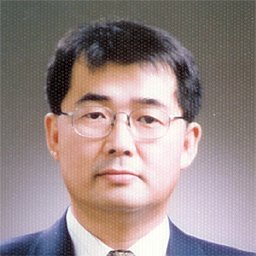 Ki Tae Kim合作论文数Korea Polar Res Inst KOPRI1Jeon Jongbum合作论文数Interdisciplinary Program in Agricultural Genomics, Seoul National University1
 Hojun Kim合作论文数1
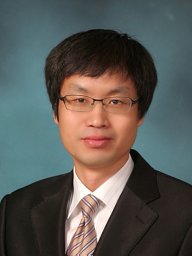 Sung Won Kim合作论文数Dept Informat & Commun Engn, Yeungnam Univ1
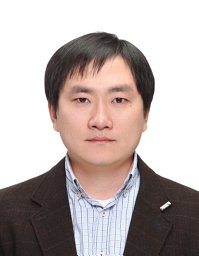 Daeheon Park合作论文数department of information and communication Engineering, Sunchon National University1Jeong-Suk Kim合作论文数School of Mechanical Engineering/ERC-NSDM, Pusan National University1Jangwoo Park合作论文数1




