We present a Bayesian bootstrap method for election forecasting that integrates traditional own-intention questions with wisdom-of-crowds questions, which ask for social-circle expectations and election forecasts. Across the 2018, 2020, and 2024 U.S. elections, wisdom-of-crowds questions consistently outperformed own-intention questions in predicting vote shares. The Bayesian bootstrap combines these questions in a theoretically justified way, assigning weights based on their inferred informational value. The main assumption is that election winner expectations for a given participant are themselves an optimal Bayesian forecast in light of all evidence available to that participant. Social-circle expectations contribute the most to the Bayesian bootstrap forecast, as they reduce demographic biases and capture hidden voter preferences. The method improves forecast accuracy across diverse electoral contexts, offering a principled approach to combining polling questions and suggesting applicability to forecasting other social phenomena.
Problem definition: This paper examines frictions in the shopping funnel using empirical clickstream data from an online travel platform. We analyze (a) customers' heterogeneous search and purchase behaviors and (b) their reactions to changes in assortment size. We then develop a consider-then-choose model to generalize our findings. Methodology/results: We characterize the online customer journey as a two-stage consider-thenchoose framework. In the consider stage, we analyze the consideration set formation and show that heterogeneity-familiarity with the assortment-amplifies the number of options; in the purchase stage, it drives preferences for niche versus popular choices. A real-world high-stakes field experiment reveals that shrinking the menu produces mixed results: highlighting the market for the long-tail for some customers and reflecting choice overload for others. Finally, we build a psychologically rich consider-then-choose model with (a) heterogeneous preferences for product features and (b) heterogeneous search costs moderated by search fatigue, theoretically characterizing the impact on consideration sets and conversion rates. Managerial implications: Identifying frictions in the shopping funnel is critical for online platforms, especially when pain points hurt click-through or conversion rates. Which options matter to which users? What is the right assortment size? Although online platforms can offer virtually unlimited assortments, managers may assume frictionless environments-which is not always the case. Our findings offer insights into improving the customer journey by considering heterogeneous preferences and boundedly rational heuristics.
In many domains, it is necessary to combine opinions or forecasts from multiple individuals. However, the average or modal judgment is often incorrect, shared information across respondents can result in correlated errors, and weighting judgments by confidence does not guarantee accuracy. We develop a Bayesian hierarchical model of crowd wisdom that incorporates predictions about others to address these aggregation challenges. The proposed model can be applied to single questions, and it can also estimate respondent expertise given multiple questions. Unlike existing Bayesian hierarchical models for aggregation, the model does not link the correct answer to consensus or privilege majority opinion. The model extends the “surprisingly popular algorithm” to enable statistical inference and in doing so, overcomes several of its limitations. We assess performance on empirical data and compare the results with other aggregation methods, including leading Bayesian hierarchical models. This paper was accepted by Manel Baucells, behavioral economics and decision analysis. Funding: This work was supported in part by the National Science Foundation [Grant MMS 2019982] and All Souls College Oxford [Visiting Fellowships in 2020 and 2022 to D. Prelec]. Supplemental Material: The data files and online appendix are available at https://doi.org/10.1287/mnsc.2023.4955 .
This paper introduces the index [Formula: see text] as a measure of time inconsistency and vulnerability to self-control problems in the quasi-hyperbolic, beta-delta ([Formula: see text] discounting model. We provide a preference foundation for [Formula: see text] and, consequently, a revealed preference definition of failed self-control. The [Formula: see text] index is independent of utility and has an intuitive interpretation as the maximum number of future selves who can disagree with the current self with respect to uniform deviations from an intertemporal plan. The index is also computable for continuous discount functions after an appropriate mapping of functions onto the ([Formula: see text] family. The [Formula: see text] index thus provides a common yardstick for comparing temporal inconsistency across different functional forms. This paper was accepted by Manel Baucells, behavioral economics and decision analysis.
Prelec, Seung and McCoy (2017) proposed a crowd wisdom model where ideal Bayesian observers receive discrete i.i.d. signals si ∈ {s1,...,sn} conditional on an unknown ‘state,’ i.e., a possible world aj ∈ {a1,...,am}. Signals and worlds are presumed drawn from a distribution p(si,aj) known to observers, but unknown to the analyst. The paper asserted via an example but without formal proof that if ideal observers specify a belief matrix as conditional distributions p(aj|si), and a meta-knowledge matrix (beliefs about other observers’ signals) as p(si|sk) = ∑j p(si|aj)p(aj|sk), then the analyst can, in the large sample limit, derive p(si,aj) and identify the actual signal-generating world. Here we provide a proof based on computing the signal prior as the stationary distribution of the meta-knowledge matrix.
We present a new Bayesian bootstrap method for election forecasts that combines traditional polling questions about people’s own intentions with their expectations about how others will vote. It treats each participant’s election winner expectation as an optimal Bayesian forecast given private and background evidence available to that individual. It then infers the independent evidence and aggregates it across participants. The bootstrap forecast outperforms forecasts based on own intentions questions posed on large national samples before the 2018 and 2020 U.S. elections. The bootstrap forecast puts most weight on people’s expectations about how their social contacts will vote, which might incorporate information about voters who are difficult to reach or who hide their true intentions. Beyond election polling, the new method is expected to improve the validity of other social science surveys.
According to the previous literature, only a few papers found better accuracy than a chance to detect dishonesty, even when more information and verbal cues (VCs) improve precision in detecting dishonesty. A new classification of dishonesty profiles has recently been published, allowing us to study if this low success rate happens for all people or if some people have higher predictive ability. This paper aims to examine if (dis)honest people can detect better/worse (un)ethical behavior of others. With this in mind, we designed one experiment using videos from one of the most popular TV shows in the UK where contestants make a (dis)honesty decision upon gaining or sharing a certain amount of money. Our participants from an online MTurk sample (N = 1,582) had to determine under different conditions whether the contestants would act in an (dis)honest way. Three significant results emerged from these two experiments. First, accuracy in detecting (dis)honesty is not different than chance, but submaximizers (compared to maximizers) and radical dishonest people (compare to non-radicals) are better at detecting honesty, while there is no difference in detecting dishonesty. Second, more information and VCs improve precision in detecting dishonesty, but honesty is better detected using only non-verbal cues (NVCs). Finally, a preconceived honesty bias improves specificity (honesty detection accuracy) and worsens sensitivity (dishonesty detection accuracy).
Credit cards have often been blamed for consumer overspending and for the growth in household debt. Indeed, laboratory studies of purchase behavior have shown that credit cards can facilitate spending in ways that are difficult to justify on purely financial grounds. However, the psychological mechanisms behind this spending facilitation effect remain conjectural. A leading hypothesis is that credit cards reduce the pain of payment and so ‘release the brakes’ that hold expenditures in check. Alternatively, credit cards could provide a ‘step on the gas,’ increasing motivation to spend. Here we present the first evidence of differences in brain activation in the presence of real credit and cash purchase opportunities. In an fMRI shopping task, participants purchased items tailored to their interests, either by using a personal credit card or their own cash. Credit card purchases were associated with strong activation in the striatum, which coincided with onset of the credit card cue and was not related to product price. In contrast, reward network activation weakly predicted cash purchases, and only among relatively cheaper items. The presence of reward network activation differences highlights the potential neural impact of novel payment instruments in stimulating spending—these fundamental reward mechanisms could be exploited by new payment methods as we transition to a purely cashless society.
Research Summary Managers regularly deal with dynamic tasks, where decisions impact immediate payoffs as well as long-term capabilities. Research shows that people do poorly in dynamic tasks, but the underlying mechanisms are unclear. These may range from unsystematic problem-solving to rational learning in complex environments. In a series of experiments, we tease apart alternative explanations, showing that poor performance is due to behavioral difficulties. Remarkably, we find that people do poorly even if provided with complete information about the payoff function, thus, eliminating any need for learning. They unsystematically search among possible solutions and end up with inefficient heuristics. The results show that differences in thinking through a dynamic problem may lead to substantial variation in performance, even if common sources of complexity and ambiguity are excluded. Managerial Summary Why do people, including managers, have difficulty managing systems where taking action today impacts future outcomes? Difficulty of learning in a complex environment has been proposed as the key challenge. Using experiments, we show that people find such tasks difficult even when all relevant information is provided to them and there is nothing to learn. Using trial and error most participants learn satisfactory, but inferior, heuristics. Those who systematically think through tradeoffs over time significantly outperform others even in a simple task, suggesting such thinking adds value in realistic managerial settings as well.
The ability to 'sense' the social environment and thereby to understand the thoughts and actions of others allows humans to fit into their social worlds, communicate and cooperate, and learn from others' experiences. Here we argue that, through the lens of computational social science, this ability can be used to advance research into human sociality. When strategically selected to represent a specific population of interest, human social sensors can help to describe and predict societal trends. In addition, their reports of how they experience their social worlds can help to build models of social dynamics that are constrained by the empirical reality of human social systems.
We consider the following ’truth serum’ mechanism problem: Two players observe signals drawn from a common prior on n x m. They are risk neutral, care only about mechanism payoffs, and will not provide information without incentives. A counterexample shows that one cannot construct a robust (i.e., detail-free) mechanism by eliciting signals and first order beliefs; players must provide something more. In the ’basic mechanism,’ the further input is the prior probability of their signal. In the ’self-prediction mechanism,’ players estimate each other’s first-order beliefs. In the ’information gain mechanism,’ players predict each other’s signal twice, once before and once after they have reported their signal. Correct reporting of own signals and beliefs are a strict Bayesian Nash equilibrium in each case, with equilibrium scores aligned with Shannon information.
Zadovoljstvo mi je i čast doprinijeti konferenciji na temu “Sistem nauke faktor stimulacije ili ograničenja u razvoju”, koju organizuje Akademija nauka i umjetnosti Bosne i Hercegovine. Nemoguće je precijeniti važnost i pravovremenost teme ove konferencije, koja postavlja najmanje dva različita pitanja. Prvo, “vanjsko” pitanje je: kako mjeriti utjecaj naučnih istraživanja na društvo u cjelini. Drugo, “interno” pitanje je kako bi naučni sistem trebao biti organiziran kako bi se povećala produkcija istinskog znanja. Iz programa je evidentno da će se o oba pitanja govoriti tokom konferencije. Trebao bih obznaniti već na početku da se moje istraživanje ne bavi proučavanjem nauke same po sebi. Radio sam na pitanjima donošenja odluka, bihevioralnoj ekonomiji i, što je ovdje relevantno, na razvoju mehanizama za iznošenje i objedinjavanje stručnih procjena, što me u smislu ove konferencije čini “meta stručnjakom” ako ne “stručnjakom za domen”. Stručno ili specijalizirano prosuđivanje je, naravno, u srži nauke i doprinosi napetosti između naučnika i opće javnosti, od koje se traži da prihvati sudove naučne zajednice bez nužnog razumijevanja popratnih razloga ili dokaza. Od laika se jednostavno traži da vjeruju nauci.
In this paper we propose a new method of eliciting market research information. Instead of asking respondents for their personal choices and preferences, we ask respondents to predict the choices of other respondents to the survey. Such predictions tap respondents' knowledge of peers, whether based on direct social contacts or on more general cultural information. The effectiveness of this approach has already been demonstrated in the context of political polling. Here we extend it to market research, specifically, to conjoint analysis. An advantage of the new approach is that it can elicit reliable responses in situations where people are not comfortable with disclosing their true preferences, but may be willing to give information about people around them. A theoretical argument demonstrates that predictions should yield utility estimates that are more accurate. These theoretical results are confirmed in four online experiments.
Рассматривается проблема выявления правдивых ответов на вопросы некоторого исследования в случае, когда респонденты имеют общее априорное распределение, не интересующее составителя опроса. В такой постановке составителю опроса желательно иметь универсальное правило, стимулирующее респондентов отвечать правдиво при любом априорном распределении. Если дополнительно выполняются условие локальности (которое гарантирует, что платежные функции правил определяются апостериорными вероятностями фактического состояния системы) и условие достаточной гладкости, мы доказываем, что равновесная платежная функция в случае правдивых ответов респондентов является логарифмической функцией апостериорных вероятностей. Более того, респонденты должны быть упорядочены в соответствии с этими вероятностями. В заключение обсуждаются вопросы применения полученных результатов.
Experimental studies of dishonesty usually rely on population-level analyses, which compare the distribution of claimed rewards in an unsupervised, self-administered lottery (e.g., tossing a coin) with the expected lottery statistics (e.g., 50/50 chance of winning). Here, we provide a paradigm that measures dishonesty at the individual level and identifies new dishonesty profiles with specific theoretical interpretations. We found that among dishonest participants, (a) some did not bother implementing the lottery at all, (b) some implemented but lied about the lottery outcome, and (c) some violated instructions by repeating the lottery multiple times until obtaining an outcome they felt was acceptable. These results held both in the lab and with online participants. In Experiment 1 (N= 178), the lottery was a coin toss, which permitted only a binary honest/dishonest response; Experiment 2 (N= 172) employed a six-sided-die roll, which permitted gradations in dishonesty. We replicated some previous results and also provide a new, richer classification of dishonest behavior.
We consider the problem of eliciting truthful responses to a survey question when the respondents share a common prior that the survey planner is agnostic about. The planner would therefore like to have a "universal" mechanism, which would induce honest answers for all possible priors. If the planner also requires a locality condition that ensures that the mechanism payoffs are determined by the respondents' posterior probabilities of the true state of nature, we prove that, under additional smoothness and sensitivity conditions, the payoff in the truth-telling equilibrium must be a logarithmic function of those posterior probabilities. Moreover, the respondents are necessarily ranked according to those probabilities. Finally, we discuss implementation issues.
 George Loewenstein合作论文数Department of Social and Decision Sciences, Dietrich College of Humanities and Social Sciences, Carnegie Mellon University28
 Colin F. Camerer合作论文数Division of the Humanities and Social Sciences, California Institute of Technology11
 Dan Ariely合作论文数The Fuqua School of Business, Duke University;Center for Advanced Hindsight, Duke University;Accumulator;Irrational Capital;Kayma Labs;Epilog;BEworks;Shapa Health;Genie8
 Sonja Radas合作论文数Institute of Economics, Zagreb7
 Sebastian Seung合作论文数Department of Computer Science, School of Engineering and Applled Science, Princeton University;Princeton Neuroscience Institute, Princeton University6
 Dunfield Derek合作论文数6
 Jaksa Cvitanic合作论文数Department of Humanities and Social Sciences, California Institute of Technology6
 John McCoy合作论文数Marketing Department, The Wharton School, University of Pennsylvania5
 Pascual-Ezama David合作论文数Department of Financial Economy and Accounting II, Universidad Complutense de Madrid5
 Wändi Bruine de Bruin合作论文数Department of Public Policy, Psychology, and Behavioral Science, Sol Price School of Public Policy, USC5
 Mirta Galesic合作论文数4
 Scott Rick合作论文数Stephen M. Ross School of Business, University of Michigan-Ann Arbor4Jane E. J. Ebert合作论文数Carlson School of Management, University of Minnesota4
 G Elliott Wimmer合作论文数Psychology and Neuroscience, Stanford University4
 Henrik Olsson合作论文数Max Planck Institute for Human Development, Berlin, Germany4R. Bodner合作论文数4
 Brian Knutson合作论文数Department of Psychology, School of Humanities and Sciences, Stanford University;Institute for Human-Centered Artificial Intelligence (HAI), Stanford University4
 Hrvoje Šikić合作论文数Department of Mathematics, University of Zagreb, Bijenička 30, HR-10 000, Zagreb, Croatia3
 Richard Herrnstein合作论文数Department of Psychology, Harvard University3
 Beatriz Gil-Gomez de Liano合作论文数Autónoma University of Madrid3D. Mijovic-Prelec合作论文数3B. Barber合作论文数2Diego Aparicio合作论文数University of Navarra2
 Adrián Muñoz-García合作论文数2
 Sachin Banker合作论文数Eccles Sch Business, Univ Utah2
 Florian Zettelmeyer合作论文数Center for the Study of Industrial Organization, Weinberg College of Arts and Sciences, Northwestern University2
 Carolyn Yoon合作论文数Stephen M. Ross School of Business, University of Michigan-Ann Arbor2
 Emir Kamenica合作论文数Chicago Booth School of Business, The University of Chicago2Hedden Trey合作论文数2
 Eldar Shafir合作论文数Department of Psychology, Princeton University2Joshua Manning合作论文数2
 John Gabrieli合作论文数Athinoula A. Martinos Imaging Center, McGovern Institute for Brain Research, Massachusetts Institute of Technology;Department of Brain and Cognitive Sciences, Massachusetts Institute of Technology2
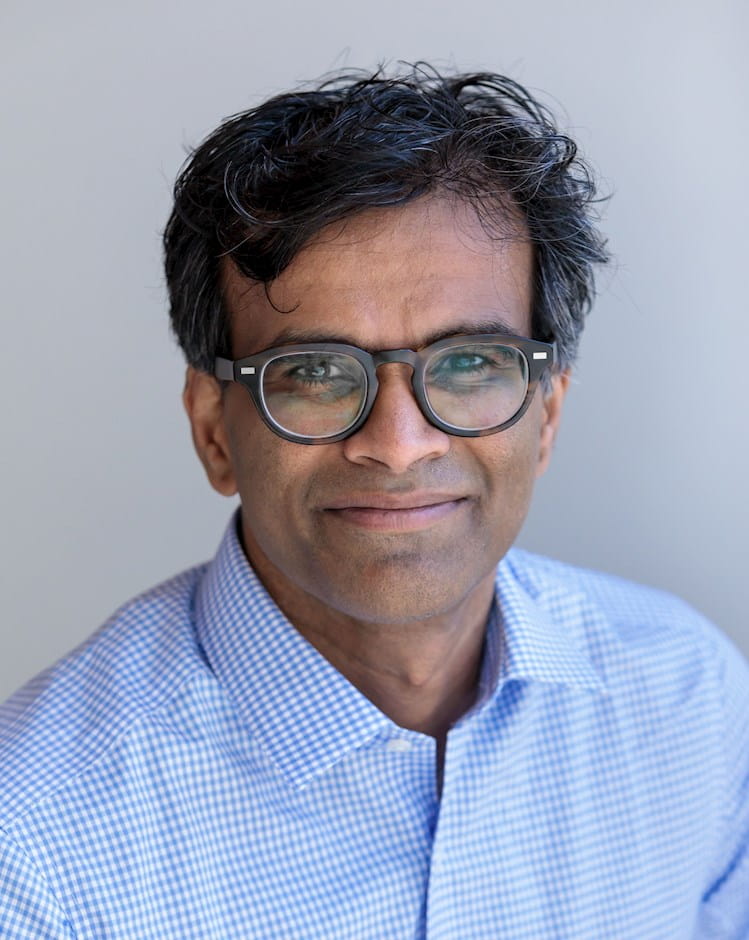 Sendhil Mullainathan合作论文数Department of Economics, Massachusetts Institute of Technology;Dandelion Health AI2
 Han Bleichrodt合作论文数Department of Applied Economics, Erasmus School of Economics, Erasmus University Rotterdam2
 Nick G. Hollon合作论文数Psychology and Neuroscience, Stanford University2
 Gary Bornstein合作论文数the Laboratory for Interactive Decision Research2
 Nina Mazar合作论文数University of Toronto2
 Rebecca Weiss合作论文数Department of Psychology, Fordham University2A Knafo合作论文数1I Bateman合作论文数1B Chanda合作论文数1Y Dudai合作论文数1RH Thaler合作论文数1A. McKyton合作论文数1NK BELISHEVA合作论文数1AJ Ayer合作论文数1S Benartzi合作论文数1H Belinson合作论文数1A. Cohen合作论文数1




