This paper proposes IELE, an LLVM-style language, together with a tool ecosystem for implementing and formally reasoning about smart contracts on the blockchain. IELE was designed by specifying its semantics formally in the K framework. Its implementation, a IELE virtual machine (VM), as well as a formal verification tool for IELE smart contracts, were automatically generated from the formal specification. The automatically generated formal verification tool allows us to formally verify smart contracts without any gap between the verifier and the actual VM. A compiler from Solidity, the predominant high-level language for smart contracts, to IELE has also been (manually) implemented, so Ethereum contracts can now also be executed on IELE.
A developing field of interest for the distributed systems and applied cryptography communities is that of smart contracts: self-executing financial instruments that synchronize their state, often through a blockchain. One such smart contract system that has seen widespread practical adoption is Ethereum, which has grown to a market capacity of 100 billion USD and clears an excess of 500,000 daily transactions. Unfortunately, the rise of these technologies has been marred by a series of costly bugs and exploits. Increasingly, the Ethereum community has turned to formal methods and rigorous program analysis tools. This trend holds great promise due to the relative simplicity of smart contracts and bounded-time deterministic execution inherent to the Ethereum Virtual Machine (EVM). Here we present KEVM, an executable formal specification of the EVM's bytecode stack-based language built with the K Framework, designed to serve as a solid foundation for further formal analyses. We empirically evaluate the correctness and performance of KEVM using the official Ethereum test suite. To demonstrate the usability, several extensions of the semantics are presented. and two different-language implementations of the ERC20 Standard Token are verified against the ERC20 specification. These results are encouraging for the executable semantics approach to language prototyping and specification.
We present a suite of runtime verification tools developed by Runtime Verification Inc.: RV-Match, RV-Predict, and RV-Monitor. RV-Match is a tool for checking C programs for undefined behavior and other common programmer mistakes. It is extracted from the most complete formal semantics of the C11 language and beats many similar tools in its ability to catch a broad range of undesirable behaviors. RV-Predict is a dynamic data race detector for Java and C/C++ programs. It is perhaps the only tool that is both sound and maximal: it only reports real races and it can find all races that can be found by any other sound data race detector analyzing the same execution trace. RV-Monitor is a runtime monitoring tool that checks and enforces safety and security properties during program execution. Our tools focus on reporting no false positives and are free for non-commercial use.
We present RV-Match, a tool for checking C programs for undefined behavior and other common programmer mistakes. Our tool is extracted from the most complete formal semantics of the C11 language. Previous versions of this tool were used primarily for testing the correctness of the semantics, but we have improved it into a tool for doing practical analysis of real C programs. It beats many similar tools in its ability to catch a broad range of undesirable behaviors. We demonstrate this with comparisons based on a third-party benchmark.
THEODOROS KASAMPALIS, Runtime Verification, Inc. and University of Illinois at Urbana-Champaign DWIGHT GUTH, Runtime Verification, Inc. BRANDON MOORE, Runtime Verification, Inc. TRAIAN S, ERBĂNUT, Ă, Runtime Verification, Inc. VIRGIL S, ERBĂNUT, Ă, Runtime Verification, Inc. DANIELE FILARETTI, Runtime Verification, Inc. GRIGORE ROS,U, Runtime Verification, Inc. and University of Illinois at Urbana-Champaign RALPH JOHNSON, Runtime Verification, Inc.
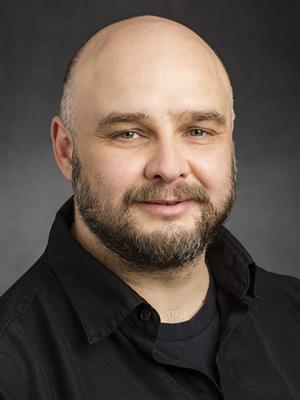 Grigore Rosu合作论文数Department of Computer Science, University of Illinois at Urbana-Champaign;Siebel School of Computing and Data Science, The Grainger College of Engineering, University of Illinois Urbana-Champaign;Runtime Verification, Inc.;Elrond Networks;Spring Labs4
 Manasvi Saxena合作论文数Computer Science, University of Illinois at Urbana-Champaign3
 Traian Florin Șerbănuță合作论文数Faculty of Mathematics and Computer Science, University of Bucharest;Runtime Verification Inc.3Yi Zhang合作论文数2Theodoros Kasampalis合作论文数University of Illinois at Urbana-Champaign2
 Philip Daian合作论文数Cornell Tech New York NY USA2Daniele Filaretti合作论文数2
 Chris Hathhorn合作论文数University of Missouri2Brandon Moore合作论文数2Nishant Rodrigues合作论文数1Xiao-ran ZHU (朱晓冉)合作论文数1
 Yilong Li合作论文数MegaETH1
 Daejun Park合作论文数Univ Illinois Urbana1
 Andrei Stefanescu合作论文数University of Illinois at Urbana-Champaign1
 Edgar Pek合作论文数1




