Under climatic warming and increased melting, glaciers and ice caps are becoming secondary sources of contaminants deposited decades ago. Cryoconite, an organic-rich material found on the surface of many glaciers, is particularly efficient at accumulating airborne contaminants due to biogeochemical exchanges with the organic matter within cryoconite. Atmospherically derived radioactive isotopes, commonly referred to as fallout radionuclides, have now been found to accumulate in cryoconite globally. However, data from the polar regions, especially ice sheets and ice caps, is scarce. This study helps to address this regional gap in understanding fallout radionuclide accumulation in glacial settings. We present the first radioactivity dataset from cryoconite on a Greenlandic ice cap and assess the role of cryoconite in the distribution of radioactive species in the High Arctic. Forty-six cryoconite samples were collected from the Flade Isblink ice cap (NE Greenland) in August 2022. These samples were analysed via alpha and gamma spectrometry for atmospheric radionuclides, including 137Cs, 241Am, 210Pbexc., 207Bi, 7Be, and several plutonium isotopes. The results of this study confirm cryoconite's exceptional ability to accumulate fallout radionuclides, even in remote and relatively pristine regions such as Northern Greenland. The activities of radionuclides in cryoconite from Flade Isblink are among the highest reported across the High Arctic and the highest ever reported from Greenland. Flade Isblink's radioactivity source is compatible with the stratospheric reservoir established during atmospheric nuclear tests and with weapon-grade fissile fuel, likely originating from Novaya Zemlya. Our findings emphasise the necessity for continued research efforts on the release of legacy contaminants from glaciers, particularly given accelerated global warming and consequent glacier retreat.
Mercury (Hg) is a chemical element recognized as one of the most toxic among all naturally occurring elements, with health risks depending on its form, concentration, route and time of exposure. Mercury appears in the environment as a result of human activities, which include burning coal or lignite, improper waste disposal, oil refining, use of mercury-containing pesticides and fertilizers, and industrial development such as mining, chemical, pharmaceutical and paper industries. The element also appears in the environment as a consequence of natural phenomena, among which are volcanic emissions, rock erosion, biomass burning and geothermal processes, but also as a result of re-emissions. Mercury can persist in the atmosphere for up to several months, which promotes the transfer of the element to areas far from the emitting source.Cryoconite, a sediment accumulating on the surface of glaciers, is known to accumulate atmospheric contaminants such as Hg likely due to biofilm producing extracellular polymeric substances. Mercury is a contaminant of primary concern in the global environment, including cryosphere environments such as glaciers, due to its high toxicity to biota. This study, for the first time, presents a comprehensive global analysis of the variation in Hg concentrations, observed in cryoconite holes and deposits from the surface of 27 glaciers in both hemispheres, comprising 105 samples in total. Concentrations of Hg were determined through ICP-MS/MS. The results indicate a higher Hg content in cryoconite from glaciers located in the Northern Hemisphere, which can be linked to the proximity of highly industrialized areas, which contrasts to glaciers located in the Southern Hemisphere. The highest Hg content was measured in cryoconite located in Norway and Alaska (up to 0.7 ppm), and the Alps (close to 0.5 ppm), correlated with the levels of industrialization in these regions. Our results reveal a broad pattern of reduction in Hg concentrations in cryoconite with altitude, which may be related to the topographical relief affecting the transport of contaminants from higher altitudes to lower.As a result of global warming, the majority of glaciers are retreating. The accumulated Hg in the cryoconite can be released during melting of glaciers and thus may also contribute to contamination of the downstream ecosystems and local communities through consumption of contaminated food and water in polar and alpine regions. Therefore, studies like this are needed to monitor the levels and fate of Hg in glaciers and ice caps.
Glaciers are recognized as repositories for atmospheric pollutants, however, due to climate change and enhanced melting rates, they are rapidly transitioning from being repositories to secondary sources of such apollutants. Artificial radionuclides are one of the pollutants found on glaciers that efficiently accumulate onto glacier surfaces within cryoconite deposits; a dark, often biogenic sediment. This work provides information about the accumulation, distribution and sources of plutonium (Pu) isotopes in cryoconite samples from glaciers worldwide. Plutonium is an artificial radionuclide spread into the environment in the last decades as a consequence of nuclear test explosions, accidents and nuclear fuel re-processing. Samples collected from 49 glaciers across nine regions of Earth are considered. Activity concentrations of plutonium in cryoconite are orders of magnitude higher than in other environmental matrices typically used for environmental monitoring (e.g. lichens, mosses, soils and sediments), particularly in the Northern Hemisphere. Isotopic ratios indicate that plutonium contamination of cryoconite is dominated by the global signal of stratospheric fallout related to atmospheric nuclear tests. However, specific glaciers in Svalbard reveal a signature compatible with a contribution from the re-entry of the SNAP-9A satellite in 1964, which was equipped with a 238Pu radioisotope thermoelectric generator. Similarly, an excess of 238Pu is observed in cryoconite from the Exploradores Glacier (Chile). This could be associated with the November 1996 crash of the automatic Interplanetary Station "Mars '96" which was carrying a 238Pu thermoelectric generator. This is the first time ever that an isotopic evidence for this event is reported. These findings highlight the role that cryoconite can play in reconstructing the radioactive contamination history of different glaciated regions of the Earth.
Under climatic warming, glaciers are becoming a secondary source of atmospheric contaminants originally released into the environment decades ago. This phenomenon has been well-documented for glaciers near emission sources. However, less is known about polar ice sheets and ice caps. Radionuclides are one of the contaminants that can be remobilised through ice melting and accumulate in cryoconite material on the surface of glaciers. To understand the cycling of radionuclides in polar glacial contexts, we evaluate the radioactivity of cryoconite samples from Flade Isblink, a High Arctic ice cap in northeast Greenland. The measured radioactivity is among the highest reported across the High Arctic and the highest from Greenland. The high variability observed among the samples is explained by considering the different macroscopic features of single cryoconite deposits. The radioactivity source is compatible with the stratospheric reservoir established during atmospheric nuclear tests and with weapons-grade fissile fuel, likely originating from Novaya Zemlya proving grounds. This study shows that the ability of cryoconite to accumulate radioactivity in remote areas is undisputed, highlighting the need for a deeper understanding of the remobilisation of radioactive species in polar glacial contexts.
The accumulation of fallout radionuclides (FRNs) from nuclear weapons testing and nuclear accidents has been eval-uated for over half a century in natural environments; however, until recently their distribution and abundance within glaciers have been poorly understood. Following a series of individual studies of FRNs, specifically 137Cs, 241Am and 210Pb, deposited on the surface of glaciers, we now understand that cryoconite, a material commonly found in the supraglacial environment, is a highly efficient accumulator of FRNs, both artificial and natural. However, the variabil-ity of FRN activity concentrations in cryoconite across the global cryosphere has never been assessed. This study thus aims to both synthesize current knowledge on FRNs in cryoconite and assess the controls on variability of activity con-centrations. We present a global database of new and previously published data based on gamma spectrometry of cryoconite and proglacial sediments, and assess the extent to which a suite of environmental and physical factors can explain spatial variability in FRN activity concentrations in cryoconite. We show that FRNs are not only found in cryoconite on glaciers within close proximity to specific sources of radioactivity, but across the global cryosphere, and at activity concentrations up to three orders of magnitude higher than those found in soils and sediments in the surrounding environment. We also show that the organic content of cryoconite exerts a strong control on accumulation of FRNs, and that activity concentrations in cryoconite are some of the highest ever described in environmental matri-ces outside of nuclear exclusion zones, occasionally in excess of 10,000 Bq kg-1. These findings highlight a need for significant improvements in the understanding of the fate of legacy contaminants within glaciated catchments. Future interdisciplinary research is required on the mechanisms governing their accumulation, storage, and mobility, and their potential to create time-dependent impacts on downstream water quality and ecosystem sustainability.
Historically, glaciers have been seen as pristine environments. However, research has shown that glaciers can accumulate and store contaminants through processes such as atmospheric deposition, mass movements, and anthropogenic activities. Numerous anthropogenically and naturally-derived contaminants have been found within glacial sediments, including fallout radionuclides, potentially toxic elements, and heavy metals. The introduction of these contaminants often come from human activities such as the use of agricultural fertilisers, carbon based industries, vehicular use, and nuclear power plants. However, these contaminants can also originate from natural sources such as erosion of metal-rich rock and forest fires. Through mechanisms of secondary release, these often legacy contaminants are remobilized, finding their way into glacial riverine systems and downstream environments. This can then pose potential threats to human and ecosystem health, as well as impacting food quality, water resources, livelihoods, and social justice. When assessing potential downstream risk from glacial contaminants, it is crucial to know what types of contaminants may be released in meltwaters and in what quantity. Here we identify contaminants in cryoconite – a sediment found on the surface of glaciers – in Peru’s Cordillera Blanca, from which meltwater feeds into the Rio Santa. Previous studies have shown that glaciers in similar environments (i.e. high mountain glacier catchments) have been found to contain differing types and concentrations of contaminants within cryoconite. However, until now this had not been reported for cryoconite on glaciers in Peru. This research investigates the variation in contaminant load in cryoconite from four different glaciers (Pastoruri, Shallap, Vallunaraju, and Yanapacca) within the Cordillera Blanca. Key contaminants in cryoconite from this region have been analysed using X-ray fluorescence, gamma spectrometry, and ICP-MS. These results contribute to an improved understanding of the extent to which glaciers may act as a secondary source of contaminants to the Rio Santa catchment. This is an important first step towards assessing the risk of contaminant release from glaciers in this region.
Mountain glaciers are crucial sources of fresh water, contributing directly and indirectly to water, energy and food supplies for hundreds of millions of people. Assessing the impact of diminishing glacial meltwater contributions to the security of this resource is critical as we seek to manage and adapt to changing freshwater dynamics in a warming world. Both water quantity and quality influence water (in)security, so understanding the fluxes of water, sediment and contaminants through glacial and proglacial systems is required for holistic assessment of meltwater contribution to downstream resource security. In this paper we consider the socio-environmental role of and pressures on glacier-fed waters, discuss key research priorities for the assessment of both the quantity and quality of meltwater and reflect on the importance of situating our understanding within a transdisciplinary and inclusive research landscape.
Anthropogenic contamination has been detected in glacial and proglacial environments around the globe. Through mechanisms of secondary release, these contaminants are finding their way into glacial hydrological systems and downstream environments, with potential to impact hundreds of millions of people who rely on glacial meltwater for water, food and energy security worldwide. The first part of our progress report outlined the sources and accumulation mechanisms of contaminants in glacial environments (Part I: Inputs and accumulation). Here we assess processes of contaminant release, pathways to downstream environments, and socio-environmental consequences. We reflect on the potential impacts these contaminants could have for human, ecosystem, and environmental health, as well as framing glacial contaminants within the context of the water-food-energy nexus. Improved understanding of these processes and impacts, while crucially embedding local knowledge, will help to develop key policy and mitigation strategies to address future risk of contaminant release from glaciers.
Historically, glaciers have been seen as pristine environments. However, recent research has shown that glaciers can accumulate and store contaminants over long timescales, through processes such as atmospheric deposition, sedimentation, glacial hydrology and mass movements. Studies have identified numerous anthropogenically derived contaminants within the global cryosphere, including the six we focus on here: fallout radionuclides; microplastics; persistent organic pollutants; potentially toxic elements; black carbon and nitrate-based contaminants. These contaminants are relatively well-studied in other environments; however, their dynamics and role in glaciated systems is still poorly understood. Therefore, it is important to assess and quantify contaminant levels within the cryosphere, so that current and future threats can be fully understood and mitigated. In this first progress report (Part I: Inputs and accumulation), we review the current state of knowledge of six of the most common anthropogenic contaminants found in the cryosphere, and consider their sources, transportation, accumulation and concentration within glacial systems. A second progress report (Part II: Release and downstream consequences) will outline how these contaminants leave glacial systems and the consequences that this release can have for communities and ecosystems reliant on glacial meltwater.
Glaciers are temporary repositories for radionuclides and other airborne contaminants (eg. heavy metals). Retreat of glaciers results in the release of these contaminants to downstream ecosystems where they can be accumulated by biota, with further consequences along the trophic chain. Fallout radionuclides, and especially Pu released from nuclear weapons testing and nuclear accidents, concentrates on glacier surfaces in cryoconite granules. These aggregates of mineral and organic components are associated with biological consortia composed of archaea, algae, cyanobacteria, fungi and heterotrophic bacteria (Cook et al., 2016). Cryoconite is also responsible for local decrease ice albedo and is responsible for formation of water-filled holes. Contaminants are effectively trapped in cryoconite granules for long periods (up to decades) due to the “sticky” nature of the material. Cryoconite can thus be useful in monitoring of radionuclide deposition on glaciers (Łokas et al., 2019; Giovanni et al., 2020).Our collective research reveals widespread incidence of Pu isotopes in cryoconite across multiple sites on both hemispheres, including Svalbard, Sweden, Norway, Iceland, Greenland, British Columbia, Alaska, the European Alps, the Caucasus, Siberia, Tien Shan, Altai, South America and Antarctica. The levels of plutonium isotopes (238,239,240Pu) found in cryoconite at these sites are orders of magnitude higher than those detected in non-glaciated environments, raising important questions around the role of glaciers, and specifically cryoconite, in concentrating levels of Pu isotopes above those found in the surrounding environment. The activity ratios of 238Pu/239+240Pu show that the plutonium-related radioactivity of cryoconite from the Northern hemisphere is compatible with the worldwide signal from the global radioactive fallout (0.025) but in some samples from Svalbard higher activity ratios are associated with an additional source of pure 238Pu, pointing to an influence of the SNAP-9A satellite burn up in the atmosphere occurred in 1964. Also activity ratios from South America and Antarctica are consistent with the global radioactive fallout ratio (including SNAP 9 re-entry) in the southern hemisphere (0.14), with an exception concerning cryoconite from the Exploradores Glacier (Chilean Patagonia, ratio 0.35). There are no known nuclear test sites near this glacier which could explain this anomalous value. However, there is also no information about the atmospheric re-entry of the automatic Interplanetary Station “Mars’96” which was launched on 16 November 1996. It fell off the coast of Chile near the border with Bolivia and was not found so far. There were considerable quantities of 238Pu on board of the station, with a total activity of 174 TBq (IAEA, 2001). We hypothesize that this event could explain the anomaly observed at Exploradores Glacier, confirming the unmatched potential of cryoconite to study environmental radioactivity in glacial contexts.AcknowledgementsThis study was supported by the National Science Center grant no. NCN 2018/31/B/ST10/03057.ReferencesCook et al., 2016. Progress in Physical Geography, 40(1), 66-111.Giovanni et al., 2020. CATENA, 191, 104577.IAEA, 2001. International Atomic Energy Agency IAEA, Vienna).Łokas et al., 2019. The Cryosphere, 13(7), 2075-2086.
Drinking water treatment residuals (WTRs), the by-product of water clarification processes, are routinely disposed of via landfill however there is a growing body of research that demonstrates the material has great potential for beneficial use in environmental applications. Application to agricultural land is one option showing great promise (i.e. a low cost disposal route that provides organic matter input to soils and other potential benefits), however questions remain as to the impact such applications may have on earthworm survival and behaviour and also on the potential effects it may have on soil porewater chemistry. This study examined the leachability of elements within two types of WTRs (one Al- and one Fe- based) from England via 0.001 M CaCl2 solution, at varying pH, and via the Community Bureau of Reference (BCR) sequential extraction scheme. Earthworm avoidance, survival, growth, reproduction and element concentrations were examined in WTR-amended sandy soils (0%, 5%, 10%, 20% w/w), while soil porewaters were also recovered from experimental units and examined for element concentrations. The results revealed leachable element concentrations to be very low in both types of WTRs tested and so element leaching from these WTRs would be unlikely to pose any threat to ecosystems under typical agricultural soil conditions. However, when the pH was lowered to 4.4 there was a substantial release of Al from the Al-WTRs (382 mg/kg). Soil porewater element concentrations were influenced to some degree by WTR addition, warranting further examination in terms of any potential implications for nutrient supply or limitation. Earthworm avoidance of WTR-amended soil was only observed for Al-WTRs and only at the maximum applied rate (20% w/w), while survival of earthworms was not affected by either WTR type at any application rate. Earthworm growth and reproduction (cocoon production) were not affected at a statistically significant level but this needs further examination over a longer period of exposure. Increased assimilation of Al and Fe into earthworm tissues was observed at some WTR application rates (maximum fresh weight concentrations of 42 mg/kg for Al and 167 mg/kg for Fe), but these were not at levels likely to pose environmental concerns.
 Caroline C. Clason合作论文数Sch Geog Earth & Environm Sci, Univ Plymouth11
 Edyta Łokas合作论文数8
 William H Blake合作论文数University of Plymouth School of Geography8
 Giovanni Baccolo合作论文数Univ Milano Bicocca, Dept Earth & Environm Sci, Piazza Sci 1, I-20126 Milan, Italy7
 Phil Owens合作论文数Department of Geography Earth and Environmental Sciences, University of Northern British Columbia6
 Rangecroft Sally合作论文数School of Geography, University of Exeter6
 Przemyslaw Wachniew合作论文数6
 Nozomu Takeuchi合作论文数5
 Roberto Ambrosini合作论文数Dipartimento di Biotecnologie e Bioscienze, Università di Milano-Bicocca5
 Francesca Pittino合作论文数4
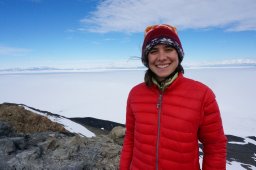 Ewa Poniecka合作论文数Dept Environm Microbiol & Biotechnol, Univ Warsaw4
 Zawierucha Krzysztof合作论文数Faculty of Biology, Adam Mickiewicz University in Poznań4
 Andrea Franzetti合作论文数Department of Environmental Sciences, University of Milano-Bicocca4Massimiliano Nastasi合作论文数3Katarzyna Kołtonik合作论文数Fac Earth Sci, Univ Silesia2Monica Sisti合作论文数2
 kim ward合作论文数Sch Geog Earth & Environm Sci, Univ Plymouth2Anna Cwanek合作论文数2
 Jakub Buda合作论文数2
 Dariusz Sala合作论文数Dept Enterprise Management, AGH Univ Sci & Technol2
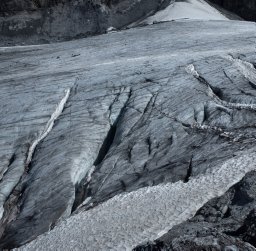 Biagio Di Mauro合作论文数Institute of Polar Sciences, National Research Council2
 N. Selmes合作论文数GLIMPSE Research Group, Swansea University2
 Geoffrey Eric Millward合作论文数2Joseph A. Cook合作论文数1
 Sergio Morera合作论文数1Rosa María Dextre合作论文数Instituto Geofísico del Perú (IGP), c. Badajoz, 169, URB. Mayorazgo, 4ta. Etapa-Ate, Lima 15012, Perú1Jessica Kitch合作论文数Sch Geog Earth & Environm Sci, Univ Plymouth1
 Elena Di Stefano合作论文数Univ Milano Bicocca, Dept Environm & Earth Sci, I-20126 Milan, Italy1Alex Taylor合作论文数1Lewis Steven合作论文数1
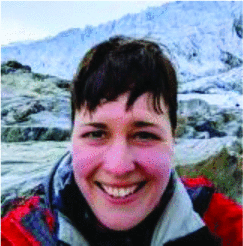 Elizabeth A Bagshaw合作论文数1
 Przemysław Niedzielski合作论文数Faculty of Chemistry, Adam Mickiewicz University1
 Melanie Hay合作论文数1
 Ralph Fyfe合作论文数School of Geography, Earth and Environmental Sciences, University of Plymouth1
 Ian Oliver合作论文数Nokia Bell Labs;NSW Dept Planning and Environment1
 Jacob C. Yde合作论文数Department of Earth Sciences, University of Aarhus1Geoffrey E Millward合作论文数1
 Kamil Brudecki合作论文数1




