First information on the time-like electromagnetic structure of baryons in the second resonance region has been obtained from measurements of dielectron (e+ e-) invariant-mass and angular distributions in the quasi-free reaction $\pi-$ p $\rightarrow$ n e+ e- at $\sqrt{s_{\pi p}}$ = 1.49 GeV with the High Acceptance Di-Electron Spectrometer (HADES) at GSI using the pion beam impinging on a CH$_2$ target. We find a total cross section $\sigma$ = 2.97 $\pm$ 0.07data $\pm$ 0.21acc $\pm$ 0.31Zeff $\mu$b. In complement to the analysis of the inclusive e+ e- channel, this data set provides a crucial test of the description of baryon time-like transitions. Approaches based on a Vector Meson Dominance amplitude containing direct photon and vector meson ($\rho$) couplings to the baryon provide a satisfactory agreement with the data. A good description is also obtained by electromagnetic time-like baryon transition form factors in a covariant spectator-quark model, pointing to the dominance of meson-cloud effects. The dielectron angular distributions exhibit the contributions of virtual photons ($\gamma^*$) with longitudinal polarization, in contrast to real photons. The virtual photon angular dependence supports the dominance of J=3/2, I=1/2 contributions observed in both the $\gamma^*$n and the $\pi \pi$n channels.
Inclusive e$^+$e$^-$ production has been studied with HADES in $\pi^-$ + p, $\pi^-$ + C and $\pi^- + \mathrm{CH}_2$ reactions, using the GSI pion beam at $\sqrt{s_{\pi p}}$ = 1.49 GeV. Invariant mass and transverse momentum distributions have been measured and reveal contributions from Dalitz decays of $\pi^0$, $\eta$ mesons and baryon resonances. The transverse momentum distributions are very sensitive to the underlying kinematics of the various processes. The baryon contribution exhibits a deviation up to a factor seven from the QED reference expected for the dielectron decay of a hypothetical point-like baryon with the production cross section constrained from the inverse $\gamma$ n$\rightarrow \pi^-$ p reaction. The enhancement is attributed to a strong four-momentum squared dependence of the time-like electromagnetic transition form factors as suggested by Vector Meson Dominance (VMD). Two versions of the VMD, that differ in the photon-baryon coupling, have been applied in simulations and compared to data. VMD1 (or two-component VMD) assumes a coupling via the $\rho$ meson and a direct coupling of the photon, while in VMD2 (or strict VMD) the coupling is only mediated via the $\rho$ meson. The VMD2 model, frequently used in transport calculations for dilepton decays, is found to overestimate the measured dielectron yields, while a good description of the data can be obtained with the VMD1 model assuming no phase difference between the two amplitudes. Similar descriptions have also been obtained using a time-like baryon transition form factor model where the pion cloud plays the major role.
The jet cross section and jet-substructure observables in p +p collisions at root s =200 GeV were measured by the PHENIX Collaboration at the Relativistic Heavy Ion Collider (RHIC). Jets are reconstructed from charged-particle tracks and electromagnetic-calorimeter clusters using the anti-k(t) algorithm with a jet radius of R =0.3 for jets with transverse momentum within 8.0 < p(T) <40.0 GeV/c and pseudorapidity |eta| <0.15. Measurements include the jet cross section, as well as distributions of SoftDrop-groomed momentum fraction (z(g)), charged-particle transverse momentum with respect to jet axis (j(T)), and radial distributions of charged particles within jets (r). Also measured was the distribution of xi =-ln(z), where z is the fraction of the jet momentum carried by the charged particle. The measurements are compared to theoretical next-to and next-to-next-to-leading-order calculations, the pythia and herwig event generators, and to other existing experimental results. Indicated from these measurements is a lower particle multiplicity in jets at RHIC energies when compared to models. Also noted are implications for future jet measurements with sPHENIX at RHIC as well as at the future Electron-Ion Collider.
High-momentum two-particle correlations are a useful tool for studying jet-quenching effects in the quark-gluon plasma. Angular correlations between neutral-pion triggers and charged hadrons with transverse momenta in the range 4–12 GeV/c and 0.5–7 GeV/c, respectively, have been measured by the PHENIX experiment in 2014 for Au+Au collisions at √(s__NN)=200 GeV. Suppression is observed in the yield of high-momentum jet fragments opposite the trigger particle, which indicates jet suppression stemming from in-medium partonic energy loss, while enhancement is observed for low-momentum particles. The ratio and differences between the yield in Au+Au collisions and p+p collisions, I_AA and Δ_AA, as a function of the trigger-hadron azimuthal separation, Δϕ, are measured for the first time at the Relativistic Heavy Ion Collider. These results better quantify how the yield of low-p_T associated hadrons is enhanced at wide angle, which is crucial for studying energy loss as well as medium-response effects.
The PHENIX experiment measured the centrality dependence of two-pion Bose-Einstein correlation functions in root sNN = 200 GeV Au + Au collisions at the Relativistic Heavy Ion Collider at Brookhaven National Laboratory. The data are well represented by Levy-stable source distributions. The extracted source parameters are the correlation-strength parameter lambda, the Levy index of stability a, and the Levy-scale parameter R as a function of transverse mass m(T) and centrality. The lambda(m(T)) parameter is constant at larger values of m(T), but decreases as m(T) decreases. The Levy-scale parameter R(m(T)) decreases with mT and exhibits proportionality to the length scale of the nuclear overlap region. The Levy exponent alpha(m(T)) is independent of m(T) within uncertainties in each investigated centrality bin, but shows a clear centrality dependence. At all centralities, the Levy exponent a is significantly different from that of Gaussian ( alpha= 2) or Cauchy ( alpha = 1) source distributions. Comparisons to the predictions of Monte-Carlo simulations of resonance-decay chains show that, in all but the most peripheral centrality class (50%-60%), the obtained results are inconsistent with the measurements, unless a significant reduction of the in-medium mass of the eta meson is included. In each centrality class, the best value of the in-medium eta mass is compared to the mass of the. meson, as well as to several theoretical predictions that consider restoration of U-A(1) symmetry in hot hadronic matter.
High-momentum two-particle correlations are a useful tool for studying jet-quenching effects in the quarkgluon plasma. Angular correlations between neutral-pion triggers and charged hadrons with transverse momenta in the range 4-12 GeV/c and 0.5-7 GeV/c, respectively, have been measured by the PHENIX experiment in 2014 for Au + Au collisions at root sNN = 200 GeV. Suppression is observed in the yield of high-momentum jet fragments opposite the trigger particle, which indicates jet suppression stemming from in-medium partonic energy loss, while enhancement is observed for low-momentum particles. The ratio and differences between the yield in Au + Au collisions and p + p collisions, I-AA and Delta(AA), as a function of the trigger-hadron azimuthal separation, Delta phi, are measured for the first time at the BNL Relativistic Heavy Ion Collider. These results better quantify how the yield of low-pT associated hadrons is enhanced at wide angle, which is crucial for studying energy loss as well as medium-response effects.
Hadron production ( π ^± , proton, Λ , K_S^0 , K^± ) in π ^- + C and π ^- + W collisions is investigated at an incident pion beam momentum of 1.7 GeV/c . This comprehensive set of data measured with HADES at SIS18/GSI significantly extends the existing world data on hadron production in pion induced reactions and provides a new reference for models that are commonly used for the interpretation of heavy-ion collisions. The measured inclusive differential production cross-sections are compared with state-of-the-art transport model (GiBUU, SMASH) calculations. The (semi-) exclusive channel π ^- + A →Λ + K_S^0 +X , in which the kinematics of the strange hadrons are correlated, is also investigated and compared to a model calculation. Agreement and remaining tensions between data and the current version of the considered transport models are discussed.
The PHENIX experiment has performed a systematic study of identified charged-hadron $({\ensuremath{\pi}}^{\ifmmode\pm\else\textpm\fi{}},$ ${K}^{\ifmmode\pm\else\textpm\fi{}},$ $p,$ $\overline{p})$ production at midrapidity in $p+\mathrm{Al}$, $^{3}\mathrm{He}+\mathrm{Au}$, and $\mathrm{Cu}+\mathrm{Au}$ collisions at $\sqrt{{s}_{{}_{NN}}}=200\phantom{\rule{0.16em}{0ex}}\mathrm{GeV}$ and $\mathrm{U}+\mathrm{U}$ collisions at $\sqrt{{s}_{{}_{NN}}}=193\phantom{\rule{0.16em}{0ex}}\mathrm{GeV}$. Identified charged-hadron invariant transverse-momentum $({p}_{T})$ and transverse-mass $({m}_{T})$ spectra are presented and interpreted in terms of radially expanding thermalized systems. The particle ratios of $K/\ensuremath{\pi}$ and $p/\ensuremath{\pi}$ have been measured in different centrality ranges of large ($\mathrm{Cu}+\mathrm{Au}$ and $\mathrm{U}+\mathrm{U}$) and small ($p+\mathrm{Al}$ and $^{3}\mathrm{He}+\mathrm{Au}$) collision systems. The values of $K/\ensuremath{\pi}$ ratios measured in all considered collision systems were found to be consistent with those measured in $p+p$ collisions. However, the values of $p/\ensuremath{\pi}$ ratios measured in large collision systems reach the values of $\ensuremath{\approx}0.6$, which is a factor of $\ensuremath{\approx}2$ larger than in $p+p$ collisions. These results can be qualitatively understood in terms of the baryon enhancement expected from hadronization by recombination. Identified charged-hadron nuclear-modification factors (${R}_{AB}$) are also presented. Enhancement of proton ${R}_{AB}$ values over meson ${R}_{AB}$ values was observed in central $^{3}\mathrm{He}+\mathrm{Au}$, $\mathrm{Cu}+\mathrm{Au}$, and $\mathrm{U}+\mathrm{U}$ collisions. The proton ${R}_{AB}$ values measured in the $p+\mathrm{Al}$ collision system were found to be consistent with ${R}_{AB}$ values of $\ensuremath{\phi}$, ${\ensuremath{\pi}}^{\ifmmode\pm\else\textpm\fi{}}$, ${K}^{\ifmmode\pm\else\textpm\fi{}}$, and ${\ensuremath{\pi}}^{0}$ mesons, which may indicate that the size of the system produced in $p+\mathrm{Al}$ collisions is too small for recombination to cause a noticeable increase in proton production.
The PHENIX experiment has performed a systematic study of identified charged-hadron ( p +/-, K +/-, p, p) production at midrapidity in p + Al, He-3+Au, and Cu + Au collisions at root s(NN) = 200 GeV and U + U collisions at root s(NN) = 193 GeV. Identified charged-hadron invariant transverse-momentum (p(T)) and transverse-mass (m(T)) spectra are presented and interpreted in terms of radially expanding thermalized systems. The particle ratios of K/ p and p/ p have been measured in different centrality ranges of large (Cu + Au and U + U) and small ( p + Al and He-3+Au) collision systems. The values of K/pi ratios measured in all considered collision systems were found to be consistent with those measured in p + p collisions. However, the values of p/pi ratios measured in large collision systems reach the values of approximate to 0.6, which is a factor of approximate to 2 larger than in p + p collisions. These results can be qualitatively understood in terms of the baryon enhancement expected from hadronization by recombination. Identified charged-hadron nuclear-modification factors (R-AB) are also presented. Enhancement of proton R-AB values over meson RAB values was observed in central He-3+Au, Cu + Au, and U + U collisions. The proton R-AB values measured in the p + Al collision system were found to be consistent with R-AB phi values of phi, pi(+/-), K-+/-, and pi(0) mesons, which may indicate that the size of the system produced in p + Al collisions is too small for recombination to cause a noticeable increase in proton production.
A. Adare,12 C. Aidala,39,45 N. N. Ajitanand,63,* Y. Akiba,57,58,† R. Akimoto,11 J. Alexander,63 M. Alfred,24 H. Al-Ta’ani,52 A. Angerami,13 K. Aoki,32,57 N. Apadula,29,64 Y. Aramaki,11,57 H. Asano,35,57 E. C. Aschenauer,7 E. T. Atomssa,64 T. C. Awes,54 B. Azmoun,7 V. Babintsev,25 A. Bagoly,17 M. Bai,6 B. Bannier,64 K. N. Barish,8 B. Bassalleck,51 S. Bathe,5,58 V. Baublis,56 S. Baumgart,57 A. Bazilevsky,7 R. Belmont,12,69 A. Berdnikov,60 Y. Berdnikov,60 D. S. Blau,34,50 M. Boer,39 J. S. Bok,51,52,72 K. Boyle,58 M. L. Brooks,39 J. Bryslawskyj,5,8 H. Buesching,7 V. Bumazhnov,25 S. Butsyk,51 S. Campbell,13,64 V. Canoa Roman,64 P. Castera,64 C.-H. Chen,58,64 C. Y. Chi,13 M. Chiu,7 I. J. Choi,26 J. B. Choi,10,* S. Choi,62 R. K. Choudhury,4 P. Christiansen,41 T. Chujo,68 O. Chvala,8 V. Cianciolo,54 Z. Citron,64,70 B. A. Cole,13 M. Connors,21,58,64 M. Csanád,17 T. Csörgő,18,71 S. Dairaku,35,57 T. W. Danley,53 A. Datta,44 M. S. Daugherity,1 G. David,7,64 K. DeBlasio,51 K. Dehmelt,64 A. Denisov,25 A. Deshpande,58,64 E. J. Desmond,7 K. V. Dharmawardane,52 O. Dietzsch,61 L. Ding,29 A. Dion,29,64 J. H. Do,72 M. Donadelli,61 L. D’Orazio,43 O. Drapier,36 A. Drees,64 K. A. Drees,6 J. M. Durham,39,64 A. Durum,25 S. Edwards,6 Y. V. Efremenko,54 T. Engelmore,13 A. Enokizono,54,57,59 S. Esumi,68 K. O. Eyser,7,8 B. Fadem,46 W. Fan,64 N. Feege,64 D. E. Fields,51 M. Finger,9 M. Finger, Jr.,9 F. Fleuret,36 S. L. Fokin,34 J. E. Frantz,53 A. Franz,7 A. D. Frawley,20 Y. Fukao,57 Y. Fukuda,68 T. Fusayasu,48 K. Gainey,1 C. Gal,64 P. Gallus,14 P. Garg,3,64 A. Garishvili,66 I. Garishvili,38 H. Ge,64 A. Glenn,38 X. Gong,63 M. Gonin,36 Y. Goto,57,58 R. Granier de Cassagnac,36 N. Grau,2 S. V. Greene,69 M. Grosse Perdekamp,26 T. Gunji,11 L. Guo,39 H.-Å. Gustafsson,41,* T. Hachiya,57,58 J. S. Haggerty,7 K. I. Hahn,19 H. Hamagaki,11 S. Y. Han,19 J. Hanks,13,64 S. Hasegawa,30 T. O. S. Haseler,21 K. Hashimoto,57,59 E. Haslum,41 R. Hayano,11 X. He,21 T. K. Hemmick,64 T. Hester,8 J. C. Hill,29 K. Hill,12 A. Hodges,21 R. S. Hollis,8 K. Homma,23 B. Hong,33 T. Horaguchi,68 Y. Hori,11 T. Hoshino,23 N. Hotvedt,29 J. Huang,7 S. Huang,69 T. Ichihara,57,58 H. Iinuma,32 Y. Ikeda,57,68 J. Imrek,16 M. Inaba,68 A. Iordanova,8 D. Isenhower,1 M. Issah,69 D. Ivanishchev,56 B. V. Jacak,64 M. Javani,21 Z. Ji,64 J. Jia,7,63 X. Jiang,39 B. M. Johnson,7,21 K. S. Joo,47 V. Jorjadze,64 D. Jouan,55 D. S. Jumper,26 J. Kamin,64 S. Kaneti,64 B. H. Kang,22 J. H. Kang,72 J. S. Kang,22 J. Kapustinsky,39 K. Karatsu,35,57 S. Karthas,64 M. Kasai,57,59 G. Kasza,17,18 D. Kawall,44,58 A. V. Kazantsev,34 T. Kempel,29 V. Khachatryan,64 A. Khanzadeev,56 K. M. Kijima,23 B. I. Kim,33 C. Kim,8,33 D. J. Kim,31 E.-J. Kim,10 H. J. Kim,72 K.-B. Kim,10 M. Kim,62 M. H. Kim,33 Y.-J. Kim,26 Y. K. Kim,22 D. Kincses,17 E. Kinney,12 Á. Kiss,17 E. Kistenev,7 J. Klatsky,20 D. Kleinjan,8 P. Kline,64 T. Koblesky,12 Y. Komatsu,11,32 B. Komkov,56 J. Koster,26 D. Kotchetkov,53 D. Kotov,56,60 A. Král,14 F. Krizek,31 S. Kudo,68 G. J. Kunde,39 B. Kurgyis,17 K. Kurita,57,59 M. Kurosawa,57,58 Y. Kwon,72 G. S. Kyle,52 R. Lacey,63 Y. S. Lai,13 J. G. Lajoie,29 A. Lebedev,29 B. Lee,22 D. M. Lee,39 J. Lee,19,65 K. B. Lee,33 K. S. Lee,33 S. H. Lee,29,64 S. R. Lee,10 M. J. Leitch,39 M. A. L. Leite,61 M. Leitgab,26 Y. H. Leung,64 B. Lewis,64 N. A. Lewis,45 X. Li,39 S. H. Lim,39,72 L. A. Linden Levy,12 M. X. Liu,39 S. Lökös,17,18 B. Love,69 D. Lynch,7 C. F. Maguire,69 Y. I. Makdisi,6 M. Makek,70,73 A. Manion,64 V. I. Manko,34 E. Mannel,7,13 H. Masuda,59 S. Masumoto,11,32 M. McCumber,12,39 P. L. McGaughey,39 D. McGlinchey,12,20,39 C. McKinney,26 M. Mendoza,8 B. Meredith,26 W. J. Metzger,18 Y. Miake,68 T. Mibe,32 A. C. Mignerey,43 D. E. Mihalik,64 A. Milov,70 D. K. Mishra,4 J. T. Mitchell,7 G. Mitsuka,58 Y. Miyachi,57,67 S. Miyasaka,57,67 A. K. Mohanty,4 S. Mohapatra,63 H. J. Moon,47 T. Moon,72 D. P. Morrison,7 S. I. Morrow,69 S. Motschwiller,46 T. V. Moukhanova,34 T. Murakami,35,57 J. Murata,57,59 A. Mwai,63 T. Nagae,35 K. Nagai,67 S. Nagamiya,32,57 K. Nagashima,23 J. L. Nagle,12 M. I. Nagy,17,71 I. Nakagawa,57,58 H. Nakagomi,57,68 Y. Nakamiya,23 K. R. Nakamura,35,57 T. Nakamura,57 K. Nakano,57,67 C. Nattrass,66 A. Nederlof,46 M. Nihashi,23,57 R. Nouicer,7,58 T. Novák,18,71 N. Novitzky,31,64 A. S. Nyanin,34 E. O’Brien,7 C. A. Ogilvie,29 K. Okada,58 J. D. Orjuela Koop,12 J. D. Osborn,45 A. Oskarsson,41 M. Ouchida,23,57 K. Ozawa,11,32,68 R. Pak,7 V. Pantuev,27 V. Papavassiliou,52 B. H. Park,22 I. H. Park,19,65 J. S. Park,62 S. Park,57,62,64 S. K. Park,33 S. F. Pate,52 L. Patel,21 M. Patel,29 H. Pei,29 J.-C. Peng,26 W. Peng,69 H. Pereira,15 D. V. Perepelitsa,7,12,13 G. D. N. Perera,52 D.Yu. Peressounko,34 C. E. PerezLara,64 R. Petti,7,64 C. Pinkenburg,7 R. P. Pisani,7 M. Proissl,64 A. Pun,53 M. L. Purschke,7 H. Qu,1 P. V. Radzevich,60 J. Rak,31 I. Ravinovich,70 K. F. Read,54,66 D. Reynolds,63 V. Riabov,50,56 Y. Riabov,56,60 E. Richardson,43 D. Richford,5 T. Rinn,29 D. Roach,69 G. Roche,40,* S. D. Rolnick,8 M. Rosati,29 Z. Rowan,5 J. Runchey,29 B. Sahlmueller,64 N. Saito,32 T. Sakaguchi,7 H. Sako,30 V. Samsonov,50,56 M. Sano,68 M. Sarsour,21 K. Sato,68 S. Sato,30 S. Sawada,32 B. K. Schmoll,66 K. Sedgwick,8 R. Seidl,57,58 A. Sen,21,29,66 R. Seto,8 A. Sexton,43 D. Sharma,64,70 I. Shein,25 T.-A. Shibata,57,67 K. Shigaki,23 M. Shimomura,29,49,68 K. Shoji,35,57 P. Shukla,4 A. Sickles,7,26 C. L. Silva,29,39 D. Silvermyr,41,54 K. S. Sim,33 B. K. Singh,3 C. P. Singh,3 V. Singh,3 M. J. Skoby,45 M. Slunečka,9 R. A. Soltz,38 W. E. Sondheim,39 S. P. Sorensen,66 I. V. Sourikova,7 P. W. Stankus,54 E. Stenlund,41 M. Stepanov,44,* A. Ster,71 S. P. Stoll,7 T. Sugitate,23 A. Sukhanov,7 J. Sun,64 J. Sziklai,71 E. M. Takagui,61 A. Takahara,11 A Takeda,49 A. Taketani,57,58 Y. Tanaka,48 S. Taneja,64 K. Tanida,30,58,62 M. J. Tannenbaum,7 S. Tarafdar,3,69 A. Taranenko,50,63 G. Tarnai,16 E. Tennant,52 H. Themann,64 R. Tieulent,42 A. Timilsina,29 T. Todoroki,57,68 L. Tomášek,28 M. Tomášek,14,28 H. Torii,23 C. L. Towell,1 R. S. Towell,1 I. Tserruya,70 Y. Tsuchimoto,11 T. Tsuji,11 Y. Ueda,23 B. Ujvari,16 C. Vale,7 H. W. van Hecke,39 M. Vargyas,17,71 S. Vazquez-Carson,12 E. Vazquez-Zambrano,13 A. Veicht,13 J. Velkovska,69 R. Vértesi,71 M. Virius,14 A. Vossen,26 V. Vrba,14,28 E. Vznuzdaev,56 X. R. Wang,52,58 Z. Wang,5 D. Watanabe,23 K. Watanabe,68 Y. Watanabe,57,58 Y. S. Watanabe,11 F. Wei,29,52 R. Wei,63 S. N. White,7 D. Winter,13 S. Wolin,26 C. L. Woody,7 M. Wysocki,12,54 B. Xia,53 C. Xu,52 Q. Xu,69
Received 2 October 2023DOI:https://doi.org/10.1103/PhysRevC.108.049905©2023 American Physical SocietyPhysics Subject Headings (PhySH)Research AreasParticle correlations & fluctuationsQuark-gluon plasmaRelativistic heavy-ion collisionsPhysical SystemsBose-Einstein condensatesPionsNuclear Physics
The measurement of direct photons from Au$+$Au collisions at $\sqrt{s_{_{NN}}}=39$ and 62.4 GeV in the transverse-momentum range $0.4<p_T<3$ Gev/$c$ is presented by the PHENIX collaboration at the Relativistic Heavy Ion Collider. A significant direct-photon yield is observed in both collision systems. A universal scaling is observed when the direct-photon $p_T$ spectra for different center-of-mass energies and for different centrality selections at $\sqrt{s_{_{NN}}}=62.4$ GeV is scaled with $(dN_{\rm ch}/d\eta)^{\alpha}$ for $\alpha=1.21{\pm}0.04$. This scaling also holds true for direct-photon spectra from Au$+$Au collisions at $\sqrt{s_{_{NN}}}=200$ GeV measured earlier by PHENIX, as well as the spectra from Pb$+$Pb at $\sqrt{s_{_{NN}}}=2760$ GeV published by ALICE. The scaling power $\alpha$ seems to be independent of $p_T$, center of mass energy, and collision centrality. The spectra from different collision energies have a similar shape up to $p_T$ of 2 GeV/$c$. The spectra have a local inverse slope $T_{\rm eff}$ increasing with $p_T$ of $0.174\pm0.018$ GeV/$c$ in the range $0.4<p_T<1.3$ GeV/$c$ and increasing to $0.289\pm0.024$ GeV/$c$ for $0.9<p_T<2.1$ GeV/$c$. The observed similarity of low-$p_T$ direct-photon production from $\sqrt{s_{_{NN}}}= 39$ to 2760 GeV suggests a common source of direct photons for the different collision energies and event centrality selections, and suggests a comparable space-time evolution of direct-photon emission.
We present measurements of the cross section and double-helicity asymmetry A_{LL} of direct-photon production in p[over →]+p[over →] collisions at sqrt[s]=510 GeV. The measurements have been performed at midrapidity (|η|<0.25) with the PHENIX detector at the Relativistic Heavy Ion Collider. At relativistic energies, direct photons are dominantly produced from the initial quark-gluon hard scattering and do not interact via the strong force at leading order. Therefore, at sqrt[s]=510 GeV, where leading-order-effects dominate, these measurements provide clean and direct access to the gluon helicity in the polarized proton in the gluon-momentum-fraction range 0.02<x<0.08, with direct sensitivity to the sign of the gluon contribution.
The PHENIX experiment reports systematic measurements at the Relativistic Heavy Ion Collider of phi-meson production in asymmetric Cu + Au collisions at root sNN = 200 GeV and in U + U collisions at root sNN = 193 GeV. Measurements were performed via the phi -> K+K- decay channel at midrapidity |n| < 0.35. Features of phi -meson production measured in Cu + Cu, Cu + Au, Au + Au, and U + U collisions were found to not depend on the collision geometry, which was expected because the yields are averaged over the azimuthal angle and follow the expected scaling with nuclear-overlap size. The elliptic flow of the 0 meson in Cu + Au, Au + Au, and U + U collisions scales with second-order-participant eccentricity and the length scale of the nuclear -overlap region (estimated with the number of participating nucleons). At moderate pT, phi-meson production measured in Cu + Au and U + U collisions is consistent with coalescence-model predictions, whereas at high p(T) the production is in agreement with expectations for in-medium energy loss of parent partons prior to their fragmentation. The elliptic flow for 0 mesons measured in Cu + Au and U + U collisions is well described by a (2+1)-dimensional viscous-hydrodynamic model with specific-shear viscosity eta/s = 1/4 pi.
The measurement of direct photons from Au+Au collisions at √sNN=39 and 62.4 GeV in the transverse-momentum range 0.4
The PHENIX experiment reports systematic measurements at the Relativistic Heavy Ion Collider of ϕ-meson production in asymmetric Cu+Au collisions at sNN=200GeV and in U+U collisions at sNN=193GeV. Measurements were performed via the ϕ→K+K− decay channel at midrapidity |η|<0.35. Features of ϕ-meson production measured in Cu+Cu, Cu+Au, Au+Au, and U+U collisions were found to not depend on the collision geometry, which was expected because the yields are averaged over the azimuthal angle and follow the expected scaling with nuclear-overlap size. The elliptic flow of the ϕ meson in Cu+Au, Au+Au, and U+U collisions scales with second-order-participant eccentricity and the length scale of the nuclear-overlap region (estimated with the number of participating nucleons). At moderate pT, ϕ-meson production measured in Cu+Au and U+U collisions is consistent with coalescence-model predictions, whereas at high pT the production is in agreement with expectations for in-medium energy loss of parent partons prior to their fragmentation. The elliptic flow for ϕ mesons measured in Cu+Au and U+U collisions is well described by a (2+1)-dimensional viscous-hydrodynamic model with specific-shear viscosity η/s=1/4π.5 MoreReceived 25 July 2022Accepted 28 September 2022DOI:https://doi.org/10.1103/PhysRevC.107.014907©2023 American Physical SocietyPhysics Subject Headings (PhySH)Research AreasLeptonic, semileptonic & radiative decaysParticle productionRelativistic heavy-ion collisionsPhysical SystemsStrange quarkVector mesonsTechniquesHadron collidersNuclear Physics
The PHENIX experiment reports systematic measurements at the Relativistic Heavy Ion Collider of ϕ-meson production in asymmetric Cu+Au collisions at √(s__NN)=200 GeV and in U+U collisions at √(s__NN)=193 GeV. Measurements were performed via the ϕ→ K^+K^- decay channel at midrapidity |η|<0.35. Features of ϕ-meson production measured in Cu+Cu, Cu+Au, Au+Au, and U+U collisions were found to not depend on the collision geometry, which was expected because the yields are averaged over the azimuthal angle and follow the expected scaling with nuclear-overlap size. The elliptic flow of the ϕ meson in Cu+Au, Au+Au, and U+U collisions scales with second-order-participant eccentricity and the length scale of the nuclear-overlap region (estimated with the number of participating nucleons). At moderate p_T, ϕ-meson production measured in Cu+Au and U+U collisions is consistent with coalescence-model predictions, whereas at high p_T the production is in agreement with expectations for in-medium energy loss of parent partons prior to their fragmentation. The elliptic flow for ϕ mesons measured in Cu+Au and U+U collisions is well described by a (2+1)D viscous-hydrodynamic model with specific-shear viscosity η/s=1/4π.
The PHENIX collaboration presents a systematic study of $\pi^0$ production from $p$$+$$p$, $p$$+$Al, $p$$+$Au, $d$$+$Au, and $^{3}$He$+$Au collisions at $\sqrt{s_{_{NN}}}=200$ GeV. Measurements were performed with different centrality selections as well as the total inelastic, 0%--100%, selection for all collision systems. For 0%--100% collisions, the nuclear modification factors, $R_{xA}$, are consistent with unity for $p_T$ above 8 GeV/$c$, but exhibit an enhancement in peripheral collisions and a suppression in central collisions. The enhancement and suppression characteristics are similar for all systems for the same centrality class. It is shown that for high-$p_T$-$\pi^0$ production, the nucleons in the $d$ and $^3$He interact mostly independently with the Au nucleus and that the counter intuitive centrality dependence is likely due to a physical correlation between multiplicity and the presence of a hard scattering process. These observations disfavor models where parton energy loss has a significant contribution to nuclear modifications in small systems. Nuclear modifications at lower $p_T$ resemble the Cronin effect -- an increase followed by a peak in central or inelastic collisions and a plateau in peripheral collisions. The peak height has a characteristic ordering by system size as $p$$+$Au $>$ $d$$+$Au $>$ $^{3}$He$+$Au $>$ $p$$+$Al. For collisions with Au ions, current calculations based on initial state cold nuclear matter effects result in the opposite order, suggesting the presence of other contributions to nuclear modifications, in particular at lower $p_T$.
A. Adare, C. Aidala, 41 N.N. Ajitanand, Y. Akiba, 53 R. Akimoto, H. Al-Ta’ani, J. Alexander, A. Angerami, K. Aoki, N. Apadula, Y. Aramaki, 52 H. Asano, 52 E.C. Aschenauer, E.T. Atomssa, T.C. Awes, B. Azmoun, V. Babintsev, M. Bai, B. Bannier, K.N. Barish, B. Bassalleck, S. Bathe, 53 V. Baublis, S. Baumgart, A. Bazilevsky, R. Belmont, A. Berdnikov, Y. Berdnikov, X. Bing, D.S. Blau, J.S. Bok, K. Boyle, M.L. Brooks, H. Buesching, V. Bumazhnov, S. Butsyk, S. Campbell, P. Castera, C.-H. Chen, C.Y. Chi, M. Chiu, I.J. Choi, J.B. Choi, S. Choi, R.K. Choudhury, P. Christiansen, T. Chujo, O. Chvala, V. Cianciolo, Z. Citron, B.A. Cole, M. Connors, M. Csanád, T. Csörgő, S. Dairaku, 52 A. Datta, M.S. Daugherity, G. David, A. Denisov, A. Deshpande, 59 E.J. Desmond, K.V. Dharmawardane, O. Dietzsch, L. Ding, A. Dion, 59 M. Donadelli, O. Drapier, A. Drees, K.A. Drees, J.M. Durham, 59 A. Durum, L. D’Orazio, S. Edwards, Y.V. Efremenko, T. Engelmore, A. Enokizono, S. Esumi, K.O. Eyser, B. Fadem, D.E. Fields, M. Finger, M. Finger, Jr., F. Fleuret, S.L. Fokin, J.E. Frantz, A. Franz, A.D. Frawley, Y. Fukao, T. Fusayasu, K. Gainey, C. Gal, A. Garishvili, I. Garishvili, A. Glenn, X. Gong, M. Gonin, Y. Goto, 53 R. Granier de Cassagnac, N. Grau, S.V. Greene, M. Grosse Perdekamp, T. Gunji, L. Guo, H.-Å. Gustafsson, ∗ T. Hachiya, J.S. Haggerty, K.I. Hahn, H. Hamagaki, J. Hanks, K. Hashimoto, 54 E. Haslum, R. Hayano, X. He, T.K. Hemmick, T. Hester, J.C. Hill, R.S. Hollis, K. Homma, B. Hong, T. Horaguchi, Y. Hori, S. Huang, T. Ichihara, 53 H. Iinuma, Y. Ikeda, 62 J. Imrek, M. Inaba, A. Iordanova, D. Isenhower, M. Issah, D. Ivanishchev, B.V. Jacak, M. Javani, J. Jia, 58 X. Jiang, B.M. Johnson, K.S. Joo, D. Jouan, D.S. Jumper, J. Kamin, S. Kaneti, B.H. Kang, J.H. Kang, J.S. Kang, J. Kapustinsky, K. Karatsu, 52 M. Kasai, 54 D. Kawall, 53 A.V. Kazantsev, T. Kempel, A. Khanzadeev, K.M. Kijima, B.I. Kim, C. Kim, D.J. Kim, E.-J. Kim, H.J. Kim, K.-B. Kim, Y.-J. Kim, Y.K. Kim, E. Kinney, Á. Kiss, E. Kistenev, J. Klatsky, D. Kleinjan, P. Kline, Y. Komatsu, B. Komkov, J. Koster, D. Kotchetkov, D. Kotov, 55 A. Král, F. Krizek, G.J. Kunde, K. Kurita, 54 M. Kurosawa, Y. Kwon, G.S. Kyle, R. Lacey, Y.S. Lai, J.G. Lajoie, A. Lebedev, B. Lee, D.M. Lee, J. Lee, K.B. Lee, K.S. Lee, S.H. Lee, S.R. Lee, M.J. Leitch, M.A.L. Leite, M. Leitgab, B. Lewis, S.H. Lim, L.A. Linden Levy, M.X. Liu, B. Love, C.F. Maguire, Y.I. Makdisi, M. Makek, 67 A. Manion, V.I. Manko, E. Mannel, S. Masumoto, M. McCumber, P.L. McGaughey, D. McGlinchey, 19 C. McKinney, M. Mendoza, B. Meredith, Y. Miake, T. Mibe, A.C. Mignerey, A. Milov, D.K. Mishra, J.T. Mitchell, Y. Miyachi, 61 S. Miyasaka, 61 A.K. Mohanty, H.J. Moon, D.P. Morrison, † S. Motschwiller, T.V. Moukhanova, T. Murakami, 52 J. Murata, 54 T. Nagae, S. Nagamiya, 52 J.L. Nagle, ‡ M.I. Nagy, I. Nakagawa, 53 Y. Nakamiya, K.R. Nakamura, 52 T. Nakamura, K. Nakano, 61 C. Nattrass, A. Nederlof, M. Nihashi, 52 R. Nouicer, 53 N. Novitzky, A.S. Nyanin, E. O’Brien, C.A. Ogilvie, K. Okada, A. Oskarsson, M. Ouchida, 52 K. Ozawa, R. Pak, V. Pantuev, V. Papavassiliou, B.H. Park, I.H. Park, S.K. Park, S.F. Pate, L. Patel, H. Pei, J.-C. Peng, H. Pereira, D.Yu. Peressounko, R. Petti, 59 C. Pinkenburg, R.P. Pisani, M. Proissl, M.L. Purschke, H. Qu, J. Rak, I. Ravinovich, K.F. Read, 60 D. Reynolds, V. Riabov, Y. Riabov, E. Richardson, N. Riveli, D. Roach, G. Roche, ∗ S.D. Rolnick, M. Rosati, B. Sahlmueller, N. Saito, T. Sakaguchi, V. Samsonov, 51 M. Sano, M. Sarsour, S. Sawada, K. Sedgwick, R. Seidl, 53 A. Sen, R. Seto, D. Sharma, I. Shein, T.-A. Shibata, 61 K. Shigaki, M. Shimomura, K. Shoji, 52 P. Shukla, A. Sickles, C.L. Silva, D. Silvermyr, K.S. Sim, B.K. Singh, C.P. Singh, V. Singh, M. Slunečka, R.A. Soltz, W.E. Sondheim, S.P. Sorensen, M. Soumya, I.V. Sourikova, P.W. Stankus, E. Stenlund, M. Stepanov, A. Ster, S.P. Stoll, T. Sugitate, A. Sukhanov, J. Sun, J. Sziklai, E.M. Takagui, A. Takahara, A. Taketani, 53 Y. Tanaka, S. Taneja, K. Tanida, 57 M.J. Tannenbaum, S. Tarafdar, A. Taranenko, 58 E. Tennant, H. Themann, T. Todoroki, 62 L. Tomášek, M. Tomášek, H. Torii, R.S. Towell, I. Tserruya, Y. Tsuchimoto, T. Tsuji, C. Vale, H.W. van Hecke, M. Vargyas, E. Vazquez-Zambrano, A. Veicht, J. Velkovska, R. Vértesi, M. Virius, A. Vossen, V. Vrba, 26 E. Vznuzdaev, X.R. Wang, D. Watanabe, K. Watanabe, Y. Watanabe, 53 Y.S. Watanabe, F. Wei, R. Wei, S. Whitaker, S.N. White, D. Winter, S. Wolin, C.L. Woody, M. Wysocki, Y.L. Yamaguchi, 52 R. Yang, A. Yanovich, J. Ying, S. Yokkaichi, 53 Z. You, I. Younus, 46 I.E. Yushmanov, W.A. Zajc, and A. Zelenski
(Dated: The PHENIX collaboration presents a systematic study of inclusive π 0 production from p + p , p +Al, p +Au, d +Au, and 3 He+Au collisions at √ s NN = 200 GeV. Measurements were performed with different centrality selections as well as the total inelastic, 0%–100%, selection for all collision systems. For 0%–100% collisions, the nuclear-modification factors, R xA , are consistent with unity for p T above 8 GeV/ c , but exhibit an enhancement in peripheral collisions and a suppression in central collisions. The enhancement and suppression characteristics are similar for all systems for the same centrality class. It is shown that for high- p T - π 0 production, the nucleons in the d and 3 He interact mostly independently with the Au nucleus and that the counter intuitive centrality dependence is likely due to a physical correlation between multiplicity and the presence of a hard scattering process. These observations disfavor models where parton energy loss has a significant contribution to nuclear modifications in small systems. Nuclear modifications at lower p T resemble the Cronin effect – an increase followed by a peak in central or inelastic collisions and a plateau in peripheral collisions. The peak height has a characteristic ordering by system size as p +Au > d +Au > 3 He+Au > p +Al. For collisions with Au ions, current calculations based on initial state cold nuclear matter effects result in the opposite order, suggesting the presence of other contributions to nuclear modifications, in particular at lower p T .
 Yasuyuki Akiba合作论文数RHIC Physics Research Laboratory, Nishina Center for Accelerator-Based Science, RIKEN261
 S. Bathe合作论文数258
 Bob Azmoun合作论文数Physics Department, Brookhaven National Laboratory258
 Melvin L. Brooks合作论文数Los Alamos National Laboratory251V. Bumazhnov合作论文数251
 Tatsuya Chujo合作论文数Institute of Physics, University of Tsukuba;Division of Physics, Faculty of Pure and Applied Sciences, University of Tsukuba250A. Bazilevsky合作论文数249Vv Baublis合作论文数247V. Babintsev合作论文数245Terry Awes合作论文数Oak Ridge National Laboratory244
 Mate Csanad合作论文数Faculty of Natural Sciences, Eötvös Loránd University;Department of Atomic Physics, Eötvös Loránd University243
 Axel Drees合作论文数Department of Physics and Astronomy, Stony Brook University;College of Arts and Sciences, Stony Brook University243
 Christine A. Aidala合作论文数Department of Physics, University of Michigan240E. J. Desmond合作论文数239Abhay Deshpande合作论文数Brookhaven National Laboratory239
 Andrew Adare合作论文数Yale University239J. E. Frantz合作论文数238A. Enokizono合作论文数237
 Yaroslav A. Berdnikov合作论文数Department of Experimental Nuclear Physics, Peter the Great St. Petersburg Polytechnic University;High Energy Physics Division, Petersburg Nuclear Physics Institute237M. Grosse Perdekamp合作论文数Department of Physics, University of California237
 Artur Durum合作论文数236
 Mickey Chiu合作论文数Physics Department, Brookhaven National Laboratory;NEXO;PHENIX236N. N. Ajitanand合作论文数236
 D. E. Fields合作论文数Los Alamos National Laboratory234Olivier Drapier合作论文数CNRS233
 M. X. Liu合作论文数los alamos national laboratory233
 Kazuyoshi Kurita (栗田和好)合作论文数Department of Physics, College of Science, Rikkyo University;Center for Development and Support of Higher Education, Rikkyo University231
 Achim Franz合作论文数Physics Department, Brookhaven National Laboratory230A. Glenn合作论文数229S. F. Pate合作论文数229Walter Sondheim合作论文数Los Alamos National Laboratory229J. T. Mitchell合作论文数229
 John Haggerty合作论文数Physics Department, Brookhaven National Laboratory228S. Esumi合作论文数228P. L. McGaughey合作论文数Los Alamos National Laboratory228A. D. Frawley合作论文数228
 Byung-Sik Hong合作论文数Department of Physics, College of Science, Korea University228M. Mccumber合作论文数228D. Yu. Peressounko合作论文数227V. Papavassiliou合作论文数227S. Campbell合作论文数227A. Dion合作论文数226
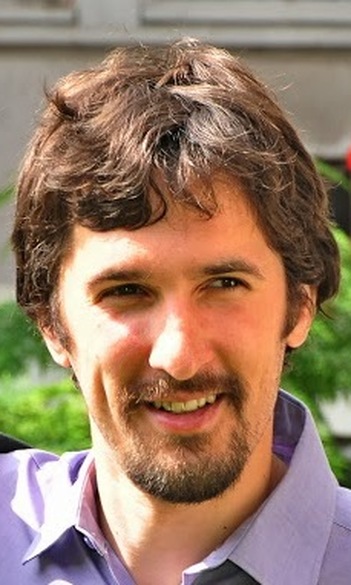 Márton Nagy合作论文数Department of Atomic Physics, ELTE Institute of Physics and Astronomy, Faculty of Natural Sciences, Eötvös Loránd University226
 Alexander Milov合作论文数Department of Particle Physics and Astrophysics, Faculty of Physics, Weizmann Institute of Science226A. S. Nyanin合作论文数225
 Yasuo Miake (三明康郎)合作论文数Institute of Physics, University of Tsukuba;Department of Pure and Applied Sciences, University of Tsukuba225
 Kenneth N Barish合作论文数Physics and Astronomy Dept, University of California, Riverside225M. Bai合作论文数225
 Alexei Denisov合作论文数Department of Experimental Physics, Institute for High Energy Physics225




