High-momentum two-particle correlations are a useful tool for studying jet-quenching effects in the quark-gluon plasma. Angular correlations between neutral-pion triggers and charged hadrons with transverse momenta in the range 4–12 GeV/c and 0.5–7 GeV/c, respectively, have been measured by the PHENIX experiment in 2014 for Au+Au collisions at √(s__NN)=200 GeV. Suppression is observed in the yield of high-momentum jet fragments opposite the trigger particle, which indicates jet suppression stemming from in-medium partonic energy loss, while enhancement is observed for low-momentum particles. The ratio and differences between the yield in Au+Au collisions and p+p collisions, I_AA and Δ_AA, as a function of the trigger-hadron azimuthal separation, Δϕ, are measured for the first time at the Relativistic Heavy Ion Collider. These results better quantify how the yield of low-p_T associated hadrons is enhanced at wide angle, which is crucial for studying energy loss as well as medium-response effects.
The PHENIX experiment measured the centrality dependence of two-pion Bose-Einstein correlation functions in root sNN = 200 GeV Au + Au collisions at the Relativistic Heavy Ion Collider at Brookhaven National Laboratory. The data are well represented by Levy-stable source distributions. The extracted source parameters are the correlation-strength parameter lambda, the Levy index of stability a, and the Levy-scale parameter R as a function of transverse mass m(T) and centrality. The lambda(m(T)) parameter is constant at larger values of m(T), but decreases as m(T) decreases. The Levy-scale parameter R(m(T)) decreases with mT and exhibits proportionality to the length scale of the nuclear overlap region. The Levy exponent alpha(m(T)) is independent of m(T) within uncertainties in each investigated centrality bin, but shows a clear centrality dependence. At all centralities, the Levy exponent a is significantly different from that of Gaussian ( alpha= 2) or Cauchy ( alpha = 1) source distributions. Comparisons to the predictions of Monte-Carlo simulations of resonance-decay chains show that, in all but the most peripheral centrality class (50%-60%), the obtained results are inconsistent with the measurements, unless a significant reduction of the in-medium mass of the eta meson is included. In each centrality class, the best value of the in-medium eta mass is compared to the mass of the. meson, as well as to several theoretical predictions that consider restoration of U-A(1) symmetry in hot hadronic matter.
High-momentum two-particle correlations are a useful tool for studying jet-quenching effects in the quarkgluon plasma. Angular correlations between neutral-pion triggers and charged hadrons with transverse momenta in the range 4-12 GeV/c and 0.5-7 GeV/c, respectively, have been measured by the PHENIX experiment in 2014 for Au + Au collisions at root sNN = 200 GeV. Suppression is observed in the yield of high-momentum jet fragments opposite the trigger particle, which indicates jet suppression stemming from in-medium partonic energy loss, while enhancement is observed for low-momentum particles. The ratio and differences between the yield in Au + Au collisions and p + p collisions, I-AA and Delta(AA), as a function of the trigger-hadron azimuthal separation, Delta phi, are measured for the first time at the BNL Relativistic Heavy Ion Collider. These results better quantify how the yield of low-pT associated hadrons is enhanced at wide angle, which is crucial for studying energy loss as well as medium-response effects.
The PHENIX experiment has performed a systematic study of identified charged-hadron $({\ensuremath{\pi}}^{\ifmmode\pm\else\textpm\fi{}},$ ${K}^{\ifmmode\pm\else\textpm\fi{}},$ $p,$ $\overline{p})$ production at midrapidity in $p+\mathrm{Al}$, $^{3}\mathrm{He}+\mathrm{Au}$, and $\mathrm{Cu}+\mathrm{Au}$ collisions at $\sqrt{{s}_{{}_{NN}}}=200\phantom{\rule{0.16em}{0ex}}\mathrm{GeV}$ and $\mathrm{U}+\mathrm{U}$ collisions at $\sqrt{{s}_{{}_{NN}}}=193\phantom{\rule{0.16em}{0ex}}\mathrm{GeV}$. Identified charged-hadron invariant transverse-momentum $({p}_{T})$ and transverse-mass $({m}_{T})$ spectra are presented and interpreted in terms of radially expanding thermalized systems. The particle ratios of $K/\ensuremath{\pi}$ and $p/\ensuremath{\pi}$ have been measured in different centrality ranges of large ($\mathrm{Cu}+\mathrm{Au}$ and $\mathrm{U}+\mathrm{U}$) and small ($p+\mathrm{Al}$ and $^{3}\mathrm{He}+\mathrm{Au}$) collision systems. The values of $K/\ensuremath{\pi}$ ratios measured in all considered collision systems were found to be consistent with those measured in $p+p$ collisions. However, the values of $p/\ensuremath{\pi}$ ratios measured in large collision systems reach the values of $\ensuremath{\approx}0.6$, which is a factor of $\ensuremath{\approx}2$ larger than in $p+p$ collisions. These results can be qualitatively understood in terms of the baryon enhancement expected from hadronization by recombination. Identified charged-hadron nuclear-modification factors (${R}_{AB}$) are also presented. Enhancement of proton ${R}_{AB}$ values over meson ${R}_{AB}$ values was observed in central $^{3}\mathrm{He}+\mathrm{Au}$, $\mathrm{Cu}+\mathrm{Au}$, and $\mathrm{U}+\mathrm{U}$ collisions. The proton ${R}_{AB}$ values measured in the $p+\mathrm{Al}$ collision system were found to be consistent with ${R}_{AB}$ values of $\ensuremath{\phi}$, ${\ensuremath{\pi}}^{\ifmmode\pm\else\textpm\fi{}}$, ${K}^{\ifmmode\pm\else\textpm\fi{}}$, and ${\ensuremath{\pi}}^{0}$ mesons, which may indicate that the size of the system produced in $p+\mathrm{Al}$ collisions is too small for recombination to cause a noticeable increase in proton production.
The PHENIX experiment has performed a systematic study of identified charged-hadron ( p +/-, K +/-, p, p) production at midrapidity in p + Al, He-3+Au, and Cu + Au collisions at root s(NN) = 200 GeV and U + U collisions at root s(NN) = 193 GeV. Identified charged-hadron invariant transverse-momentum (p(T)) and transverse-mass (m(T)) spectra are presented and interpreted in terms of radially expanding thermalized systems. The particle ratios of K/ p and p/ p have been measured in different centrality ranges of large (Cu + Au and U + U) and small ( p + Al and He-3+Au) collision systems. The values of K/pi ratios measured in all considered collision systems were found to be consistent with those measured in p + p collisions. However, the values of p/pi ratios measured in large collision systems reach the values of approximate to 0.6, which is a factor of approximate to 2 larger than in p + p collisions. These results can be qualitatively understood in terms of the baryon enhancement expected from hadronization by recombination. Identified charged-hadron nuclear-modification factors (R-AB) are also presented. Enhancement of proton R-AB values over meson RAB values was observed in central He-3+Au, Cu + Au, and U + U collisions. The proton R-AB values measured in the p + Al collision system were found to be consistent with R-AB phi values of phi, pi(+/-), K-+/-, and pi(0) mesons, which may indicate that the size of the system produced in p + Al collisions is too small for recombination to cause a noticeable increase in proton production.
A. Adare,12 C. Aidala,39,45 N. N. Ajitanand,63,* Y. Akiba,57,58,† R. Akimoto,11 J. Alexander,63 M. Alfred,24 H. Al-Ta’ani,52 A. Angerami,13 K. Aoki,32,57 N. Apadula,29,64 Y. Aramaki,11,57 H. Asano,35,57 E. C. Aschenauer,7 E. T. Atomssa,64 T. C. Awes,54 B. Azmoun,7 V. Babintsev,25 A. Bagoly,17 M. Bai,6 B. Bannier,64 K. N. Barish,8 B. Bassalleck,51 S. Bathe,5,58 V. Baublis,56 S. Baumgart,57 A. Bazilevsky,7 R. Belmont,12,69 A. Berdnikov,60 Y. Berdnikov,60 D. S. Blau,34,50 M. Boer,39 J. S. Bok,51,52,72 K. Boyle,58 M. L. Brooks,39 J. Bryslawskyj,5,8 H. Buesching,7 V. Bumazhnov,25 S. Butsyk,51 S. Campbell,13,64 V. Canoa Roman,64 P. Castera,64 C.-H. Chen,58,64 C. Y. Chi,13 M. Chiu,7 I. J. Choi,26 J. B. Choi,10,* S. Choi,62 R. K. Choudhury,4 P. Christiansen,41 T. Chujo,68 O. Chvala,8 V. Cianciolo,54 Z. Citron,64,70 B. A. Cole,13 M. Connors,21,58,64 M. Csanád,17 T. Csörgő,18,71 S. Dairaku,35,57 T. W. Danley,53 A. Datta,44 M. S. Daugherity,1 G. David,7,64 K. DeBlasio,51 K. Dehmelt,64 A. Denisov,25 A. Deshpande,58,64 E. J. Desmond,7 K. V. Dharmawardane,52 O. Dietzsch,61 L. Ding,29 A. Dion,29,64 J. H. Do,72 M. Donadelli,61 L. D’Orazio,43 O. Drapier,36 A. Drees,64 K. A. Drees,6 J. M. Durham,39,64 A. Durum,25 S. Edwards,6 Y. V. Efremenko,54 T. Engelmore,13 A. Enokizono,54,57,59 S. Esumi,68 K. O. Eyser,7,8 B. Fadem,46 W. Fan,64 N. Feege,64 D. E. Fields,51 M. Finger,9 M. Finger, Jr.,9 F. Fleuret,36 S. L. Fokin,34 J. E. Frantz,53 A. Franz,7 A. D. Frawley,20 Y. Fukao,57 Y. Fukuda,68 T. Fusayasu,48 K. Gainey,1 C. Gal,64 P. Gallus,14 P. Garg,3,64 A. Garishvili,66 I. Garishvili,38 H. Ge,64 A. Glenn,38 X. Gong,63 M. Gonin,36 Y. Goto,57,58 R. Granier de Cassagnac,36 N. Grau,2 S. V. Greene,69 M. Grosse Perdekamp,26 T. Gunji,11 L. Guo,39 H.-Å. Gustafsson,41,* T. Hachiya,57,58 J. S. Haggerty,7 K. I. Hahn,19 H. Hamagaki,11 S. Y. Han,19 J. Hanks,13,64 S. Hasegawa,30 T. O. S. Haseler,21 K. Hashimoto,57,59 E. Haslum,41 R. Hayano,11 X. He,21 T. K. Hemmick,64 T. Hester,8 J. C. Hill,29 K. Hill,12 A. Hodges,21 R. S. Hollis,8 K. Homma,23 B. Hong,33 T. Horaguchi,68 Y. Hori,11 T. Hoshino,23 N. Hotvedt,29 J. Huang,7 S. Huang,69 T. Ichihara,57,58 H. Iinuma,32 Y. Ikeda,57,68 J. Imrek,16 M. Inaba,68 A. Iordanova,8 D. Isenhower,1 M. Issah,69 D. Ivanishchev,56 B. V. Jacak,64 M. Javani,21 Z. Ji,64 J. Jia,7,63 X. Jiang,39 B. M. Johnson,7,21 K. S. Joo,47 V. Jorjadze,64 D. Jouan,55 D. S. Jumper,26 J. Kamin,64 S. Kaneti,64 B. H. Kang,22 J. H. Kang,72 J. S. Kang,22 J. Kapustinsky,39 K. Karatsu,35,57 S. Karthas,64 M. Kasai,57,59 G. Kasza,17,18 D. Kawall,44,58 A. V. Kazantsev,34 T. Kempel,29 V. Khachatryan,64 A. Khanzadeev,56 K. M. Kijima,23 B. I. Kim,33 C. Kim,8,33 D. J. Kim,31 E.-J. Kim,10 H. J. Kim,72 K.-B. Kim,10 M. Kim,62 M. H. Kim,33 Y.-J. Kim,26 Y. K. Kim,22 D. Kincses,17 E. Kinney,12 Á. Kiss,17 E. Kistenev,7 J. Klatsky,20 D. Kleinjan,8 P. Kline,64 T. Koblesky,12 Y. Komatsu,11,32 B. Komkov,56 J. Koster,26 D. Kotchetkov,53 D. Kotov,56,60 A. Král,14 F. Krizek,31 S. Kudo,68 G. J. Kunde,39 B. Kurgyis,17 K. Kurita,57,59 M. Kurosawa,57,58 Y. Kwon,72 G. S. Kyle,52 R. Lacey,63 Y. S. Lai,13 J. G. Lajoie,29 A. Lebedev,29 B. Lee,22 D. M. Lee,39 J. Lee,19,65 K. B. Lee,33 K. S. Lee,33 S. H. Lee,29,64 S. R. Lee,10 M. J. Leitch,39 M. A. L. Leite,61 M. Leitgab,26 Y. H. Leung,64 B. Lewis,64 N. A. Lewis,45 X. Li,39 S. H. Lim,39,72 L. A. Linden Levy,12 M. X. Liu,39 S. Lökös,17,18 B. Love,69 D. Lynch,7 C. F. Maguire,69 Y. I. Makdisi,6 M. Makek,70,73 A. Manion,64 V. I. Manko,34 E. Mannel,7,13 H. Masuda,59 S. Masumoto,11,32 M. McCumber,12,39 P. L. McGaughey,39 D. McGlinchey,12,20,39 C. McKinney,26 M. Mendoza,8 B. Meredith,26 W. J. Metzger,18 Y. Miake,68 T. Mibe,32 A. C. Mignerey,43 D. E. Mihalik,64 A. Milov,70 D. K. Mishra,4 J. T. Mitchell,7 G. Mitsuka,58 Y. Miyachi,57,67 S. Miyasaka,57,67 A. K. Mohanty,4 S. Mohapatra,63 H. J. Moon,47 T. Moon,72 D. P. Morrison,7 S. I. Morrow,69 S. Motschwiller,46 T. V. Moukhanova,34 T. Murakami,35,57 J. Murata,57,59 A. Mwai,63 T. Nagae,35 K. Nagai,67 S. Nagamiya,32,57 K. Nagashima,23 J. L. Nagle,12 M. I. Nagy,17,71 I. Nakagawa,57,58 H. Nakagomi,57,68 Y. Nakamiya,23 K. R. Nakamura,35,57 T. Nakamura,57 K. Nakano,57,67 C. Nattrass,66 A. Nederlof,46 M. Nihashi,23,57 R. Nouicer,7,58 T. Novák,18,71 N. Novitzky,31,64 A. S. Nyanin,34 E. O’Brien,7 C. A. Ogilvie,29 K. Okada,58 J. D. Orjuela Koop,12 J. D. Osborn,45 A. Oskarsson,41 M. Ouchida,23,57 K. Ozawa,11,32,68 R. Pak,7 V. Pantuev,27 V. Papavassiliou,52 B. H. Park,22 I. H. Park,19,65 J. S. Park,62 S. Park,57,62,64 S. K. Park,33 S. F. Pate,52 L. Patel,21 M. Patel,29 H. Pei,29 J.-C. Peng,26 W. Peng,69 H. Pereira,15 D. V. Perepelitsa,7,12,13 G. D. N. Perera,52 D.Yu. Peressounko,34 C. E. PerezLara,64 R. Petti,7,64 C. Pinkenburg,7 R. P. Pisani,7 M. Proissl,64 A. Pun,53 M. L. Purschke,7 H. Qu,1 P. V. Radzevich,60 J. Rak,31 I. Ravinovich,70 K. F. Read,54,66 D. Reynolds,63 V. Riabov,50,56 Y. Riabov,56,60 E. Richardson,43 D. Richford,5 T. Rinn,29 D. Roach,69 G. Roche,40,* S. D. Rolnick,8 M. Rosati,29 Z. Rowan,5 J. Runchey,29 B. Sahlmueller,64 N. Saito,32 T. Sakaguchi,7 H. Sako,30 V. Samsonov,50,56 M. Sano,68 M. Sarsour,21 K. Sato,68 S. Sato,30 S. Sawada,32 B. K. Schmoll,66 K. Sedgwick,8 R. Seidl,57,58 A. Sen,21,29,66 R. Seto,8 A. Sexton,43 D. Sharma,64,70 I. Shein,25 T.-A. Shibata,57,67 K. Shigaki,23 M. Shimomura,29,49,68 K. Shoji,35,57 P. Shukla,4 A. Sickles,7,26 C. L. Silva,29,39 D. Silvermyr,41,54 K. S. Sim,33 B. K. Singh,3 C. P. Singh,3 V. Singh,3 M. J. Skoby,45 M. Slunečka,9 R. A. Soltz,38 W. E. Sondheim,39 S. P. Sorensen,66 I. V. Sourikova,7 P. W. Stankus,54 E. Stenlund,41 M. Stepanov,44,* A. Ster,71 S. P. Stoll,7 T. Sugitate,23 A. Sukhanov,7 J. Sun,64 J. Sziklai,71 E. M. Takagui,61 A. Takahara,11 A Takeda,49 A. Taketani,57,58 Y. Tanaka,48 S. Taneja,64 K. Tanida,30,58,62 M. J. Tannenbaum,7 S. Tarafdar,3,69 A. Taranenko,50,63 G. Tarnai,16 E. Tennant,52 H. Themann,64 R. Tieulent,42 A. Timilsina,29 T. Todoroki,57,68 L. Tomášek,28 M. Tomášek,14,28 H. Torii,23 C. L. Towell,1 R. S. Towell,1 I. Tserruya,70 Y. Tsuchimoto,11 T. Tsuji,11 Y. Ueda,23 B. Ujvari,16 C. Vale,7 H. W. van Hecke,39 M. Vargyas,17,71 S. Vazquez-Carson,12 E. Vazquez-Zambrano,13 A. Veicht,13 J. Velkovska,69 R. Vértesi,71 M. Virius,14 A. Vossen,26 V. Vrba,14,28 E. Vznuzdaev,56 X. R. Wang,52,58 Z. Wang,5 D. Watanabe,23 K. Watanabe,68 Y. Watanabe,57,58 Y. S. Watanabe,11 F. Wei,29,52 R. Wei,63 S. N. White,7 D. Winter,13 S. Wolin,26 C. L. Woody,7 M. Wysocki,12,54 B. Xia,53 C. Xu,52 Q. Xu,69
Received 2 October 2023DOI:https://doi.org/10.1103/PhysRevC.108.049905©2023 American Physical SocietyPhysics Subject Headings (PhySH)Research AreasParticle correlations & fluctuationsQuark-gluon plasmaRelativistic heavy-ion collisionsPhysical SystemsBose-Einstein condensatesPionsNuclear Physics
The measurement of direct photons from Au$+$Au collisions at $\sqrt{s_{_{NN}}}=39$ and 62.4 GeV in the transverse-momentum range $0.4<p_T<3$ Gev/$c$ is presented by the PHENIX collaboration at the Relativistic Heavy Ion Collider. A significant direct-photon yield is observed in both collision systems. A universal scaling is observed when the direct-photon $p_T$ spectra for different center-of-mass energies and for different centrality selections at $\sqrt{s_{_{NN}}}=62.4$ GeV is scaled with $(dN_{\rm ch}/d\eta)^{\alpha}$ for $\alpha=1.21{\pm}0.04$. This scaling also holds true for direct-photon spectra from Au$+$Au collisions at $\sqrt{s_{_{NN}}}=200$ GeV measured earlier by PHENIX, as well as the spectra from Pb$+$Pb at $\sqrt{s_{_{NN}}}=2760$ GeV published by ALICE. The scaling power $\alpha$ seems to be independent of $p_T$, center of mass energy, and collision centrality. The spectra from different collision energies have a similar shape up to $p_T$ of 2 GeV/$c$. The spectra have a local inverse slope $T_{\rm eff}$ increasing with $p_T$ of $0.174\pm0.018$ GeV/$c$ in the range $0.4<p_T<1.3$ GeV/$c$ and increasing to $0.289\pm0.024$ GeV/$c$ for $0.9<p_T<2.1$ GeV/$c$. The observed similarity of low-$p_T$ direct-photon production from $\sqrt{s_{_{NN}}}= 39$ to 2760 GeV suggests a common source of direct photons for the different collision energies and event centrality selections, and suggests a comparable space-time evolution of direct-photon emission.
We present measurements of the cross section and double-helicity asymmetry A_{LL} of direct-photon production in p[over →]+p[over →] collisions at sqrt[s]=510 GeV. The measurements have been performed at midrapidity (|η|<0.25) with the PHENIX detector at the Relativistic Heavy Ion Collider. At relativistic energies, direct photons are dominantly produced from the initial quark-gluon hard scattering and do not interact via the strong force at leading order. Therefore, at sqrt[s]=510 GeV, where leading-order-effects dominate, these measurements provide clean and direct access to the gluon helicity in the polarized proton in the gluon-momentum-fraction range 0.02<x<0.08, with direct sensitivity to the sign of the gluon contribution.
The performance of the electromagnetic calorimeter of the ALICE experiment during operation in 2010–2018 at the Large Hadron Collider is presented. After a short introduction into the design, readout, and trigger capabilities of the detector, the procedures for data taking, reconstruction, and validation are explained. The methods used for the calibration and various derived corrections are presented in detail. Subsequently, the capabilities of the calorimeter to reconstruct and measure photons, light mesons, electrons and jets are discussed. The performance of the calorimeter is illustrated mainly with data obtained with test beams at the Proton Synchrotron and Super Proton Synchrotron or in proton-proton collisions at √s = 13 TeV, and compared to simulations.
The PHENIX experiment reports systematic measurements at the Relativistic Heavy Ion Collider of phi-meson production in asymmetric Cu + Au collisions at root sNN = 200 GeV and in U + U collisions at root sNN = 193 GeV. Measurements were performed via the phi -> K+K- decay channel at midrapidity |n| < 0.35. Features of phi -meson production measured in Cu + Cu, Cu + Au, Au + Au, and U + U collisions were found to not depend on the collision geometry, which was expected because the yields are averaged over the azimuthal angle and follow the expected scaling with nuclear-overlap size. The elliptic flow of the 0 meson in Cu + Au, Au + Au, and U + U collisions scales with second-order-participant eccentricity and the length scale of the nuclear -overlap region (estimated with the number of participating nucleons). At moderate pT, phi-meson production measured in Cu + Au and U + U collisions is consistent with coalescence-model predictions, whereas at high p(T) the production is in agreement with expectations for in-medium energy loss of parent partons prior to their fragmentation. The elliptic flow for 0 mesons measured in Cu + Au and U + U collisions is well described by a (2+1)-dimensional viscous-hydrodynamic model with specific-shear viscosity eta/s = 1/4 pi.
The PHENIX experiment reports systematic measurements at the Relativistic Heavy Ion Collider of ϕ-meson production in asymmetric Cu+Au collisions at sNN=200GeV and in U+U collisions at sNN=193GeV. Measurements were performed via the ϕ→K+K− decay channel at midrapidity |η|<0.35. Features of ϕ-meson production measured in Cu+Cu, Cu+Au, Au+Au, and U+U collisions were found to not depend on the collision geometry, which was expected because the yields are averaged over the azimuthal angle and follow the expected scaling with nuclear-overlap size. The elliptic flow of the ϕ meson in Cu+Au, Au+Au, and U+U collisions scales with second-order-participant eccentricity and the length scale of the nuclear-overlap region (estimated with the number of participating nucleons). At moderate pT, ϕ-meson production measured in Cu+Au and U+U collisions is consistent with coalescence-model predictions, whereas at high pT the production is in agreement with expectations for in-medium energy loss of parent partons prior to their fragmentation. The elliptic flow for ϕ mesons measured in Cu+Au and U+U collisions is well described by a (2+1)-dimensional viscous-hydrodynamic model with specific-shear viscosity η/s=1/4π.5 MoreReceived 25 July 2022Accepted 28 September 2022DOI:https://doi.org/10.1103/PhysRevC.107.014907©2023 American Physical SocietyPhysics Subject Headings (PhySH)Research AreasLeptonic, semileptonic & radiative decaysParticle productionRelativistic heavy-ion collisionsPhysical SystemsStrange quarkVector mesonsTechniquesHadron collidersNuclear Physics
The PHENIX experiment reports systematic measurements at the Relativistic Heavy Ion Collider of ϕ-meson production in asymmetric Cu+Au collisions at √(s__NN)=200 GeV and in U+U collisions at √(s__NN)=193 GeV. Measurements were performed via the ϕ→ K^+K^- decay channel at midrapidity |η|<0.35. Features of ϕ-meson production measured in Cu+Cu, Cu+Au, Au+Au, and U+U collisions were found to not depend on the collision geometry, which was expected because the yields are averaged over the azimuthal angle and follow the expected scaling with nuclear-overlap size. The elliptic flow of the ϕ meson in Cu+Au, Au+Au, and U+U collisions scales with second-order-participant eccentricity and the length scale of the nuclear-overlap region (estimated with the number of participating nucleons). At moderate p_T, ϕ-meson production measured in Cu+Au and U+U collisions is consistent with coalescence-model predictions, whereas at high p_T the production is in agreement with expectations for in-medium energy loss of parent partons prior to their fragmentation. The elliptic flow for ϕ mesons measured in Cu+Au and U+U collisions is well described by a (2+1)D viscous-hydrodynamic model with specific-shear viscosity η/s=1/4π.
The PHENIX collaboration presents a systematic study of $\pi^0$ production from $p$$+$$p$, $p$$+$Al, $p$$+$Au, $d$$+$Au, and $^{3}$He$+$Au collisions at $\sqrt{s_{_{NN}}}=200$ GeV. Measurements were performed with different centrality selections as well as the total inelastic, 0%--100%, selection for all collision systems. For 0%--100% collisions, the nuclear modification factors, $R_{xA}$, are consistent with unity for $p_T$ above 8 GeV/$c$, but exhibit an enhancement in peripheral collisions and a suppression in central collisions. The enhancement and suppression characteristics are similar for all systems for the same centrality class. It is shown that for high-$p_T$-$\pi^0$ production, the nucleons in the $d$ and $^3$He interact mostly independently with the Au nucleus and that the counter intuitive centrality dependence is likely due to a physical correlation between multiplicity and the presence of a hard scattering process. These observations disfavor models where parton energy loss has a significant contribution to nuclear modifications in small systems. Nuclear modifications at lower $p_T$ resemble the Cronin effect -- an increase followed by a peak in central or inelastic collisions and a plateau in peripheral collisions. The peak height has a characteristic ordering by system size as $p$$+$Au $>$ $d$$+$Au $>$ $^{3}$He$+$Au $>$ $p$$+$Al. For collisions with Au ions, current calculations based on initial state cold nuclear matter effects result in the opposite order, suggesting the presence of other contributions to nuclear modifications, in particular at lower $p_T$.
A. Adare, C. Aidala, 41 N.N. Ajitanand, Y. Akiba, 53 R. Akimoto, H. Al-Ta’ani, J. Alexander, A. Angerami, K. Aoki, N. Apadula, Y. Aramaki, 52 H. Asano, 52 E.C. Aschenauer, E.T. Atomssa, T.C. Awes, B. Azmoun, V. Babintsev, M. Bai, B. Bannier, K.N. Barish, B. Bassalleck, S. Bathe, 53 V. Baublis, S. Baumgart, A. Bazilevsky, R. Belmont, A. Berdnikov, Y. Berdnikov, X. Bing, D.S. Blau, J.S. Bok, K. Boyle, M.L. Brooks, H. Buesching, V. Bumazhnov, S. Butsyk, S. Campbell, P. Castera, C.-H. Chen, C.Y. Chi, M. Chiu, I.J. Choi, J.B. Choi, S. Choi, R.K. Choudhury, P. Christiansen, T. Chujo, O. Chvala, V. Cianciolo, Z. Citron, B.A. Cole, M. Connors, M. Csanád, T. Csörgő, S. Dairaku, 52 A. Datta, M.S. Daugherity, G. David, A. Denisov, A. Deshpande, 59 E.J. Desmond, K.V. Dharmawardane, O. Dietzsch, L. Ding, A. Dion, 59 M. Donadelli, O. Drapier, A. Drees, K.A. Drees, J.M. Durham, 59 A. Durum, L. D’Orazio, S. Edwards, Y.V. Efremenko, T. Engelmore, A. Enokizono, S. Esumi, K.O. Eyser, B. Fadem, D.E. Fields, M. Finger, M. Finger, Jr., F. Fleuret, S.L. Fokin, J.E. Frantz, A. Franz, A.D. Frawley, Y. Fukao, T. Fusayasu, K. Gainey, C. Gal, A. Garishvili, I. Garishvili, A. Glenn, X. Gong, M. Gonin, Y. Goto, 53 R. Granier de Cassagnac, N. Grau, S.V. Greene, M. Grosse Perdekamp, T. Gunji, L. Guo, H.-Å. Gustafsson, ∗ T. Hachiya, J.S. Haggerty, K.I. Hahn, H. Hamagaki, J. Hanks, K. Hashimoto, 54 E. Haslum, R. Hayano, X. He, T.K. Hemmick, T. Hester, J.C. Hill, R.S. Hollis, K. Homma, B. Hong, T. Horaguchi, Y. Hori, S. Huang, T. Ichihara, 53 H. Iinuma, Y. Ikeda, 62 J. Imrek, M. Inaba, A. Iordanova, D. Isenhower, M. Issah, D. Ivanishchev, B.V. Jacak, M. Javani, J. Jia, 58 X. Jiang, B.M. Johnson, K.S. Joo, D. Jouan, D.S. Jumper, J. Kamin, S. Kaneti, B.H. Kang, J.H. Kang, J.S. Kang, J. Kapustinsky, K. Karatsu, 52 M. Kasai, 54 D. Kawall, 53 A.V. Kazantsev, T. Kempel, A. Khanzadeev, K.M. Kijima, B.I. Kim, C. Kim, D.J. Kim, E.-J. Kim, H.J. Kim, K.-B. Kim, Y.-J. Kim, Y.K. Kim, E. Kinney, Á. Kiss, E. Kistenev, J. Klatsky, D. Kleinjan, P. Kline, Y. Komatsu, B. Komkov, J. Koster, D. Kotchetkov, D. Kotov, 55 A. Král, F. Krizek, G.J. Kunde, K. Kurita, 54 M. Kurosawa, Y. Kwon, G.S. Kyle, R. Lacey, Y.S. Lai, J.G. Lajoie, A. Lebedev, B. Lee, D.M. Lee, J. Lee, K.B. Lee, K.S. Lee, S.H. Lee, S.R. Lee, M.J. Leitch, M.A.L. Leite, M. Leitgab, B. Lewis, S.H. Lim, L.A. Linden Levy, M.X. Liu, B. Love, C.F. Maguire, Y.I. Makdisi, M. Makek, 67 A. Manion, V.I. Manko, E. Mannel, S. Masumoto, M. McCumber, P.L. McGaughey, D. McGlinchey, 19 C. McKinney, M. Mendoza, B. Meredith, Y. Miake, T. Mibe, A.C. Mignerey, A. Milov, D.K. Mishra, J.T. Mitchell, Y. Miyachi, 61 S. Miyasaka, 61 A.K. Mohanty, H.J. Moon, D.P. Morrison, † S. Motschwiller, T.V. Moukhanova, T. Murakami, 52 J. Murata, 54 T. Nagae, S. Nagamiya, 52 J.L. Nagle, ‡ M.I. Nagy, I. Nakagawa, 53 Y. Nakamiya, K.R. Nakamura, 52 T. Nakamura, K. Nakano, 61 C. Nattrass, A. Nederlof, M. Nihashi, 52 R. Nouicer, 53 N. Novitzky, A.S. Nyanin, E. O’Brien, C.A. Ogilvie, K. Okada, A. Oskarsson, M. Ouchida, 52 K. Ozawa, R. Pak, V. Pantuev, V. Papavassiliou, B.H. Park, I.H. Park, S.K. Park, S.F. Pate, L. Patel, H. Pei, J.-C. Peng, H. Pereira, D.Yu. Peressounko, R. Petti, 59 C. Pinkenburg, R.P. Pisani, M. Proissl, M.L. Purschke, H. Qu, J. Rak, I. Ravinovich, K.F. Read, 60 D. Reynolds, V. Riabov, Y. Riabov, E. Richardson, N. Riveli, D. Roach, G. Roche, ∗ S.D. Rolnick, M. Rosati, B. Sahlmueller, N. Saito, T. Sakaguchi, V. Samsonov, 51 M. Sano, M. Sarsour, S. Sawada, K. Sedgwick, R. Seidl, 53 A. Sen, R. Seto, D. Sharma, I. Shein, T.-A. Shibata, 61 K. Shigaki, M. Shimomura, K. Shoji, 52 P. Shukla, A. Sickles, C.L. Silva, D. Silvermyr, K.S. Sim, B.K. Singh, C.P. Singh, V. Singh, M. Slunečka, R.A. Soltz, W.E. Sondheim, S.P. Sorensen, M. Soumya, I.V. Sourikova, P.W. Stankus, E. Stenlund, M. Stepanov, A. Ster, S.P. Stoll, T. Sugitate, A. Sukhanov, J. Sun, J. Sziklai, E.M. Takagui, A. Takahara, A. Taketani, 53 Y. Tanaka, S. Taneja, K. Tanida, 57 M.J. Tannenbaum, S. Tarafdar, A. Taranenko, 58 E. Tennant, H. Themann, T. Todoroki, 62 L. Tomášek, M. Tomášek, H. Torii, R.S. Towell, I. Tserruya, Y. Tsuchimoto, T. Tsuji, C. Vale, H.W. van Hecke, M. Vargyas, E. Vazquez-Zambrano, A. Veicht, J. Velkovska, R. Vértesi, M. Virius, A. Vossen, V. Vrba, 26 E. Vznuzdaev, X.R. Wang, D. Watanabe, K. Watanabe, Y. Watanabe, 53 Y.S. Watanabe, F. Wei, R. Wei, S. Whitaker, S.N. White, D. Winter, S. Wolin, C.L. Woody, M. Wysocki, Y.L. Yamaguchi, 52 R. Yang, A. Yanovich, J. Ying, S. Yokkaichi, 53 Z. You, I. Younus, 46 I.E. Yushmanov, W.A. Zajc, and A. Zelenski
(Dated: The PHENIX collaboration presents a systematic study of inclusive π 0 production from p + p , p +Al, p +Au, d +Au, and 3 He+Au collisions at √ s NN = 200 GeV. Measurements were performed with different centrality selections as well as the total inelastic, 0%–100%, selection for all collision systems. For 0%–100% collisions, the nuclear-modification factors, R xA , are consistent with unity for p T above 8 GeV/ c , but exhibit an enhancement in peripheral collisions and a suppression in central collisions. The enhancement and suppression characteristics are similar for all systems for the same centrality class. It is shown that for high- p T - π 0 production, the nucleons in the d and 3 He interact mostly independently with the Au nucleus and that the counter intuitive centrality dependence is likely due to a physical correlation between multiplicity and the presence of a hard scattering process. These observations disfavor models where parton energy loss has a significant contribution to nuclear modifications in small systems. Nuclear modifications at lower p T resemble the Cronin effect – an increase followed by a peak in central or inelastic collisions and a plateau in peripheral collisions. The peak height has a characteristic ordering by system size as p +Au > d +Au > 3 He+Au > p +Al. For collisions with Au ions, current calculations based on initial state cold nuclear matter effects result in the opposite order, suggesting the presence of other contributions to nuclear modifications, in particular at lower p T .
We describe the details of a silicon-tungsten prototype electromagnetic calorimeter module and associated readout electronics. Detector performance for this prototype has been measured in test beam experiments at the CERN PS and SPS accelerator facilities in 2015/16. The results are compared to those in Monte Carlo Geant4 simulations. This is the first real-world demonstration of the performance of a custom ASIC designed for fast, lower-power, high-granularity applications.
 Walter Sondheim合作论文数Los Alamos National Laboratory539
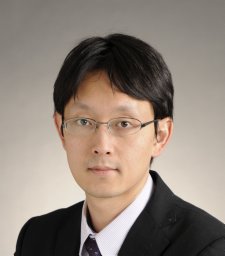 Tatsuya Chujo合作论文数Institute of Physics, University of Tsukuba;Division of Physics, Faculty of Pure and Applied Sciences, University of Tsukuba522Anders Oskarsson合作论文数Division of Particle and Nuclear Physics, Department of Physics, Faculty of Science, Lund University521
 Yasuo Miake (三明康郎)合作论文数Institute of Physics, University of Tsukuba;Department of Pure and Applied Sciences, University of Tsukuba489
 Hideki Hamagaki (浜垣秀樹)合作论文数Division of Fundamental Science, Institute for Innovative Science and Technology, Nagasaki Institute of Applied Science459
 Yaroslav A. Berdnikov合作论文数Department of Experimental Nuclear Physics, Peter the Great St. Petersburg Polytechnic University;High Energy Physics Division, Petersburg Nuclear Physics Institute457S. Esumi合作论文数456S. Bathe合作论文数453M. L. Purschke合作论文数444H. Buesching合作论文数440A. S. Nyanin合作论文数428A. Khanzadeev合作论文数421
 Ralf Averbeck合作论文数GSI Helmholtzzentrum für Schwerionenforschung418
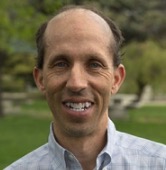 Ron Soltz合作论文数Nuclear and Chemical Sciences Division, Lawrence Livermore National Laboratory416
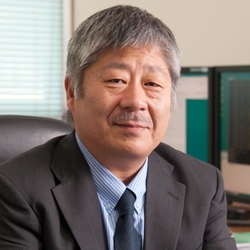 Toru Sugitate (杉立徹)合作论文数Hiroshima University410
 Yasuyuki Akiba合作论文数RHIC Physics Research Laboratory, Nishina Center for Accelerator-Based Science, RIKEN408
 Kenneth F Read Jr合作论文数Physics Division, Oak Ridge National Laboratory;University of Tennessee406
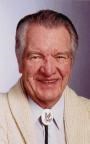 Melvin L. Brooks合作论文数Los Alamos National Laboratory405
 Achim Franz合作论文数Physics Department, Brookhaven National Laboratory405
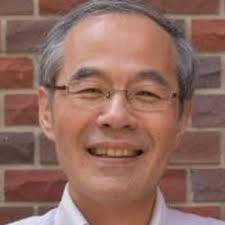 Kazuyoshi Kurita (栗田和好)合作论文数Department of Physics, College of Science, Rikkyo University;Center for Development and Support of Higher Education, Rikkyo University398P. L. McGaughey合作论文数Los Alamos National Laboratory397A. Bazilevsky合作论文数396
 Alexander Milov合作论文数Department of Particle Physics and Astrophysics, Faculty of Physics, Weizmann Institute of Science392
 Jan Rak合作论文数Namitech;Jyvaskyla University392V. Bumazhnov合作论文数387
 David Silvermyr合作论文数Division of Particle Physics, Department of Physics, Lund University386
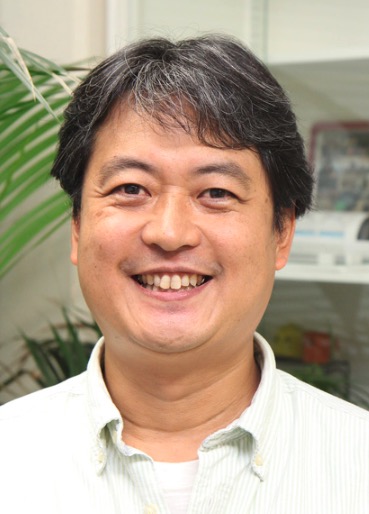 Kenta Shigaki (志垣賢太)合作论文数Graduate School of Advanced Science and Engineering, Hiroshima University;International Institute for Sustainability with Knotted Chiral Meta Matter, Hiroshima University386Gr Young合作论文数385D. Morrison合作论文数385Vv Baublis合作论文数384
 Vladimir Samsonov合作论文数Department of High Energy Physics, Petersburg Nuclear Physics Institute;High Energy Physics Division, Petersburg Nuclear Physics Institute384Abhay Deshpande合作论文数Brookhaven National Laboratory382
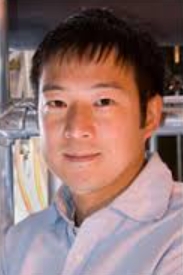 Mickey Chiu合作论文数Physics Department, Brookhaven National Laboratory;NEXO;PHENIX380V. Papavassiliou合作论文数379S. F. Pate合作论文数376S. P. Sorensen合作论文数375
 Kwon Young Il合作论文数Department of Physics, Yonsei University375
 Byung-Sik Hong合作论文数Department of Physics, College of Science, Korea University372
 Kenneth N Barish合作论文数Physics and Astronomy Dept, University of California, Riverside371
 Laurent Aphecetche合作论文数SUBATECH;Laboratoire de Physique Subatomique et des Technologie Associées, Centre National de la Recherche Scientifique;Nantes Université371
 Alexei Denisov合作论文数Department of Experimental Physics, Institute for High Energy Physics371Alexei Lebedev合作论文数Physics Department, Brookhaven National Laboratory370
 Bernd Bassalleck合作论文数Department of Physics and Astronomy, The University of New Mexico370A. Glenn合作论文数369
 Artur Durum合作论文数369
 John Haggerty合作论文数Physics Department, Brookhaven National Laboratory367
 Axel Drees合作论文数Department of Physics and Astronomy, Stony Brook University;College of Arts and Sciences, Stony Brook University367
 Taku Gunji (郡司卓)合作论文数Center for Nuclear Study, Graduate School of Science, The University of Tokyo366Shoji Nagamiya合作论文数364




