The Spin Physics Detector collaboration proposes to install a universal detector in the second interaction point of the NICA collider under construction (JINR, Dubna) to study the spin structure of the proton and deuteron and other spin-related phenomena using a unique possibility to operate with polarized proton and deuteron beams at a collision energy up to 27 GeV and a luminosity up to 10^32 cm^-2 s^-1. As the main goal, the experiment aims to provide access to the gluon TMD PDFs in the proton and deuteron, as well as the gluon transversity distribution and tensor PDFs in the deuteron, via the measurement of specific single and double spin asymmetries using different complementary probes such as charmonia, open charm, and prompt photon production processes. Other polarized and unpolarized physics is possible, especially at the first stage of NICA operation with reduced luminosity and collision energy of the proton and ion beams. This document is dedicated exclusively to technical issues of the SPD setup construction.
The paper presents initial steps to distinguish the contribution of anomalous operators in Wtb vertex from the Standard Model for final state processes tWb using a deep neural network. A scenario with vector left- and right-handed operators at the Wtb vertex is considered as an example and as a most difficult for the separation. The deep neural network was trained on preselected kinematic variables that exhibit different behavior for the Standard Model cases and the presence of a right vector operator at the Wtb vertex. The presented results can be interpreted in the context of further prospects for searching for anomalous operators in Wtb vertex for the processes of single- and double-resonant production of top quarks with the final state tWb.
We report an improved measurement of the valence u and d quark distributions from the forward-backward asymmetry in the Drell-Yan process using 8.6 fb(-1) of data collected with the D0 detector in p (p) over bar collisions at root s = 1.96. This analysis provides the values of new structure parameters that are directly related to the valence up and down quark distributions in the proton. In other experimental results measuring the quark content of the proton, d quark contributions are mixed with those from other quark flavors. In this measurement, the u and d quark contributions are separately extracted by applying a factorization of the QCD and electroweak portions of the forward-backward asymmetry.
The paper presents a method for separating contributions of pair and single top quark production to tWb associated final state using a neural network. The proposed method makes it possible to calculate such processes in a gauge-invariant way, taking into account interference contributions and dividing the phase space into single-resonant and double-resonant regions. The optimized set of observables is used to separate single-resonant and double-resonant contributions to the overall process for neural network training. A usage of the method allows for avoiding the disadvantages that are inherent in the schemes used in collider physics for calculation of the tWb associated top quark production with the removal of Feynman diagrams, which leads to violation of gauge invariance, or the addition of a subtraction scheme, which leads to the appearance of negative weights for the part of simulated events. The proposed method can be used to increase the efficiency of the search for deviations from the predictions of the Standard Model in the interaction of the top quark with the W boson and b-quark.
This document presents the initial scientific case for upgrading the Continuous Electron Beam Accelerator Facility (CEBAF) at Jefferson Lab (JLab) to 22 GeV. It is the result of a community effort, incorporating insights from a series of workshops conducted between March 2022 and April 2023. With a track record of over 25 years in delivering the world's most intense and precise multi-GeV electron beams, CEBAF's potential for a higher energy upgrade presents a unique opportunity for an innovative nuclear physics program, which seamlessly integrates a rich historical background with a promising future. The proposed physics program encompass a diverse range of investigations centered around the nonperturbative dynamics inherent in hadron structure and the exploration of strongly interacting systems. It builds upon the exceptional capabilities of CEBAF in high-luminosity operations, the availability of existing or planned Hall equipment, and recent advancements in accelerator technology. The proposed program cover various scientific topics, including Hadron Spectroscopy, Partonic Structure and Spin, Hadronization and Transverse Momentum, Spatial Structure, Mechanical Properties, Form Factors and Emergent Hadron Mass, Hadron-Quark Transition, and Nuclear Dynamics at Extreme Conditions, as well as QCD Confinement and Fundamental Symmetries. Each topic highlights the key measurements achievable at a 22 GeV CEBAF accelerator. Furthermore, this document outlines the significant physics outcomes and unique aspects of these programs that distinguish them from other existing or planned facilities. In summary, this document provides an exciting rationale for the energy upgrade of CEBAF to 22 GeV, outlining the transformative scientific potential that lies within reach, and the remarkable opportunities it offers for advancing our understanding of hadron physics and related fundamental phenomena.
We discuss the possibility of constructing an effective gauge field theory of the nucleon interations based on the ideas of isotopic invariance as well as hypercharge invariance as a local gauge symmetry and spontaneous breaking of this symmetry. The constructed model predicts the structure of interactions of protons and neutrons with $\rho$- and $\sigma$-mesons, with pi-mesons and photons, as well as interactions of these particles with each other. The Lagrangian of the model consists of several parts parts involving dimension 4 and 5 gauge invariant operators. Feynman rules for physical degrees of freedom as follow from the Lagrangian define the structure of diagrams for one-boson exchanges between nucleons predicting the internucleon one-boson exchange potential as well as nucleon scattering amplitudes. The range of applicability of the model is discussed and estimates are made of the resulting coupling constants. The model predicts the mass of the neutral $\rho^0$-meson to be about $1\,MeV$ larger than the mass of the charged mesons $\rho^{\pm}$. The vector $\omega$-meson, which is a sterile particle with respect to the considered gauge group $SU_I(2)\times U_Y(1)$, can be added to the scheme by means of a gauge-invariant operator of dimension 5, as shown in Appendix ~A.
14 ÂÒÓÇÎâ 2023 ÅÑAE ÀÓËá ¸ÑÎÂÍÑÄËÚÖ °ÅÂÐÇÔâÐÖ, ÄÔÇÏËÓÐÑ ËÊÄÇÔÕÐÑÏÖ ÖÚÈÐÑÏÖ, ÒÓÑ×ÇÔÔÑÓÖ, ÂÍÂAEÇÏËÍÖ ²ÑÔÔËÌÔÍÑÌ ÂÍÂ-AEÇÏËË ÐÂÖÍ (²¡¯), ÐÂÖÚÐÑÏÖ ÓÖÍÑÄÑAEËÕÇÎá ÂÃÑÓÂÕÑÓËË âAEÇÓÐÞØ ÓÇÂÍÙËÌ ËÏ. ¤.¯.¶ÎÈÓÑÄ °ÃÝÇAEËÐÈÐÐÑÅÑ ËÐÔÕËÕÖÕ âAEÇÓÐÞØ ËÔÔÎÇAEÑÄÂÐËÌ (°ªÁª), ËÔÒÑÎÐËÎÑÔß 90 ÎÇÕ.À.¸.°ÅÂÐÇÔâÐ ÓÑAEËÎÔâ 14 ÂÒÓÇÎâ 1933 Å. Ä Å. ²ÑÔÕÑÄÇ-ÐÂ-¥ÑÐÖ.°ÍÑÐÚËÄ ÔÓÇAEÐáá ÛÍÑÎÖ Ä ¦ÓÇÄÂÐÇ Ô ÔÇÓÇÃÓâÐÑÌ ÏÇAEÂÎßá Ä 1950 Å., Ä ÑÉËAEÂÐËË ÔÑÃÇÔÇAEÑÄÂÐËâ ÒÑ ×ËÊËÍÇ Ë ÏÂÕÇÏÂÕËÍÇ AEÎâ ÒÑÔÕÖÒÎÇÐËâ Ä ®ÑÔÍÑÄÔÍËÌ ÏÇØÂÐËÚÇÔÍËÌ ËÐÔÕËÕÖÕ (ÐÞÐÇ ®ÑÔÍÑÄÔÍËÌ ËÐÉÇÐÇÓÐÑ-×ËÊËÚÇÔÍËÌ ËÐÔÕËÕÖÕ ì ®ª ¶ª) ÀÓËÌ AEÇÔâÕß AEÐÇÌ ÉËÎ Ä ®ÑÔÍÄÇ Ð ÁÓÑÔÎÂÄÔÍÑÏ ÄÑÍÊÂÎÇ.£ 1956 Å., ÑÍÑÐÚËÄ ®ª ¶ª, ÓÂÃÑÕÂÎ Ä ÂÃÑÓÂÕÑÓËË ËÊÏÇÓËÕÇÎßÐÞØ ÒÓËÃÑÓÑÄ å 2 ¡ÍÂAEÇÏËË ÐÂÖÍ (¡¯) ³³³² (ÐÞÐÇ ¬ÖÓÚÂÕÑÄÔÍËÌ ËÐÔÕËÕÖÕ).£ 1958 Å. Ä ÔÑÔÕÂÄÇ ÔÇÍÕÑÓ ¤.¯.¶ÎÈÓÑÄ ÃÞÎ ÒÇÓÇÄÇAEÈÐ Ä ¥ÖÃÐÖ Ä °ªÁª, ÅAEÇ ÓÂÃÑÕÂÇÕ ÖÉÇ AEÄÇ ÕÓÇÕË ÄÇÍÂ: ÏÎÂAEÛËÌ ÐÂÖÚÐÞÌ ÔÑÕÓÖAEÐËÍ, ÔÕÂÓÛËÌ ÐÂÖÚÐÞÌ ÔÑÕÓÖAEÐËÍ, ÐÂÚÂÎßÐËÍ ÔÇÍÕÑÓÂ, ÐÂÚÂÎßÐËÍ ÑÕAEÇÎÂ, ÊÂÏÇÔÕËÕÇÎß AEËÓÇÍÕÑÓ ÂÃÑÓÂÕÑÓËË âAEÇÓÐÞØ ÓÇÂÍÙËÌ ËÏ. ¤.¯.¶ÎÈÓÑÄ (Á²), AEËÓÇÍÕÑÓ ÂÃÑÓÂÕÑÓËË (1989 ë 1997 ÅÅ.), ÐÂÖÚÐÞÌ ÓÖÍÑÄÑAEËÕÇÎß Á² °ªÁª.£ 1962 Å. ÀÓËÌ ¸ÑÎÂÍÑÄËÚ (À¸) ÊÂÜËÕËÎ ÍÂÐAEËAEÂÕÔÍÖá AEËÔÔÇÓÕÂÙËá "g-ËÊÎÖÚÇÐËÇ âAEÇÓ Ô ÄÞÔÑÍËÏ ÔÒËÐÑÏ Ä ÓÇÂÍÙËâØ Ô ÕâÉÈÎÞÏË ËÑÐÂÏË", Ä 1970 Å. ÊÂÜËÕËÎ AEÑÍÕÑÓÔÍÖá AEËÔÔÇÓÕÂ-ÙËá "¥ÇÎÇÐËÇ ÄÑÊÃÖÉAEÈÐÐÞØ âAEÇÓ Ë ÄÑÊÏÑÉÐÑÔÕË ÔËÐÕÇÊ ÐÑÄÞØ ËÊÑÕÑÒÑÄ", Ô 1980 Å. ì ÒÓÑ×ÇÔÔÑÓ, ÚÎÇÐ-ÍÑÓÓÇÔÒÑÐAEÇÐÕ ¡¯³³³² Ô 1990 Å. Ë ÂÍÂAEÇÏËÍ ²¡¯Ô 2003 Å. (°ÕAEÇÎÇÐËÇ ×ËÊËÚÇÔÍËØ ÐÂÖÍ ²¡¯).¡ÍÂAEÇÏËÍ À.¸.°ÅÂÐÇÔâÐ ì ÎÇÅÇÐAE ÏËÓÑÄÑÌ ÐÂÖÍË, ÖÚÈÐÞÌ Ô ÏËÓÑÄÞÏ ËÏÇÐÇÏ Ä ÑÃÎÂÔÕË àÍÔÒÇÓËÏÇÐÕÂÎßÐÑÌ ×ËÊËÍË ÂÕÑÏÐÑÅÑ âAEÓÂ, ËÔÔÎÇAEÑÄÂÐËÌ âAEÇÓÐÞØ ÓÇÂÍÙËÌ, ÔËÐ-ÕÇÊÂ Ë ËÔÔÎÇAEÑÄÂÐËâ ÔÄÑÌÔÕÄ ÐÑÄÞØ àÎÇÏÇÐÕÑÄ ±ÇÓËÑAEËÚÇÔÍÑÌ ÕÂÃÎËÙÞ ØËÏËÚÇÔÍËØ àÎÇÏÇÐÕÑÄ ¥.ª.®ÇÐAEÇÎÇÇÄÂ, ×ËÊËÍË Ë ÕÇØÐËÍË ÖÔÍÑÓËÕÇÎÇÌ ÊÂÓâÉÇÐÐÞØ ÚÂÔÕËÙ, ËÔÒÑÎßÊÑÄÂÐËâ ÖÔÍÑ-ÓÇÐÐÞØ ÕâÉÈÎÞØ ËÑÐÑÄ Ä ÔÏÇÉÐÞØ
We present perspectives for searching for light dark matter production mediated by a leptophilic scalar {\phi} and a dark photon A' in in experiments at the Super c-tau Factory. Based on the analysis of the associative production of mediators and {\tau} -leptons at the energies of the future collider, the possibility of searching in the non-excluded region of the parameter space was found. The obtained sensitivity curves at the 90% C.L. for the mediators mass range below 4 GeV demonstrate the power of the SCTF for light dark matter search.
Using the optical theorem from the conditions of perturbative unitarity, we have established the upper bounds on the ratios of the Wilson coefficients to the square of the new physics scale for anomalous operators contributing to the processes of single t-quark production in hadron collisions. The limitations are found in an analytical form and are given numerically in the form of characteristic regions.
Numerical simulations of processes of three and four top quark hadroproduction are carried out in the SMEFT model framework. The simulated data are used to derive theoretical constraints on Wilson coefficients of relevant SMEFT operators of dimension six. Obtained limits for both cases are discussed and compared in terms of processes sensitivity to possible BSM contribution. Results show that operators Q_QQ^1 and Q_Qt^1 are better constrained by the process of triple top production, whereas for operator Q_tt^1 more accurate limits are obtained from the production of four top quarks. The last considered operator Q_Qt^8 is relatively loosely constrained by both processes.
First physics results of the BM@N experiment at the Nuclotron/NICA complex are presented on π+ and K+ meson production in interactions of an argon beam with fixed targets of C, Al, Cu, Sn and Pb at 3.2 A GeV. Transverse momentum distributions, rapidity spectra and multiplicities of π+ and K+ mesons are measured. The results are compared with predictions of theoretical models and with other measurements at lower energies.
We present prospects for the search for signals of light dark matter production mediated by a leptophilic scalar ϕ and dark photon A 1pt ' in experiments at the Super Charm-Tau Factory (SCTF). Based on an analysis of the associative formation of scalar and vector mediators and τ leptons in the final state at the energies of the future collider, the possibility of searching for manifestations of dark matter in the nonexcluded region of the parameter space is found.
In memory of Andrei Alekseevich Slavnov, Aref’eva I.Ya., Belokurov V.V., Boos E.E., Bykov D.V., Volovich I.V., Kazakov D.I., Kozlov V.V., Libanov M.V., Matveev V.A., Rubakov V.A., Treshchev D.V., Trubnikov G.V.
Production cross sections of Υ(1S), Υ(2S), and Υ(3S) states decaying into μ^+μ^- in proton-lead (pPb) collisions are reported using data collected by the CMS experiment at √(s_NN) = 5.02 TeV. A comparison is made with corresponding cross sections obtained with pp data measured at the same collision energy and scaled by the Pb nucleus mass number. The nuclear modification factor for Υ(1S) is found to be R_pPb(Υ(1S)) = 0.806 ± 0.024 (stat) ± 0.059 (syst). Similar results for the excited states indicate a sequential suppression pattern, such that R_pPb(Υ(1S)) R_pPb(Υ(2S)) R_pPb(Υ(3S)). The suppression is much less pronounced in pPb than in PbPb collisions, and independent of transverse momentum p_T^Υ and center-of-mass rapidity y_CM^Υ of the individual Υ state in the studied range p_T^Υ 30 GeV/c and | y_CM^Υ| 1.93. Models that incorporate sequential suppression of bottomonia in pPb collisions are in better agreement with the data than those which only assume initial-state modifications.
In this paper, the triple top quark production processes have been investigated and calculated in the scope of the Standard Model. The cross-sections for different channels are provided for the proton–proton collision energies of [Formula: see text] and 100 TeV. The importance of the electroweak contribution has been demonstrated. For the main channels, the interference between the gluon and the weak bosons mediated contributions is negative and significant, therefore the complete set of diagrams has to be taken into account. Estimated total rates are about 1.9 fb for [Formula: see text] TeV and 530 fb for [Formula: see text] TeV. A simple estimation of the uncertainty of the calculated cross-sections gives about 20%. The integrated luminosity of 3 ab[Formula: see text] at HL-LHC allows expecting about 5700 events, giving a chance to detect this rare process.
Using a data sample of $$\sqrt{s}=13\,\text {TeV}$$ proton-proton collisions collected by the CMS experiment at the LHC in 2017 and 2018 with an integrated luminosity of $$103\text {~fb}^{-1}$$ , the $$\text {B}^{0}_{\mathrm{s}} \rightarrow \uppsi (\text {2S})\text {K}_\mathrm{S}^{0}$$ and $$\text {B}^{0} \rightarrow \uppsi (\text {2S})\text {K}_\mathrm{S}^{0} \uppi ^+\uppi ^-$$ decays are observed with significances exceeding 5 standard deviations. The resulting branching fraction ratios, measured for the first time, correspond to $${\mathcal {B}}(\text {B}^{0}_{\mathrm{s}} \rightarrow \uppsi (\text {2S})K_\mathrm{S}^{0})/{\mathcal {B}}(\text {B}^{0}\rightarrow \uppsi (\text {2S})K_\mathrm{S}^{0}) = (3.33 \pm 0.69 (\text {stat})\, \pm 0.11\,(\text {syst}) \pm 0.34\,(f_{\mathrm{s}}/f_{\mathrm{d}})) \times 10^{-2}$$ and $${\mathcal {B}}(\text {B}^{0} \rightarrow \uppsi (\text {2S})\text {K}_\mathrm{S}^{0} \uppi ^{+} \uppi ^{-})/ {\mathcal {B}}(\text {B}^{0} \rightarrow \uppsi (\text {2S})\text {K}^{0}_{\mathrm{S}}) = 0.480 \pm 0.013\,(\text {stat}) \pm 0.032\,(\text {syst})$$ , where the last uncertainty in the first ratio is related to the uncertainty in the ratio of production cross sections of $$\hbox {B}^{0}_{\mathrm{s}}$$ and $$\hbox {B}^{0}$$ mesons, $$f_{\mathrm{s}}/f_{\mathrm{d}}$$ .
The search for manifestations of physics beyond the Standard Model (SM) is one of the main directions of research at the LHC and future colliders under discussion. The effects caused by the new physics can consist in the direct detection of new particles if their masses are less than the characteristic energies available at colliders and their interactions with the SM particles are strong enough. But if the masses of new particles are too large, or the interactions with SM particles are too weak, then new particles cannot be detected directly. In this case, the new physics can lead to a modification of the interactions of SM particles, to subthreshold effects. We present the current status of an approach or formalism called the Standard Model Effective Field Theory (SMEFT), which allows us to describe and model deviations from the SM predictions in a theoretically consistent manner. The advantages of and serious problems with this approach are discussed.
I discuss several novel and unexpected aspects of quantum chromodynamics. These include: (a) the nonperturbative origin of intrinsic strange, charm and bottom quarks in the nucleon at large x; the breakdown of pQCD factorization theorems due to the lensing effects of initialand final-state interactions; (b) important corrections to pQCD scaling for inclusive reactions due to processes in which hadrons are created at high transverse momentum directly in the hard processes and their relation to the baryon anomaly in high-centrality heavy-ion collisions; and (c) the nonuniversality of quark distributions in nuclei. I also discuss some novel theoretical perspectives in QCD: (a) lightfront holography – a relativistic color-confining first approximation to QCD based on the AdS/CFT correspondence principle; (b) the principle of maximum conformality – a method which determines the renormalization scale at finite order in perturbation theory yielding scheme independent results; (c) the replacement of quark and gluon vacuum condensates by “in-hadron condensates” and how this helps to resolves the conflict between QCD vacuum and the cosmological constant.
The Spin Physics Detector, a universal facility for studying the nucleon spin structure and other spin-related phenomena with polarized proton and deuteron beams, is proposed to be placed in one of the two interaction points of the NICA collider that is under construction at the Joint Institute for Nuclear Research (Dubna, Russia). At the heart of the project there is huge experience with polarized beams at JINR. The main objective of the proposed experiment is the comprehensive study of the unpolarized and polarized gluon content of the nucleon. Spin measurements at the Spin Physics Detector at the NICA collider have bright perspectives to make a unique contribution and challenge our understanding of the spin structure of the nucleon. In this document the Conceptual Design of the Spin Physics Detector is presented.
Modeling of the pair and single top quark production are discussed in the context of searches for the anomalous Wtb couplings. For the simulation of the anomalous Wtb couplings in the top quark production and/or decay, the Subsidiary Fields method allows to generate a minimal number of event samples to cover all possible values of the couplings. In the paper the Subsidiary Fields method is applied to simulate the full tt̅+tW process with tWb final state including the subsequent top quark and W boson decays. Correctness of the differential cross sections for arbitrary values of the Wtb couplings is demonstrated for the case of the simultaneous presence of the left- and right-handed vector operators in the Wtb vertex.
 Alice L. Bean合作论文数Department of Physics & Astronomy, College of Liberal Arts & Sciences, University of Kansas481
 Emanuela Barberis合作论文数College of Science, Northeastern University481
 Yuri Gershtein合作论文数Department of Physics and Astronomy, School of Arts and Sciences, Rutgers University472
 L. Dudko合作论文数Skobeltsyn Inst Nucl Phys, Lomonosov Moscow State Univ468V. Bunichev合作论文数467H. Thomas Diehl合作论文数Fermilab457Carlos Avila合作论文数442
 Todd Adams合作论文数Department of Physics, College of Arts and Sciences, Florida State University441
 Neeti Parashar合作论文数Center for High Energy Physics, Purdue University Northwest;Department of Chemistry and Physics, Purdue University Northwest436
 Bob Hirosky合作论文数Department of Physics, University of Virginia436
 Meenakshi Narain合作论文数Brown University436
 Pedro Galli Mercadante合作论文数Centro de Ciências Naturais e Humanas, Universidade Federal do ABC433
 Chandrashekhara M. Bhat合作论文数Fermi National Accelerator Laboratory430
 Ken Bloom合作论文数Department of Physics and Astronomy, College of Arts and Sciences, University of Nebraska-Lincoln428
 Vipin Bhatnagar合作论文数Department of Physics, Panjab University427
 Eduard De La Cruz Burelo合作论文数Physics Department, Centro de Investigacion y de Estudios Avanzados del IPN426Fabrice Couderc合作论文数Particle Physics Division, CEA Paris-Saclay424
 M. Titov合作论文数421
 John Ellison合作论文数Department of Physics and Astronomy, University of California, Riverside419
 Andrew Askew合作论文数Department of Physics, College of Arts and Sciences, Florida State University416
 Sudhir Malik合作论文数Department of Physics, University of Puerto Rico-Mayaguez416A. Grohsjean合作论文数415
 René Luna-García合作论文数Centro de Investigación en Computación, Instituto Politécnico Nacional415
 Michael Hildreth合作论文数Department of Physics and Astronomy, College of Science, University of Notre Dame412
 Andreas B. Meyer合作论文数Deutsches Elektronen-Synchrotron;Hamburg University408
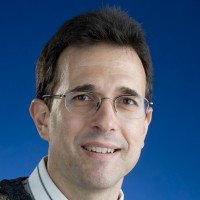 V. Daniel Elvira合作论文数Particle Physics Division, Fermi National Accelerator Laboratory408
 Christopher Tully合作论文数Department of Physics, Princeton University408V. Gavrilov合作论文数406
 Suman Bala Beri合作论文数Department of Physics, Panjab University406R. Demina合作论文数404
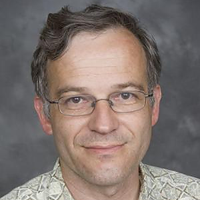 Ulrich Heintz合作论文数Department of Physics, Brown University404D. Lincoln合作论文数400T. Ferbel合作论文数399M Adams合作论文数397
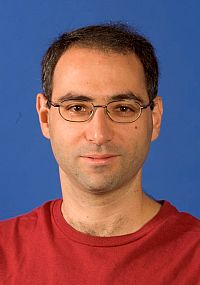 Amnon Harel合作论文数University of Rochester389
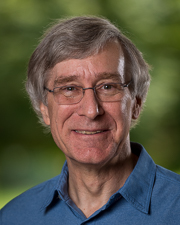 Philip S. Baringer合作论文数Department of Physics & Astronomy, College of Liberal Arts & Sciences, University of Kansas388
 Dan Claes合作论文数Department of Physics and Astronomy, College of Arts and Sciences, University of Nebraska-Lincoln376M. Perfilov合作论文数374
 Greg Landsberg合作论文数Department of Physics, Brown University374Raymond Beuselinck合作论文数Department of Physics, Faculty of Natural Sciences, Imperial College London373A Kharchilava合作论文数371
 S. Dutt合作论文数Panjab University368
 Jon Hays合作论文数School of Physical and Chemical Sciences, Queen Mary University of London;ATLAS Experiment, CERN367
 Gerald C. Blazey合作论文数Department of Physics, College of Liberal Arts and Sciences, Northern Illinois University364Kurca T合作论文数359L. Uvarov合作论文数359
 Ia Iashvili合作论文数Department of Physics, College of Arts and Sciences, University at Buffalo359J. Lellouch合作论文数358
 David Cutts合作论文数Brown University357




