We provide an overview of the status of Monte-Carlo event generators for high-energy particle physics. Guided by the experimental needs and requirements, we highlight areas of active development, and opportunities for future improvements. Particular emphasis is given to physics models and algorithms that are employed across a variety of experiments. These common themes in event generator development lead to a more comprehensive understanding of physics at the highest energies and intensities, and allow models to be tested against a wealth of data that have been accumulated over the past decades. A cohesive approach to event generator development will allow these models to be further improved and systematic uncertainties to be reduced, directly contributing to future experimental success. Event generators are part of a much larger ecosystem of computational tools. They typically involve a number of unknown model parameters that must be tuned to experimental data, while maintaining the integrity of the underlying physics models. Making both these data, and the analyses with which they have been obtained accessible to future users is an essential aspect of open science and data preservation. It ensures the consistency of physics models across a variety of experiments.
This report presents a short summary of the activities of the "Standard Model" working group for the "Physics at TeV Colliders" workshop (Les Houches, France, 12-30 June, 2023).
This Report summarizes the proceedings of the 2019 Les Houches workshop on Physics at TeV Colliders. Session 1 dealt with (I) new developments for high precision Standard Model calculations, (II) the sensitivity of parton distribution functions to the experimental inputs, (III) new developments in jet substructure techniques and a detailed examination of gluon fragmentation at the LHC, (IV) issues in the theoretical description of the production of Standard Model Higgs bosons and how to relate experimental measurements, and (V) Monte Carlo event generator studies relating to PDF evolution and comparisons of important processes at the LHC.
We present results at next-to-leading order accuracy in QCD for single top-quark production in the t , s and tW channels at the LHC at a centre-of-mass energy of 8TeV, obtained with the SHERPA event generator. We find them in very good agreement with measured values and quantify their theory uncertainties. Uncertainties stemming from the choice between the fourand the five-flavour scheme are found to be typically of the order of 5–10% over large ranges of phase space. We discuss the impact of parton distribution functions, and in particular of the bottom PDF. We also show how different cuts on QCD radiation patterns improve the signal-to-background ratio in realistic fiducial volumes.
This report summarises the properties of Standard Model processes at the 100 TeV pp collider. We document the production rates and typical distributions for a number of benchmark Standard Model processes, and discuss new dynamical phenomena arising at the highest energies available at this collider. We discuss the intrinsic physics interest in the measurement of these Standard Model processes, as well as their role as backgrounds for New Physics searches.
This Report summarizes the proceedings of the 2015 Les Houches workshop on Physics at TeV Colliders. Session 1 dealt with (I) new developments relevant for high precision Standard Model calculations, (II) the new PDF4LHC parton distributions, (III) issues in the theoretical description of the production of Standard Model Higgs bosons and how to relate experimental measurements, (IV) a host of phenomenological studies essential for comparing LHC data from Run I with theoretical predictions and projections for future measurements in Run II, and (V) new developments in Monte Carlo event generators.
 K. Sakurai合作论文数1S. Kuttimalai合作论文数1E. Germann合作论文数1P. Ferrarese合作论文数1L. Salfelder合作论文数1X. Garcia i Tormo合作论文数1
 Steffen Schumann合作论文数1Barbara Jäger合作论文数1H. Martinez合作论文数1M. Moretti合作论文数1Davide Pagani合作论文数1Ioannis Tsinikos合作论文数1Alexander Karlberg合作论文数Theoret Phys Dept, CERN1Richard Ruiz合作论文数Institute of Nuclear Physics, Polish Academy of Sciences1M. Chiesa合作论文数University of Würzburg1
 Maurizio Pierini合作论文数CERN1
 Leandro Cieri合作论文数1
 Stefano Carrazza合作论文数Tif Lab, Università di Milano and INFN1
 David d'Enterria合作论文数Physics Department, European Organization for Nuclear Research1
 Cimaglia Fabio合作论文数1Stefan Kallweit合作论文数1
 Frank Petriello合作论文数Department of Physics and Astronomy, Weinberg College of Arts and Sciences, Northwestern University;Argonne National Laboratory1Philipp Maierhöfer合作论文数1
 Peter Zeiler Skands合作论文数School of Physics and Astronomys, Monash University1Schulze Markus合作论文数Div High Energy Phys, Argonne Natl Lab1
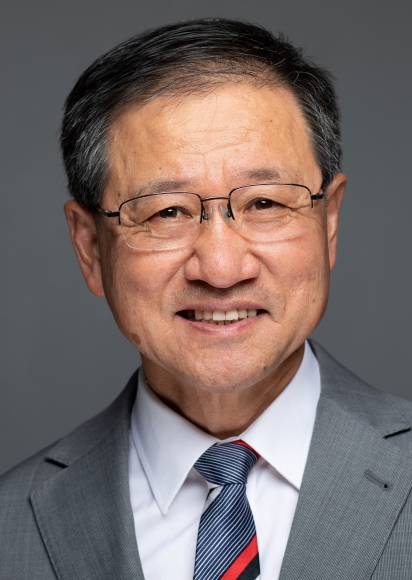 Tao Han (韩涛)合作论文数Department of Physics & Astronomy, Kenneth P. Dietrich School of Arts & Sciences, University of Pittsburgh;Pittsburgh Particle physics, Astrophysics, and Cosmology Center, University of Pittsburgh1
 Paolo Nason合作论文数Department of Physics "Giuseppe Occhialini", University of Milano-Bicocca1Matteo Cacciari合作论文数Sorbonne Université/French National Centre for Scientific Research/Paris Diderot University/Department of Physics, University of Pavia1
 Christian Bauer合作论文数Physics Division, Lawrence Berkeley National Laboratory1Alessandro Vicini合作论文数and INFN, Dipartimento di Fisica Univeristà di Padova1
 Thomas Becher合作论文数Fermilab1Fulvio Piccinini合作论文数Sezione di Pavia1Carlo Oleari合作论文数1
 Michelangelo Mangano合作论文数Department of Theoretical Physics, European Organization for Nuclear Research1
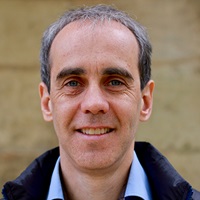 Gavin Salam合作论文数Clarendon Laboratory, Rudolf Peierls Centre for Theoretical Physics, University of Oxford;Department of Physics, University of Oxford1S. Moch合作论文数1
 Frank Krauss合作论文数Institute for Data Science;Institute for Particle Physics Phenomenology, University of Durham;Department of Physics, University of Durham1John M. Campbell合作论文数Fermilab1
 Jonas M. Lindert合作论文数Institut für Theoretische Teilchenphysik und Kosmologie, RWTH Aachen University1




