Implementation of damage control surgery and the open abdomen technique has showed improved survival in trauma and acute general surgery emergencies. However, this technique has also created new challenges in the management of patients with a significant abdominal wall defect. One of the main challenges lies in optimizing resting energy expenditure (REE). Thus, under-feeding or over-feeding remains problematic due to uncertainties regarding the prediction of energy needs at different disease states as well as individual variations. Early studies were conducted to explain the responses of injury and its influence on caloric and protein requirements. These studies showed that nutrition support after trauma should be dynamically adjusted according to metabolic responses. This is because the trauma itself can induce a series of dynamic metabolic responses with different characteristics in three stages: the ebb phase, flow phase, and recovery phase.
# Outcomes and opportunities for improvement in self-inflicted blunt and penetrating trauma {#article-title-2} Self-inflicted trauma (SIT) is a public health issue ranking 4th as leading cause of death and disability in young adults. Retrospective descriptive analysis of patients admitted to a
Background Neoadjuvant chemotherapy is an accepted standard for locally advanced esophagogastric junction adenocarcinoma. However, the dysphagia frequently associated with this condition may interfere with patient tolerance of this treatment. In many centers, invasive tube feeding, placed either endoscopically, radiographically, or surgically, is used to address this issue, but it can cause significant morbidity. We sought to determine if an approach of goal-directed dietary counseling and appropriately timed neoadjuvant chemotherapy could obviate the need for invasive tube feeding. Methods Patients with locally advanced (cT3 or N+) esophageal and esophagogastric junction adenocarcinoma undergoing neoadjuvant TCF [Taxotere, cisplatin 5-fluorouracil (5-FU)], ECF (epirubicin, cisplatin, 5-FU), or FLOT (docetaxel, oxaliplatin, leucovorin, and 5-FU) at the McGill University Health Center from March 2007 to September 2012 were identified from a prospective database. All received individualized goal-directed dietary counseling, were monitored for signs/symptoms of malnutrition with serial (baseline/presurgery) body mass index, albumin, and completed serial symptom scores (dysphagia), and quality-of-life questionnaires (Functional Assessment in Cancer Therapy with the esophageal subset, FACT-E). We assessed the response of dysphagia and nutritional status to neoadjuvant chemotherapy and the need for invasive tube feeding. Results Of 130 patients undergoing neoadjuvant chemotherapy, 78 had severe dysphagia (defined as dysphagia score ≥2 on a 5-point Likert scale), most of whom received TCF (91 %). Overall dysphagia scores improved in 75 (96 %) of 78 patients from a dysphagia score of 3-0, most of which improved after the first cycle of therapy. This was associated with an increase in quality of life (FACT-E scores 117 ± 23 to 140 ± 20). With maintenance of weight (70 ± 22 to 69 ± 24 kg), body mass index (24.5 ± 8 to 23.9 ± 7 kg/m 2 ), and serum albumin (40 ± 5 to 37 ± 4 g/L). Only one patient required a stent, and none required jejunostomy or gastrostomy. Conclusions Appropriately timed neoadjuvant chemotherapy with a highly effective regimen rapidly restores normal swallowing, maintains nutritional status, and obviates the need for invasive tube feeding in patients with significant dysphagia from esophageal adenocarcinoma.
The Canadian Surgery Forum Steering Committee acknowledges and thanks the following organizations for their support of the 2015 Forum: # 02 The usefulness and costs of routine contrast studies after laparoscopic sleeve gastrectomy for detecting staple line leaks {#article-title-2} Although
9613 Background: The dysphagia commonly associated with esophageal cancer often interferes with patient tolerance of neo-adjuvant chemotherapy. Surgical or endoscopic invasive tube feeding (ITF - gastroscopy/jejunostomy/stent) is a commonly employed strategy to maintain nutritional support however it can cause significant morbidity in its own right. We sought to determine if a strategy of careful dietary counseling and appropriately-timed neoadjuvant chemotherapy can obviate the need for ITF. Methods: Pts undergoing neoadjuvant chemotherapy (TAX/CDDP/5FU Q3 weeks x3) for esophageal or GEJ adenocarcinoma at a single institution from 3/07–7/08 were identified from a prospective database. All received dietary counseling and were closely monitored for signs/ symptoms of malnutrition with serial (baseline, after 1st cycle, pre-surgery) Body Mass Index (BMI), albumin, dysphagia scores (0 best - 4 worse), and quality of life (FACT-E). We assessed the response of dysphagia and nutritional status to neoadjuvant treatment and the need for ITF. Data presented as median (range) or mean (±SD), paired t-test or Wilcoxon signed ranks test determined significance. Results: 25 pts received neoadjuvant chemotherapy and significant dysphagia (score 2–4) was found in 14. Dysphagia scores improved in all 14 (all results in Table 1 ), and 10/13 improved after the first cycle. No patient required ITF. QoL as assessed by the FACT-E improved in 13/14 patients. A small decrease in BMI was noted, however serum albumin did not significantly decrease. Conclusions: Appropriately timed neoadjuvant chemotherapy with a highly effective regimen rapidly restores normal swallowing, maintains nutritional status, and obviates the need for ITF in patients with significant dysphagia from esophageal adenocarcinoma. [Table: see text] No significant financial relationships to disclose.
 Jean-Pierre Gagné合作论文数Institut des Sciences de la mer de Rimouski (ISMER),, Université du Québec à Rimouski5
 Lorenzo Ferri合作论文数Gerald Bronfman Department of Oncology, Faculty of Medicine and Health Sciences, McGill University;Division of General Surgery, Department of Surgery, Faculty of Medicine and Health Sciences, McGill University;Division of Thoracic Surgery, Department of Surgery, Faculty of Medicine and Health Sciences, McGill University4Hameed S Morad合作论文数4
 Richard Malthaner合作论文数London Health Sciences Centre Division of Thoracic Surgery and Surgical Oncology, University of Western Ontario4
 Andrew Kirkpatrick合作论文数4M Rousseau合作论文数3
 Sameena Iqbal合作论文数3Shazya Karmali合作论文数3
 Erin Kennedy合作论文数Department of Surgery, Temerty Faculty of Medicine, University of Toronto;Zane Cohen Centre for Digestive Diseases, Mount Sinai Hospital;Division of General Surgery, Mount Sinai Hospital3
 Gail Darling合作论文数Department of Surgery, Temerty Faculty of Medicine, University of Toronto3
 Tarek Razek合作论文数Division of General Surgery, Department of Surgery, Faculty of Medicine and Health Sciences, McGill University3
 Jeremy Grushka合作论文数Division of General Surgery, Department of Surgery, Faculty of Medicine and Health Sciences, McGill University3
 Liane S. Feldman合作论文数Division of General Surgery, Department of Surgery, McGill University;McGill University Health Centre3
 Thierry Alcindor合作论文数Department of Medicine, Faculty of Medicine and Health Sciences, McGill University;Department of Medicine, Division of Medical Oncology, McGill University Health Centre;Tufts Medical Center3
 Jonathan Spicer合作论文数Division of Experimental Medicine, Department of Medicine, Faculty of Medicine and Health Sciences, McGill University3
 Dan Deckelbaum合作论文数Division of Epidemiology, Biostatistics and Occupational Health, School of Population and Global Health, Faculty of Medicine and Health Sciences, McGill University3Ball Chad G合作论文数3
 David Urbach合作论文数Department of Surgery, Temerty Faculty of Medicine, University of Toronto;Women's College Hospital3
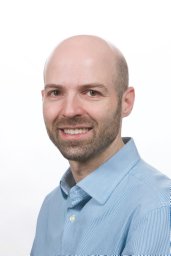 Gillman Lawrence M合作论文数Dept Surg, Univ Manitoba3Hassan Muhamad M Elhusseini合作论文数3
 Elijah Dixon合作论文数3
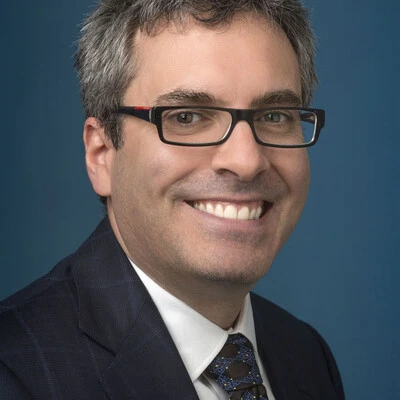 Avery Nathens合作论文数Sunnybrook Health Sciences Centre;Department of Surgery, Temerty Faculty of Medicine, University of Toronto3
 Kosar A Khwaja合作论文数3
 Calvin Law合作论文数Department of Surgery, Temerty Faculty of Medicine, University of Toronto3C Soto合作论文数2W Stephen合作论文数2Ian McKee合作论文数2D. K. Gray合作论文数2P Kaneva合作论文数2S A Fraser合作论文数2M. Chasen合作论文数2Adic Perez合作论文数2Jean-Denis Yelle合作论文数2
 Annie Lalande合作论文数2jocelyn keillor合作论文数2Amélie Tremblay St-Germain合作论文数2Mostafa Al-Habboubi合作论文数2Johan Delport合作论文数2
 Marko Simunovic合作论文数2Sandy Widder合作论文数2Melanie E Tsang合作论文数2Melissa McGowan合作论文数2N Parry合作论文数2G. Ghitulescu合作论文数2M. Raval合作论文数2
 Blaire Anderson合作论文数2Philippe Dufresne合作论文数2Robert Bendavid合作论文数2Andrzej Krzysztof Buczkowski合作论文数Department of Surgery, Faculty of Medicine, The University of British Columbia;Vancouver Coastal Health Research Institute2




