The WebAssembly Component Model is an emerging standard for assembling applications from parts that are implemented in WebAssembly. Unlike ordinary WebAssembly modules, components implement their interfaces in a standardized way, enabling the interoperation of software parts compiled to WebAssembly from different programming languages. A component essentially wraps an ordinary module with binding code , created by a WebAssembly Interface Type (WIT) binding generator , to adapt the module to the WebAssembly component standard. Errors in the generation of binding code can lead to hard-to-diagnose run-time errors, including crashes and silent data corruption, in applications built from WebAssembly components. Prior published work on WebAssembly testing has focused on finding bugs in WebAssembly compilers and runtimes, and has overlooked the potential for bugs in the generation of binding code. In this experience paper, we detail and evaluate our approach to addressing this oversight. We implemented a system to perform random differential testing for two WIT binding generators, called wit-bindgen and wit-bindgen-go. Our system uses these binding generators to produce multiple WebAssembly components with the same behavior from programs written in different high-level languages. If the components’ run-time behaviors differ, we expect that there is a bug in one of the generated bindings. Using our framework, we discovered seven previously unknown code-generation defects in wit-bindgen and wit-bindgen-go. We analyze these bugs in this paper and, in addition, share lessons learned that can guide future efforts to test binding generators.
Fuzz testing is an effective tool for finding bugs in software, including programming language compilers and interpreters. Advanced fuzz testers can find deep semantic bugs in language implementations through differential testing. However, input programs used for differential testing must not only be syntactically and semantically valid, but also be free from nondeterminism and undefined behaviors. Developing a fuzzer that produces such programs can require tens of thousands of lines of code and hundreds of person-hours. Despite this significant investment, fuzzers designed for differential testing of different languages include many of the same features and analyses in their implementations. To make the implementation of language fuzz testers for differential testing easier, we introduce Xsmith. Xsmith is a Racket library and domain-specific language that provides mechanisms for implementing a fuzz tester in only a few hundred lines of code. By sharing infrastructure, allowing declarative language specification, and by allowing procedural extensions, Xsmith allows developers to write correct fuzzers for differential testing with little effort. We have developed fuzzers for several languages, and found bugs in implementations of Racket, Dafny, Standard ML, and WebAssembly.
This paper presents an overview of an NSF Research Experience for Undergraduate (REU) Site on Trust and Reproducibility of Intelligent Computation, delivered by faculty and graduate students in the Kahlert School of Computing at University of Utah. The chosen themes bring together several concerns for the future in producing computational results that can be trusted: secure, reproducible, based on sound algorithmic foundations, and developed in the context of ethical considerations. The research areas represented by student projects include machine learning, high-performance computing, algorithms and applications, computer security, data science, and human-centered computing. In the first four weeks of the program, the entire student cohort spent their mornings in lessons from experts in these crosscutting topics, and used one-of-a-kind research platforms operated by the University of Utah, namely NSF-funded CloudLab and POWDER facilities; reading assignments, quizzes, and hands-on exercises reinforced the lessons. In the subsequent five weeks, lectures were less frequent, as students branched into small groups to develop their research projects. The final week focused on a poster presentation and final report. Through describing our experiences, this program can serve as a model for preparing a future workforce to integrate machine learning into trustworthy and reproducible applications.
Performance troubleshooting is notoriously difficult for distributed microservices-based applications. A typical root-cause diagnosis for performance anomaly by an analyst starts by narrowing down the scope of slow services, investigates into high-level performance metrics or available logs in the slow components, and finally drills down to an actual cause. This process can be long, tedious, and sometimes aimless due to the lack of domain knowledge and the sheer number of possible culprits. This paper introduces a new machine-learning-driven performance analysis system called LongTale that automates the troubleshooting process for latency-related performance anomalies to facilitate the root cause diagnosis and explanation. LongTale builds on existing application-layer tracing in two significant aspects. First, it stitches application-layer traces with corresponding system stack traces, which enables more informative root-cause analysis. Second, it utilizes a novel machine-learning-driven analysis that feeds on the combined data to automatically uncover the most likely contributing factor(s) for given performance slowdown. We demonstrate how LongTale can be utilized in different scenarios, including abnormal long-tail latency explanation and performance interference analysis.
Researchers in experimental cybersecurity are increasingly sharing the code, data, and other artifacts associated with their studies. This trend is encouraged and rewarded by conferences and journals through practices such as artifact evaluation and badging. While these trends in sharing artifacts are promising, the cybersecurity community is still far from an ecosystem in which artifacts are FAIR: findable, accessible, interoperable, and reusable. The lack of established standards and best practices for sharing and reuse results in artifacts that are often difficult to find and reuse; in addition, the lack of community standards results in artifacts that may be incomplete and low-quality. In this paper we describe our experience in creating an online community hub, called SEARCCH, to promote the sharing and reuse of artifacts for cybersecurity research. Based on our experience, we offer lessons learned: issues that must be addressed to further promote FAIR principles in experimental cybersecurity.
POWDER is a highly flexible, deeply programmable, and city-scale scientific instrument that enables cutting-edge research in wireless technologies. Researchers interact with the POWDER platform via the Internet to conduct their experiments, with zero penalty for remote access. In this two-part demonstration, the POWDER implementers show how to use the platform. First, they present the workflow that researchers follow to conduct experiments. Second, they highlight some of the hardware and software building blocks available through POWDER, including components related to over-the-air wireless and mobile networking, 5G, and massive MIMO.
Programs such as simulators and fuzz testers often use randomness to walk through a large state space in search of interesting paths or outcomes. These explorations can be made more efficient by employing heuristics that “zero-in” on paths through the state space that are more likely to lead to interesting solutions. Given one path that exhibits a desired property, it may be beneficial to generate and explore similar paths to determine if they produce similarly interesting results. When the random decisions made during this path exploration can be manipulated in such a way that they correspond to discrete structural changes in the result, we call it parametric randomness. Many programming languages, including Racket, provide only simple randomness primitives, making the implementation of parametric randomness somewhat difficult. To address this deficiency, we present Clotho: a Racket library for parametric randomness, designed to be both easy to use and flexible. Clotho supports multiple strategies for using parametric randomness in Racket applications without hassle.
While distributed application-layer tracing is widely used for performance diagnosis in microservices, its coarse granularity at the service level limits its applicability towards detecting more fine-grained system level issues. To address this problem, cross-layer stitching of tracing information has been proposed. However, all existing cross-layer stitching approaches either require modification of the kernel or need updates in the application-layer tracing library to propagate stitching information, both of which add further complex modifications to existing tracing tools. This paper introduces Deepstitch, a deep learning based approach to stitch cross-layer tracing information without requiring any changes to existing application layer tracing tools. Deepstitch leverages a global view of a distributed application composed of multiple services and learns the global system call sequences across all services involved. This knowledge is then used to stitch system call sequences with service-level traces obtained from a deployed application. Our proof of concept experiments show that the proposed approach successfully maps application-level interaction into the system call sequences and can identify thread-level interactions.
This paper provides an overview of the Platform for Open Wireless Data-driven Experimental Research (Powder). Powder is a city-scale, remotely accessible, end-to-end software defined platform to support mobile and wireless research. Compared to other mobile and wireless testbeds Powder provides advances in scale, realism, diversity, flexibility, and access.
While distributed application-layer tracing is widely used for performance diagnosis in microservices, its coarse granularity at the service level limits its applicability towards detecting more fine-grained system level issues. To address this problem, cross-layer stitching of tracing information has been proposed. However, all existing cross-layer stitching approaches either require modification of the kernel or need updates in the application-layer tracing library to propagate stitching information, both of which add further complex modifications to existing tracing tools. This paper introduces Deepstitch, a deep learning based approach to stitch cross-layer tracing information without requiring any changes to existing application layer tracing tools. Deepstitch leverages a global view of a distributed application composed of multiple services and learns the global system call sequences across all services involved. This knowledge is then used to stitch system call sequences with service-level traces obtained from a deployed application. Our proof of concept experiments show that the proposed approach successfully maps application-level interaction into the system call sequences and can identify thread-level interactions.
Given the highly empirical nature of research in cloud computing, networked systems, and related fields, testbeds play an important role in the research ecosystem. In this paper, we cover one such facility, CloudLab, which supports systems research by providing raw access to programmable hardware, enabling research at large scales, and creating a shared platform for repeatable research. We present our experiences designing CloudLab and operating it for four years, serving nearly 4,000 users who have run over 79,000 experiments on 2,250 servers, switches, and other pieces of datacenter equipment. From this experience, we draw lessons organized around two themes. The first set comes from analysis of data regarding the use of CloudLab: how users interact with it, what they use it for, and the implications for facility design and operation. Our second set of lessons comes from looking at the ways that algorithms used "under the hood," such as resource allocation, have importantand sometimes unexpected-effects on user experience and behavior. These lessons can be of value to the designers and operators of IaaS facilities in general, systems testbeds in particular, and users who have a stake in understanding how these systems are built.
Kernel-resident malware remains a significant threat. An effective way to detect such malware is to examine the kernel memory of many similar (virtual) machines, as one might find in an enterprise network or cloud, in search of anomalies: i.e., the relatively rare infected hosts within a large population of healthy hosts. It is challenging, however, to compare the kernel memories of different hosts against each other. Previous work has relied on knowledge of specific kernels-e.g., the locations of important variables and the layouts of key data structures-to cross the "semantic gap" and allow kernels to be compared. As a result, those previous systems work only with the kernels they were built for, and they make assumptions about the malware being searched for. We present a new approach to detecting kernel-resident malware within a "herd" of similar virtual machines. Our approach uses limited knowledge of the kernels under examination-e.g., the location of the page global directory and the processor's instruction set-to concisely fingerprint each kernel. It uses no kernel-specific semantics to compare the fingerprints and find those that represent anomalous hosts. We implement our method in a tool called Fluorescence and demonstrate its ability to identify Linux and Windows hosts infected with real-world, kernel-resident malware. Fluorescence can examine a herd of 200 virtual machines with Linux guests in about an hour.
Since cloud users do not have direct visibility into the cloud provider’s infrastructure, cloud users generally depend on the information provided by the cloud providers when they need to know about states of their virtual resources. In this document, we introduce an approach to monitor the update time of infrastructure level virtual firewalls (called Security Group) from the cloud user’s side and technical details for practical deployment of this approach in an OpenStack environment.
Researchers conduct experiments in a variety of computing environments, including dedicated testbeds and commercial clouds, and they need convenient mechanisms for deploying their software within these disparate platforms. To address this need, we have extended Emulab so that it can instantiate and configure container-based virtual devices using Docker images. Docker is a de facto standard for packaging and deploying software in cloud environments; now, researchers can use Docker to package and deploy software within Emulab-based testbeds as well. We describe how Emulab incorporates Docker and how it extends Docker images to support the interactivity that researchers expect within a testbed. We show that Emulab can use many popular Docker images to create testbed experiments. We expect that Emulab’s support for Docker will make it easier for researchers to move their activities freely, both into the testbed and out into production.
Though there has been much study of information leakage channels exploiting shared hardware resources (memory, cache, and disk) in cloud environments, there has been less study of the exploitability of shared software resources. In this paper, we analyze the exploitability of cloud networking services (which are shared among cloud tenants) and introduce a practical method for building information leakage channels by monitoring workloads on the cloud networking services through the virtual firewall. We also demonstrate the practicality of this attack by implementing two different covert channels in OpenStack as well as a new class of side channels that can eavesdrop on infrastructure-level events. By utilizing a Long Short-Term Memory (LSTM) neural network model, our side channel attack could detect infrastructure level VM creation/termination events with 93.3% accuracy.
Wingman is a run-time monitoring system that aims to detect and mitigate anomalies, including malware infections, within virtual appliances (VAs). It observes the kernel state of a VA and uses an expert system to determine when that state is anomalous. Wingman does not simply restart a compromised VA; instead, it attempts to repair the VA, thereby minimizing potential downtime and state loss. This paper describes Wingman and summarizes experiments in which it detected and mitigated three types of malware within a web-server VA. For each attack, Wingman was able to defend the VA by bringing it to an acceptable state.
We present CAPNET, a capability-based network architecture designed to enable least authority and secure collaboration in the cloud. CAPNET allows fine-grained management of rights, recursive delegation, hierarchical policies, and least privilege. To enable secure collaboration, CAPNET extends a classical capability model with support for decentralized authority. We implement CAPNET in the substrate of a software-defined network, integrate it with the OpenStack cloud, and develop protocols enabling secure multiparty collaboration.
Efficient deterministic replay of whole operating systems is feasible and useful, so why isn't replay a default part of the software stack? While implementing deterministic replay is hard, we argue that the main reason is the lack of general abstractions for understanding and addressing the significant engineering challenges involved in the development of a replay engine for a modern VMM. We present a design blueprint---a set of abstractions, general principles, and low-level implementation details---for efficient deterministic replay in a modern hypervisor. We build and evaluate our architecture in Xen, a full-featured hypervisor. Our architecture can be readily followed and adopted, enabling replay as a ubiquitous part of a modern virtualization stack.
We will demonstrate features and capabilities of the PhantomNet testbed. PhantomNet is a mobile testbed, at the University of Utah, aimed at enabling a broad range of mobile networking related research. PhantomNet is remotely accessible and open to the mobile networking research community.
 Robert Ricci合作论文数University of Utah14
 Mike Hibler合作论文数Computer Science Department, University of Utah12
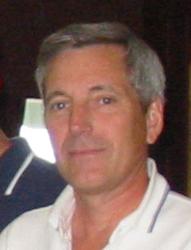 Jay Lepreau合作论文数School of Computing,University of Utah12
 D. Johnson合作论文数Department of Computer Science
Rice University9
D. Johnson合作论文数Department of Computer Science
Rice University9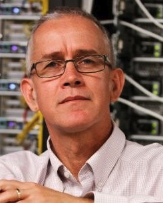 Jacobus (Kobus) Van der Merwe合作论文数School of Computing, University of Utah;College of Engineering, University of Utah8
 John Regehr合作论文数School of Computing
University of Utah7
John Regehr合作论文数School of Computing
University of Utah7 Tim Stack合作论文数Work I work in the Flux Group6Yang Chen合作论文数Meta5
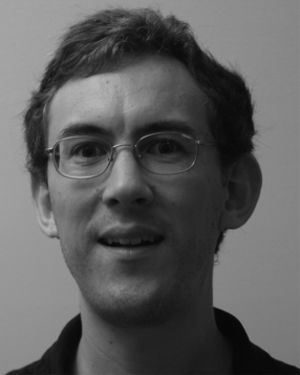 Gary Wong合作论文数5
 Kirk Webb合作论文数University of Utah5Jonathon Duerig合作论文数5
 Leigh Stoller合作论文数School of Computing, University of Utah5richard c li合作论文数4
 Olaf Spinczyk合作论文数Osnabrück University4
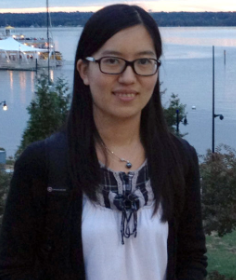 Min Du合作论文数Nvidia4
 Gilles Muller合作论文数OBASCO group ;??cole des Mines de Nantes4Hyun Wook Baek合作论文数3Will Archer合作论文数3
 Xing Lin合作论文数University of Utah3
 David E. Johnson合作论文数School of Computing, University of Utah3
 Alex Groce合作论文数Laboratory for Reliable Software;Jet Propulsion Laboratory3
 Alastair D. Reid合作论文数ARM Ltd3
 Sarit Mukherjee合作论文数Network Systems Software Research Department, Nokia Bell Labs3
 Chaoqiang Zhang合作论文数Oregon State University3
 Anton Burtsev合作论文数Kahlert School of Computing, University of Utah3Sean Walton合作论文数3
 Nathan Cooprider合作论文数School of Computing;University of Utah;School of Computing, University of Utah3
 Hyunseok Chang合作论文数Nokia Bell Labs3James L. Simister合作论文数3yaoqing liu合作论文数2violet r syrotiuk合作论文数2Yuankai Guo合作论文数2Pierce Darragh合作论文数2Joe Breen合作论文数2
 Binh Nguyen合作论文数University of Utah2Rakotoarivelo, T.合作论文数Data612
 David Schurig合作论文数Department of Electrical and Computer Engineering, University of Utah2
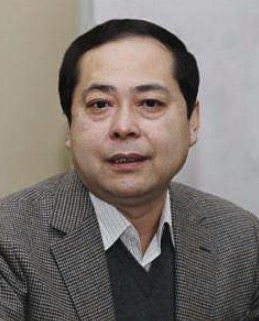 Xuejun Yang (杨学军)合作论文数Academy of Military Sciences2
 Wilson C. Hsieh合作论文数Google2
 Richard Schantz合作论文数Distributed Systems Technology Group People;Intelligent Distributed Computing Department 2
 Junguk Cho合作论文数Univ Utah2
 Kuang-Ching Wang合作论文数Watt Family Innovation Center, Clemson University;The Holcombe Department of Electrical and Computer Engineering, College of Engineering, Computing and Applied Sciences, Clemson University2
 Sean Mcdirmid合作论文数School of Computing;University of Utah;School of Computing, University of Utah2
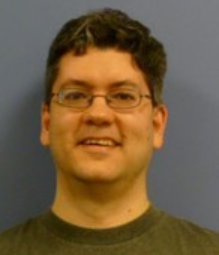 Brett Benyo合作论文数Raytheon BBN Technologies2
 Matthew Flatt合作论文数University of Utah;School of Computing2
 Andy Bavier合作论文数Princeton University2
 Neal Patwari合作论文数The Preston M. Green Department of Electrical & Systems Engineering, McKelvey School of Engineering, Washington University in St. Louis;Department of Computer Science & Engineering, McKelvey School of Engineering, Washington University in St. Louis2
 Sneha Kasera合作论文数John and Marcia Price College of Engineering, University of Utah;Kahlert School of Computing, University of Utah2




