We have observed the polarized light at 2 microns in the center of NGC 1068 with HST (Hubble Space Telescope) NICMOS (Near Infrared Camera Multi Object Spectrometer) Camera 2. The nucleus is dominated by a bright, unresolved source, polarized at a level of 6.0 +/- 1.2% with a position angle of 122 degrees +/- 1.5 degrees. There are two polarized lobes extending tip to 8 northeast and southwest of the nucleus. The polarized flux in both lobes is quite clumpy, with the maximum polarization occurring in the southwest lobe at a level of 17% when smoothed to 0.23 resolution. The perpendiculars to the polarization vectors in these two lobes point back to the intense unresolved nuclear source to within one 0.076 Camera 2 pixel, thereby confirming that this source is the origin of the scattered light and therefore the probable AGN (Active Galactic Nuclei) central engine. Whereas the polarization of the nucleus is probably caused by dichroic absorption, the polarization in the lobes is almost certainly caused by scattering, with very little contribution from dichroic absorption. Features in the polarized lobes include a gap at a distance of about 1 from the nucleus toward the southwest lobe and a of emission about 5 northwest of the nucleus. Both features had been discussed by groundbased observers, but they are much better defined with the high spatial resolution of NICMOS. The northeast knot may be the side of a molecular cloud that is facing the nucleus, which cloud may be preventing the expansion of the northeast radio lobe at the head of the radio synchrotron-radiation-emitting jet. We also report the presence of two ghosts in the Camera 2 polarizers.
HST NICMOS narrowband images of the shocked molecular hydrogen emission in OMC-1 are analyzed to reveal new information on the BN/KL outflow. The outstanding morphological feature of this region is the array of molecular hydrogen "fingers" emanating from the general vicinity of IRc2 and the presence of several Herbig-Haro objects. The NICMOS images appear to resolve individual shock fronts. This work is a more quantitative and detailed analysis of our data from a previous paper. Line strengths for the H2 1-0 S(4) plus 2-1 S(6) lines at 1.89 μm are estimated from measurements with the Paschen-α continuum filter F190N at 1.90 μm and continuum measurements at 1.66 and 2.15 μm. We compare the observed H2 line strengths and ratios of the 1.89 and 2.12 μm 1-0 S(1) lines with models for molecular cloud shock waves. Most of the data cannot be fit by J-shocks but are well matched by C-shocks with shock velocities in the range of 20-45 km s-1 and preshock densities of 104-106 cm-3, similar to values obtained in larger beam studies which averaged over many shocks. There is also some evidence that shocks with higher densities have lower velocities.
We present 2 mu m polarization measurements of positions in the IRc2 and BN regions of the OrionMolecular Cloud (OMC-1) made with NICMOS Camera 2 (0."2 resolution) on the Hubble Space Telescope. Our results are as follows: BN is similar to 29% polarized by dichroic absorption and appears to be the illuminating source for most of the nebulosity to its north and for up to similar to 5" to its south. Although the stars are probably all polarized by dichroic absorption, there are a number of compact but non-point-source objects that could be polarized by a combination of both dichroic absorption and local scattering of starlight. We identify several candidate YSOs, including an approximately edge-on bipolar YSO 8"7 east of BN, and a deeply embedded variable star. Additional strongly polarized sources are IRc2-B, IRc2-D, and IRc7, all of which are obviously self-luminous at mid-infrared wavelengths and may be YSOs. None of these is a reflection nebula illuminated by a star located near radio source I, as was previously suggested. Other IRc sources are clearly reflection nebulae: IRc3 appears to be illuminated by IRc2-B or a combination of the IRc2 sources, and IRc4 and IRc5 appear to be illuminated by an unseen star in the vicinity of radio source I, or by star n or IRc2-A. Trends in the magnetic field direction are inferred from the polarization of the 26 stars that are bright enough to be seen as NICMOS point sources. The most polarized star has a polarization position angle different from its neighbors by similar to 40 degrees, but in agreement with the grain alignment inferred from millimeter polarization measurements of the cold dust cloud in the southern part of OMC-1.
Six H II regions at galactocentric distances of R = 10-15 kpc have been observed in the far-IR emission lines of [O III] (52 mu m, 88 mu m), [N III] (57 mu m), and [S III] (19 mu m) using the Kuiper Airborne Observatory. These observations have been combined with Very Large Array radio continuum observations of these sources to determine the abundances of O(++), N(++), and S(++) relative to hydrogen. In addition, eight of the most recent sets of measurements of ionic line strengths in H II regions have been reanalyzed in order to attempt to reconcile differences in optical versus far-IR abundance determinations. We have in total 168 sets of observations of 117 H II regions in our analysis. The new analysis included updating the atomic constants (transition probabilities and collision cross sections), recalculation of some of the physical conditions in the H II regions (n(e) and T(e)), and the use of new photoionization models to determine stellar effective temperatures of the exciting stars. We also use the most recent data available for the distances for these objects, although for most we still rely on kinematic distance determinations. Our analysis finds little indication of differences between optical and infrared observations of the nitrogen abundances, but some differences are seen in the oxygen and sulfur abundances. A very significant offset continues to be seen between optical and infrared measurements of the N/O abundance ratio.
The Becklin-Neugebauer object, discovered in observations made by Eric Becklin as a graduate student, is the brightest mid-infrared source outside the solar system, and a beacon in the nearest region of massive star formation. Using NICMOS on HST, we have obtained near infrared photometric, spectroscopic, and polarimetric images of the region immediately around BN. These images, with resolutions < -0.2", reveal remarkable morphologies, shock details, new young stellar objects, faint stars with variable intensities, and outflow features. We will summarize these results and inferences regarding the shock properties, illuminating sources of the nebulosity, and IRc sources near BN.
The SOFIA telescope has a silicon carbide secondary mirror and a six degree-of-freedom secondary mirror mechanism. Each of these high-technology items represents a single-point failure mode, because both are essential for operation of the observatory, and neither has a spare. Reduced-performance, relatively inexpensive "backup" hardware can enable a large fraction of the planned SOFIA science observations, and so can help to assure a highly reliable flight program. Accordingly, we have developed an aluminum secondary mirror and derived design requirements for a backup secondary mirror mechanism that will meet minimum performance needs.
Although variations in elemental abundance ratios in the Milky Way certainly exist, details remain uncertain, particularly in the inner Galaxy, where stars and H II regions in the Galactic plane are obscured optically. In this paper we revisit two previously studied, inner Galaxy H II regions: G333.6-0.2 and W43. We observed three new positions in G333.6-0.2 with the Kuiper Airborne Observatory and reobserved the central position with the Infrared Space Observatory's Long Wavelength Spectrometer in far-infrared lines of S++, N++, N+, and O++. We also added the N+ lines at 122 and 205 μm to the suite of lines measured in W43 by Simpson and coworkers. The measured electron densities range from ~40 to over 4000 cm-3 in a single H II region, indicating that abundance analyses must consider density variations, since the critical densities of the observed lines range from 40 to 9000 cm-3. We propose a method to handle density variations and make new estimates of the S/H and N/H abundance ratios. We find that our sulfur abundance estimates for G333.6-0.2 and W43 agree with the S/H abundance ratios expected for the S/H abundance gradient previously reported by Simpson and coworkers, with the S/H values revised to be smaller as a result of changes in collisional excitation cross sections. The estimated N/H, S/H, and N/S ratios are the most reliable because of their small corrections for unseen ionization states (≲10%). The estimated N/S ratios for the two sources are smaller than what would be calculated from the N/H and S/H ratios in our previous paper. We compute models of the two H II regions to estimate corrections for the other unseen ionization states. We find, with large uncertainties, that oxygen does not have a high abundance, with the result that the N/O ratio is as high (~0.35) as previously reported. The reasons for the uncertainty in the ionization corrections for oxygen are both the nonuniqueness of the H II region models and the sensitivity of these models to different input atomic data and stellar atmosphere models. We discuss these predictions and conclude that only a few of the latest models adequately reproduce H II region observations, including the well-known, relatively large observed Ne++/O++ ratios in low- and moderate-excitation H II regions.
SOFIA will provide 0.3- 1600 pm wavelength coverage, excellent FIR/submm angular resolution, a variety of focal plane instruments, and access to them throughout a 20-year lifetime. These attributes assure SOFIA a vital role in future observations of the interstellar medium, and in numerous other studies. SOFIA is a joint program of NASA in the U.S. and DLR in Germany. Observing time will be arranged by annual peer review of proposals, with roughly 80 percent of the time granted by the U.S. and 20 percent of the time granted by Germany. International proposals may be submitted to either time allocation committee. SOFIA is expected to begin science flights in 2005.
We describe the development of a cryogenic multiplexer for far-infrared (FIR) photoconductor detectors operating at moderate backgrounds. The device is called the SBRC 190. Its architecture and basic functions are based on the 1x32-channel CRC 696 CMOS device used on SIRTF. The SBRC 190 is designed to accommodate the higher backgrounds to be encountered on SOFIA and Herschel, to tolerates a wider range of backgrounds, to permit faster sampling, and to facilitate synchronization of sampling with chopping. Major design differences relative to the CRC 696 which have been incorporated in the SBRC 190 design are: (a) an AC coupled, capacitive feedback transimpedence unit cell, which minimizes input offset effects, thereby enabling low detector biases, (b) selectable feedback capacitors to enable operation over a wide range of backgrounds, and (c) clamp and sample-and-hold output circuits to improve sampling efficiency, which can be a concern at the relatively high readout rates required. A relationship between sampling efficiency and noise performance needed to achieve background-limited instrument performance (BLIP) is derived. Requirements for use on SOFIA, the basic circuit design, fabrication, and operation are discussed.
 Michael R. Haas合作论文数93Janet P. Simpson合作论文数NASA Ames Research Center SETI Institute60Sean W. J. Colgan合作论文数43Fred C. Witteborn合作论文数30D. W. Strecker合作论文数29Swj Colgan合作论文数28
 David Hollenbach合作论文数Ames Research Center, National Aeronautics and Space Administration;Astrobiology Institute, National Aeronautics and Space Administration25Robert H. Rubin合作论文数23RH Rubin合作论文数21
 Michael Burton合作论文数Armagh Observatory and Planetarium21D. Goorvitch合作论文数15L. J. Caroff合作论文数13David J Hollenbach合作论文数12S. Lord合作论文数12Gordon C Augason合作论文数11A. S. B. Schultz合作论文数8Dd Mckibbin合作论文数8Jessie L. Dotson合作论文数NASA Ames Research Center8
 Erick Young合作论文数Stratospheric Observatory for Infrared Astronomy, Universities Space Research Association8Michael R Haas合作论文数8s lord合作论文数7james a baltz合作论文数6David Goorvitch合作论文数6Mark Morris合作论文数Division of Astronomy and Astrophysics, University of California, Los Angeles;Department of Physics and Astronomy, University of California, Los Angeles;Galactic Center Group, University of California, Los Angeles6
 Jeffrey Scargle合作论文数6As Cotera合作论文数5philip b duffy合作论文数5dana h lynch合作论文数4angela stephanie cotera合作论文数4DA ALLEN合作论文数4
 Dean C. Hines合作论文数Space Science Institute4
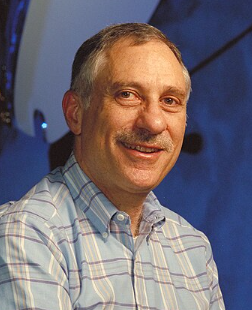 James B. Pollack合作论文数Ames Research Center, NASA4
 Michael J. Kaufman合作论文数Electron Microscopy Laboratory, Colorado School of Mines;Center for Advanced Non-ferrous Structural Alloys, Colorado School of Mines4S. W. J. Colgan合作论文数4
 Sam Petuchowski合作论文数Electro-Physics Laboratory Department, University of Illinois4
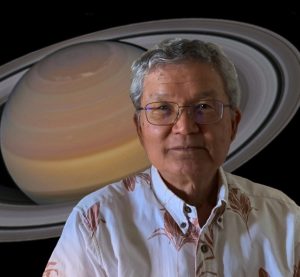 Alan T. Tokunaga合作论文数Institute for Astronomy, University of Hawaii4Janet P Simpson合作论文数4David Rabanus合作论文数I. Physikalisches Institut;Universitat zu Koln4Patricia Carral合作论文数4S. R. Stolovy合作论文数Spitzer Science Center4christopher t koerber合作论文数3Jeffrey D. Scargle合作论文数3
 Harriet Dinerstein合作论文数Department of Astronomy, College of Natural Sciences, University of Texas at Austin3
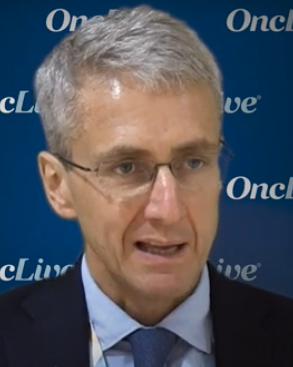 Juergen Wolf合作论文数Center for Integrated Oncology, University Hospital of Cologne3Ira G. Nolt合作论文数3J. V. Radostitz合作论文数3Edward W. Dunham合作论文数3C. D. Swift合作论文数3L. W. Kunz合作论文数3




