Academic 15 (A15), an interview–based research project, explores the perceptions of university library and information technology (IT) staff related to the challenges impacting higher education as a result of technological advances. Faced with disruption on many fronts, academic library and IT staff have adapted and adopted a number of tools and processes to cope with accelerating change. This includes seeking out collaborative partnerships, working within financial constraints, discovering alternate funding sources, and experimenting with new roles in the evolving model of higher education. This paper presents findings to guide the future design and implementation of resilient support systems for library, educational technology, and IT staff.
The dose, serum level and ventricular content of ouabain needed to produce cardiotoxicity were examined in control cats, cats with transected spinal cord and cats with transected spinal cords whose heart rates were restored to control values by artificial pacing. The lethal dose of ouabain was higher in cats with transected spinal cords and not paced than it was in the control group. However, the lethal dose of ouabain in spinal-sectioned cats with ventricular pacing was no different from that in controls. However, in both groups of spinal-sectioned cats, death was associated with higher ventricular and serum levels of ouabain than in controls. The ventricular ouabain content of paced animals with transected spinal cords was higher than that of controls and lower than that of unpaced spinal cats. Thus, restoration of heart rate to control levels in spinal animals appeared to accelerate myocardial ouabain uptake. The lower myocardial ouabain content in the spinal-sectioned animals which were paced suggests that pacing sensitizes the heart to cardiotoxicity. Spinal section itself appears to decrease the sensitivity to ouabain partly through a decrease in cardiac rate and partly through a loss of neurogenic influence.
The action of propranolol on cardiotoxicity produced by ouabain was studied in intact and isolated guinea pig hearts. The lethal event in the intact guinea pig was ventricular fibrillation; in the isolated heart it was asystole. Myocardial ouabain content at death was significantly higher in isolated preparations than in the intact heart. Propranolol was observed to alter the mode of death in the intact guinea pig from ventricular fibrillation to asystole. The myocardial ouabain content at the time of death was elevated in guinea pigs pretreated with propranolol to the level observed in isolated guinea pig heart preparations. Exposure of the isolated preparation to propranolol prolonged the time to the induction of cardiac rhythm disorders and death without changing myocardial ouabain content. These data suggest that propranolol, by eliminating neural influence transforms the cardiotoxicity of ouabain to an in vitro mechanism. In the isolated heart, propranolol prolongs the time to the induction of cardiac rhythm disorders by inhibiting the myocardial uptake of ouabain.
 Barrie Levitt合作论文数3Helene Bounous合作论文数2John Somberg合作论文数2Ruth Diaz合作论文数2Na Cagin合作论文数1A Raines合作论文数1
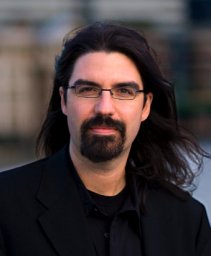 Michael Stephens合作论文数School of Information, San Jose State University1
 Alison Hicks合作论文数Department of Information Studies, Faculty of Arts & Humanities, University College London1John C. Somberg合作论文数1Thomas Mittag合作论文数1Norman A. Cagin合作论文数1
 Lisa M. Spiro合作论文数3DM, Inc.1
 Diane Wahl合作论文数1David Wedaman合作论文数1Gail Matthews-Denatale合作论文数1




