Student success in introductory mathematics courses has been a topic of national concern due to the high failure rates associated with these courses and the impact on STEM degree retention and completion. At Florida International University (FIU), College Algebra underwent an extensive reform in 2012 leading to the implementation of the Mastery Math Lab (MML). Within this lab, students engage in a student-centered active-learning mathematics environment where they can work through problems at their own pace while receiving immediate feedback from faculty, peers, and Learning Assistants. This study aims to determine the impact of the Mastery Math Lab on student performance, by analyzing student data (i.e., pre-and post-implementation). Results show a significant upward trend in the percentage of students passing the course after implementation, as well as a significant increase in the average course grade, with consistent improvements. Analysis of student perception survey responses suggest that students perceive Mastery Math Lab as beneficial for their success in College Algebra and the integration of undergraduate Learning Assistants (LAs) to be conducive to their learning.
The prevalence of online and hybrid structures for mathematics courses has increased significantly in the last two decades. In many of these, instructors have adopted computer-based instructional tools of various kinds to deliver both content and assessments. These systems rely on high levels of self-motivated student engagement for successful implementation, but the decrease in instructor involvement in the student learning process can sometimes intensify existing student apprehensions about mathematics learning. In this chapter we present a description of the implementation of a face-to-face support program for students in a self-paced, computer-supported Intermediate Algebra course and examine trends we observed during implementation.
A study conducted by the Mathematical Association of America showed that calculus not only has significant effects on students' decision to pursue STEM fields, but also on their attitudes towards mathematics. Inspired by this large-scale study, the present study sought to deepen the current understanding of the impact of calculus on student attitudes towards mathematics. Results of an implementation of the Modeling Practices in Calculus (MPC) model, an innovative active learning in mathematics (ALM) approach, in Calculus I at a large, urban, research intensive (R1) institution are presented. Using a randomized-control trial research design, students were randomly assigned to either traditional, lecture-based classrooms, or MPC classrooms. The Attitudes Towards Mathematics Inventory (ATMI) was used to measure student attitudes at the beginning and end of the course and results were compared from both MPCand traditional sections. Overall, MPC sections showed improvement over traditional instruction by having less negative impact on student attitudes. The enjoyment and self-confidence ATMI subscales showed significant differences at course completion for both semesters, when controlling for pre-ATMI score and term. Furthermore, the MPC model had a positive impact on female students' self-confidence as opposed to male students, acting as a gender equalizer.
Mathematics as an area of study occupies an important place in higher education. Due in part to its utility in other disciplines as well as its role in student learning, institutions of higher education (IHEs) often have large numbers of mathematics faculty with different balances of teaching and research in different ranks and appointment structures. Most flagship IHEs, especially state land-grant institutions, have large undergraduate populations taking mathematics courses in many cases built around the widespread use of calculus and the connections between mathematics and science, technology, and engineering. These connections have made mathematics departments essential to universities\cite{olson2012engage} and emphasized the critical role math plays in supporting student success \cites{reinholz2020time,calcscience} in all areas of post-secondary education. We tend to take that essential nature of mathematics at the undergraduate level, and for research universities at the graduate level, as a given, but that characterization no longer holds for some IHEs.
The present paper explores the relationship between attitudes towards mathematics (ATM) and achievement in college calculus in active learning (AL) and lecture-based (LB) classrooms. Previous work on this relationship has mainly been limited to LB instruction, neglecting the impact of innovative approaches such as AL. Less attention has been paid to the roles played in this relationship by gender, year in college, and initial ATM. Results from a sample of 535 undergraduate students enrolled in 9 AL and 9 LB sections are presented. Data included ATMI surveys’ responses, final grades, and demographics. Correlation and multiple regression analyses were conducted. The influence of instruction on students with low ATM was also examined. Gender and year in college were the main demographic variables considered. Achievement in AL was found to be less dependent on initial ATM in terms of correlation. AL showed higher gains in grades than LB, when controlling for ATM and demographic variables. Effect sizes of AL instruction on grades of students with low ATM were larger than those of students with higher ATM. Furthermore, AL courses had a large effect size (d = 0.81) on female students with lower ATM, confirming its role as a gender equalizer.
A significant portion of mathematics education research has focused on factors that impact student pursuit of science, technology, engineering and mathematics (STEM). Low rates of STEM student enrollment combined with high drop-out rates have consistently drawn attention from educators, administrators and policy-makers at all levels. Many studies have been dedicated to the investigation of the influential factors that exacerbate this problem, and one factor that has been cited consistently is the learning experience in a specific introductory mathematics course – first-semester calculus. Research has shown strong relationships between STEM persistence and student affect in this context including their attitudes, beliefs, confidence and enjoyment related to mathematics, and between persistence and student perceptions of pedagogy in these courses. In this paper, we extend prior work by the authors by investigating the impact of three different Calculus I course settings on these relationships and find that some course structures have a moderating effect on these relationships. We present those results and indicate some possible ways to leverage pedagogical structures to improve student persistence in pursuing a STEM major.
Calculus, the study of change in processes and systems, serves as the foundation for many STEM disciplines. Traditional, lecture-based calculus instruction may present a barrier for students seeking STEM degrees, limit their access to STEM professions, and block their potential to address society's challenges. A large-scale pragmatic trial with randomized student allocation was conducted to compare two calculus instruction styles: active student engagement (treatment condition) versus traditional, lecture-based instruction (control condition). A sample of 811 university students were studied across 32 sections taught by 19 instructors over three semesters at a large, US-based Hispanic-serving institution. Large effect sizes were consistently measured for student learning outcomes in the treatment condition, which demonstrates a new standard for calculus instruction and increased opportunities for completion of STEM degrees.
College calculus plays an important role in STEM students' degree and career aspirations. One of the key factors considered in assessing a student's ability to be successful in calculus is their proficiency in topics from prior mathematics courses such as algebra and precalculus. This study set out to examine the impact of students' precalculus proficiency on their achievement in introductory calculus based on their classroom environment. Results from the implementation of the Modeling Practices in Calculus (MPC) model, an innovative, active learning approach, are presented. Using a randomized-controlled trial research design, students were randomly assigned to MPC and traditional, lecture-based calculus sections. The Precalculus Concept Assessment inventory was administered to gauge students' precalculus proficiency. We found that students exposed to the MPC model were more likely to be successful in their calculus course, even if they began with low precalculus proficiency. Also, students enrolled in the MPC sections saw significant growth in their precalculus proficiency from the beginning to the end of the semester. Additionally, we observed this model providing support for students in key demographics (low proficiency, female, first and second year undergraduates) in terms of the development of their proficiency that they may not receive in traditional classrooms.
Self-efficacy has emerged as one of the most important noncognitive variables explaining academic behavior. It has been shown to influence students' academic and career decisions as well as their academic performance. Multiple studies have reported differences in self-efficacy between men and women in science, technology, engineering, and mathematics classes. A student's personality, characterized by the five-factor model, is also related to academic performance; some personality facets are substantially different for men and women. This work examines the relations among the five-factor model of personality (agreeableness, conscientiousness, extraversion, neuroticism, and openness), self-efficacy toward physics and mathematics, and course outcomes in university physics and mathematics classes. Women reported significantly higher neuroticism in all classes, a medium to large effect size, and significantly higher conscientiousness in Calculus 1 and Physics 1, small effects. Men reported higher self-efficacy in two-semester Calculus 1, one-semester Calculus 1, Physics 1, and Physics 2, small effects. Conscientiousness and neuroticism had competing mediational effects on the relation of gender to self-efficacy. The path through neuroticism accounted for 25%-47% of the total effect of gender on self-efficacy (increasing self-efficacy for men) and the path through conscientiousness accounted for 12%-23% of the total effect (increasing self-efficacy for women). Self-efficacy mediated the relation of conscientiousness to course grade in all classes, accounting for 30%-45% of the total effect.
The Automatic Quasi-Clique Merger algorithm is a new algorithm adapted from early work published under the name QCM (introduced by Ou and Zhang (2007)). The AQCM algorithm performs hierarchical clustering in any data set for which there is an associated similarity measure quantifying the similarity of any data i and data j. Importantly, the method exhibits two valuable performance properties: (1) the ability to automatically return either a larger or smaller number of clusters depending on the inherent properties of the data rather than on a parameter. (2) the ability to return a very large number of relatively small clusters automatically when such clusters are reasonably well defined in a data set. In this work we present the general idea of a quasi-clique agglomerative approach, provide the full details of the mathematical steps of the AQCM algorithm, and explain some of the motivation behind the new methodology. The main achievement of the new methodology is that the agglomerative process now unfolds adaptively according to the inherent structure unique to a given data set, and this happens without the time-costly parameter adjustment that drove the previous QCM algorithm. For this reason we call the new algorithm automatic. We provide a demonstration of the algorithm's performance at the task of community detection in a social media network of 22,900 nodes.
The Automatic Quasi-clique Merger algorithm is a new algorithm adapted from early work published under the name QCM (quasi-clique merger) [Ou2006, Ou2007, Zhao2011, Qi2014]. The AQCM algorithm performs hierarchical clustering in any data set for which there is an associated similarity measure quantifying the similarity of any data i and data j. Importantly, the method exhibits two valuable performance properties: 1) the ability to automatically return either a larger or smaller number of clusters depending on the inherent properties of the data rather than on a parameter 2) the ability to return a very large number of relatively small clusters automatically when such clusters are reasonably well defined in a data set. In this work we present the general idea of a quasi-clique agglomerative approach, provide the full details of the mathematical steps of the AQCM algorithm, and explain some of the motivation behind the new methodology. The main achievement of the new methodology is that the agglomerative process now unfolds adaptively according to the inherent structure unique to a given data set, and this happens without the time-costly parameter adjustment that drove the previous QCM algorithm. For this reason we call the new algorithm \emph{automatic}. We provide a demonstration of the algorithm's performance at the task of community detection in a social media network of 22,900 nodes.
Over the last several decades, Emerging Scholars Programs (ESPs) have incorporated active learning strategies and challenging problems into collegiate mathematics, resulting in students, underrepresented minority (URM) students in particular, earning at least half of a letter grade higher than other students in Calculus. In 2009, West Virginia University (WVU) adapted ESP models for use in Calculus I in an effort to support the success and retention of URM STEM students by embedding group and inquiry-based learning into a designated section of Calculus I. Seats in the class were reserved for URM and first-generation students. We anticipated that supporting students in courses in the calculus sequence, including Calculus I, would support URM Calculus I students in building learning communities and serve as a mechanism to provide a strong foundation for long-term retention. In this study we analyze the success of students that have progressed through our ESP Calculus courses and compare them to their non-ESP counterparts. Results show that ESP URM students succeed in the Calculus sequence at substantially higher rates than URM students in non-ESP sections of Calculus courses in the sequence (81% of URM students pass ESP Calculus I while only 50% of URM students pass non-ESP Calculus I). In addition, ESP URM and ESP non-URM (first-generation but not URM) students succeed at similar levels in the ESP Calculus sequence of courses (81% of URM students and 82% of non-URM students pass ESP Calculus I). Finally, ESP URM students’ one-year retention rates are similar to those of ESP non-URM students and significantly higher than those of URM students in non-ESP sections of Calculus (92% of ESP URM Calculus I students were retained after one year, while only 83% of URM non-ESP Calculus I students were retained). These results suggest that ESP is ideally suited for retaining and graduating URM STEM majors, helping them overcome obstacles and barriers in STEM, and increasing diversity, equity, and inclusion in Calculus.
Abstract We describe here a notion of diffusion similarity, a method for defining similarity between vertices in a given graph using the properties of random walks on the graph to model the relationships between vertices. Using the approach of graph vertex embedding, we characterize a vertex vi by considering two types of diffusion patterns: the ways in which random walks emanate from the vertex vi to the remaining graph and how they converge to the vertex vi from the graph. We define the similarity of two vertices vi and vj as the average of the cosine similarity of the vectors characterizing vi and vj. We obtain these vectors by modifying the solution to a differential equation describing a type of continuous time random walk. This method can be applied to any dataset that can be assigned a graph structure that is weighted or unweighted, directed or undirected. It can be used to represent similarity of vertices within community structures of a network while at the same time representing similarity of vertices within layered substructures (e.g., bipartite subgraphs) of the network. To validate the performance of our method, we apply it to synthetic data as well as the neural connectome of the C. elegans worm and a connectome of neurons in the mouse retina. A tool developed to characterize the accuracy of the similarity values in detecting community structures, the uncertainty index, is introduced in this paper as a measure of the quality of similarity methods.
Let $G$ be a directed graph associated with a weight $w: E(G) \rightarrow R^+$. For an edge-cut $Q$ of $G$, the average weight of $Q$ is denoted and defined as $w_{ave}(Q)=\frac{\sum_{e\in Q}w(e)}{|Q|}$. An edge-cut of optimal average weight is an edge-cut $Q$ such that $w_{ave}(Q)$ is maximum among all edge-cuts (or minimum, symmetrically). In this paper, a polynomial algorithm for this problem is proved for finding such an optimal edge-cut in a rooted tree, separating the root and the set of all leafs. This algorithm enables us to develop an automatic clustering method with more accurate detection of communities embedded in a hierarchy tree structure.
According to Bandura's social cognitive theory, a student's self-efficacy influences his or her academic and career decisions, and his or her performance outcomes; as such, a student's self-efficacy changes with time in response to the student's experiences. Self-efficacy may also vary by academic domain. Differences in STEM self-efficacy have often been reported between men and women. The purpose of this study is to explore the evolution of domain-specific STEM self-efficacy in students in gateway physics and mathematics courses and how academic feedback influences the evolution of these differences with time. Further, this study explored whether gender differences in self-efficacy are consistent across STEM domains and how these differences change in response to academic feedback. Self-efficacy in multiple academic domains (current mathematics/science class, other STEM classes, and intended profession) was assessed at multiple time points with subscales adapted from the Motivated Strategies for Learning Questionnaire. Linear mixed effects modeling was used to understand how academic feedback provided by test scores influenced changes in self-efficacy. Students in all classes expressed different levels of self-efficacy toward different domains with the lowest self-efficacy toward their current class and the highest toward their intended profession. Only the current math/science class self-efficacy of men and women differed significantly, with women expressing lower self-efficacy. The differences in current class self-efficacy were evident very early in the class before substantive class feedback was received. The evolution of self-efficacy within the class and between classes was the same for men and women.
Students taking developmental mathematics often need academic support to succeed in their courses, but also benefit from support in adapting to university life. In this paper we describe our experience in developing, implementing, and evaluating a peer mentoring program for developmental mathematics students at a large research university that focused on both academic and psychosocial support. We give a summary of the success and persistence rates of students in the program, compare them to non-mentored students, and discuss the results of an assessment of the project that includes student feedback and lessons learned.
The identification of factors that impact student success in mathematics courses has been a focus of a great deal of research since the early 2000s. The role of classroom approaches, teacher beliefs, and underlying student backgrounds have been studied in different ways. As a part of this effort researchers have studied the degree to which personality factors and affect contribute to (or mitigate) a student’s level of effective engagement. In this work we present the results from the first semester of a two-year study of the role of anxiety, personality factors and self-efficacy in student success and career planning for a cohort of students entering a developmental mathematics course at the university level. We quantify the impact of anxiety on success and grade outcomes, as well as identify a personality factor interacting with success in a surprising way. We provide initial data regarding the students’ sense of belonging in STEM disciplines and their self-efficacy levels, and then analyse their career planning patterns.
Let [Formula: see text] be a directed graph associated with a weight [Formula: see text]. For an edge-cut [Formula: see text] of [Formula: see text], the average weight of [Formula: see text] is denoted and defined as [Formula: see text]. An optimal edge-cut with average weight is an edge-cut [Formula: see text] such that [Formula: see text] is maximum among all edge-cuts (or minimum, symmetrically). In this paper, a polynomial algorithm for this problem is proposed for finding an optimal edge-cut in a rooted tree separating the root and the set of all leafs. This algorithm enables us to develop an automatic clustering method with more accurate detection of community output.
BACKGROUND:Substantial research has been conducted focusing on student outcomes in mathematics courses in order to better understand the ways in which these outcomes depend on the underlying instructional methodologies found in the courses. From 2009 to 2014, the Mathematical Association of America (MAA) studied Calculus I instruction in United States (US) colleges and universities in the Characteristics of Successful Programs of College Calculus (CSPCC). One aspect of this study attempted to understand the impact of these courses on student experience.RESULTS:In this paper, we describe results from an examination of the effect of course structure on students' attitudes and beliefs across different versions of Calculus I at a large research university in the USA. To do this, we implemented a follow-up study of the national MAA study of calculus programs in part to identify potential relationships between various course structures and changes in attitudes and beliefs during the course. We compare our results both internally across these course structures and to the national data set.CONCLUSIONS:We find that the statistically significant changes measured in confidence and enjoyment exhibit differences across the different calculus implementations and that these changes are statistically independent of the underlying student academic backgrounds as shown by standardized test scores and high school GPA. This suggests that these observed changes in attitudes and beliefs relate to the experience in our varied course structures and not to the academic characteristics of students as they enter the course. In addition to our findings, we show how this national study can be used locally to study effects of courses on student affective traits.
Clustering algorithms for unsigned social networks which have only positive edges have been studied intensively. However, when a network has like/dislike, love/hate, respect/disrespect, or trust/distrust relationships, unsigned social networks with only positive edges are inadequate. Thus we model such kind of networks as signed networks which can have both negative and positive edges. Detecting the cluster structures of signed networks is much harder than for unsigned networks, because it not only requires that positive edges within clusters are as many as possible, but also requires that negative edges between clusters are as many as possible. Currently, we have few clustering algorithms for signed networks, and most of them requires the number of final clusters as an input while it is actually hard to predict beforehand. In this paper, we will propose a novel clustering algorithm called Eb&D for signed networks, where both the betweenness of edges and the density of subgraphs are used to detect cluster structures. A hierarchically nested system will be constructed to illustrate the inclusion relationships of clusters. To show the validity and efficiency of Eb&D, we test it on several classical social networks and also hundreds of synthetic data sets, and all obtain better results compared with other methods. The biggest advantage of Eb&D compared with other methods is that the number of clusters do not need to be known prior.
 Jessica Deshler合作论文数School of Mathematical and Data Sciences, Eberly College of Arts and Sciences, West Virginia University10
 Marjorie Darrah合作论文数Institute for Scientific Research , Inc6
 Bojan Cukic合作论文数College of Computing and Informatics, University of North Carolina at Charlotte4
 Sampath Yerramalla合作论文数3
 Xingqin Qi (亓兴勤)合作论文数School of Mathematics and Statistics, Shandong University, Weihai3Lynnette Michaluk合作论文数2Scott Payne合作论文数2David Miller合作论文数2
 John Stewart合作论文数Department of Physics and Astronomy, Eberly College of Arts & Sciences, West Virginia University2
 Mitchell Wathen合作论文数2
 George Spirou合作论文数2Kristin Duling合作论文数2
 Srikanth Gururajan合作论文数West Virginia University2Rong Luo合作论文数rluo@mtsu.edu
Department of Mathematical Sciences, Middle Tennessee State University, Murfreesboro, Tennessee 37130
2Marcela Mera Trujillo合作论文数1
Srikanth Gururajan合作论文数West Virginia University2Rong Luo合作论文数rluo@mtsu.edu
Department of Mathematical Sciences, Middle Tennessee State University, Murfreesboro, Tennessee 37130
2Marcela Mera Trujillo合作论文数1 Thilanka Munasinghe合作论文数1
 Yan Liu合作论文数1Matt Pascal合作论文数1Tim Mceldowney合作论文数1betsy kuhn合作论文数1Xiangming Wu合作论文数1
 Dona Sachini Hewagallage合作论文数Dept Phys & Astron, West Virginia Univ1
 Rachel Henderson合作论文数STEM Inst, Michigan State Univ1
 D. Jake Follmer合作论文数West Virginia University1
 Karen E Rambo-Hernandez合作论文数Texas A&M Univ1Yerramalla, S.合作论文数1Mridul Gautam合作论文数Department of Mechanical and Aerospace Engineering, West Virginia University1
 Giampiero Campa合作论文数The Mathworks 400 Continental Blvd, El Segundo CA 902451
 Marcello R. Napolitano合作论文数1Wenliang Tang合作论文数1
 Robert Duval合作论文数1Arian Spahiu合作论文数1
 Yezhou Wu (吴叶舟)合作论文数Ocean College, Zhejiang University1
 Qin Wu (吴秦)合作论文数School of Artificial Intelligence and Computer Science, Jiangnan University1
 Kyle Christensen合作论文数1
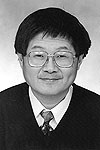 Cun-Quan "CQ" Zhang (张存铨)合作论文数Department of Mathematics, School of Mathematical and Data Sciences, Eberly College of Arts and Sciences, West Virginia University1




