This study examines teachers’ acceptance of an inquiry-oriented, Crime Scene Investigation (CSI)-based teaching sequence supported by a Virtual Scanning Electron Microscope (Virtual-SEM) using an extended Technology Acceptance Model (TAM). While TAM has been widely used to explain technology adoption, its traditional focus on cognitive perceptions may not fully capture the pedagogical complexity of educational settings. To address this, the study integrates pedagogical and affective variables, namely Inquiry Engagement (INQ), Trust (TR), and Self-Efficacy (SE), into the TAM framework. Data were collected from 30 teachers who evaluated a teaching sequence designed according to constructivist principles and the 5E Instructional Model. Descriptive statistics, reliability analysis, correlation analysis, and multiple regression analyses were employed to examine the relationships among constructs. The findings indicate high perceived usefulness, positive attitudes, and strong behavioral intention to adopt the sequence. Inquiry Engagement was significantly associated with both Perceived Usefulness and Attitude Toward Use, while Trust was significantly associated with Perceived Ease of Use and attitudes. In contrast, Perceived Usefulness showed a weak and non-significant association with attitudes, suggesting that pedagogical factors may play a particularly important role in technology acceptance. Attitude Toward Use showed the strongest association with Behavioral Intention. The findings provide preliminary support for an extended, pedagogically enriched TAM and highlight the potential importance of instructional design in technology acceptance.
This exploratory study examines how Control of Variables Strategy (CVS) sub-skills develop among high school students through Inquiry-Based Learning (IBL) activities in physics. It specifically assesses students' understanding of four CVS sub-skills (Planning, Identifying, Interpreting, and Understanding) as they engage in Confirmation, Structured, and Guided inquiry activities. A total of 22 students from 10 and 11th grades participated in this four-month study. An exploratory Rasch analysis offered initial insights into how the difficulty levels of each CVS sub-skill changed over the instructional sequence, though interpretations are limited by methodological constraints such as a small sample size (N = 22) and ceiling effects observed in students’ responses. The results show initial signs of gradual improvement across all CVS sub-skills, with Understanding demonstrating the largest normalized Hake gain and the most significant overall progress, while Planning consistently remained the biggest challenge for students. After the Guided Inquiry phase, students displayed the clearest qualitative gains in Planning and Identifying, suggesting potential benefits of increasing student autonomy. Despite the study’s limitations, this research provides valuable initial insights into how structured and guided inquiry can gradually enhance students' scientific reasoning skills.
Abstract This paper presents the design of a mystery-solving teaching sequence focused on exploring micro- and nanoscale structure through the analysis of scanning electron microscopy (SEM) images. Although the introduction of contemporary microscopy and imaging techniques through inquiry-based activities is increasingly important in secondary education, research on developing targeted teaching sequences in this context remains limited. The proposed sequence introduces students to micro- and nanoscale structure through a crime scene investigation (CSI)-based scenario while engaging them in inquiry activities involving SEM image observation, comparison, and interpretation. The teaching sequence was designed according to the 5E instructional model and uses images of human hair samples provided by a Virtual-SEM simulation. Within the sequence, students are expected to investigate the structure of hair samples, identify morphological differences, collect measurements, and compare microstructural characteristics across SEM images. The instructional design integrates three key dimensions: familiarisation with inquiry-oriented investigation processes, introduction to SEM imaging and microstructural analysis, and active engagement in the learning process through a CSI-based scenario. Core activities include image observation, quantitative measurement, sample comparison, and evidence-based interpretation. A preliminary validation phase, conducted through a questionnaire administered to 30 science teachers, provided formative feedback on the pedagogical design and perceived learning benefits of the sequence. Teachers’ responses also highlighted practical considerations for classroom implementation, informing directions for further refinement. The next stage of the research will involve classroom implementation to examine the sequence’s educational impact on student learning outcomes.
The Technological Pedagogical Content Knowledge (TPACK) framework is widely used to conceptualize teacher knowledge as an interplay of content, pedagogy, and technology. Following recent research interests in examining TPACK as contextually situated knowledge, this study investigates how pre-service physics teachers (undergraduate students in a physics department) and in-service science teachers perceive the domains of TPACK and explores what these differences imply for university-based teacher education. A total of 48 pre-service physics undergraduates and 27 in-service teachers completed an adapted 21-item self-assessment questionnaire, which combined validated items with context-specific modifications. Data analysis included internal consistency reliability tests, independent samples t-tests, and correlation analysis. Results revealed that pre-service teachers reported higher self-assessed competencies, especially in integrative domains, although their knowledge structures appeared less coherent. In contrast, in-service teachers exhibited more coherent and integrated knowledge frameworks, possibly reflecting their accumulated professional experience, despite reporting lower self-confidence. These findings confirm the contextual and situated nature of TPACK, highlighting the divergence between perceived competence and structural coherence. The study contributes by proposing that university science education programs should not only promote theoretical understanding of TPACK but also deliberately embed technology-rich, practice-oriented experiences.
Educational institutions face growing challenges. Rising enrolment, limited budgets, and sustainability goals demand more efficient resource management and administrative decision-making. To address challenges like these, this work proposes a conceptual framework for smart campus management which integrates Artificial Intelligence (AI) and advanced wireless networks based on 5G. The framework’s design outlines layers for campus data collection (via sensors and connected devices), high-speed communication, and AI-driven analytics for decision support. By leveraging data-driven insights enabled by reliable wireless connectivity, institutions can make more informed decisions, use resources more effectively, and automate routine tasks. Envisioned AI capabilities include forecasting (for predictive maintenance and demand planning), anomaly detection (for fault or irregularity identification), and optimisation (for resource scheduling). Rather than reporting empirical results, the framework is illustrated through hypothetical scenarios (e.g., anticipating equipment maintenance, dynamically scheduling classrooms, or reallocating resources) to present potential benefits and tools for researchers. The discussion also highlights how the framework incorporates data privacy, security, and accessibility considerations to ensure inclusive adoption. Eventually, this conceptual proposal provides a roadmap for administrators and planners, guiding the adoption of AI and wireless innovations in educational management to enable more responsive, efficient governance and, ultimately, improve outcomes for students and staff.
Understanding students’ attitudes toward science is vital for fostering engagement in scientific fields. This study aimed to adapt and validate the Test of Science-Related Attitudes (TOSRA) for Greek upper-secondary Physics classrooms and explore how attitudes vary by gender, grade, and school location. A translated and culturally adapted version of TOSRA was administered to 662 students (grades 10–11) from urban and rural schools. Five of the original seven factors were retained. Exploratory Factor Analysis (EFA) and Confirmatory Factor Analysis (CFA) tested the factor structure and reliability. Group comparisons were conducted using t-tests. A 32-item, five-factor structure showed good fit (CFI = 0.969, TLI = 0.966, RMSEA = 0.064) and high internal consistency (α = 0.89 overall). Students reported stronger acceptance of inquiry and enjoyment-related factors compared with leisure and career interest. Boys scored higher on Leisure, 11th graders on Adoption of Scientific Attitudes, and rural students on Career Interest. The Greek TOSRA-Physics is a valid and reliable instrument for assessing science attitudes and evaluating inquiry-based programs.
The aim of this study is to evaluate the contribution of mobile devices to ninth-grade students' Critical thinking & Problem solving skills in laboratory settings.Students participated in a sequence of Microcomputer-based and mobile supported Laboratories, covering four different cognitive topics in Physics.Research instruments such as a reflective questionnaire, students' messages in a Viber group and a set of open-ended questions seem to enlighten the students' progress.Students' development of Critical thinking and Problem solving skills, over time in the Laboratory sequence, turns out by their way of manipulating, analysing, evaluating the experimental data and reflecting on the experimental procedures in the Viber group.Also, students' written responses to open-ended questions before and after the mobile-supported Labs revealed interesting data about their improvement.
A general phenomenological model of the kinetics of thermally induced structural phase transitions in multi-phase alloys is introduced for arbitrary numbers of lattice phases and transitions. The model is based on a system of ODEs yielding the temporal evolution of lattice phase fractions caused by temperature variation described by a heat balance equation. The kinetics of each transition are modeled by temperature rates of phase fractions rather than sigmoids, where an extra multiplicative parameter describing the shape of the transition rate curves is introduced. The model is applied to the electrical behavior of thin NiTi filaments by relating its resistivity to the relative proportions of three main structural phases, namely Martensite, Austenite and an intermediate phase, known as R-phase. The model yields resistivity time-series for successive heating/cooling cycles. Computer simulations are compared to previously published resistivity measurements on filaments self-heated by time-varying currents of various frequencies and passively heated samples.
Critical Thinking & Problem Solving belong to 21st century skills that enhance ways of thinking, learning, working andliving in the world. When combined with well-designed educational activities, mobile technology has the capacity to fosterthese
Inquiry-based learning (IBL) is essential to Science Education since it improves students' conceptual comprehension, higher-order thinking abilities, and interpersonal skills. Mobile technology (mIBL) promotes active learning, facilitates access to learning materials, and enhances IBL in terms of mobility and rapid feedback. This study assesses the 9th grade students' awareness of 4Cs skills (Collaboration, Communication, Critical thinking and problem solving, and Creativity) after participating in mobile-technology-supported inquiry-based Teaching Learning Sequence (TLS). Additionally, the study investigates the qualities/characteristics students cite before and after the TLS in relation to these skills. The results of a questionnaire administered to students indicate that their awareness of these skills has increased as a result of the TLS. Specifically, the TLS seems to have a greater impact on Collaboration and Communication than on Critical thinking and problem solving, and Creativity. An additional qualitative investigation of students' written answers to explanatory open-ended questions before and after the entire procedure found intriguing data confirming their shift in 4Cs awareness.
Thermal conductivity is a key parameter in identifying and developing alternative materials for many technological and temperature-critical applications, ranging from higher-temperature capability thermal barrier coatings to materials for thermoelectric conversion. The Figure of Merit (ZT) of a thermoelectric material (TE) is a function of the Seebeck coefficient (S), the electrical conductivity (σ), the total thermal conductivity (κ) and the absolute temperature (T). A highly-performing TE material should have high S and σ and low κ. Thermal conductivity has two contributions, the electronic (κE) and the lattice (κL). Various models have been developed to describe the lattice component of thermal conductivity. In this chapter, the models for the evaluation of lattice thermal conductivity will be explored, both phenomenological as well analytical models, taking into account the various phonon-scattering processes, with examples of real materials.
STEM education promotes scientific inquiry and engineering design, including mathematics, incorporating appropriate technologies. Portable technologies motivate active learning of students and enable accessing to learn resources, facilitating cross-disciplinary designing tasks. This chapter initially presents theoretical approaches of STEM education, mobile learning, and inquiry-based learning, and then it describes an inquiry-based short-term intervention that took advantage of portable digital devices in a STEM class. The aim of the intervention was to study its affection on students' motivation about physics. Results indicate that students who participated in the activity had higher motivation scores than their classmates who attended lessons with conventional teaching methods. The findings also show that the students involved in a guided inquiry-based process became more profoundly engaged in STEM than their classmates who followed a structured inquiry process. Other factors, such as grade point average (GPA) and gender, did not seem to affect student motivation.
Mechanical alloying has been applied, as an advantageous scalable method, to synthesize Ti1-xZrxNiSn half Heusler materials. This is the first time a synthesis of single phase n-type Ti1-xZrxNiSn half Heusler solid solutions is reported by this technique, along with structural studies and thermoelectric properties. The application of mechanical alloying was successful, as all compositions ranging between x = 0.4-0.8 were in general single phase materials. The lattice thermal conductivity of the series was lower compared to the same compositions prepared by arc melting. Ti0.4Zr0.6NiSn exhibited the minimum lattice thermal conductivity of the series and was selected for doping studies with Sb, with the scope to enhance the thermoelectric performance via the power factor modification. Thermoelectric property measurements resulted in a maximum figure of merit of 0.71 at 762K for Ti0.4Zr0.6NiSn doped with 1.5% Sb.
Nowadays, energy saving is one of the most important issues to be solved worldwide. This effort is supported by the synthesis and use of thermoelectric materials. A variety of techniques have been used to prepare silicides, such as ball milling, solid state reaction, sputtering and reactive deposition epitaxy. In this work, Mg2Si silicide powders were synthesized by Pack Cementation, a environmental friendly, low cost and simple technique. A series of experiments were carried out at various temperatures from 500 °C to 650 °C for different deposition time and various magnesium concentrations, in order to select the optimum synthesis conditions of Mg2Si. The particle size and the lattice strain of Mg2Si was evaluated by X-ray diffraction analysis using Williamson-Hall equation, X-ray photoelectron spectroscopy illustrated the surface contaminations from the environment and Scanning Electron Microscopy revealed the morphology of the as-synthesized thermoelectric compound. Thermogravimetry measurements of Mg2Si powder demonstrated a significant thermal stability up to 400ο C, as a thin magnesium oxide layer formed on the surface acts as a barrier-which is much higher than the temperature region of maximum thermoelectric efficiency.
In this study, an inquiry-based sequence was designed, developed and implemented using facets of flipped classroom and aspects of inquiry learning using the ADDIE model. The sequence intends to promote the students' scientific literacy. The aim of this paper is to examine the effectiveness of specially designed inquiry-based online worksheets (e-WS) to actively engage students in the design of unconfounded experiments by applying the Control of Variables Strategy (CVS). Second-year senior high school (11th grade) students participated in an intervention in which facets of flipped classroom approach with asynchronous and synchronous distance learning sessions were adopted, during the COVID-19 lockdown. Results show that the flipped classroom approach with synchronous and asynchronous sessions was acceptable and adoptable by the students; the existence of probe questions in e-WS, combined with explicit reference to inquiry procedure enhanced students' awareness of scientific practice and on CVS, while at the end of the intervention, students were capable of applying the CVS in the design of unconfounded experiments.
Memristors were proposed in the early 1970s by Leon Chua as a new electrical element linking charge to flux. Since that first introduction, these devices have positioned themselves to be considered as possible fundamental ones for the generations of electronic devices to come. In this paper, we propose a new way to investigate the effects of the electrical variables on the memristance of a device, and we successfully apply this technique to model the behavior of a TiN/Ti/HfO2/W ReRAM structure. To do so, we initially apply the Dynamic Route Map technique in the general case to obtain an approximation to the differential equation that determines the behaviour of the device. This is performed by choosing a variable of interest and observing the evolution of its own temporal derivative versus both its value and the applied voltage. Then, according to this technique, it is possible to obtain an approach to the governing equations with no need to make any assumption about the underlying physical mechanisms, by fitting a function to this. We have used a polynomial function, which allows accurate reproduction of the observed electrical behavior of the measured devices, by integrating the resulting differential equation system.
Teachers' attitudes and views towards mobile learning are essential since they affect their actual use of mobiletechnology in the classrooms. This study investigated secondary school teachers' mobile learning perceptions, by usingthe Mobile
This chapter aims to present an overview of the recent progress in high-performance bulk Mg2(Si/Sn/Ge) thermoelectric materials defining the key approaches for boosting the thermoelectric performance. These include alloying, doping, nanostructuring, band converging, and intentional or spontaneous hierarchical Sn-rich and Si-rich phases' architecture.
Standards documents envision that students in grades K-6 engage in developmentally appropriate yet substantive learning in physics and physical science. Students are expected to engage in the practices of the discipline, trying to develop – and experimentally defend – their own explanations of rich everyday phenomena. Teachers need special preparation to meet this challenge. Traditional preparation in lecture-based science university courses or courses that emphasize engaging demonstrations with little intellectual ballast are unlikely to yield the kind of rich experiential and rich discourse-based instructional environment for young pupils to thrive. In this GIREP Symposium, speakers introduced promising models for teacher preparation and enhancement and contribute to a discussion in search of a coherent research-based agenda for like-minded GIREP members.
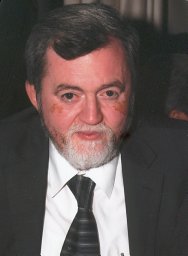 Konstantinos M. Paraskevopoulos合作论文数Physics Department, Aristotle University of Thessaloniki78
 Th. Kyratsi合作论文数32Theodora Kyratsi合作论文数Department of Physics, Aristotle University of Thessaloniki21
 Mercouri G. Kanatzidis合作论文数Department of Chemistry, Northwestern University;Materials Science Division, Argonne National Laboratory19Anastasios Molohidis合作论文数Aristotle University of Thessaloniki18
 Konstantinos Chrissafis合作论文数Department of Solid State Physics, School of Physics, Aristotle University of Thessaloniki18
 George S. Polymeris合作论文数18
 Eleni-Chrysanthi Stefanaki合作论文数15
 Eleni Pavlidou合作论文数Department of Condensed Matter and Materials Physics, School of Physics, Faculty of Sciences, Aristotle University of Thessaloniki14
 George Vourlias合作论文数12Dimitris Psillos合作论文数11
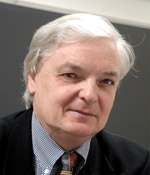 Ctirad Uher合作论文数Department of Physics, College of Literature, Science, and the Arts, University of Michigan10
 Thomas C. Chasapis合作论文数Amazon Fulfillment Technologies & Robotics10M. Ioannou合作论文数9Triantafillia Zorba合作论文数8
 Maria Kallery合作论文数8Ch. B. Lioutas合作论文数8Dimitrios Stathokostopoulos合作论文数7
 Jeffrey S. Dyck合作论文数Department of Physics;John Carroll University;Department of Physics, John Carroll University7C. Julien合作论文数6
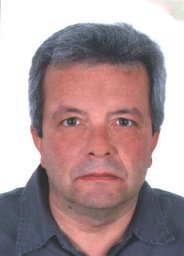 K. T. Zorbas合作论文数Department of Physics, Aristotle University of Thessaloniki6
 Eleni Petridou合作论文数Center for Research and Prevention of Injuries (CEREPRI),, University of Athens6
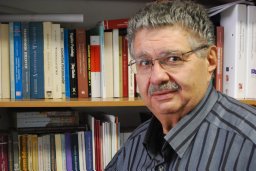 Petros Kariotoglou合作论文数University of Western Macedonia Greece6C. L. Mitsas合作论文数6D. I. Siapkas合作论文数6
 Stavros G. Stavrinides合作论文数Physics Department, Aristotle University of Thessaloniki6
 Apostolos Michaloudis合作论文数5
 Manolis Kousloglou合作论文数5
 Rodrigo Picos合作论文数Univ Balearic Isl, Dept Phys, Elect Technol Grp, Palma de Mallorca 07122, Spain5
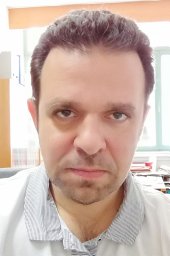 Dimitrios Chaliampalias合作论文数Department of Physics, Aristotle University of Thessaloniki5Nikolaos Vlachos合作论文数5Konstantinos Kambas合作论文数5
 Anna Spyrtou合作论文数University of Western Macedonia Greece5D. Terzidis合作论文数5
 Ioannis Samaras合作论文数5th c hasapis合作论文数4G Moumouzias合作论文数4
 Ioannis Lefkos合作论文数Sch Educ & Social Pol, Univ Macedonia4
 Atta Ullah Khan合作论文数Institute of Physical Chemistry, University of Vienna4Minko Balkanski合作论文数4
 Duck-Young Chung合作论文数Materials Science Division, Argonne National Laboratory4
 Steven N. Girard合作论文数Department of Chemistry, Northwestern University4Georgios S. Polymeris合作论文数3Christos Lioutas合作论文数3ch iona合作论文数3
 Evangelia Tarani合作论文数Department of Physics, Aristotle University of Thessaloniki3
 Leon O. Chua合作论文数Electrical Engineering and Computer Sciences Department, College of Engineering, University of California, Berkeley3




