Accurate reconstruction of directional wave spectra is essential for a wide range of oceanographic and engineering applications. Conventional wave data processing methods rely on potential theory, assuming irrotational flow and can account only for vertically uniform currents. These assumptions neglect the effects of ambient vertically shearing currents, which are often present in the ocean. This may lead to inaccurate wave parameter estimations, such as wave heights, periods and direction. This study presents a rotational data processing methodology incorporating the influence of shearing currents by solving the Rayleigh boundary value problem and deriving frequency- and direction-dependent numerical transfer functions. The method was validated through controlled numerical simulations and applied to in situ dataset obtained by an acoustic Doppler current profiler. Simulation results show that the rotational approach substantially improves the accuracy of directional wave spectrum estimations, compared to potential theory methods which were found to overestimate wave height up to 80% and to introduce directional errors exceeding 10 degrees, especially when using pressure sensors near the seabed. The study highlights the sensitivity of wave estimates to current shear gradients and underscores the need for robust numerical approaches when interpreting field measurements. These findings have direct implications for coastal engineering, where small directional errors can critically impact sediment transport modeling and infrastructure design.
Realistic currents in seas and oceans are almost always changing in depth thus indicative on the presence of shear in the profile of the mean ambient flow. However, analysis methodologies interpreting directional wave data gathered by in situ measurement instruments such as buoys, pressure gauges, and acoustic Doppler current profilers (ADCPs) utilize potential irrotational flow theory which cannot account for the rotational shearing currents. The effects of shearing currents on the wave direction estimations were studied on numerically simulated ADCP data of waves propagating in a predetermined spread. The numerical data was generated employing the Rayleigh boundary-value problem (BVP) and a selected ambient current profile. The potential data processing led to significant errors in wave directional spread estimation for common shearing currents (up to & AP;10 degrees in mean wave direction for the presented example). This finding is of great importance because it addresses the influence of an ambient current profile on wave propagation direction. The obtained results suggest that there is an uncertainty with the confidence of any wave directional spread ever presented by in situ wave measurement devices. Here, we developed an approach for estimating directional wave spectra based on rotational flow physics by acquiring terms emanating from wave-shearing current interaction governing equations. This included a derivation of numerical transfer functions for the fluid's physical properties based on the Rayleigh BVP. Then, by applying classical cross-and auto-spectral analysis on time-series data sets, the directional spread function was numerically reconstructed. This derived data processing methodology was applied to the same numerically simulated ADCP data sets. It was found to be capable of reconstructing the spread with great accuracy (0.4 degrees in mean wave direction for the presented example). This makes it a prominent methodology for estimating directional wave spectra in realistic oceanic conditions.
The focus of the current study is on the anisotropy of stably stratified turbulence that is not only limited to large scales and an inertial subrange but also penetrates to small-scale turbulence in the viscous/dissipation subrange on the order of the Kolmogorov scale. The anisotropy of buoyancy forces is well-known, including ensuing effects such as horizontal layering and pancakes structures. Laboratory experiments in the nineties by Van Atta and his students showed that the anisotropy penetrates to very small scales, but their experiments were performed only at a relatively low Reλ (i.e., at Taylor Reynolds numbers) and, therefore, did not provide convincing evidence of anisotropy penetration into viscous sublayers. Nocturnal katabatic flows having configurations of stratified parallel shear flows and developing on mountain slopes provide high Reynolds number data for testing the notion of anisotropy at viscous scales, but obtaining appropriate time series of the data representing stratified shear flows devoid of unwarranted atmospheric factors is a challenge. This study employed the “in situ” calibration of multiple hot-film-sensors collocated with a sonic anemometer that enabled obtaining a 90 min continuous time series of a “clean” katabatic flow. A detailed analysis of the structure functions was conducted in the inertial and viscous subranges at an Reλ around 1250. The results of DNS simulations by Kimura and Herring were employed for the interpretation of data.
Turbulence in a nocturnal stably stratified flow draining from a mountain range was captured using a probe system consisting of sonic and hot-film anemometers that communicate with each other through a neural network for optimal operation without any human intervention. This unique `Combo' system allowed probing turbulence continuously down to energy dissipation scales, at Taylor Reynolds number greater than 1200. The data analyses, together with direct numerical simulation, reveal that, contrary to the Kolmogorov Self-Similarity Hypothesis, turbulence at dissipation scales is anisotropic, suggesting a new line of inquiry on turbulence in stable atmospheric boundary layers.
Time series of sea level measurements from different instruments deployed around the Haifa Bay area are analyzed. All observations indicate the existence of persistent low frequency oscillations with periods corresponding to approximately 1hour and to approximately 30minutes. These oscillations are persistent throughout most of the year and reached maximal wave heights of around 30cm, a comparable value to tidal variations, making these oscillations an important factor in determining the average sea level elevation. The work identifies the phenomenon as resonant trapped waves, which are normal modes of the continental shelf extending from Haifa promontory to Achziv Canyon. Their temporal and spatial characteristics are learned through field measurement data analysis, wavelet analysis, numerical simulations, and exploration of an analytic solution. Finally, possible mechanisms for the generation of these waves are discussed. Such waves, which are commonly not surveyed, can be an important factor affecting coastal dynamics such as breaker line and coast line locations. Furthermore, the resonance behavior found has the capability of increasing the deep-to-shallow amplitudes in up to two orders of magnitude depending on incident angle. Noting that seismic or atmospheric events can agitate oscillation with similar wave periods, the intensification poses a hazard to Haifa Bay and coastal area. Plain Language Summary Different instruments for observing surface sea level variability had been deployed in Haifa Bay, North of Israel. In addition to expected changes caused by tidal forces and atmospheric influence, the observations revealed significant and persistent oscillations with wave periods of 1hour and 30minutes. This means that the average sea level in this area has been changing much more frequently and is less predictable than previously thought. By using analytic explanations and numerical simulations we show that these oscillations are observable due to natural amplification that happens on the continental shelf, the relatively shallow region between Haifa promontory and Achziv Canyon. This intensification reaction could constitute a threat to the coastal area in an event of tsunami event or extreme weather conditions, which are known to generate waves in the same frequency range. Key Points Sea level oscillations with periods of about 1hour and 30minutes are measured in Haifa Bay Numerical simulations are utilized to investigate the response of the coastal region to incident low-frequency waves Resonance on the continental shelf between Haifa promontory and Achziv Canyon explains the observations in terms of amplitudes and phases
Wind waves are of great importance in various fields of oceanography and engineering. Although they propagate along entire seas and oceans, due to the complexity and high costs in setting deep water measurements, they are mostly measured only in nearshore regions. The connection between deep sea wave conditions and nearshore ones is commonly done using wave propagation models. Nevertheless, due to the scarcity of deep water measurements, the validity of this process is seldomly tested. This work presents newly acquired data for investigating wave evolution from the deep sea far beyond the continental shelf to intermediate coastal waters. The deep water wave measurements were obtained using an upward-looking Acoustic Doppler Current Profiler (ADCP) mounted on a submerged buoy (35 m depth) in the East Mediterranean 50 km offshore Israel (bottom depth of 1500 m). To the best of our knowledge, it is the first time that such a deep sea measurement is carried out in the region. Another ADCP was deployed on the sea bed (26 m depth) 2 km offshore. During this campaign, a substantial storm (H-m0 = 6 m) was recorded simultaneously by both ADCPs. A wave evolution model accounting for triad and quartet interactions was employed for connecting the two measurements, in order to explain the differences between the two measurements with numerical estimations. A new methodology was developed for resolving spatial variability in the deep sea conditions by assimilating the deep water data into the output of an operational wave model for the Mediterranean Sea. This allowed forming appropriate boundary conditions for propagation of the wave field from deep to coastal waters. Model results show an importance of accounting for inhomogeneity of the wave field in deep water. Nevertheless, the measurements indicate that one cannot expect to fully resolve the exact wave spectra only by applying wave modeling. This emphasizes the importance of conducting such deep wave measurements.
Longitudinal velocity-derivative skewness S-0 is directly proportional to the rate of enstrophy generation and hence is a key parameter for characterizing small-scale turbulence. Obtaining S-0 requires accurate measurements of the finest scales in the dissipation subrange. In this paper we define a derivative skewness of the inertial range scales that is readily accessible experimentally, and we derive its value analytically. The results depend on the filtering procedure of small scales. Analytically derived inertial range skewness is compared with those computed by high-resolution numerical simulations and obtained in laboratory and field experiments. An alternative definition of the derivative skewness in the full and the inertial range scales is examined to identify the effects of intermittency.
The mixing coefficient Г = B/ε, defined as the ratio of the magnitude of buoyancy flux B to the rate of turbulent kinetic energy (TKE) dissipation ε, plays a key role in modeling atmospheric and oceanic flows. Г is sometimes estimated using yet another fundamental quantity, the flux Richardson number (or mixing efficiency) Rif = B/P, where P is the rate of production of TKE. In practice, Г and Rif are commonly assumed as constants, but studies show that they depend on multiple parameters determined by the type of flow, for example, the gradient Richardson number Rig for stratified shear flows. During the MATERHORN field program, direct measurements of velocity and temperature profiles as well as B, ε, and P were made over an extended period using a densely instrumented flux tower. A ~ 90 min period of stratified parallel shear flow was identified in the data record, including recurrent intervals of nominally stationary flow. Measurements during this period supported the study of mixing parameters as reported in this paper. Even for this case of nature resembling an ideal flow, Г was found to be dependent on multiple parameters. Nevertheless, for periods robustly identified as shear flow in equilibrium with embedded turbulence, the measurements were in agreement with those of past stratified shear flow experiments in the laboratory. This result points to the challenges of parameterizing turbulent mixing in environmental flow models.
Turbulence in the atmospheric boundary layer (ABL) is usually measured using sonic anemometers (sonics), but coarse spatial (${\sim}10$ cm) and temporal (${\sim}32$ Hz) resolutions of sonics preclude direct measurement of fine-scale parameters such as the turbulent kinetic energy (TKE) dissipation rate$\unicode[STIX]{x1D700}$. Instead,$\unicode[STIX]{x1D700}$is estimated using techniques based on Kolmogorov theory. Fine-scale measurements of ABL turbulence down to Kolmogorov scale were made with a sonic and hot-film anemometer dyad (a ‘combo’ probe) during the field campaigns of the Mountain Terrain Atmospheric Modeling and Observations (MATERHORN) programme. The hot-film probe was located on a gimbal within the sonic probe volume, and was automated to rotate in the horizontal plane to align with the mean flow measured by sonic. This procedure not only helped satisfy the requirement of hot-film alignment with the mean flow, but also allowedin situcalibration of hot-film probes. This paper analyses a period of nocturnal flow that was similar to a stratified parallel shear flow. The combo-probe measurements showed an interesting phenomenon – the occurrence of strong bursts, characterized by short-term increase of velocity fluctuations and simultaneous increase of TKE dissipation rate by orders of magnitude. These bursts were indicative of unusual turbulence activity at finer (${\sim}0.1$–0.4 m) scales that are not captured by sonics since the smallest scales resolved by the latter are greater than 0.6 m. With bursting present, the spectra exhibited bumps at scales intermediate to inertial and dissipation subranges, resembling a bottleneck phenomenon. Its manifestation, although unequivocally related to bursts, may not convincingly fit into the framework of previous bottleneck-effect theories that allude to either viscous effects or buoyancy effects modifying the local energy cascade via non-local effects. The origins of burst are yet to be identified. Stratified ABL with bursts exhibits non-Kolmogorov behaviour, and hence should be modelled with caution.
A parametric experimental study of the cold plume instability that appears in the large-Prandtl-number Czochralski melt flows is reported. The critical temperature difference (the critical Grashof number) and the frequency of appearing oscillations were measured for varying Prandtl numbers, aspect ratios of the melt, and crystal/crucible radii ratio. The measurements were carried out by two independent and fully non-intrusive experimental techniques. The results are reported as dimensional and dimensionless parametric dependences, and then are joined into relatively simple empirical relations showing how the critical Grashof number and the frequency of emerging oscillations depend on other parameters.
Effect of the capillary meniscus on the instability of large Prandtl number Czochralski melt flow is studied experimentally. The measurements are conducted in two experimental facilities by two independent non-intrusive optical techniques. The quantitative results are presented as dependencies of the critical Grashof number (critical temperature difference) on the meniscus height for different Prandtl numbers, radii and aspect ratios. The results show that with increase of the meniscus height the critical temperature difference noticeably grows and sometimes doubles. Recently reported parametric relations for the critical Grashof number and oscillations frequency are extended to include parameters of the meniscus.
High resolution measurements of turbulence in the atmospheric boundary layer (ABL) are critical to the understanding of physical processes and parameterization of important quantities, such as the turbulent kinetic energy dissipation. Low spatio-temporal resolution of standard atmospheric instruments, sonic anemometers and LIDARs, limits their suitability for fine-scale measurements of ABL. The use of miniature hot-films is an alternative technique, although such probes require frequent calibration, which is logistically untenable in field setups. Accurate and truthful calibration is crucial for the multi-hot-films applications in atmospheric studies, because the ability to conduct calibration in situ ultimately determines the turbulence measurements quality. Kit et al (2010 J. Atmos. Ocean. Technol. 27 23-41) described a novel methodology for calibration of hot-film probes using a collocated sonic anemometer combined with a neural network (NN) approach. An important step in the algorithm is the generation of a calibration set for NN training by an appropriate low-pass filtering of the high resolution voltages, measured by the hot-film-sensors and low resolution velocities acquired by the sonic. In Kit et al (2010 J. Atmos. Ocean. Technol. 27 23-41), Kit and Grits (2011 J. Atmos. Ocean. Technol. 28 104-10) and Vitkin et al (2014 Meas. Sci. Technol. 25 75801), the authors reported on successful use of this approach for in situ calibration, but also on the method's limitations and restricted range of applicability. In their earlier work, a jet facility and a probe, comprised of two orthogonal x-hot-films, were used for calibration and for full dataset generation. In the current work, a comprehensive laboratory study of 3D-calibration of two multi-hot-film probes (triple-and four-sensor) using a grid flow was conducted. The probes were embedded in a collocated sonic, and their relative pitch and yaw orientation to the mean flow was changed by means of motorized traverses. The study demonstrated that NN-calibration is a powerful tool for calibration of multi-sensor 3D-hot film probes embedded in a collocated sonic, and can be employed in long-lasting field campaigns.
Abstract Emerging application areas such as air pollution in megacities, wind energy, urban security, and operation of unmanned aerial vehicles have intensified scientific and societal interest in mountain meteorology. To address scientific needs and help improve the prediction of mountain weather, the U.S. Department of Defense has funded a research effort—the Mountain Terrain Atmospheric Modeling and Observations (MATERHORN) Program—that draws the expertise of a multidisciplinary, multi-institutional, and multinational group of researchers. The program has four principal thrusts, encompassing modeling, experimental, technology, and parameterization components, directed at diagnosing model deficiencies and critical knowledge gaps, conducting experimental studies, and developing tools for model improvements. The access to the Granite Mountain Atmospheric Sciences Testbed of the U.S. Army Dugway Proving Ground, as well as to a suite of conventional and novel high-end airborne and surface measurement platforms, has provided an unprecedented opportunity to investigate phenomena of time scales from a few seconds to a few days, covering spatial extents of tens of kilometers down to millimeters. This article provides an overview of the MATERHORN and a glimpse at its initial findings. Orographic forcing creates a multitude of time-dependent submesoscale phenomena that contribute to the variability of mountain weather at mesoscale. The nexus of predictions by mesoscale model ensembles and observations are described, identifying opportunities for further improvements in mountain weather forecasting.
The performance of an in situ calibration technique, implementing neural network (NN) algorithms for co-located multi-wire hot-film and sonic anemometers, is studied. The NN-based calibration technique, proposed by Kit et al (2010 J. Atmos. Ocean. Technol. 27 23–41), allows performing direct measurement of fine scales in turbulent air flow, and offers a robust tool for measurements of micro-scale properties in atmospheric flows. Accuracy of the suggested calibration technique is examined in view of isotropic and anisotropic flow fields of various turbulence intensity (TI). Anisotropic velocity datasets of various TIs were generated using a 'virtual probe' simulating hot-film anemometer response to the sensed flow, while a kinematic model of homogeneous isotropic turbulent flow was implemented to generate isotropic flow datasets. NN calibration performance is examined by quantitative comparison between the original and reconstructed velocity components, using a specially constructed norm and by visual comparison of original and reconstructed time series. The examined NN calibration technique performance is shown to be of reasonable accuracy for all TI velocity fields examined, while a notable drop in accuracy is detected with the increase in TI. The reconstruction of isotropic velocity fields, using the NN algorithm for calibration, is apparently of slightly lower accuracy than in the case of anisotropic flows. The results are discussed in view of possible implementation of the suggested technique in direct field measurements of atmospheric turbulence fine scales.
This study examines the eect of slow crystal dummy rotation on three-dimensional oscillatory instability and time-dependent supercritical ow states in a Czochralski melt ow experimental model.To enable further comparison with numerical modelling, the experiments are carried out using a 20 cSt silicone oil as an experimental liquid and in a large diameter crucible, which allows one to work in a narrow temperature interval, so that temperature dependence of all the thermophysical properties of the experimental liquid can be neglected.The measurements conrm, partially qualitatively and partially quantitatively, earlier numerical predictions on destabilization ofthe Czochralski convective ow by a slow rotation.A simple power dependence of ow oscillations frequency on the Grashof and rotational Reynolds numbers that ts all the experimental runs was found.
Experimental and numerical observations of oscillatory instability of melt flow in a Czochralski model are compared, and a disagreement observed at small crystal dummy rotation rates is addressed. To exclude uncertainties connected with flow along the free surface, the latter is covered by a no-slip thermally insulating ring. Experiments reveal an appearance of oscillations at temperature differences smaller than the numerically predicted critical ones. At the same time, a steep increase of the oscillations amplitude is observed just beyond the computed threshold values. By increasing the dummy rotation gradually, we are able to qualitatively confirm the numerically predicted flow destabilization. A good quantitative comparison is reached only with a rather strong rotation of the crystal dummy. Focusing on the disagreement in the non-rotating case, we argue that the experimentally observed instability is triggered by an external excitation that results from low-amplitude temperature oscillations in thermostatic baths. This argument is supported by a numerical simulation of the parametrically excited model.
The paper describes a three-dimensional hydrodynamic model of stratified fluid flow CAMERI3D/HD-ST developed in the Coastal and Marine Engineering Research Institute (CAMERI). The model, which incorporates the shallow water approximation, has been successfully applied for solution of various problems encountered within the coastal waters along the Israeli shore, such as release of cooling water and brine disposal. The empirical coefficients employed in the turbulent model have been selected based on comparison with the measurements of heated water spreading in the field and laboratory experiments. The selected coefficients are model constants and should not be modified in specific applications. Then, the model was thoroughly verified versus field measurements: instrumental temperature measurements in many locations along the Mediterranean coast of Israel including detailed temperature measurements in the Ashkelon region, airborne and satellite imaging of temperature plume propagation.
 Lev Shemer合作论文数Dept. Fluid Mech. and Heat Transfer, School of Mechanical Engineering, Faculty of Engineering, Tel-Aviv University27
 Arkady Tsinober合作论文数17
 Harindra Joseph Fernando合作论文数Environmental Fluid Mechanics Laboratory, College of Engineering, University of Notre Dame;Arizona State University16
 Alexander Yuri Gelfgat合作论文数School of Mechanical Engineering, Astronomy Tel Aviv University12
 Dan Liberzon合作论文数School of Mechanical Engineering, Tel-Aviv University7
 Naftali a Tsitverblit合作论文数Faculty of Engineering, Tel Aviv University7
 Efim Pelinovsky合作论文数Department of Applied Mathematics, Nizhny Novgorod State Technical University6
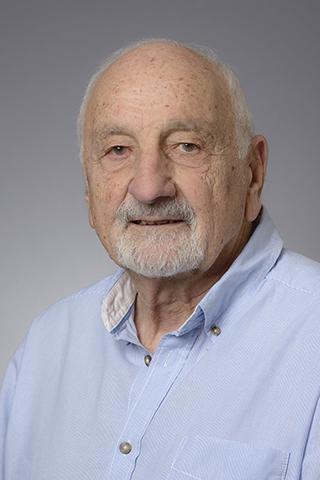 Israel J. Wygnanski合作论文数Department of Aerospace & Mechanical Engineering, College of Engineering, The University of Arizona6Hy Jiao合作论文数5A. Chai合作论文数5
 M. Teitel合作论文数Agricultural Research Organization, ARO,Volcani Center5Th Dracos合作论文数5E. Miroshnichenko合作论文数4A BERSHADSKII合作论文数4Christopher M. Hocut合作论文数Army Res Lab, DEVCOM4
 Konstantin Goulitski合作论文数4
 Dov Zviely合作论文数Department of Geography, University of Haifa4
 Yaron Toledo合作论文数Civil and Environmental Engineering4
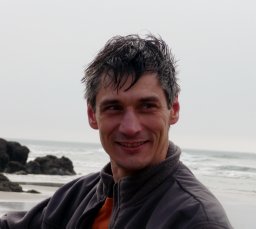 A Perlin合作论文数College of Oceanic;Atmospheric Sciences;Oregon State University;College of Oceanic|Atmospheric Sciences, Oregon State University4Rotem Soffer合作论文数3Patrick Conry合作论文数3
 Michael Stiassnie合作论文数Faculty of Civil and Environmental Engineering, Technion-Israel Institute of Technology3
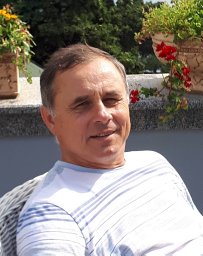 Nikolay Nikitin合作论文数Department of Academic;Castle Hill Hospital;Department of Academic, Castle Hill Hospital3M. Sladkevich合作论文数3Vitaly Haslavsky合作论文数Institute of Soil, Water & Environmental Sciences, The Volcani Center3
 Touvia Miloh合作论文数3O. Eitan合作论文数3
 Josef Tanny合作论文数Agricultural Research Organization, ARO,Volcani Center3Micha Klein合作论文数3Ej Strang合作论文数2Joachim Grüne合作论文数2D Arad合作论文数2O. Krivonosova合作论文数2D. Zhilenko合作论文数2T Talipova合作论文数2A. Solan合作论文数2
 Eugene Levich合作论文数Tel Aviv University2
 Leonid Shtilman合作论文数CUNY2B. Grits合作论文数2
 David Friedman合作论文数2
 S. Hassid合作论文数Dept. of Environmental & Water Resources Eng. Technion, Israel Inst. of Technology2D.S Rosen合作论文数2A Slavicz合作论文数2
 Dan Bowman合作论文数2hjs fernando合作论文数1A. N. Militeev合作论文数1E. Zemach合作论文数1E. Creegan合作论文数1r s coppersmith合作论文数1




