This article presents a new, multi-foil-blades (multi-S) rotor and compare its performance potentials with traditional (Single-S) Savomius rotor . Theoretical and experimental investigations show that the performance of the multi-S rotor is better than the other classical designs of Savonius rotor in terms of the resulting power factor. Analytical equations for power and torque factors are developed for both the single- and multi-S rotors with ideal flow assumed. These equations are proven very effective in describing the performance potentials of these rotors for a range of speed ratio less than or equals 0.7. This result is experimentally justified for both types of rotors. For speed ratios higher than 0.7, a remarkable deviation occurs between the theoretical performance measures provided by the developed equations and the experimentally measured ones. A geometric design parameter which depends on the internal construction of the proposed multi-S rotor is found to be of great impact on the attained power factor. A power factor for the multi-S rotor can be much more than that of a single-S one having the same height and outer size according to the chosen values of this design parameter.
This paper presents the possibility of using some design tools for developing a new, multi-foil-blades (multi-S) Savonius rotor and using these tools to assess some of the existing (single-S) Savonius designs. Theoretical and experimental investigations show that the performance of the multi-S rotor is better than the other classical designs of Savonius rotor in terms of the power factor. Analytical equations for power and torque factors are developed for both the single- and multi-S rotors with ideal flow theory. These equations are proven very effective in describing the performance potentials of these rotors for a range of speed ratio less than or equals 0.7. This result is experimentally justified for both types of rotors. For speed ratios higher than 0.7, a remarkable deviation occurs between the theoretical performance measures provided by the developed equations and the experimentally measured ones. A geometric design parameter which depends on the internal construction of the proposed multi-S rotor is found to be of great impact on the attained power factor. A power factor for the multi-S rotor can be much more than that of a single-S one having the same height and outer size according to the chosen values of this design parameter.
This paper suggests a hybrid, vertical configuration of multi-bladed and multi-stage (multi-S) Savonius rotors for capturing and storing wind energy. The intended hybrid design is expected to provide small- or near-medium-sized wind turbine of unique design in terms of the gained energy and speed factors. The whole system is dedicated for stand-alone power plants. Integration of wind power into electricity generation is associated with some challenges as wind power generation is known by its fluctuating nature. The operation philosophy here is based on continual storing of wind energy into temporal energy storage systems. This paper is pioneering in developing a bidirectional process by which storing and expanding energy take place simultaneously or separately. A continual energy storing goes forward by a mechanically-actuated compressor in order to compress air into air tanks which is simultaneously providing air expanders by the necessary energy. These expanders concurrently generate electricity and/or produce hydrogen and nitrogen. Pumping air into storage by using a wind turbine is normally done at high delivered torques rather than high speeds, while electricity generation finds most of its impact at relatively high speeds. A conflict is then exists which adds more complexity to the system operation in addition to the wind and load fluctuation problems. This paper suggests a solution to this problem by the integration of four storage facilities in order to realize a consistent, sustainable electricity generation, pumping air into air storage and generating hydrogen and nitrogen.
A new efficient approach is presented for solving the quadratic eigenvalue problem of weakly, nonproportionally damped vibration systems. In the analysis of these systems, gyroscopic moments and external damping are both considered. Traditional restriction of symmetry of inertia, damping and stiffness matrices is slightly relaxed. A second-order perturbation theory is developed such that the perturbed solution is based on the eigensolution of an unperturbed subproblem. This subproblem considers the unperturbed system in two different forms: (i) a conservative, gyroscopic part of an original problem, or (ii) a nonconservative, gyroscopic part of an original problem that is proportionally damped. To cope with asymmetry of the system matrices, a Duncan's like state formulation is used to bring these matrices into a suitable form for perturbations. Two numerical examples are introduced for explaining the detailed implementation of the presented approach. Additionally, a practical problem of rotor supported by two tilting pad-bearings is investigated. The eigensolutions obtained by the current approach match, to a great extent, other solutions obtained by time-consuming exact methods. The investigation procedure given here gives a framework to handle vibration problems of weakly nonproportional damping and/or weakly asymmetric inertia, damping and stiffness matrices.
A global control strategy of linear and nonlinear control methods is developed for application to the design of hydraulic suspensions in ground vehicles. A nonlinear, three-dimensional passenger car model of 7-dof is used to investigate vehicle ride capabilities with hydraulic actuators employed as active suspension elements. The design procedure starts with the application of an optimal control method of multiple-structure constraints to the optimization of suspension performance in the absence of system nonlinearities. Hence, the strong nonlinearity of hydraulic actuators is considered, and the optimal linear solutions are implemented as reference values to be asymptotically tracked. Two contrasting nonlinear control methods, called input–output linearization and sliding mode control, are used to achieve the asymptotic tracking problem in the presence of Coulomb friction and model uncertainties. Digital simulation shows that the input–output controller is effective as long as the suspension is frictionless and the system knowledge is perfect. Conversely, the robustness of the sliding mode controller makes it capable of providing good tracking even in cases of model uncertainty. The whole design procedure is demonstrated with numerical examples showing its significance. The procedure also allows for the simultaneous design of optimal passive suspension elements to be mechanized in parallel with the hydraulic actuators in order to increase suspension reliability.
This paper presents the design of a control process that intelligently manages and unifies the reconfigured operations of individual manufacturing physical systems like robotic and CNC systems. The goal is to develop a Unified, Reconfigurable Open Control Architecture (UROCA) system that represents a control level higher than the open architecture controllers but utilizes their powerful features. The unifying architecture UROCA is designed based on a new controller approach inspired by the concept of human's left/right brain and whole brain intelligence, which assures traceability between the requirements and capabilities of the controller and a high degree of operational flexibility. The UROCA design process follows the guidelines of a methodology called the Design Approach for Real-Time Systems (DARTS). This DARTS method proceeds from and builds on the application results of a specification methodology called Real-Time Structured Analysis (RTSA). The outcome of this design is a three-layer (bidirectional) hierarchical control architecture having deliberative left brain for normal operations and reactive right brain for contingent operations or navigation control. A third hybrid mode is also enabled.
A Unified Reconfigurable Open Control Architecture (UROCA) aims at unifying the reconfiguration aspects and managing the interaction amongst the different operating levels of individual machining control systems that are likely to perform in reconfigurable manufacturing systems. The hierarchical control structure of UROCA demands the usage of a supervisory control scheme in order to manage operations of supervisory and servo controllers altogether into a reconfigurable control process. The main function of the supervisory unit is to serve as a switching/reconfiguring logic amongst different available controllers, according to need, in order to maintain motion output within the permitted limits. Due to backlash, efficiency of machine tools will be undesirably turned down causing higher vibrations, lower contouring accuracy, and may draw the whole system into instability region. A Switching control scheme designated to manage the control process where two different controllers with two different control functionalities, acting differently in two vital zones - one of them where the backlash lies, and the other when moving past the backlash - is the main topic of this paper. The proposed switching schemes emphasize a reconfiguration aspect on the control process level for machine tools as perceived, investigated and resolved by the physical and control layers located at the deliberative part of the UROCA architecture.
This article presents ideas for contour error control of machine tools. A demonstration of these ideas is performed on a biaxial drive system exhibiting linear and circular contouring. A new independent contour error control (ICEC) strategy, which utilizes the equations of the well-known cross-coupling controller, is shown to diminish a linear contour error without using any cross-feeding signals between the driving axes. For circular contouring, new exact equations for contour error calculations are presented. These exact equations may lead to some significant control strategies that can be based on the cross-coupling control (CCC) concept. One new CCC strategy, based on one of these exact contour error equations, is shown to be very promising for circular contouring. Finally, the proposed strategies have been further developed for either independent or cross-coupling backlash compensation. These backlash compensation schemes may save complications of having special means for backlash control if CCC systems are intended for implementation.
A new extension of the stochastic linear quadratic Gaussian (LQG) regulator problem is developed and used for the design of new suboptimal cross-coupling controllers for machine tool drives. This new extension allowed us to combine both the drive and the cutting dynamics into a unified model driven by the static and the dynamic portions of the cutting force. The dynamic portion of the cutting force is considered as a stochastic random process in end milling contouring processes. The outputs of the axes are corrected by the cutting tool deflections which result from the cutting force-workpiece resistance interactive dynamics. Most importantly, the LQG extension developed here is directly applicable to the design and optimization of centralized, decentralized, and hierarchical machine tool controllers that have previously appeared in the literature. This is possible because our extension allows the assignment of a different control structure for each control input even if more than one control input are contributing to the same axis. Furthermore, the method admits each controller to function in any chosen subset of the available measurements. Thus, it provides us with a powerful means for designing any of the above-mentioned controllers using the same approach. The results of our suboptimal cross-coupling controllers were magnificent when compared to the commercially available positioning controllers.
Observers are required to estimate the states, which are not directly measured. In this paper, a robust observer is developed for estimating the states of flexible link manipulators. The developed observer uses the sliding mode approach to improve the tracking and convergence performance of a quasi-linear observer. The observer stability and limitations are proved using a hybrid approach of Lyapunov-based and variable structure system techniques. The design procedure of the observer is presented and applied to a two-link, three-degrees of freedom manipulator with flexible links. The observer is used in real-time applications due to its simple structure. Simulation results show excellent performance for the observer even with the change of payload. Experimental results for implementing the observer on a 3D manipulator with flexible links are demonstrated.
High-gain Luenberger-like state observation would provide the best possible tracking error of nonlinear systems at the expense of higher transient variance and slower convergence to the real state. Conversely, low-gain Luenberger-like observation usually provides lower transient variance of the error system, but might lead to nonzero or nonconvergent steady tracking error. This paper presents new switching-gain observer designs that capitalize on the benefits of low-gain, high-gain, and sliding mode observations. Switching and non-switching observer designs are both considered. Since adaptive observers are often of complex structures and might be difficult to implement, a simpler adaptation form is presented using one-time switching between two predetermined solutions. A nonlinear coordinate transformation is applied to obtain a linear observable system with nonlinear perturbation terms characterized by a Lipschitz constant and/or a finite bound on the norm. Sufficient conditions are derived for the existence of sliding mode, asymptotic stability of the error system, and the independence of the reconstruction error system from the perturbation inputs during the sliding mode. The new observer designs are applied to flexible-joint manipulators in order to explore their performance capabilities. The switching-gain observer was shown to be a reasonable compromise that is easy to be implemented.
The ultimate goal of a manipulator control design is to combine the design of both the controller and the observer into one procedural approach. Hence, the stability of the global system, namely, the manipulator dynamics, controller, and observer is guaranteed. This paper presents a new, unified approach in combining the control and observation problem for robotic manipulators. It links the design of an independent joint acceleration controller to the design of a variable structure state observer that is used to estimate the joint acceleration. Since both the joint acceleration controller and the observer introduced in this paper are likely to implement high gains to improve tracking, the effects of the time delay between the measurement of the output and the control loop response has been investigated. The observer design also considers the observation robustness against unknown but bounded disturbances using the theory of variable structure systems. A simulation study to investigate the performance of the joint acceleration controller and observer is conducted on a PUMA 560 robot. Simulation results showed that the proposed combination of observer and controller are robust to the change in the payload and small time delays.
In this paper, an advanced control technique that can be implemented in hard emergency situations of vehicles is introduced. This technique suggests integration between Active Front Steering (AFS) and Active Roll Moment Control (ARMC) systems in order to enhance the vehicle controllability. For this purpose, the AFS system applies a robust sliding mode controller (SMC) that is designed to influence the steering input of the driver by adding a correction steering angle for maintaining the vehicle yaw rate under control all the time. The AFS system is then called active-correction steering control. The ARMC system is designed to differentiate the front and rear axles' vertical suspension forces in order to alter the vehicle yaw rate and to eliminate the vehicle roll motion as well. Moreover, the operation of the SMC is based on tracking the behavior of a nonlinear 2-wheel model of 2-DOF used as a reference model. The 2-wheel model incorporates real tire characteristics, which can be inferred by the use of trained neural networks. The results clearly demonstrate the enhanced characteristics of the proposed control technique. The SMC with the assistance of the ARMC provides less correction of the steering angle and accordingly reduces the possibility of occurrence of the saturation phenomenon that is likely to take place in the operation of the SMC systems.
Methods for suboptimal bilinear control of semiactive, smart damping elements are developed in this study by use of extensions of linear-quadratic optimal control. These damping elements are considered in the form of continuously variable dampers, which are capable of adapting their damping forces to reasonably match full- or limited-state control (inputs) forces generated by broadband actuators. During the operation of these dampers, simultaneous broadband force generators control some other locations in the vibratory system. This leads to a class of bilinear vibratory systems with disjunct (active) linear and (semiactive) multiplicative control inputs. Generally, these disjunct control inputs might be contributing to control the same vibratory modes or not. A generalized quadratic performance index is considered for minimizing variances of the system state variables, the broadband control forces, and the damping factors of semiactive dampers. This performance index is constrained by (i) the inability to measure all the system state variables that are necessary for the operation of the broadband control input and (ii) the necessity to consider the switching states of the semiactive damping elements. Methods for full-state bilinear control and limited-state bilinear control are first derived. Then an application is made to an in-plane 4-DOF car model of front suspension unit having semiactive damper and rear suspension unit having broadband ideal actuator, or vice versa, as two different suspension schemes. Time-domain simulation of the vehicle response to (a hole followed by a bump) deterministic and stochastic road inputs is made. Comparisons with full-state control and limited-state control designs show the effectiveness of the bilinear control configurations derived in this work.
Methods for optimal and sub-optimal bilinear control of smart dampers are derived in this article. The smart dampers are considered in the form of (CVD) continuously variable semi-active dampers which are capable of adapting their damping forces to reasonably match full- or limited-state control (inputs) forces generated by broad-band actuators. During the operation of the smart dampers, it is assumed that some other locations in the vibratory system are controlled by simultaneous broad-band force generators. The system is then a piecewise (bilinear) vibrator in which the control inputs appear additively and multiplicatively. The chosen performance index is constrained by (i) the inability to measure all the system state variables that are necessary for the operation of the broadband control input and (ii) the necessity to consider the switching states of the smart damping elements. A bilinear control theory is first developed and then applied to an automobile model of 4-DOF having front suspension of smart damper and rear suspension of broadband ideal actuator. Performance comparisons with (FLSC) full-state control and (LMSC) limited-state control designs show the effectiveness of the (FLBC) full-state bilinear control and the (LSBC) limited-state bilinear control designs derived in this work.
A stochastic optimal control procedure, based on a perturbation criterion, is developed to study effects of small travel speed variations on active suspensions of vehicles. The vehicle speed is regarded as an uncertain parameter that randomly varies around a measured (equilibrium) mean value. The approach here separates the active suspension forces into two control (laws) forces. The first force is termed steady (unperturbed) control force that isolates a vehicle body from a roadway disturbance and functions in large (mean) nominal speed variations starting from low to very high. The second force is termed a perturbation control force that accommodates changes in the steady force due to small speed variations. Eventually, after justifying the perturbation approach, it is shown how these two control forces could be combined to function only in terms of measured signals. The investigation is made of two different suspension structures for two levels of roadway roughness. Although the approach to the problem is approximate and needs perfect knowledge of all the state variables, the results show that there are noticeable variations to the steady control laws for even small deviations from nominal travel speed. In fact, the control procedure developed here as a design tool is meaningful since optimum vibration control problems are not easy to formulate when non-stationary random vibrations are considered. Also, it can be generalized with care to handle some parametric uncertainty problems.
It is a universal trend that automotive engineers tend to use fast digital computers to develop advanced vehicle systems. They can design, analyze, and test their systems using computer simulation before physically manufacturing them. It is still questionable how these advanced systems would react with the human driver. One way to deal with this problem is to develop a computer model that is capable of controlling the vehicle in a way similar to human driver behavior. Fuzzy logic inference systems are known of their great ability to simulate human reasoning process as well as the possibility of being further trained to mimic specific human control process. This paper presents a new driver model using fuzzy logic controls. The model is designed to control the longitudinal as well as the lateral motions of the vehicle by performing simultaneous steering and braking commands. The model is tested on a vehicle model having an integrated active steering and direct yaw control strategy as developed by this paper's authors in [1]. The results show success of this fuzzy model in simulating driver control actions in curve following;md collision avoidance maneuvers.
In a variety of applications, especially in large scale dynamic systems, the mechanization of different vibration control elements in different locations would be decided by limitations placed on the modal vibration of the system and the inherent dynamic coupling between its modes. Also, the quality of vibration control to the economy of producing the whole system would be another trade-off leading to a mix of passive, active and semi-active vibration control elements in one system. This termactiveis limited to externally powered vibration control inputs and the termsemi-activeis limited to rapidly switched dampers. In this article, an optimal preview control method is developed for application to dynamic systems having active and semi-active vibration control elements mechanized at different locations in one system. The system is then a piecewise (bilinear) controller in which two independent sets of control inputs appear additively and multiplicatively. Calculus of variations along with the Hamiltonian approach are employed for the derivation of this method. In essence, it requires the active elements to be ideal force generators and the switched dampers to have the property of on-line variation of the damping characteristics to pre-determined limits. As the dampers switch during operation the whole system's structure differs, and then values of the active forcing inputs are adapted to match these rapid changes. Strictly speaking, each rapidly switched damper has pre-known upper and lower damping levels and it can take on any in-between value. This in-between value is to be determined by the method as long as the damper tracks a pre-known fully active control demand. In every damping state of each semi-active damper the method provides the optimal matching values of the active forcing inputs. The method is shown to have the feature of solving simple standard matrix equations to obtain closed form solutions. A comprehensive 9-DOF tractor semi-trailer model is used to demonstrate the effectiveness of the method. Time domain predictions are made to compare performance of ride and tyre-to-road contact in the model for the presented method with those of some other active and semi-active suspension designs.
 Waguih ElMaraghy合作论文数Intelligent Manufacturing Systems Centre, Faculty of Engineering, University of Windsor5
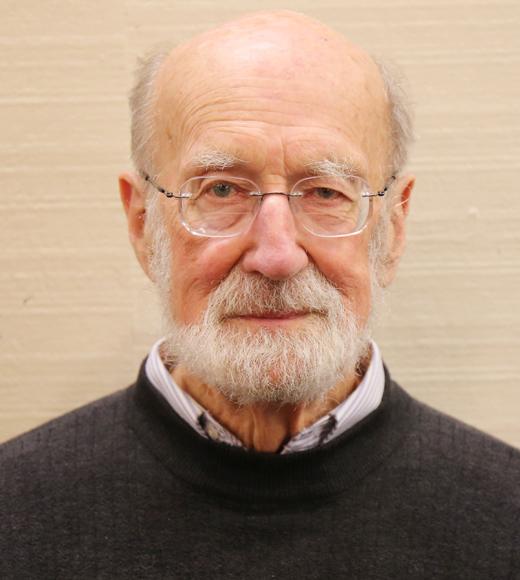 Dean C. Karnopp合作论文数Department of Mechanical and Aerospace Engineering, College of Engineering, University of California, Davis5
 Hoda ElMaraghy合作论文数Department of Mechanical, Automotive and Materials Engineering, Faculty of Engineering, University of Windsor;Intelligent Manufacturing Systems Centre, Faculty of Engineering, University of Windsor3
 W.A. El-Askary合作论文数Faculty of Engineering, Menoufiya University3
 Ahmed M. Abdelraaouf合作论文数3Y. F. Zeyada合作论文数2Zaki, Ahmed S.合作论文数1
 Ahmed Zaki合作论文数University of Calgary1D. C. Karnopp合作论文数1Rami M. Shahin合作论文数1Mohamed E. Elaraby合作论文数1




