The Sun's motion through the interstellar medium creates a flow of interstellar neutral (ISN) atoms through the heliosphere. ISN He, due to its high universal abundance and relatively low ionization rate, is the most abundant of the interstellar species near 1 au and ideal for flow parameter determination. The Interstellar Boundary Explorer (IBEX) measurements of ISN He flow parameters (speed, temperature, and direction) yielded a tube in 4D parameter space – narrow in cross-section but highly extended along one parameter axis (e.g., ecliptic longitude direction). This “4D parameter tube” results in large systematic uncertainties, a direct consequence of IBEX-Lo's fixed viewing orientation on the spacecraft. On the Interstellar Mapping and Acceleration Probe (IMAP), the articulation of the IMAP-Lo boresight using its pivot platform enables multiple viewing orientations of the ISN flow for significant systematic uncertainty reduction. We provide first results that definitively intersect ISN parameter tubes for elongation angles 79^∘, 94^∘, and 109^∘, resulting in precise interstellar parameters: speed 26.37 ± 0.82 km s^-1, ecliptic longitude direction 74.85^∘± 0.96^∘, ecliptic latitude direction -5.212^∘± 0.035^∘, and temperature 7740^+770_-730 K. The inferred flow of the Very Local Interstellar Medium is not consistent with either the Local Interstellar Cloud or the G-Cloud, but rather an intermediate state. IMAP is now positioned to study the detailed physics of this complex, nearby interstellar region. By resolving and understanding its physics, we determine how the heliosphere responds to the local interstellar flow, and how it may evolve in time
Energetic Neutral Atoms (ENAs) from the heliosphere are a unique means to remotely image the boundary regions of our heliosphere. NASA's Interstellar Boundary Explorer (IBEX) has been very successful in measuring these ENAs since 2008 at energies from tens of eV to 6 keV. The ENA low energy range from tens of eV to solar wind energy (roughly 1 keV) has been sampled throughout an entire solar cycle with the IBEX-Lo ENA imager. This enables us to study the physical implications for the structure of the heliosphere and for the parent proton populations in the heliosheath and other plasma regions that give rise to the observed ENAs. Here, we will discuss in particular the implications of the measured ENA intensities for the plasma pressure balance at the heliospheric boundary.
The interactions of our heliosphere with the surrounding local interstellar medium (LISM) lead to a range of observable phenomena such as energetic neutral atoms (ENAs) from the boundary regions of the heliosphere and the influx of interstellar neutrals (ISNs) into the inner solar system. Hydrogen is the dominant neutral species in the LISM, but due to ionization and radiation pressure, only a fraction of the ISN H atoms reach the inner solar system close to Earth. Monitoring this signal therefore provides observational constraints on our assumptions of the LISM and the solar-activity-dependent loss processes inside the heliosphere. The IBEX-Lo instrument on board the Interstellar Boundary Explorer has been the only instrument so far to measure ISN H atoms directly, together with ISN D, He, Ne, O, and ENAs in the energy range from tens of eV to 2 keV. This study covers 15 yr of IBEX-Lo ISN H observations, i.e., more than one solar cycle and includes two solar minima when the ISN H signal in IBEX-Lo is strongest. Despite the very intense ISN He signal, the ISN H signal can be retrieved with appropriate knowledge of the instrument, choice of optimum observation season, and supporting modeling. The retrieved ISN H signal shows a clear anticorrelation with solar activity. The resulting ISN H maps are available in orbit format and in ecliptic coordinates and will be the basis for future more detailed comparison with heliosphere models.
Energetic neutral atoms (ENAs) from the heliosphere are a unique means to remotely image the boundary regions of our heliosphere. The Interstellar Boundary Explorer (IBEX) has been very successful in measuring these ENAs since 2008 at energies from tens of eV to 6 keV. The main question raised by one solar cycle of IBEX-Lo observations at 0.05–2 keV is the strong and ubiquitous underestimation of several model predictions compared with actually measured ENA intensities at energies between 100 and 500 eV. This study converts the observed ENA intensities into plasma pressures for different sky directions and considers the implications for our understanding of the heliosheath and the source of the observed ENAs.
The heliosphere does not reside in splendid isolation of its environment.On the contrary, the size, shape, and plasma properties of the outer heliosphere depend critically on the neutral density, and magnetic field of the surrounding environment -the Very Local Interstellar Medium (VLISM).Just as the properties of the VLISM affect the heliosphere and the planetary environments inside, this argument can be readily extended to the astrospheres of stars with exoplanets.The properties of the heliosphere beyond the heliopause are being measured by the Voyager, New Horizons, and IBEX spacecraft, and the properties of the VLISM are being extracted from high-resolution interstellar absorption line spectra primarily with the UV instruments on the Hubble Space Telescope (HST).The interaction between the VLISM and the outer heliosphere is an important research frontier with implications for heliosphere/astrosphere physics, interstellar medium physics, and the physical processes in the atmospheres of exoplanets, many of which are potentially habitable.This white paper describes the present status of this important yet insufficiently studied field, the critically important scientific questions that can and should be addressed in the coming decade, and the reasons why these questions are important.Major questions concern the environment of the heliosphere and its interactions with the VLISM, the physical processes that control the ionization of hydrogen in the VLISM, and how astrospheres should differ from the today's heliosphere as a result of the different properties of the VLISM and different velocities of stars compared to their interstellar environment.
Combined in situ observations of the interstellar wind through the solar system and of its pickup ions (PUIs), implanted after ionization in the solar wind, explain, in comparison with interstellar absorption lines of nearby stars, that the Sun is in an interaction region of the two nearest interstellar clouds. This new finding disrupts the long-held understanding that we are inside the local interstellar cloud (LIC). We discuss how space physics evolved toward such interdisciplinary studies between heliophysics and astrophysics. In 1984, the discovery of interstellar He+ PUIs exposed the very local interstellar medium to in situ diagnostics at 1AU. These PUIs provide the interstellar gas composition and form a stepping stone for the acceleration of ions, especially into anomalous cosmic rays. Using the Sun as a gravitational spectrograph, direct imaging of the neutral interstellar wind, first for He and then for H, O, and Ne, provides the interstellar gas velocity vector and temperature at the heliopause. Combining the interstellar gas flow vectors, those of secondary neutral He and O, and the interstellar magnetic field direction deduced from the interstellar H deflection and termination shock anisotropy seen by the Voyagers provides synergistically the heliosphere’s shape, its interaction with the interstellar medium, and constrains our radiation environment. This ISMF organizes the bright Ribbon seen in all-sky images of energetic neutral atoms with the potential to provide its precision determination. The elemental and isotopic composition from PUI and neutral gas observations constrains the galactic evolution and Big Bang cosmology, opening additional interdisciplinary opportunities.
A detailed overview of the knowledge gaps in our understanding of the heliospheric interaction with the largely unexplored Very Local Interstellar Medium (VLISM) are provided along with predictions of with the scientific discoveries that await. The new measurements required to make progress in this expanding frontier of space physics are discussed and include in-situ plasma and pick-up ion measurements throughout the heliosheath, direct sampling of the VLISM properties such as elemental and isotopic composition, densities, flows, and temperatures of neutral gas, dust and plasma, and remote energetic neutral atom (ENA) and Lyman-alpha (LYA) imaging from vantage points that can uniquely discern the heliospheric shape and bring new information on the interaction with interstellar hydrogen. The implementation of a pragmatic Interstellar Probe mission with a nominal design life to reach 375 Astronomical Units (au) with likely operation out to 550 au are reported as a result of a 4-year NASA funded mission study.
The interaction of our protective heliosphere and the Very Local Interstellar Medium (VLISM) is the least explored and most rewarding frontier of space physics.New evidence amplifies the central role of the heliosphere in the evolution of the solar system along its 4.6billion-year journey around the galaxy.In addition to the dense clouds of plasma, gas and dust seeding the early proto solar nebula, recent supernovae have left the entire solar system exposed to extreme fluxes of interstellar material and cosmic radiation with far-reaching implications.Our current knowledge lacks the direct measurements necessary to understand how our star upholds its vast heliosphere and its potentially game-changing role in the evolution of our galactic home.Interstellar Probe provides new, required measurements over more than a solar cycle to uncover the physical processes starting near the Sun responsible for creating our dynamic heliosphere.In April 2022, the pragmatic Interstellar Probe Mission Concept Study was completed after four years, detailing a Large Strategic heliophysics mission that would transect the heliosphere from 1 au to the VLISM.Its journey provides rich science for generations across heliophysics and presents an opportunity to push the frontier of space exploration farther than ever done before.Modest crossdivisional investments enable high-value planetary science and astrophysics, deepening our understanding of the emergence of our habitable planetary system.A trajectory through the forward hemisphere of the heliosphere would be accomplished by a launch in the 2036-2042 timeframe using conventional chemical propulsion and a heavy-lift launch vehicle, such as the Space Launch System (SLS).A Jupiter Gravity Assist could propel an 860-kg spacecraft with an 87-kg payload of ten instruments delivering a unified view of the global heliosphere, reaching the VLISM after 16 years.The spacecraft is designed to a 50-year nominal lifetime using modern-day technology based on successful missions like New Horizons.Two next-generation Radioisotope Thermal Generators (RTGs) would ensure 300 We at end of nominal mission at 375 au and could enable exploration even beyond 500 au.
The Voyager spacecraft are providing the first in situ measurements of physical properties in the outer heliosphere beyond the heliopause. These data, together with data from the IBEX and Hubble Space Telescope and physical models consistent with these data, now provide critical measurements of pressures in the heliosphere and surrounding interstellar medium. Using these data, we assemble the first comprehensive survey of total pressures inside and outside of the heliopause, in the interstellar gas surrounding the heliosphere, and in the surrounding Local Cavity to determine whether the total pressures in each region are in balance with each other and with the gravitational pressure exerted by the galaxy. We intercompare total pressures in each region that include thermal, nonthermal, plasma, ram, and magnetic pressure components. An important result is the role of dynamic (ram) pressure. Total pressure balance at the heliopause can only be maintained with a substantial contribution of dynamic pressure from the inside. Also, total pressure balance between the outer heliosphere and pristine very local interstellar medium (VLISM) and between the pristine VLISM and the Local Cavity requires large dynamic pressure contributions.
The primary scientific goal of ICARUS (Investigation of Coronal AcceleRation and heating of solar wind Up to the Sun), a mother-daughter satellite mission, proposed in response to the ESA "Voyage 2050" Call, will be to determine how the magnetic field and plasma dynamics in the outer solar atmosphere give rise to the corona, the solar wind, and the entire heliosphere. Reaching this goal will be a Rosetta Stone step, with results that are broadly applicable within the fields of space plasma physics and astrophysics. Within ESA's Cosmic Vision roadmap, these science goals address Theme 2: "How does the Solar System work?" by investigating basic processes occurring "From the Sun to the edge of the Solar System". ICARUS will not only advance our understanding of the plasma environment around our Sun, but also of the numerous magnetically active stars with hot plasma coronae. ICARUS I will perform the first direct in situ measurements of electromagnetic fields, particle acceleration, wave activity, energy distribution, and flows directly in the regions in which the solar wind emerges from the coronal plasma. ICARUS I will have a perihelion altitude of 1 solar radius and will cross the region where the major energy deposition occurs. The polar orbit of ICARUS I will enable crossing the regions where both the fast and slow winds are generated. It will probe the local characteristics of the plasma and provide unique information about the physical processes involved in the creation of the solar wind. ICARUS II will observe this region using remote-sensing instruments, providing simultaneous, contextual information about regions crossed by ICARUS I and the solar atmosphere below as observed by solar telescopes. It will thus provide bridges for understanding the magnetic links between the heliosphere and the solar atmosphere. Such information is crucial to our understanding of the plasma physics and electrodynamics of the solar atmosphere. ICARUS II will also play a very important relay role, enabling the radio-link with ICARUS I. It will receive, collect, and store information transmitted from ICARUS I during its closest approach to the Sun. It will also perform preliminary data processing before transmitting it to Earth. Performing such unique in situ observations in the area where presumably hazardous solar energetic particles are energized, ICARUS will provide fundamental advances in our capabilities to monitor and forecast the space radiation environment. Therefore, the results from the ICARUS mission will be extremely crucial for future space explorations, especially for long-term crewed space missions.
A good understanding of the ionization rates of neutral species in the heliosphere is important for studies of the heliosphere and planetary atmospheres. So far, the intensities of the ionization reactions have been studied based on observations of the contributing phenomena, such as the solar spectral flux in the EUV band and the flux of the solar wind protons, alpha particles, and electrons. The results strongly depend on absolute calibration of these measurements, which, especially for the EUV measurements, is challenging. Here, we propose a novel method of determining the ionization rate of neutral species based on direct sampling of interstellar neutral gas from two locations in space distant to each other. In particular, we suggest performing observations from the vicinity of Earth’s orbit and using ratios of fluxes of interstellar neutral He for the direct and indirect orbits of interstellar atoms. We identify the most favorable conditions and observations geometries, suitable for implementation on the forthcoming NASA Interstellar Mapping and Acceleration Probe mission.
<p>The pristine very local interstellar medium (VLISM) is not available for in situ observations even with the Voyager spacecraft because the influence of the heliosphere on the VLISM plasma extends up to several hundred au from the Sun. Therefore, observations of interstellar neutral (ISN) helium, the species least modified at the heliospheric boundaries, are used to determine the pristine VLISM flow speed, direction, and temperature. For more than one solar cycle, the Interstellar Boundary Explorer (IBEX) has sampled ISN helium atoms at 1 au, significantly reducing the statistical uncertainties of the ISN helium flow parameters. Launching in 2025, the Interstellar Mapping and Acceleration Probe (IMAP) will further lower these uncertainties thanks to the utilization of a pivot platform, which provides a range of viewing orientations and reduces the parameter degeneracy seen from IBEX data. Even though interstellar helium is the least modified ISN species, recent studies show that the ISN helium flux is affected by charge exchange and elastic collisions beyond the heliopause. Charge exchange collisions outside the heliopause filter the primary ISN helium and produce a secondary population from perturbed He<sup>+</sup> ions in the interstellar plasma. The secondary helium population, originally called the Warm Breeze, was discovered from IBEX observations. Moreover, the distribution function of the primary ISN helium population is modified by elastic collisions with slowed down and heated plasma ahead of the heliopause. Consequently, the combined primary and secondary ISN helium populations at 1 au are complex and cannot be separated. Furthermore, the modifications of the population properties are larger than the statistical uncertainty of IBEX observations. We use global heliosphere models to estimate the magnitude of the filtration and scattering caused by charge exchange and elastic collisions. Together with other sources of information about the VLISM, these estimates allow us to assess the pristine VLISM conditions outside of heliosphere influences.&#160;</p>
As the heliosphere moves through the surrounding interstellar medium, a fraction of the interstellar neutral helium, hydrogen, and heavier species crossing the heliopause make it to the inner heliosphere as neutral atoms with energies ranging from few eV to several hundred eV. In addition, energetic neutral hydrogen atoms originating from solar wind protons and from pick-up ions are created through charge-exchange with interstellar atoms. This review summarizes all observations of heliospheric energetic neutral atoms and interstellar neutrals at energies below 10 keV. Most of these data were acquired with the Interstellar Boundary Explorer launched in 2008. Among many other IBEX breakthroughs, it provided the first ever all-sky maps of energetic neutral atoms from the heliosphere and enabled the science community to measure in-situ interstellar neutral hydrogen, oxygen, and neon for the first time. These observations have revolutionized and keep challenging our understanding of the heliosphere shaped by the combined forces of the local interstellar flow, the local interstellar magnetic field, and the time-dependent solar wind.
This paper reviews past research and new studies underway of the local interstellar environment and its changing influence on the heliosphere. The size, shape, and physical properties of the heliosphere outside of the heliopause are determined by the surrounding environment – now the outer region of the Local Interstellar Cloud (LIC). The temperature, turbulence, and velocity vector of neutral atoms and ions in the LIC and other partially ionized interstellar clouds are measured from high-resolution spectra of interstellar absorption lines observed with the STIS instrument on the HST. Analysis of such spectra led to a kinematic model with many interstellar clouds defined by velocity vectors derived from radial velocity measurements. This analysis identified fifteen clouds located within about 10 pc of the Sun and their mean temperatures, turbulence, and velocity vectors. With the increasing number of sight lines now being analyzed, we find that temperatures and turbulent velocities have spatial variations within the LIC and other nearby clouds much larger than measurement uncertainties, and that these spatial variations appear to be randomly distributed and can be fit by Gaussians. The inhomogeneous length scale is less than 4,000 AU, a distance that the heliosphere will traverse in less than 600 years. The temperatures and turbulent velocities do not show significant trends with stellar distance or angle from the LIC center. If/when the Sun enters an inter-cloud medium, the physical properties of the future heliosphere will be very different from the present. For the heliosheath and the very local interstellar medium (VLISM) just outside of the heliopause, the total pressures are approximately equal to the gravitational pressure of overlying material in the Galaxy. The internal pressure in the LIC is far below that in the VLISM, but there is an uncertain ram pressure term produced by the flow of the LIC with respect to its environment.
On its journey through the Galaxy, the Sun passes through diverse regions of the interstellar medium. High-resolution spectroscopic measurements of interstellar absorption lines in spectra of nearby stars show absorption components from more than a dozen warm partially ionized clouds within 15 pc of the Sun. The two nearest clouds - the Local Interstellar Cloud (LIC) and Galactic (G) cloud - move toward each other. Their bulk heliocentric velocities can be compared with the interstellar neutral helium flow velocity obtained from space-based experiments. We combine recent results from Ulysses, IBEX, and STEREO observations to find a more accurate estimate of the velocity and temperature of the very local interstellar medium. We find that, contrary to the widespread viewpoint that the Sun resides inside the LIC, the locally observed velocity of the interstellar neutral helium is consistent with a linear combination of the velocities of the LIC and G cloud, but not with either of these two velocities. This finding shows that the Sun travels through a mixed-cloud interstellar medium composed of material from both these clouds. Interactions between these clouds explain the substantially higher density of the interstellar hydrogen near the Sun and toward stars located within the interaction region of these two clouds. The observed asymmetry of the interstellar helium distribution function also supports this interaction. The structure and equilibrium in this region require further studies using in situ and telescopic observations.
We present a case study of the pitch-angle distributions (PADs) of suprathermal H + , He 2+ at ∼10–40 keV/nuc and He + at ∼8–20 keV/nuc near a reverse shock of a stream interaction region observed by the Plasma and Suprathermal Ion Composition instrument on board the Solar Terrestrial Relations Observatory Ahead spacecraft on 2008 March 9. We find that in both the downstream and upstream region close to the shock, the shocked particles of all three species appear to have a power-law-like spectrum at these suprathermal energies. The PADs of these three species show very similar behavior: in the downstream region, the phase space density appears to be significantly higher in the direction perpendicular to the interplanetary magnetic field (IMF) than in the parallel direction, along which particles accelerated at the shock front are supposed to escape into the downstream region. In the upstream region, the PADs of all three species show a clear beam in the direction antiparallel to the IMF due to the escaping particles from the shock into the upstream region. In addition, we find that suprathermal He + shows a signature of bidirectional beams in the upstream region very close to the shock. These results suggest that H + , He 2+ at ∼10–40 keV/nuc and He + at ∼8–20 keV/nuc could be accelerated similarly at interplanetary shocks and that shock drift acceleration likely plays an important role in the in situ acceleration of low-energy suprathermal ions.
The interstellar neutral (ISN) gas enters the heliosphere and is detected at a few au from the Sun, as demonstrated by Ulysses and the Interstellar Boundary Explorer (IBEX). Ulysses observed ISN gas from different vantage points in a polar orbit from 1994 to 2007, while IBEX has been observing in an Earth orbit in a fixed direction relative to the Sun from 2009. McComas et al. (2018) reported about an IMAP-Lo detector on board the Interstellar Mapping and Acceleration Probe (IMAP), with an ability to track the ISN flux in the sky. We present observation geometries for ISN gas for a detector with the capability to adjust the boresight direction along the Earth orbit over a year within a multichoice ISN observation scheme. We study science opportunities from the observations as a function of time during a year and the phase of solar activity. We identify observation geometries and determine the observation seasons separately for various ISN species and populations. We find that using an adjustable viewing direction allows for ISN gas observations in the upwind hemisphere, where the signal is not distorted by gravitational focusing, in addition to the viewing of ISN species throughout the entire year. Moreover, we demonstrate that with appropriately adjusted observation geometries, primary and secondary populations can be fully separated. Additionally, we show that atoms of ISN gas on indirect trajectories are accessible for detection, and we present their impact on the study of the ionization rates for ISN species.
 Nathan Schwadron合作论文数College of Engineering and Physical Sciences, University of New Hampshire80
 Harald Kucharek合作论文数College of Engineering and Physical Sciences, University of New Hampshire79Maciej Bzowski合作论文数74
 Stephen Fuselier合作论文数Southwest Research Institute, University of Texas at San Antonio73
 David J. McComas合作论文数Department of Astrophysical Sciences, Princeton University57
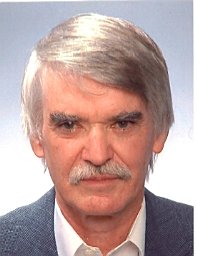 B. Klecker合作论文数Max-Planck-Institut für extraterrestrische Physik52
 Lynn Kistler合作论文数College of Engineering and Physical Sciences, University of New Hampshire;Physics and Space Science Center, University of New Hampshire46
 Herbert Funsten合作论文数Los Alamos National Laboratory42
 Peter Wurz合作论文数41Peter Bochsler合作论文数Physics Institute, Faculty of Science, University of Bern38
 Justyna M. Sokół合作论文数Southwest Research Institute37
 Marzena Kubiak合作论文数Zakład Fizyki Układu Słonecznego i Astrofizyki, Space Research Centre, Polish Academy of Sciences35
 Priscilla C. Frisch合作论文数Department of Astronomy and Astrophysics, University of Chicago30
 Daniel B. Reisenfeld合作论文数Los Alamos National Laboratory27
 Martin Lee合作论文数College of Engineering and Physical Sciences, University of New Hampshire27
 James P Mcfadden合作论文数Space Sciences Laboratory, University of California, Berkeley27Thomas C. Carlson合作论文数26
 Lukas Saul合作论文数Dept. of Physics and Space Science Center, University of New Hampshire25
 Andre Galli合作论文数23
 Paweł Swaczyna合作论文数Department of Astrophysical Sciences, Princeton University;swaczyna@princeton.edu;Department of Astrophysical Sciences, Princeton University22Mark Andrew Popecki合作论文数22
 Frederic Allegrini合作论文数Southwest Research Institute;Department of Physics and Astronomy, College of Sciences, The University of Texas at San Antonio21
 David Heirtzler合作论文数20
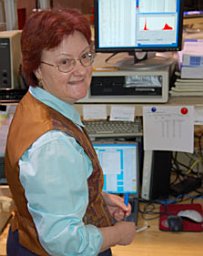 Antoinette B. Galvin合作论文数Dept. of Physics and Astronomy, University of Maryland19
 Robert F. Wimmer-Schweingruber合作论文数Institut für Experimentelle und Angewandte Physik, Universität Kiel;Mathematisch-Naturwissenschaftliche Fakultät, Christian-Albrechts-Universität zu Kiel18H. Reme合作论文数17Trevor Leonard合作论文数16
 J.-A. Sauvaud合作论文数Centre d’Etude Spatiale des Rayonnements16J. M. Bosqued合作论文数16
 A. Korth合作论文数Max-Planck-Institut für Sonnensystemforschung16P. Janzen合作论文数15
 Gary Zank合作论文数Department of Space Science, University of Alabama at Huntsville13
 Robert Strangeway合作论文数Department of Earth, Planetary, and Space Sciences, College of Physical Sciences, University of California, Los Angeles13Rickard Lundin合作论文数13
 George Livadiotis合作论文数Department of Astrophysical Sciences, Princeton University13
 Robert E Ergun合作论文数Department of Astrophysical and Planetary Sciences, University of Colorado Boulder;Laboratory for Atmospheric and Space Physics, University of Colorado Boulder12
 G. K. Parks合作论文数University of Washington12Edmond C Roelof合作论文数12
 Charles Farrugia合作论文数College of Engineering and Physical Sciences, University of New Hampshire12M. B. Bavassano-Cattaneo合作论文数12Robert Demajistre合作论文数12I. Dandouras合作论文数11
 Robert F Pfaff合作论文数Space Weather Laboratory, Heliophysics Division, Goddard Space Flight Center, NASA11
 Mike Gruntman合作论文数Department of Astronautical Engineering, Viterbi School of Engineering, University of Southern California11
 Maher Dayeh合作论文数Southwest Research Institute11
 Cynthia Cattell合作论文数School of Physics and Astronomy, College of Science and Engineering, University of Minnesota10
 Forrest Mozer合作论文数Department of Physics, University of California, Berkeley;Space Sciences Laboratory, University of California, Berkeley10Paul Henry Janzen合作论文数10




