One of the most successful physicists of the generation immediately before Hugh Everett III, E. T. Jaynes shared both Everett's interest in applications of information theory to physics and his foundational orientation. But whereas Everett focused on quantum mechanics, much of Jaynes' work concerned how to use information theory in thermodynamics. This letter is a response to comments Everett made on Jaynes' paper Information Theory and Statistical Mechanics, Physical Review, 106, 620-630 (1957). Jaynes claims his theory of information in statistical mechanics Is similar to Everett's theory (Everett seems to have included a preprint of his forthcoming Reviews of Modern Physics article with his letter to Jaynes). Everett is not convinced, as is clear from his marginal comments on the letter.
This is a remarkable book by a remarkable scientist. E. T. Jaynes was a physicist, principally theoretical, who found himself driven to spend much of his life advocating, defending and developing a particular view of probability theory. His interest was triggered in the 1950s by the role of probability in quantum mechanics, the theory that supersedes Newton’s physics on subatomic scales. Quantum mechanics predicts certain things only probabilistically. The theory is a huge success—the predictions it does make have been verified to unprecedented accuracy. But Jaynes realised that to go further, and penetrate the interpretative fog that surrounded quantum theory, a more coherent understanding of probability was needed than he had been taught. Jaynes effectively took the probability p(X |Y ) to represent how strongly the binary proposition X is implied to be true upon supposing that proposition Y is true. The value ofp(X |Y ) depends on relations that are known between the things to which both propositions refer. Jaynes was deeply impressed by a short 1946 paper by the physicist R. T. Cox, (Cox, 1946) which derived the sum and product rules—the ‘laws of probability’—from the laws of Boolean algebra for propositions. From the sum and product rules follows Bayes’ theorem for incorporating the truth of proposition B into what we know about proposition A, given prior informationC phrased propositionally:
A summary is not available for this content so a preview has been provided. Please use the Get access link above for information on how to access this content.
 G. Larry Bretthorst合作论文数18Wayman Crow合作论文数3
 James G. Miller合作论文数Laboratory of Ultrasonics, Department of Physics, Arts & Sciences, Washington University in St.Louis2G. E. Uhlenbeck合作论文数1irving john good合作论文数1arnold zellner合作论文数1N. Rosenzweig合作论文数1A. Nussbaum合作论文数1
 David Spiegelhalter合作论文数Department of Pure Mathematics and Mathematical Statistics, University of Cambridge;Centre for Mathematical Sciences, University of Cambridge;Centre for Science and Policy, University of Cambridge1
 Louis Victor de Broglie (路易·维克多·德布罗意)合作论文数巴黎大学理学院1S. Heims合作论文数1
 Frederick W. Cummings合作论文数Physics Department, University of California1A. I. Akhiezer合作论文数1Nandor L. Balazs合作论文数1Dennis V. Lindley合作论文数1
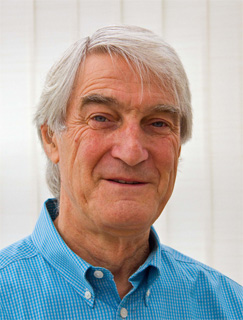 Anthony O'Hagan合作论文数School of Mathematics and Statistics, The University of Sheffield1P. H. Vartanian合作论文数1Seymour Geisser合作论文数Department of Statistics, University of Minnesota System1
 Hirotugu Akaike (赤池弘次)合作论文数The Institute of Statistical Mathematics;The Graduate University for Advance Study1James M. Dickey合作论文数1
 Arthur Dempster合作论文数Harvard University;Purdue University;Harvard University, Harvard University1
 Carlos R. Stroud合作论文数The Institute of Optics, Hajim School of Engineering and Applied Sciences, University of Rochester1S. V. Peletminskii合作论文数1
 Oscar Kempthorne合作论文数Iowa State University Ames Iowa1




