Background. The Catholic University of Health and Allied Health Sciences, Kilimanjaro Christian Medical University College and Muhimbili University of Health and Allied Sciences teamed up to address gaps in the training curricula for medical doctors and nurses with the aim of developing harmonised curricular templates that would be comprehensive and suit national objectives. Objectives. To share experiences and lessons learned in engaging stakeholders using social media as an additional method to collect information on curricular gaps and ideas to develop harmonised medical and nursing curricula. Methods. Pictures, newsprint extracts, and videos of face-to-face events in the curriculum development process and project and a curriculum advert were posted on Facebook, Twitter and YouTube and used to engage stakeholders, including regulatory bodies, health professional councils, graduates, students, practitioners, health training institutions, private and public employers, internship supervisors, faculty and the public. Reactions, comments and post insights from stakeholder postings, in both Swahili and English, were analysed manually and categorised into four types of messages: congratulatory, comments on the process and expected outcomes, curricular gaps, and faculty development needs to implement new curricula. Results. A total of 69 290 stakeholders were engaged via Facebook and 229 via Twitter. A total of 13 553 (19.6%) Facebook and 179 (78.2%) Twitter comments were directly related to gaps in current curricula and graduate competencies. Other inputs received through social media were on faculty development needs to implement harmonised curricula and the project in general. Conclusion. This was the first attempt to engage curriculum stakeholders using social media for the development of harmonised curricula in Tanzania. The impact of social media in providing relevant inputs for curriculum development was significant. Use of social media, with multiple language options, is an economical and efficient way to reach a large number of stakeholders for curriculum quality improvement.
Welcome to Annals of Global Health,Annals of Global Health is a peer-reviewed, fully open access, online journal dedicated to publishing high quality articles dedicated to all aspects of global health. The journal's mission is to advance global health, promote research, and foster the prevention and treatment of disease worldwide. Its goals are to improve the health and well-being of all people, advance health equity, and promote wise stewardship of the earth's environment. The latest journal impact factor is 3.64.Annals of Global Health is supported by the Program for Global Public Health and the Common Good at Boston College. It was founded in 1934 by the Icahn School of Medicine at Mount Sinai as the Mount Sinai Journal of Medicine. It is a partner journal of the Consortium of Universities for Global Health. Authors of articles accepted for publication in Annals of Global Health will be asked to pay an Article Publication Charge (APC) to cover publication costs. This charge can normally be sourced from your funder or institution. We are committed to supporting authors from all countries to publish their work in Annals of Global Health regardless of national income level, and to achieve this goal, we waive the Article Publication Charge for manuscripts where all authors are from low-income or lower-middle-income countries (as defined by the World Bank). From time to time, Annals of Global Health publishes Special Collections, a series of articles organized around a common theme in global health. Recent Special Collections have included “Strengthening Women’s Leadership in Global Health”, “Decolonizing Global Health Education”, and “Capacity Building for Global Health Leadership Training”. Global health workers interested in developing a Special Collection are strongly encouraged to contact the Managing Editor in advance to discuss the project.
Welcome to Annals of Global Health,Annals of Global Health is a peer-reviewed, fully open access, online journal dedicated to publishing high quality articles dedicated to all aspects of global health. The journal's mission is to advance global health, promote research, and foster the prevention and treatment of disease worldwide. Its goals are to improve the health and well-being of all people, advance health equity, and promote wise stewardship of the earth's environment. The latest journal impact factor is 3.64.Annals of Global Health is supported by the Program for Global Public Health and the Common Good at Boston College. It was founded in 1934 by the Icahn School of Medicine at Mount Sinai as the Mount Sinai Journal of Medicine. It is a partner journal of the Consortium of Universities for Global Health. Authors of articles accepted for publication in Annals of Global Health will be asked to pay an Article Publication Charge (APC) to cover publication costs. This charge can normally be sourced from your funder or institution. We are committed to supporting authors from all countries to publish their work in Annals of Global Health regardless of national income level, and to achieve this goal, we waive the Article Publication Charge for manuscripts where all authors are from low-income or lower-middle-income countries (as defined by the World Bank). From time to time, Annals of Global Health publishes Special Collections, a series of articles organized around a common theme in global health. Recent Special Collections have included “Strengthening Women’s Leadership in Global Health”, “Decolonizing Global Health Education”, and “Capacity Building for Global Health Leadership Training”. Global health workers interested in developing a Special Collection are strongly encouraged to contact the Managing Editor in advance to discuss the project.
Welcome to Annals of Global Health,Annals of Global Health is a peer-reviewed, fully open access, online journal dedicated to publishing high quality articles dedicated to all aspects of global health. The journal's mission is to advance global health, promote research, and foster the prevention and treatment of disease worldwide. Its goals are to improve the health and well-being of all people, advance health equity, and promote wise stewardship of the earth's environment. The latest journal impact factor is 3.64.Annals of Global Health is supported by the Program for Global Public Health and the Common Good at Boston College. It was founded in 1934 by the Icahn School of Medicine at Mount Sinai as the Mount Sinai Journal of Medicine. It is a partner journal of the Consortium of Universities for Global Health. Authors of articles accepted for publication in Annals of Global Health will be asked to pay an Article Publication Charge (APC) to cover publication costs. This charge can normally be sourced from your funder or institution. We are committed to supporting authors from all countries to publish their work in Annals of Global Health regardless of national income level, and to achieve this goal, we waive the Article Publication Charge for manuscripts where all authors are from low-income or lower-middle-income countries (as defined by the World Bank). From time to time, Annals of Global Health publishes Special Collections, a series of articles organized around a common theme in global health. Recent Special Collections have included “Strengthening Women’s Leadership in Global Health”, “Decolonizing Global Health Education”, and “Capacity Building for Global Health Leadership Training”. Global health workers interested in developing a Special Collection are strongly encouraged to contact the Managing Editor in advance to discuss the project.
 O. Gachuno合作论文数3K.B. Ousman合作论文数3
 Joachim Voss合作论文数Frances Payne Bolton School of Nursing, Case Western Reserve University3Chapman Susan A合作论文数3
 Damalie Nakanjako合作论文数Faculty of Medicine, Makerere University3
 Urassa David P合作论文数3
 Theresa Odero合作论文数3
 Douglas J. Wiebe合作论文数Center for Clinical Epidemiology and Biostatistics, Department of Biostatistics, Epidemiology and Informatics, Perelman School of Medicine, University of Pennsylvania3
 Gabrielle O'Malley合作论文数Department of Global Health, University of Washington3Yohana James Mashalla合作论文数3Esther S. Seloilwe合作论文数3
 Yukari Carol Manabe合作论文数Bloomberg School of Public Health, Johns Hopkins University3
 Rosemary Carol Polomano合作论文数School of Nursing, University of Pennsylvania2Laura P Newman合作论文数2
 Nelson K. Sewankambo合作论文数College of Health Sciences, Makerere University2
 Judith N. Wasserheit合作论文数Department of Global Health, University of Washington2
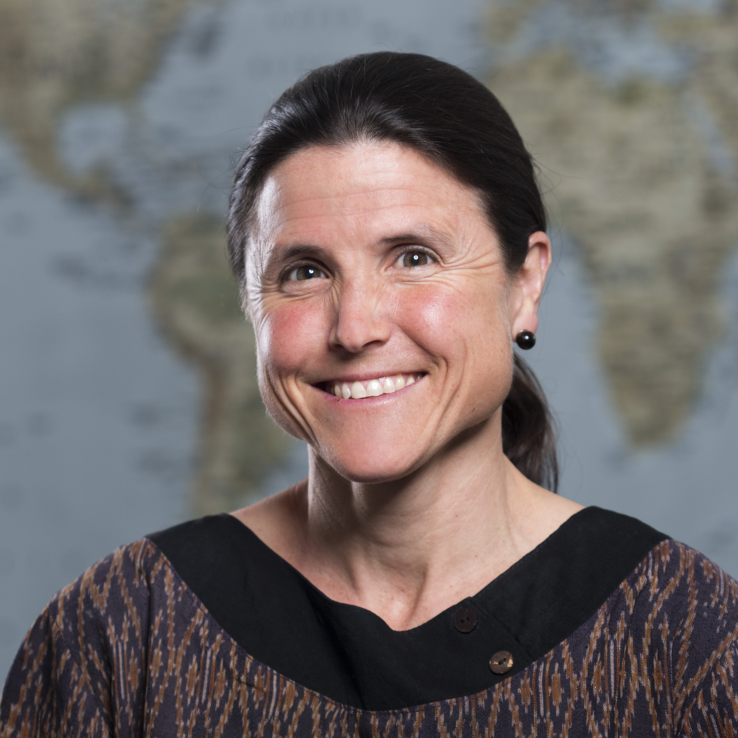 Carey Farquhar合作论文数School of Public Health, University of Washington2a kulanga合作论文数1K.N. Hosey合作论文数1Marjorie Muecke合作论文数1
 Doreen Mloka合作论文数1
 Daisy Krakowiak合作论文数1
 Rochelle Ami Dicker合作论文数Department of Surgery, University of California Los Angeles/Division of General Surgery, University of California San Francisco1
 Ephata Kaaya合作论文数Cancer Center Karolinska (CCK),, Karolinska University Hospital Solna/Karolinska Institute;Department of Pathology, Muhimbili University of Health and Allied Sciences (MUHAS),1
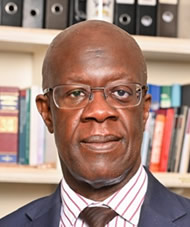 Nelson Sewankambo合作论文数Makerere University Medical School1




