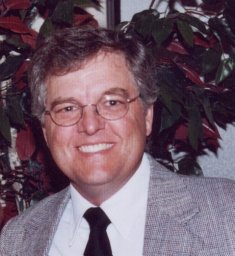
Edward Lawrence Keyes was born on August 28, 1843 to Erasmus Darwin Keyes and Caroline M. Clarke at the Fort Moultrie Army Base in Charleston, South Carolina. The illustrious military career of Erasmus Keyes began as a student at West Point. At an early assignment at Fort Moultrie, he was aide-de-camp to General Winfield Scott. Keyes returned to West Point on the faculty, largely owing to Robert E. Lee's recommendation. In 1849, at the start of the Gold Rush, Keyes was assigned as Commanding Officer of San Francisco's Presidio. 1 Thompson EN: Defender of the Gate: The Presidio of San Francisco, A History from 1846 to 1995. Golden Gate National Recreation Area, National Park Service, California, Historic Resource Study, 1997, vol 1, pp 20–32, 50–66, 71–81, 146–159, 440–453 Google Scholar His wife and children remained east in New York. General Keyes was a creative, independent thinker and a superb manager of the Presidio during the chaotic time of the Gold Rush. The Presidio assignment ended in 1858 when he was promoted to Captain, and by 1860, Keyes had returned to the command of General Scott, who had become Commander-in-Chief of the new Union Army at the beginning of the Civil War. 2 Eisenhower J.S. Agent of Destiny: The Life and Times of General Winfield Scott. Free Press, New York1997 Google Scholar Soon after leaving Scott's command, Keyes was distinguished in rear-guard action at the First Battle of Bull Run, resulting in promotion to Colonel. President Lincoln then chose him to command the Fourth Corps during General McClellan's Peninsula campaign in 1862. Keyes distinguished himself at the battle of Seven Pines, and again during the subsequent retreat at White Oak Swamp. He was then promoted to Major-General, but owing to a falling out with McClellan, he was assigned to fort duty at Yorktown and saw little combat during 1863. During the Civil War, Keyes twice followed the advice of President Lincoln, even though a superior officer disagreed with Lincoln's decisions. 3 Belt ES (Ed): Civil War Newspaper Clippings and a Brief Biography of Major-General Erasmus Darwin Keyes 1861–1862. Amherst, Massachusetts, Paper House (privately printed), 1999, pp 1–35 Google Scholar After being assigned to a board for retiring disabled officers in 1864, General Keyes resigned his commission and returned to California. He purchased a vineyard in the Napa Valley and built one of the first large wine cellars in the state. Keyes then became president of a gold mining company, vice-president of a savings bank, and vice-president of the Vinicultural Society of Napa County. By the mid-1870s, he and some family members moved to Nice, France, where he died in 1895. He is buried at West Point. General Keyes' wartime newspaper clippings have recently come to light, and a facsimile copy has been published. 3 Belt ES (Ed): Civil War Newspaper Clippings and a Brief Biography of Major-General Erasmus Darwin Keyes 1861–1862. Amherst, Massachusetts, Paper House (privately printed), 1999, pp 1–35 Google Scholar The wide ranging abilities and character traits of Keyes seem to have been passed on to his son, Edward Lawrence Keyes, who in turn showed creative, independent thought in his medical profession.
Herein, we document changes in the Lake Michigan food web between 1970 and 2000 and identify the factors responsible for these changes. Control of sea lamprey (Petromyzon marinus) and alewife (Alosa pseudoharengus) populations in Lake Michigan, beginning in the 1950s and 1960s, had profound effects on the food web. Recoveries of lake whitefish (Coregonus clupeaformis) and burbot (Lota lota) populations, as well as the buildup of salmonine populations, were attributable, at least in part, to sea lamprey control. Based on our analyses, predation by salmonines was primarily responsible for the reduction in alewife abundance during the 1970s and early 1980s. In turn, the decrease in alewife abundance likely contributed to recoveries of deepwater sculpin (Myoxocephalus thompsoni), yellow perch (Perca flavescens), and burbot populations during the 1970s and 1980s. Decrease in the abundance of all three dominant benthic macroinvertebrate groups, including Diporeia, oligochaetes, and sphaeriids, during the 1980s in nearshore waters ([Formula: see text]50 m deep) of Lake Michigan, was attributable to a decrease in primary production linked to a decline in phosphorus loadings. Continued decrease in Diporeia abundance during the 1990s was associated with the zebra mussel (Dreissena polymorpha) invasion, but specific mechanisms for zebra mussels affecting Diporeia abundance remain unidentified.
BACKGROUND. with the advent of the prostate specific antigen (PSA) assay, an increased detection rate of prostate carcinoma has ensued. This has been associated with a downward stage migration, In contrast, grade has shifted heavily toward moderate differentiation. The authors sought to test the hypothesis that such changes in grade in part may be because of trends among pathologists to upgrade similar specimens over time.METHODS. Two expert genitourinary pathologists regraded 23 prostate biopsies and 15 radical prostatectomy specimens during a 3-year period (1989-1991). Each pathologist then regraded 32 prostate biopsies and 15 radical prostatectomies from 1998 to 2000. For both time periods, each pathologist regraded only specimens that they personally had graded initially. All specimens were scored using the Gleason system, the predominant system used in describing prostate carcinoma grade. In evaluating original and regraded scores, the authors classified score changes between less than or equal to 6 and greater than or equal to 7 or between 7 and greater than or equal to 8 as significant because such changes have a high probability of altering clinical management. The results were analyzed using the two-tailed Fisher exact test.RESULTS. Of 23 prostate biopsies from 1989 to 1991, 10 of 23 (44%) had a clinically significant Gleason score change when regraded, whereas 2 of 15 (13%) radical prostatectomy specimens from the same period had a clinically significant Gleason score change. A significant change in the distribution of biopsy Gleason scores on regrading was observed (P < 0.04). In comparison, when the prostate biopsies from 1998-2000 were regraded, 10 of 32 (31%) had a clinically significant grade change. Radical prostatectomy specimens from the same period revealed 3 of 15 (20%) with a clinically significant grade change. After regrading the biopsies from 1989-1991, 8 of 23 (35%) of were upgraded, whereas 2 of 23 (9%) were downgraded. In comparison, of the biopsies with significant changes from 1998 to 2000, 3 of 32 (9%) were upgraded, whereas 7 of 32 (22%) were downgraded. Of the radical prostatectomy specimens with significant change, only 2 of 15 from each period were upgraded. Significant upgrading (P < 0.005) occurred only in the biopsy specimens from 1989 to 1991.CONCLUSIONS. The authors' data suggest that rates of upgrading and downgrading of biopsy specimens differ between the 1989-1991 cases and the 1998-2000 cases, with the 1989-1991 samples exhibiting a significant change toward higher grades. Although not excluding the possibility of a change in the biology of prostate carcinoma over time, these findings suggest that the apparent trend toward higher biopsy grades in part may be because of how pathologists interpret these specimens today as compared with 10 years ago. Therefore, outcome studies including a biopsy Gleason score from older specimens as a risk variable have a significant chance of being vunerable to this phenomenon. Based on the authors' data, all such specimens should undergo rereview. (C) 2002 American Cancer Society.
The banks of Brine Pool NR1, a brine-filled pockmark in the Gulf of Mexico, are host to a population of Bathymodiolus childressi, a hydrocarbon seep mussel with methanotrophic endosymbionts. The mussel community surrounds the pool, covering an area of similar to 540 m(2) and can be divided into two distinct zones separated by a transitional area. The inner zone extends inward from the edge of the pool similar to 1 m. The water among the mussels in this zone has high methane concentrations (>200 mu mol/L) and moderate oxygen concentrations (nondetectable to 161 mu mol/L). Hydrogen sulfide was rarely detected in this zone. The outer zone extends similar to 1 m inward from the outer edge of the mussel bed. This zone also has high methane concentrations in the water among the mussels (>200 mu mol/L), but lower average oxygen levels and areas with very high levels of hydrogen sulfide. The two zones are linked with a transitional area, the middle zone, ranging in width from 1 to 4 m, where intermediate environmental conditions are found. The inner zone was relatively homogenous, while spatial heterogeneity was high in the middle and outer zones, both in the characteristics of the mussel population and in their environment. Size-frequency distributions indicate that the inner zone is an area of active recruitment, with very little recruitment occurring in either the middle or outer zones, Physiological condition indices of the mussels were significantly higher in the inner zone than in the outer zone in some years. Comparisons of growth parameters also indicate better growth conditions in the inner zone. Physiological condition and growth did not change between the first two years of the study, However, a significant change in both was detected between 1994 and 1995, suggesting that this deep-sea community is exposed to an unexpected temporal variability in environmental conditions.
 Dan Theodorescu合作论文数University of Arizona Cancer Center2
 DJ JUDE合作论文数1T. F. Nalepa合作论文数1Carol Korte合作论文数1Edward S. Rutherford合作论文数1Da Bloom合作论文数1
 Hank Vanderploeg合作论文数NOAA - Great Lakes Environmental Research Laboratory1
 Thomas Johengen合作论文数School for Environment and Sustainability, University of Michigan-Ann Arbor1
 James C Boyd合作论文数Department of Pathology, University of Virginia Health System1
 Charles Fisher合作论文数Department of Biology, Eberly College of Science, Pennsylvania State University1Charles P. Madenjian合作论文数1E.D Vaughan合作论文数1Gary L. Fahnenstiel合作论文数1
 Henry F. Frierson合作论文数Department of Pathology, School of Medicine, University of Virginia1Mark P. Ebener合作论文数1Guy W. Fleischer合作论文数1Dennis S. Lavis合作论文数1
 James R. Bence (James Bence)合作论文数Quantitative Fisheries Center, Department of Fisheries and Wildlife, Michigan State University1
 Stacey E. Mills合作论文数Department of Pathology, School of Medicine, University of Virginia1Kathleen M. Scott合作论文数University of South Florida1E. R. Nix合作论文数1Edward S. Belt合作论文数1Darren M. Benjamin合作论文数1
 Dale M. Robertson合作论文数U.S. Geological Survey1Philip J. Schneeberger合作论文数1




