Platyprosopini Lynch, 1884 comprises a single genus, Platyprosopus Mannerheim, 1830, whose species exhibit a nearly worldwide distribution. Members of the genus are consistently collected in proximity to rivers or other humid environments. In the present study, we describe two species, including one new species, and provide the first investigation of a set of openings on the abdomen of Platyprosopus. In both P. parallelus Sharp and P. metaxyus sp. nov., we observed three openings situated at the base of tergites and sternites. No internal reservoir was detected, but a reinforced muscular system associated with the openings was present, and a cluster of cells adjacent to the basal insertions is presumed to function in glandular secretion. Because the biology of the genus and the chemical composition of the glandular secretions remain unknown, the function of the openings cannot yet be inferred.
The Atlantic Forest is one of the most biodiverse biomes in the world. A significant protected area in Paran & aacute; State (Brazil) represents an ecotone between two subdivisions: the Upper Paran & aacute; Atlantic Forest and the Araucaria Moist Forest. This protected area experiences a loss of approximately half of its canopy tree leaves between June and August, leading to the formation of a thick layer of leaf litter. This environment fosters a high abundance and diversity of Staphylinidae beetles, the beetle family with the highest species richness, particularly in the Neotropics. This study investigated whether soil characteristics influence Staphylinidae composition and diversity. Among the two soil types analyzed, Ultisol exhibited the highest overall richness (63 morphospecies) and diversity, whereas Oxisol (38 morphospecies) hosted a compositionally distinct community with greater internal variability, a pattern consistent across years. A generalized linear model confirmed soil type as the main predictor of richness, while NMDS ordination showed distinct community clustering by soil type, corroborated by PERMANOVA. These results infer the importance of Ultisol within the reserve, given that it is subject to greater disturbance through direct contact with crops and highways. Demonstrating the importance of soil properties in biodiversity monitoring enhances the understanding of habitat heterogeneity and reinforces the relevance of soil health.
Parasitoids of the genus Aleochara play an important role in the natural regulation of cyclorrhaphous Diptera of medical and veterinary relevance, many of which are associated with decomposing substrates and are of forensic importance. Aleochara (Aleochara) lustrica Say, 1832 (Coleoptera: Staphylinidae) is distributed across the Americas but, despite records from several Brazilian states, had not previously been reported from Rio Grande do Sul, and its host associations remain poorly documented. In this study, we report the first occurrence of A. (A.) lustrica in Rio Grande do Sul, Brazil, extending its known southern distribution limit in the Americas. Field sampling was conducted between April and May 2025 at the Pelotas-Visconde da Gra & ccedil;a Campus (IFSul), using poultry liver as bait to attract ovipositing flies. Pupae recovered from the substrate were reared individually under controlled laboratory conditions. Among 178 field-collected sarcophagid pupae, 61 (34.26%) were parasitized, yielding nine adult specimens of A. (A.) lustrica. Although parasitized puparia were morphologically highly consistent with Microcerella halli(Engel,1931) (Diptera: Sarcophagidae), species-level host identification for field-parasitized pupae could not be formally confirmed and is therefore conservatively interpreted at the family level (Sarcophagidae). Laboratory assays confirmed M. halli as a suitable host for A. (A.) lustrica, representing the first confirmed association between this parasitoid and a sarcophagid fly under controlled conditions. These findings expand current knowledge of the geographic distribution and host range of A. (A.) lustrica and document a previously unreported interaction of relevance to ecological, veterinary, and forensic entomology.
Hypotelus monnei Paiva & Caron sp. nov., is a new species of minute rove beetles (Coleoptera: Staphylinidae, Piestinae) described from Brazil. We have also added the new species to the dichotomous key of Hypotelus Erichson, 1839 and verified the monophyly of the genus, now including the new species. Hypotelus monnei sp. nov. is similar to H. corniculatus Bortoluzzi & Caron, 2017, but differs by having the head distinctly darker than the pronotum, frontal processes one-fourth to one-third the length of the antennal scape, antenna shorter than that of H. corniculatus with antennomere IV subquadrate, and sternite VIII with sinuous posterior margin. The new species shares morphological characters with four species that comprise a clade previously referred to as Clade C. Until now, the species of this clade were distributed from Costa Rica to Brazil and concentrated in tropical rainforests. The new species represents the southernmost and easternmost distribution of Clade C, and is the first species of this clade to occur in Brazil. With this addition, Brazil now records three species of Hypotelus.
Beetles are recognized for their ability to inhabit a wide range of environments, including subterranean habitats, where they have achieved notable ecological success. In Brazil, research on beetle fauna has increased substantially, however this trend does not extend to cave-dwelling species. Staphyliniform beetles are no exception, and current knowledge of their subterranean representatives remains limited. To address this gap, the present study describes two new taxa from the same Brazilian cave. One of these is a new species of Plagiogramma Tarsia in Curia, 1935 (Histeridae, Tribalinae), while the second taxon is the second species of the genus Tavakilianidia Orousset, 1985 (Staphylinidae, Osoriinae). For both taxa, this study represents the first record of these genera in cave environments and, for Tavakilianidia , the first record in Brazil. Plagiogramma unicum Leivas, sp. nov ., resembles P. amplistria Kovarik & Dégallier, 2021, but differs in its smaller size, light brown coloration, body dorsally and ventrally finely and sparsely punctate, reduced eyes, fronto-clypeal region strongly concave, a carinal striae of the prosternal keel that divergent anteriorly and subparallel posteriorly, and an indistinct median metaventral suture. Tavakilianidia flava Caron, sp. nov . differs from T. anophtalma Orousset, 1985 in having a lighter body, antennomeres 4–6 not pedicellate, and a perfectly globose spermatheca. These findings increase the known diversity of these previously neglected beetle groups in Brazil and provide new insights into the biology of their genera.
The interaction between exotic African mahogany species (Khaya spp.) and their associated insects in Brazilian plantations holds scientific and economic significance, and Brazil hosts one of the largest cultivated areas of these trees worldwide. The most widely planted species in the country, Khaya grandifoliola, has often been misidentified as Khaya ivorensis, causing confusion in the literature and compromising entomological research and pest management efforts. We also found several misidentifications of associated insects in the literature, further complicating the understanding of these interactions. While studies typically focus on the mahogany shoot borer (Hypsipyla grandella), records of numerous other insects reported by growers remain unpublished or are linked to incorrect tree species names. This reveals a critical knowledge gap, with few studies accurately documenting insect occurrences or confirming their pest status. This review article compiles and analyzes the current literature on insects associated with African mahogany in Brazil, contributing to the taxonomic and ecological understanding of these interactions. The findings provide a foundation for sustainable plantation management and improved pest management, offering guidance to researchers and producers involved in African mahogany cultivation.
The Museu de Zoologia da Universidade de São Paulo (MZUSP) houses one of the most extensive collections of zoology in Latin America. Its type collection of Staphylinidae includes items identified by nearly 30 entomologists, such as Charles Seevers, Erich Wasmann, Lubomir Hromádka, Max Bernhauer, Otto Scheerpeltz, and Thomas Borgmeier. This catalog details every type specimen of Staphylinidae housed at MZUSP. The collection spans more than 2,300 type specimens, including secondary types, from nearly 200 species and eight subfamilies. About 70% of the species are primary types, with 77% originating from Brazil. Thomas Borgmeier is the most represented taxonomist, accounting for 34% of the species with types at MZUSP, followed by Max Bernhauer and Charles Seevers. We offer details on the labels and photos of the dorsal aspect of all types, and the labels of at least one specimen from each species. Furthermore, we detail specimens labeled as types that have not yet been officially recognized as such.
Piestinae are flat rove beetles found under tree bark, in rotting wood and, occasionally, in leaf litter. Siagonium Kirby & Spence, 1815 is an extant genus of Piestinae with species in the Holarctic region. The main objective of this study was to test the monophyly of Siagonium and to investigate its relationship with the other genera of Piestinae. Twenty-four terminal taxa and 51 morphological characters were used in the analyses. Siagonium is paraphyletic, and forms a clade with Piestoneus Sharp, 1889. Siagonium+Piestoneus is supported by eight synapomorphies, two of which are non-homoplastic. We synonymize Piestoneus, including its four species, with Siagonium. The current Southeast Asia was indicated as the ancestral range for Siagonium. Dispersal and vicariance events are discussed, including the Beringian bridge. Additionally, the genus is redescribed and illustrated, and a checklist is provided.
In order to replace chemical herbicides, which harm the environment and health, we seek sustainable methods to control weeds. We remove a seed-beetle species, Acanthoscelides atrocephalus, from synonymy with Acanthoscelides modestus and recognize it as a potential bioagent for Aeschynomene denticulata and A. indica. Belonging the megacornis group of the genus Acanthoscelides, its fine morphology was analyzed using high-resolution photography and scanning electron microscopy. The species differs from others of the A. megacornis group based on integument coloration, distinctive patterns of vestiture on the pronotum and pygidium, large and sexually dimorphic eyes, a strong frontal carina extending from the vertex of the head to the clypeus, and distinctive armature in the internal sac of the male genitalia. It stands out as a biological control agent due to the larvae’s habit of feeding on seeds, which hinders the development of the embryo. Through tetrazolium and germination tests, it was discovered that 100% of the infested seeds had no viable seed integument and did not germinate. A. atrocephalus is no longer a synonym of Acanthoscelides modestus. This species is a predator of A. denticulata and A. indica and prevents seed germination, becoming promising as a bioagent for the control of these weeds.
The genus Macrotrichurus Silvestri (Coleoptera: Staphylinidae: Aleocharinae: Termitonannini) is composed of two species that are associated with termite nests of the genera Anoplotermes Müller, Cornitermes Wasmann and Orthognathotermes Holmgren, from southeastern Brazil. In this paper, we describe Macrotrichurus granzottorum Da-Silva, Caron & Moreno sp. nov., from southwestern Brazil from nests of Patawatermes turricula (Silvestri), representing a novel host record for the genus. Additionally, we provide an updated taxonomic key for Macrotrichurus species, a revised diagnosis for the genus, notes on behavior, and discussion about hosts. This research extends the known distribution of the genus to the state of Mato Grosso do Sul.
Hypotelus Erichson is a genus of minute rove beetles widely distributed in Central and South America. The species were recently revised and the monophyly of the genus was confirmed based on morphological data. We describe a new species from Ecuador, provide scanning electron microscope images to demonstrate the diagnostic characteristics of the genus and include the new species in a dichotomous key. We also reassess the monophyly of the genus, now including the new species, using morphological and molecular data combined. Hypotelus chusqueaticus sp. nov. is similar to H. testaceus, but differs by having elytra unicolored, male sternite 8 with posterior margin somewhat pointed and female sternite 8 with posterior margin projected in middle-third. Including the new species, Hypotelus is confirmed as a monophyletic group with three internal clades. The new species is closely related to H. marginatus.
The limited temporal completeness and taxonomic accuracy of species lists, made available in a traditional manner in scientific publications, has always represented a problem. These lists are invariably limited to a few taxonomic groups and do not represent up-to-date knowledge of all species and classifications. In this context, the Brazilian megadiverse fauna is no exception, and the Catalogo Taxonomico da Fauna do Brasil (CTFB) (http://fauna.jbrj.gov.br/), made public in 2015, represents a database on biodiversity anchored on a list of valid and expertly recognized scientific names of animals in Brazil. The CTFB is updated in near real time by a team of more than 800 specialists. By January 1, 2024, the CTFB compiled 133,691 nominal species, with 125,138 that were considered valid. Most of the valid species were arthropods (82.3%, with more than 102,000 species) and chordates (7.69%, with over 11,000 species). These taxa were followed by a cluster composed of Mollusca (3,567 species), Platyhelminthes (2,292 species), Annelida (1,833 species), and Nematoda (1,447 species). All remaining groups had less than 1,000 species reported in Brazil, with Cnidaria (831 species), Porifera (628 species), Rotifera (606 species), and Bryozoa (520 species) representing those with more than 500 species. Analysis of the CTFB database can facilitate and direct efforts towards the discovery of new species in Brazil, but it is also fundamental in providing the best available list of valid nominal species to users, including those in science, health, conservation efforts, and any initiative involving animals. The importance of the CTFB is evidenced by the elevated number of citations in the scientific literature in diverse areas of biology, law, anthropology, education, forensic science, and veterinary science, among others.
The genus Microbrachida was described by Alexander Bierig based on one tiny rove beetle. Since then, it has not been studied. Recently, a set of small rove beetle specimens were collected in the heart of the Brazilian Amazon, where they occur foraging mushrooms that grow on logs of cultivated trees. These mushrooms cause an infection known as witches' broom disease on those plants. Here, we redescribe Microbrachida and describe a new species in it. We also provide images of the diagnostic characteristics of the genus (including scanning electron micrographs), a key to the New World genera of Gyrophaenina, a key to the species of Microbrachida and a preliminary discussion about the potential biological control of the new species.
Ctenopeuca Bernhauer is a genus restricted to South America, with males exhibit bimodal secondary sexual characters with alpha males having large abdominal spines and feminized spine-less beta males. In contrast to other Oxypodini genera, Ctenopeuca lacks a frontal suture on the head and has a bifid ligula. Here, we redescribe the genus and the two species, provide a diagnosis for the genus, and make remarks about its systematic position within the Oxypodini.
Histeridae and Staphylinidae are related families that share habitats and can be sampled by the same collection methods. However, there is a lack of regional lists of these families in Brazil. The aim of this study is to present the first list of Histeridae and Staphylinidae from state of Acre, Brazil. The list of species was elaborated based on the literature and study of entomological collections. In total, 16 species and six genera of Histeridae, and 13 species and eight genera of Staphylinidae were recorded. Of all these, one species of Histeridae is recorded for the first time in Brazil. Ten species of Histeridae and five species of Staphylinidae are recorded for the first time in the state of Acre. In addition, information about known geographic distribution and ecology of these species are provided. We expect that our data will contribute to the Taxonomic Catalog of the Brazilian Fauna (TCBF).
In 2000, Cleide Costa published a paper presenting the state of knowledge of the Neotropical Coleoptera, with a focus on the Brazilian fauna. Twenty-four years later, thanks to the development of the Coleoptera section of the Taxonomic Catalog of the Brazilian Fauna (CTFB - Catalogo Taxonomico da Fauna do Brasil) through the collaboration of 100 coleopterists from all over the globe, we can build on Costa's work and present an updated overview of the state of knowledge of the beetles from Brazil. There are currently 35,699 species in 4,958 genera and 116 families known to occur in the country, including representatives of all extant suborders and superfamilies. Our data show that the Brazilian beetle fauna is the richest on the planet, concentrating 9% of the world species diversity, with some estimates accounting to up to 15% of the global total. The most diverse family in numbers of genera is Cerambycidae (1,056 genera), while in number of species it is Chrysomelidae (6,079 species). Conotrachelus Dejean, 1835 (Curculionidae) is the most species-rich genus, with 570 species. The French entomologist Maurice Pic is the author who has contributed the most to the naming of species recorded from Brazil, with 1,794 valid names in 36 families, whereas the Brazilians Ubirajara R. Martins and Maria Helena M. Galileo are the only ones among the top-ten authors to have named species in the 21(st) century. Currently, approximately 144 new species of Brazilian beetles are described each year, and this average is projected to increase in the next decade to 180 species per year, or about one new Brazilian beetle every two days.
Encounters between flowers and invertebrates are key events for the functioning of tropical forests. Assessing the structure of networks composed of the interactions between those partners leads to a better understanding of ecosystem functioning and the effects of environmental factors on ecological processes. Gathering such data is, however, costly and time-consuming, especially in the highly diverse tropics. We aimed to provide a comprehensive repository of available flower-invertebrate interaction information for the Atlantic Forest, a South American tropical forest domain. Data were obtained from published works and "gray literature," such as theses and dissertations, as well as self-reports by co-authors. The data set has ~18,000 interaction records forming 482 networks, each containing between one and 1061 interaction links. Each network was sampled for about 200 h or less, with few exceptions. A total of 641 plant genera within 136 different families and 39 orders were reported, with the most abundant and rich families being Asteraceae, Fabaceae, and Rubiaceae. Invertebrates interacting with these plants were all arthropods from 10 orders, 129 families, and 581 genera, comprising 2419 morphotypes (including 988 named species). Hymenoptera was the most abundant and diverse order, with at least six times more records than the second-ranked order (Lepidoptera). The complete data set shows Hymenoptera interacting with all plant orders and also shows Diptera, Lepidoptera, Coleoptera, and Hemiptera to be important nodes. Among plants, Asterales and Fabales had the highest number of interactions. The best sampled environment was forest (~8000 records), followed by pastures and crops. Savanna, grasslands, and urban environments (among others) were also reported, indicating a wide range of approaches dedicated to collecting flower-invertebrate interaction data in the Atlantic Forest domain. Nevertheless, most reported data were from forest understory or lower strata, indicating a knowledge gap about flower-invertebrate interactions at the canopy. Also, access to remote regions remains a limitation, generating sampling bias across the geographical range of the Atlantic Forest. Future studies in these continuous and hard-to-access forested areas will yield important new information regarding the interactions between flowers and invertebrates in the Atlantic Forest. There are no copyright restrictions on the data set. Please cite this data paper if the data are used in publications and teaching events.
Aleochara verecunda Sharp, 1876 was considered a species inquirenda in the latest revision of the Brazilian Aleochara (Aleochara) Gravenhorst, 1802 (Staphylinidae: Aleocharinae). However, recently collected specimens identified as A. verecunda are here reported from Acre and Para, two states in the Brazilian Amazon region. The species is easily distinguished from the other Brazilian A. (Aleochara) species by the two first antennomeres (scape and pedicel), which are much lighter in color than the others.
The deterioration of dried grains due to the presence of pest insects generates food waste and economic losses. The maize weevil (Sitophilus zeamais) is one of the main pests of stored grains. Traditional disinfestation methods are fumigation; however, there is a global claim to eliminate this chemical process. The present study developed an experimental method for estimating S. zeamais adults' thermal death using hot air (46–62 °C) and proposed models for predicting the survival curves of the insects. Fermi, Gompertz, and Weibull kinetics models described the experimental data accurately. Around 50 °C, an increase of 4 °C reduced by 60
 Cibele S. Ribeiro-Costa合作论文数Lab Sistemat & Bioecol Coleoptera Insecta, Univ Fed Parana19
 Sidnei Bortoluzzi da Silva合作论文数9
 Alfred F. Newton合作论文数Division of Insects, Department of Zoology, Field Museum of Natural History9
 Leonardo Cruz da Rosa合作论文数9
 Adelita Maria Linzmeier合作论文数6
 Dilson Gabriel Cardoso Busanello合作论文数5
 Fernando Leivas合作论文数4
 Carlos Alberto Borzone合作论文数4
 Reinaldo Cajaiba合作论文数Lab Appl Ecol, Univ Tras Os Montes & Alto Douro3Santos Paula B合作论文数3
 Daiara Manfio合作论文数Laboratório de Sistemática e Bioecologia de Coleoptera, Universidade Federal do Paraná3
 Lucia Massutti de Almeida合作论文数3Fernando Z. Vaz-de-Mello合作论文数2Diego F. Rodrigues合作论文数2Simone P. Rosa合作论文数2
 Mario Gabriel Santiago Santos合作论文数2Juan P. Botero合作论文数2Erich L. Spiessberger合作论文数2
 Bruno Zilberman合作论文数2richard a b leschen合作论文数2
 Rodrigo Souza Santos合作论文数2Bruna C. Buss合作论文数2Brunno H.L. Sampaio合作论文数2Carla L. Bicho合作论文数2
 Daniel S. Basilio合作论文数2
 Tais Madeira-Ott合作论文数Lab Integrat Entomol, Univ Estadual Campinas2Robert Constantin合作论文数2
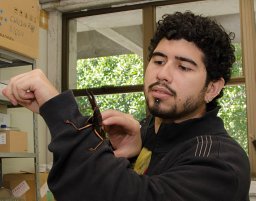 Marcus Bevilaqua合作论文数Lab Sistemat & Ecol Coleoptera, Inst Nacl de Pesquisas da Amazonia2Denise Silveira合作论文数2
 Jacques H C Delabie合作论文数Entomology Section, Cocoa Research Centre;Departamento de Ciências Agrárias e AMbientais, State University of Santa Cruz2
 Matheus Bento合作论文数Instituto Nacional de Pesquisas da Amazônia (INPA)2Thiago Tadeu Silva Polizei合作论文数2
 Paulo Duarte合作论文数2
 Thaynara Lara Pacheco合作论文数Museum A. Koenig, Bonn, Leibniz Institute for the Analysis of Biodiversity Change (LIB)2Wully Barreto da Silva合作论文数2
 Francisco Eriberto合作论文数2Thomas C. McElrath合作论文数2
 diego de santana souza合作论文数Museu Nacl, Univ Fed Rio de Janeiro MNRJ2Andre Silva Roza合作论文数Museu Nacl, Univ Fed Rio de Janeiro2Petr Bulirsch合作论文数2
 Gabriel Biffi合作论文数Museu Zool, Univ Sao Paulo2
 Mariana Alejandra Cherman合作论文数Dept Biol & Zool, Univ Fed Mato Grosso2
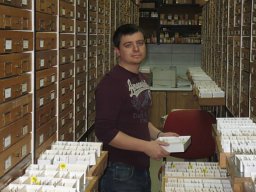 Gareth Powell合作论文数Department of Biology, Brigham Young University2
 Benetti Cesar João合作论文数Facultad de Biología, Universidad de Vigo;Email: cjbenetti@uvigo.es.;Facultad de Biología, Universidad de Vigo2
 Daniara Colpani合作论文数2
 Paschoal C. Grossi合作论文数Centro Politécnico, Universidade Federal do Paraná2
 Hermes Jose Schmitz合作论文数Universidade Federal da Integração Latino-Americana (UNILA).;Email: hj.schmitz@gmail.com.;Universidade Federal da Integração Latino-Americana (UNILA).2
 Vinicius S. Ferreira合作论文数Laboratório de Sistemática, Evolução e Bionomia de Coleoptera, Universidade de São Paulo (MZSP),;Email: vinicius.sfb@gmail.com.;Laboratório de Sistemática, Evolução e Bionomia de Coleoptera, Universidade de São Paulo (MZSP),2
 Monné Marcela L合作论文数Conselho Nacional de Desenvolvimento Científico e Tecnológico, Universidade Federal do Rio de Janeiro;Email: unknown.;Conselho Nacional de Desenvolvimento Científico e Tecnológico, Universidade Federal do Rio de Janeiro2




