This work describes an access core network emulated by means of the GNS3 code; the reliability of such a platform was verified by comparing some traffic treatments used in a real test bed. This GNS3 platform is here used to investigate the performance of Very High Capacity Networks in the presence of the impairments described in ITU-T Y1540 and in particular to evaluate the effective TCP throughput. This platform is also tested to interact with the external world and in particular with a website and with a real NG-PON2.
In this work an experimental investigation is reported about the use of machine learning, based both on a regressive approach and on artificial neural network, to evaluate the quality of experience from quality of service and other network measurements as packet losses, delays and traffic congestions, to control the performance of slices defined inside a wide area network test bed. Such a method allows the network to recover the best performance according to a knowledge defined network approach.
We report an experimental investigation carried out in a wide area network test bed about the correlation among Quality of Experience and Quality of Services indicators and some network parameters. The correlation has been analyzed by means of simple learning algorithms and the results have allowed us to design some impairment maps that have been used to manage network reconfigurations.
We experimentally verify a slicing approach, operating in a PBB-TE core and PON access architecture, based on the mPlane measurement plane, also adopted to manage slicing instances. The key element of this paper is the proposal and the implementation of the Slicing End Point (SEP), that is the client element to set up the slice path, and, at the same time, it allows us to monitor the network performance. The slices are based on VLAN/MPLS/PBB-TE logical paths and they can be managed for the implementation of different class of services. The whole SDN mPlane architecture allows us manage the slices also with restoration procedures. Furthermore, the tests on latency confirm the advantages of the NG-PON2 accesses for 5G backhauling also in this slicing configuration.
In this work, we show a wide geographical area optical network test bed, adopting the mPlane measurement plane for monitoring its performance and to manage software defined network approaches, with some specific tests and procedures dedicated to respond to disaster events and to support emergency networks. Such a test bed includes FTTX accesses, and it is currently implemented to support future 5G wireless services with slicing procedures based on Carrier Ethernet. The characteristics of this platform have been experimentally tested in the case of a damage-causing link failure and traffic congestion, showing a fast reactions to these disastrous events, allowing the user to recharge the initial QoS parameters.
In this work we report experimental tests on the performance of FTTX accesses using the mPlane measurement plane, including lab and field environments and above all we point out the role of such measurement plane in Software Defined Network architectures. For such an aim we show an experimental procedure based on a central unit (orchestrator) that automatically manages GbE links in a regional network driven by the network performance analysis carried out by such mPlane measurement plane using active and passive probes.
In this work we experimentally show a Software Defined Network approach based on a central unit (orchestrator) that automatically manages GbE links in a regional network driven by the performance analysis carried out by the mPlane measurement plane, that for such an aim takes into account active and passive Quality of Service tests.
This article describes an experimental investigation on the behavior of transmission control protocol in throughput measurements to be used in the verification of the service-level agreement between the Internet service provider and user in terms of line capacity for ultra-broadband access networks typical of fiber-to-the-x architectures. It is experimentally shown different conditions in high bandwidth-delay product links where the estimation of the line capacity based on a single transmission control protocol session results are unreliable. Simple equations reported in this work, and experimentally verified, point out the conditions in terms of packet loss, time delay, and line capacity, that allow consideration of the reliability of the measurement carried out with a single transmission control protocol session test by adopting a suitable measurement time duration.
In this work we report the final results of the field demonstration of the European FP7 mPlane project concerning the evaluation of the network performance with particular details regarding the access Quality of Service and traffic monitoring. We show how the proposed and experimented architecture of this measurement plane is fundamental for many future internet evolutions concerning user perception, content popularity web quality and network management. Here we point out the results dedicated to service level agreement verification and certification with analysis of the correlation between passive and active measurements in order to understand some causes concerning network and service anomalies.
Unveiling network and service performance issues in complex and highly decentralized systems such as the Internet is a major challenge. Indeed, the Internet is based on decentralization and diversity. However, its distributed nature leads to operational brittleness and difficulty in identifying the root causes of performance degradation. In such a context, network measurements are a fundamental pillar to shed light on and unveil design and implementation defects. To tackle this fragmentation and visibility problem, we recently conceived mPlane, a distributed measurement platform that runs, collects, and analyzes traffic measurements to study the operation and functioning of the Internet. In this article, we show the potentiality of the mPlane approach to unveil network and service degradation issues in live operational networks, involving both fixed-line and cellular networks. In particular, we combine active and passive measurements to troubleshoot problems in end-customer Internet access connections, or to automatically detect and diagnose anomalies in Internet-scale services (e.g., YouTube) that impact a large number of end users.
This work experimentally demonstrates how to save energy in GbE router network architectures by switching off idle optical Gigabit Ethernet (GbE) interfaces during low traffic periods. Two energy saving approaches, called Fixed Upper Fixed Lower (FUFL) and Dynamic Upper Fixed Lower (DUFL), have been adopted.
The authors report an experimental investigation on the measurement of the available bandwidth for the users in gigabit passive optical networks (GPON) and the limitations caused by the Internet protocols, and transfer control protocol (TCP) in particular. We point out that the huge capacity offered by the GPON highlights the enormous differences that can be showed among the available and actually exploitable bandwidth. In fact, while the physical layer capacity can reach value of 100 Mb/s and more, the bandwidth at disposal of the user (i.e. either throughput at transport layer or goodput at application layer) can be much lower when applications and services based on TCP protocol are considered. In the context of service level agreements (SLA) verification, we show how to simultaneously measure throughput and line capacity by offering a method to verify multilayer SLA. We also show how it is possible to better exploit the physical layer capacity by adopting multiple TCP connections avoiding the bottleneck of a single connection.
This work experimentally demonstrates how to control and manage user Quality of Service (QoS) by acting on the switching on-off of the optical Gigabit Ethernet (GbE) interfaces in a wide area network test bed including routers and GPON accesses. The QoS is monitored at the user location by means of active probes developed in the framework of the FP7 MPLANE project. The network topology is managed according to some current Software Defined Network issues and in particular an Orchestrator checks the user quality, the traffic load in the GbE links and manages the network interface reconfiguration when congestion occurs in some network segments.
Two energy saving approaches, called Fixed Upper Fixed Lower (FUFL) and Dynamic Upper Fixed Lower (DUFL), switching off idle optical Gigabit Ethernet (GbE) interfaces during low traffic periods, have been implemented on a testbed. We show on a simple network scenario that energy can be saved using off-the-shelf equipment not explicitly designed for dynamic on/off operation. No packet loss is experienced in our experiments. We indicate the need for faster access to routers in order to perform the reconfiguration. This is particularly important for the more sophisticated energy saving approaches such as DUFL, since FUFL can be implemented locally.
Network measurements are a fundamental pillar to understand network performance and perform root cause analysis in case of problems. Traditionally, either active or passive measurements are considered. While active measurements allow to know exactly the workload injected by the application into the network, the passive measurements can offer a more detailed view of transport and network layer impacts. In this paper, we present a hybrid approach in which active throughput measurements are regularly run while a passive measurement tool monitors the generated packets. This allows us to correlate the application layer measurements obtained by the active tool with the more detailed view offered by the passive monitor. The proposed methodology has been implemented following the mPlane reference architecture, tools have been installed in the Fastweb network, and we collect measurements for more than three months. We report then a subset of results that show the benefits obtained when correlating active and passive measurements. Among results, we pinpoint cases of congestion, of ADSL misconfiguration, and of modem issues that impair throughput obtained by the users.
 Francesco Matera合作论文数Fondazione Ugo Bordoni24
 Stefano Traverso合作论文数Politecnico di Torino9
 Marco Mellia合作论文数Department of Control and Computer Engineering, Politecnico di Torino8
 Marco Milanesio合作论文数8
 Ilias Leontiadis合作论文数Samsung AI8
 Pedro Casas合作论文数AIT Austrian Institute of Technology8
 Dimitri Papadimitriou合作论文数7
 Maurizio Dusi合作论文数NEC Laboratories Europe, Heidelberg, Germany7
 Zied Ben-Houidi合作论文数Huawei Technologies Co. Ltd6
 Arianna Rufini合作论文数6
 Alessandro D'Alconzo合作论文数FTW Telecommun Res Ctr Vienna6
 Tivadar Szemethy合作论文数Oracle6
 Benoit Donnet合作论文数EEC Department, Université de Liège Institut Montefiore6fabrizio invernizzi合作论文数5Vincenzo Attanasio合作论文数5
 Dario Rossi合作论文数Department of DataCom, Huawei Paris Research Center;INFRES, Telecom ParisTech5
 Alessandro Finamore合作论文数Politecnico di Torino5
 Rolf Winter合作论文数University of Applied Sciences Augsburg4
 Sofia Nikitaki合作论文数University of Crete & FORTH4
 Linas Baltrunas合作论文数Netflix4E. Nastri合作论文数3Donato Del Buono合作论文数3
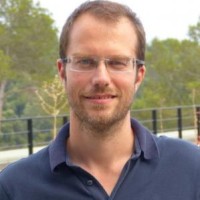 Pietro Michiardi合作论文数Data Science Department, Eurecom3
 Yan Grunenberger合作论文数Telefonica Research3
 Guy Leduc合作论文数Electrical Engineering and Computer Science Department, University of Liège3
 Diana Joumblatt合作论文数Intel Labs Berkeley, Sorbonne Universités3
 Yongjun Liao合作论文数3
 Brian Trammell合作论文数ETH Zurich3balazs m szabo合作论文数2Kowallik, E.合作论文数2
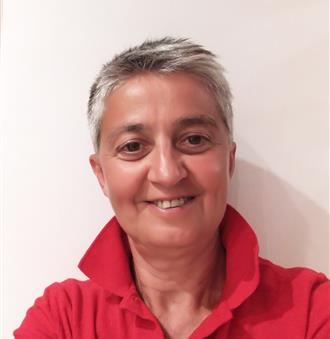 Elena Maria Baralis合作论文数Department of Control and Computer Engineering, Politecnico di Torino2Saverio Niccolini合作论文数NEC Europe Ltd., Network Laboratories in Heidelberg2
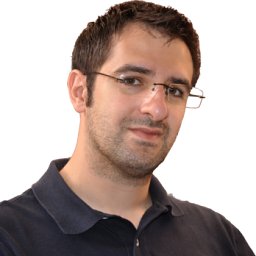 Antonio Barbuzzi合作论文数DEE - Politecnico di Bari2
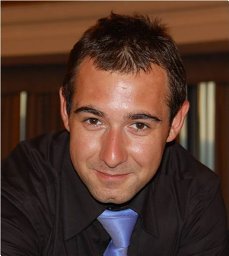 Angelo Coiro合作论文数INFOCOM Dept, University of Rome "La Sapienza",2Yixi Gong合作论文数Télécom ParisTech2
 Daniele Apiletti合作论文数Department of Control and Computer Engineering, Politecnico di Torino2
 Pierdomenico Fiadino合作论文数FTW Telecommun Res Ctr Vienna2
 Alessandro Valenti合作论文数Fondazione Ugo Bordoni, Viale del Policlinico 147, Rome, Italy2
 Luca Chiaraviglio合作论文数Politecnico di Torino - Italy2
 Filip Idzikowski合作论文数TKN, TU Berlin2M. Dusi合作论文数1andrea sannino合作论文数1michael faath合作论文数1
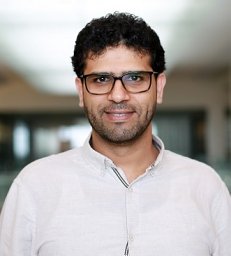 Moez Ben Houidi合作论文数Clean Combustion Research Center (CCRC),, King Abdullah University of Science and Technology (KAUST),1
 Danilo Cicalese合作论文数Telecom ParisTech, Paris, France1
 Sarah Wassermann合作论文数Austrian Institute of Technology Vienna1
 Valeria Petrini合作论文数1Raffaglio, S.合作论文数1Yige Hu合作论文数1




