NASA's Kepler Mission (Fig. 1) has been wildly successful in discovering exoplanets. This paper summarizes the mission goals, briefly explains the transit method of finding exoplanets and design of the mission, provides some key findings, and describes useful education materials available at the Kepler website.
National Aeronautics and Space Administration (Kepler Participating Scientist Program NNX12AC76G)
In spring 2013, the President's budget proposal restructured the nation's approach to STEM education, eliminating similar to$50M of NASA Science Mission Directorate (SMD) funding with the intent of transferring it to the Dept. of Education, National Science Foundation, and Smithsonian Institution. As a result, Education and Public Outreach (EPO) would no longer be a NASA mission requirement and funds that had already been competed, awarded, and productively utilized were lost. Since 1994, partnerships of scientists, engineers, and education specialists were required to create innovative approaches to EPO, providing a direct source of inspiration for today's youth that may now be lost. Although seldom discussed or evaluated, "inspiration" is the beginning of lasting education. For decades, NASA's crewed and robotic missions have motivated students of all ages and have demonstrated a high degree of leverage in society. Through personal experiences we discuss (1) the importance of inspiration in education, (2) how NASA plays a vital role in STEM education, (3) examples of high leverage educational materials showing why NASA should continue embedding EPO specialists within mission teams, and (4) how we can document the role of inspiration. We believe that personal histories are an important means of assessing the success of EPO. We hope this discussion will lead other people to document similar stories of educational success and perhaps to undertake longitudinal studies of the impact of inspiration.
The Kepler mission has discovered more than 2500 exoplanet candidates in the first two years of spacecraft data, with approximately 40% of those in candidate multi-planet systems. The high rate of multiplicity combined with the low rate of identified false positives indicates that the multiplanet systems contain very few false positive signals due to other systems not gravitationally bound to the target star. False positives in the multi-planet systems are identified and removed, leaving behind a residual population of candidate multi-planet transiting systems expected to have a false positive rate less than 1%. We present a sample of 340 planetary systems that contain 851 planets that are validated to substantially better than the 99% confidence level; the vast majority of these have not been previously verified as planets. We expect ∼two unidentified false positives making our sample of planet very reliable. We present fundamental planetary properties of our sample based on a comprehensive analysis of Kepler light curves, ground-based spectroscopy, and high-resolution imaging. Since we do not require spectroscopy or high-resolution imaging for validation, some of our derived parameters for a planetary system may be systematically incorrect due to dilution from light due to additional stars in the photometric aperture. Nonetheless, our result nearly doubles the number verified exoplanets.
We report on the masses, sizes, and orbits of the planets orbiting 22 Kepler stars. There are 49 planet candidates around these stars, including 42 detected through transits and 7 revealed by precise Doppler measurements of the host stars. Based on an analysis of the Kepler brightness measurements, along with high-resolution imaging and spectroscopy, Doppler spectroscopy, and (for 11 stars) asteroseismology, we establish low false-positive probabilities (FPPs) for all of the transiting planets (41 of 42 have an FPP under 1%), and we constrain their sizes and masses. Most of the transiting planets are smaller than three times the size of Earth. For 16 planets, the Doppler signal was securely detected, providing a direct measurement of the planet's mass. For the other 26 planets we provide either marginal mass measurements or upper limits to their masses and densities; in many cases we can rule out a rocky composition. We identify six planets with densities above 5 g cm−3, suggesting a mostly rocky interior for them. Indeed, the only planets that are compatible with a purely rocky composition are smaller than ∼2 R⊕. Larger planets evidently contain a larger fraction of low-density material (H, He, and H2O).
New transiting planet candidates are identified in 16 months (2009 May-2010 September) of data from the Kepler spacecraft. Nearly 5000 periodic transit-like signals are vetted against astrophysical and instrumental false positives yielding 1108 viable new planet candidates, bringing the total count up to over 2300. Improved vetting metrics are employed, contributing to higher catalog reliability. Most notable is the noise-weighted robust averaging of multiquarter photo-center offsets derived from difference image analysis that identifies likely background eclipsing binaries. Twenty-two months of photometry are used for the purpose of characterizing each of the candidates. Ephemerides (transit epoch, T-0, and orbital period, P) are tabulated as well as the products of light curve modeling: reduced radius (R-P / R-star), reduced semimajor axis (d / R-star), and impact parameter (b). The largest fractional increases are seen for the smallest planet candidates (201% for candidates smaller than 2R(circle plus). compared to 53% for candidates larger than 2R.) and those at longer orbital periods (124% for candidates outside of 50 day orbits versus 86% for candidates inside of 50 day orbits). The gains are larger than expected from increasing the observing window from 13 months (Quarters 1-5) to 16 months (Quarters 1-6) even in regions of parameter space where one would have expected the previous catalogs to be complete. Analyses of planet frequencies based on previous catalogs will be affected by such incompleteness. The fraction of all planet candidate host stars with multiple candidates has grown from 17% to 20%, and the paucity of short-period giant planets in multiple systems is still evident. The progression toward smaller planets at longer orbital periods with each new catalog release suggests that Earth-size planets in the habitable zone are forthcoming if, indeed, such planets are abundant.
We present the detection of five planets--Kepler-62b, c, d, e, and f--of size 1.31, 0.54, 1.95, 1.61 and 1.41 Earth radii (R⊕), orbiting a K2V star at periods of 5.7, 12.4, 18.2, 122.4, and 267.3 days, respectively. The outermost planets, Kepler-62e and -62f, are super-Earth-size (1.25 R⊕ < planet radius ≤ 2.0 R⊕) planets in the habitable zone of their host star, respectively receiving 1.2 ± 0.2 times and 0.41 ± 0.05 times the solar flux at Earth's orbit. Theoretical models of Kepler-62e and -62f for a stellar age of ~7 billion years suggest that both planets could be solid, either with a rocky composition or composed of mostly solid water in their bulk.
, 583 (2013); 340 Science et al. R. Islam Interactions in a Quantum Simulator Emergence and Frustration of Magnetism with Variable-Range This copy is for your personal, non-commercial use only. clicking here. colleagues, clients, or customers by , you can order high-quality copies for your If you wish to distribute this article to others here. following the guidelines can be obtained by Permission to republish or repurpose articles or portions of articles ): October 13, 2013 www.sciencemag.org (this information is current as of The following resources related to this article are available online at http://www.sciencemag.org/content/340/6132/583.full.html version of this article at: including high-resolution figures, can be found in the online Updated information and services, http://www.sciencemag.org/content/suppl/2013/05/01/340.6132.583.DC1.html can be found at: Supporting Online Material http://www.sciencemag.org/cgi/collection/physics Physics subject collections: This article appears in the following
A search of the time-series photometry from NASA’s Kepler spacecraft reveals a transiting planet candidate orbiting the 11th magnitude G5 dwarf KIC 10593626 with a period of 290 days. The characteristics of the host star are well constrained by high-resolution spectroscopy combined with an asteroseismic analysis of the Kepler photometry, leading to an estimated mass and radius of 0.970 ± 0.060 M and 0.979 ± 0.020 R . The depth of 492 ± 10 ppm for the three observed transits yields a radius of 2.38 ± 0.13 Re for the planet. The system passes a battery of tests for false positives, including reconnaissance spectroscopy, high-resolution imaging, and centroid motion. A full BLENDER analysis provides further validation of the planet interpretation by showing that contamination of the target by an eclipsing system would rarely mimic the observed shape of the transits. The final validation of the planet is provided by 16 radial velocities (RVs) obtained with the High Resolution Echelle Spectrometer on Keck I over a one-year span. Although the velocities do not lead to a reliable orbit and mass determination, they are able to constrain the mass to a 3σ upper limit of 124 M⊕, safely in the regime of planetary masses, thus earning the
A search of the time-series photometry from NASA's Kepler spacecraft reveals a transiting planet candidate orbiting the 11th magnitude G5 dwarf KIC 10593626 with a period of 290 days. The characteristics of the host star are well constrained by high-resolution spectroscopy combined with an asteroseismic analysis of the Kepler photometry, leading to an estimated mass and radius of 0.970 +/- 0.060 M-circle dot and 0.979 +/- 0.020 R-circle dot. The depth of 492 +/- 10 ppm for the three observed transits yields a radius of 2.38 +/- 0.13 Re for the planet. The system passes a battery of tests for false positives, including reconnaissance spectroscopy, high-resolution imaging, and centroid motion. A full BLENDER analysis provides further validation of the planet interpretation by showing that contamination of the target by an eclipsing system would rarely mimic the observed shape of the transits. The final validation of the planet is provided by 16 radial velocities (RVs) obtained with the High Resolution Echelle Spectrometer on Keck I over a one-year span. Although the velocities do not lead to a reliable orbit and mass determination, they are able to constrain the mass to a 3 sigma upper limit of 124 M-circle plus, safely in the regime of planetary masses, thus earning the designation Kepler-22b. The radiative equilibrium temperature is 262 K for a planet in Kepler-22b's orbit. Although there is no evidence that Kepler-22b is a rocky planet, it is the first confirmed planet with a measured radius to orbit in the habitable zone of any star other than the Sun.
clicking here. colleagues, clients, or customers by , you can order high-quality copies for your If you wish to distribute this article to others here. following the guidelines can be obtained by Permission to republish or repurpose articles or portions of articles ): September 24, 2012 www.sciencemag.org (this information is current as of The following resources related to this article are available online at
 David Koch合作论文数NASA36
 Alan Gould合作论文数34
 Douglas A. Caldwell合作论文数SETI Institute29
 William D Cochran合作论文数Department of Astronomy, College of Natural Sciences, University of Texas at Austin27
 Jon Jenkins合作论文数Ames Reseach Center, National Aeronautics and Space Administration27
 Jack J. Lissauer合作论文数Department of Earth and Planetary Sciences, Doerr School of Sustainability, Stanford University;Planetary Systems Branch, Space Science and Astrobiology Division, NASA Ames Research Center26
 David Latham合作论文数Department of Astronomy, Faculty of Arts and Sciences, Harvard University;Harvard-Smithsonian Center for Astrophysics;Smithsonian Astrophysical Observatory24Ronald L. Gilliland合作论文数24
 Natalie Batalha合作论文数Astronomy & Astrophysics Department, University of California, Santa Cruz23
 Jørgen Christensen-Dalsgaard合作论文数Department of Physics and Astronomy, Aarhus University;Danish AsteroSeismology Centre, Aarhus University23
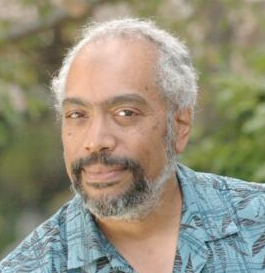 Gibor Basri合作论文数Department of Astronomy, University of California, Berkeley22
 Geoffrey Marcy合作论文数Space Laser Awareness22p k harman合作论文数21
 William Borucki合作论文数NASA Astrobiology Institute;NASA Ames Research Center21
 Steve B. Howell合作论文数NASA Ames Research Center21
 Dimitar D. Sasselov合作论文数Department of Astronomy, Faculty of Arts and Sciences, Harvard University21
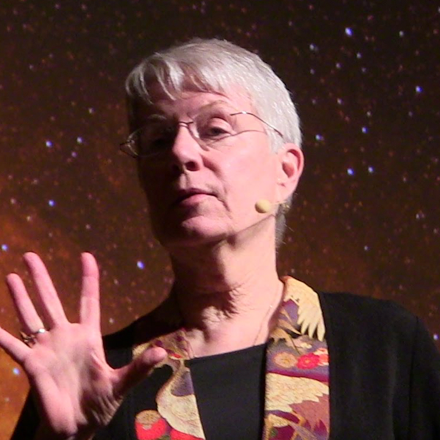 Jill Tarter合作论文数Center for SETI Research, SETI Institute21
 John Geary合作论文数21
 Jason F Rowe合作论文数Department of Physics and Astronomy, Bishop’s University;SETI Institute19
 Thomas N. Gautier合作论文数Jet Prop Lab, CALTECH18Michael R. Haas合作论文数18Andrea K. Dupree合作论文数18
 Hans Kjeldsen合作论文数Department of Physics and Astronomy, Aarhus University17
 Jason H. Steffen合作论文数University of Nevada Las Vegas17Edward W. Dunham合作论文数17
 Eric B. Ford合作论文数Department of Astronomy and Astrophysics, Eberly College of Science, The Pennsylvania State University;Institute for Computational and Data Sciences, The Pennsylvania State University17Timothy M. Brown合作论文数17
 Joseph D. Twicken合作论文数SETI Institute;Ames Research Center;Ames Research Center, SETI Institute17William F. Welsh合作论文数Department of Astronomy, San Diego State University16
 Jonathan Fortney合作论文数Department of Astronomy and Astrophysics, University of California, Santa Cruz16
 David Charbonneau合作论文数Department of Astronomy, Faculty of Arts and Sciences, Harvard University16
 Alan P. Boss合作论文数Earth & Planets Laboratory, Carnegie Institution for Science16
 Matthew J. Holman合作论文数Department of Astronomy, Harvard University;Harvard-Smithsonian Center for Astrophysics15Peter Tenenbaum合作论文数15
 Guillermo Torres合作论文数Center for Astrophysics, Harvard & Smithsonian15
 Howard Isaacson合作论文数Department of Astronomy, University of California, Berkeley;Institute for Astronomy, University of Hawaiʻi at Mānoa15Jeffrey E. Van Cleve合作论文数15
 Elisa V Quintana合作论文数Goddard Space Flight Center, NASA15
 David Ciardi合作论文数NASA Exoplanet Science Institute, California Institute of Technology15Thomas Barclay合作论文数14
 Francois Fressin合作论文数Harvard-Smithsonian Center for Astrophysics14
 Jessie Christiansen合作论文数NASA Exoplanet Science Institute;NASA Exoplanet Archive;California Institute of Technology14Stephen T. Bryson合作论文数13
 Michael Endl合作论文数McDonald Observatory, The University of Texas at Austin;Department of Astronomy, College of Natural Sciences, The University of Texas at Austin13
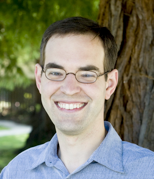 Daniel C. Fabrycky合作论文数Department of Astronomy & Astrophysics, University of Chicago13
 Andrew W. Howard合作论文数The Division of Physics, Mathematics and Astronomy, California Institute of Technology12
 Laurance R. Doyle合作论文数SETI Institute12
 Debra Fischer合作论文数Department of Astronomy, Yale University12
 Lars A. Buchhave合作论文数National Space Institute, Technical University of Denmark12




