The practitioner-academic gap has been widely discussed for decades along with recommendations for increasing the practical application of management research. We review some of the reasons for this disconnect and argue this has been the norm going back to the beginnings of the field. At the same time contemporary management practice has obviously been greatly influenced by management research. We suggest that much of this influential work has been done by academics who choose to work in the middle between university and practice. We review the experience of the Center for Effective Organizations and others working in the middle to make recommendations for doing useful research and suggest there are reasons for optimism in research to practice transfer in a changing landscape.
Global Trends in Human Resource Management draws on twenty years of data collected by the Center for Effective Organizations to chart the changing nature of HR practice, and show how it can meet the demands of an evolving global marketplace.
Agility refers to an organizations ability to make timely, effective, and sustained changes that maintain superior performance. An essential feature of agility is repeatability. Agile organizations continuously adjust to changing circumstances by, for example, launching new products or eliminating old ones, entering new markets or exiting underperforming ones, or building new capabilities. This requires management processes that can support adaptability over time. To develop their ideas on agility, the researchers of this article studied performance data from the largest public global companies in 22 industries between 1980 and 2012. To support agility, all management processes need to be designed well, and some of them must be designed for change. Agility is a capability comprising four routines: strategizing, perceiving, testing, and implementing. Agile organizations match process cycle times to the pace of environmental and business change. Well-designed management processes help a company execute its strategy and exercise its capabilities. Agile management processes go a step further: They help the organization change when needed.
Purpose - The authors comment on the paper by Aguinis et al. (2018). The authors believe that their hypotheses probably are true, but their methodology is flawed and their data do not support their conclusions. Design/Methodology - The authors review and comment on the paper by Aguinis et al. (2018). Findings - The data do not adequately demonstrate a power law distribution for chief executive officer's (CEO) performance because the analysis confounded external conditions affecting performance, and the authors use inappropriate dependent variables. The analysis does not demonstrate a power law distribution for CEO pay because the analysis does not take into account changes in pay level and mix over time. The analysis does not show a lack of overlap between the two distributions because it does not take into account the way that the CEOs are paid for performance and because it uses CEO pay averaged over CEO tenure. Research limitations/implications - A more convincing analysis of the authors' hypothesis would require the use of total shareholder return (TSR) as the dependent variable for organizational performance and would require a number of much more specific controls. Practical implications - The authors call for greater use of power law thinking by practitioners in setting CEO pay. Their analysis indicates that practitioners already think in power law terms and allocate CEO pay accordingly. Moreover, power law theory and findings could be misused as an excuse for paying average CEOs much more than they are already paid. Social implications - The authors add another perspective on CEO pay. Originality/value - The authors' perspective is informed both by research and by consulting experience on CEO pay projects.
Employment Relations TodayVolume 44, Issue 3 p. 47-50 Special Feature Employee Engagement: A Critical Commentary Edward E. Lawler III, Edward E. Lawler III elawler@marshall.usc.edu University of Southern California, Los Angeles, CASearch for more papers by this author Edward E. Lawler III, Edward E. Lawler III elawler@marshall.usc.edu University of Southern California, Los Angeles, CASearch for more papers by this author First published: 23 January 2018 https://doi.org/10.1002/ert.21639Citations: 1Read the full textAboutPDF ToolsRequest permissionExport citationAdd to favoritesTrack citation ShareShare Give accessShare full text accessShare full-text accessPlease review our Terms and Conditions of Use and check box below to share full-text version of article.I have read and accept the Wiley Online Library Terms and Conditions of UseShareable LinkUse the link below to share a full-text version of this article with your friends and colleagues. Learn more.Copy URL Share a linkShare onFacebookTwitterLinkedInRedditWechat Citing Literature Volume44, Issue3Special Issue: The Employee Engagement Journey - Lessons Learned and Next StepsFall 2017Pages 47-50 RelatedInformation
The debate over eliminating performance ratings addresses many important theoretical and practical issues. However, the academic debate on the topic is disconnected from the concerns of practitioners. Knowledge gained from theory-driven research is not leading practice on the use of performance ratings, despite the large volume of potentially relevant research findings. Many organizations are charging ahead with performance management solutions that seem sensible to them. They may be interested in academic research, but they are not waiting for it. We will argue that academic researchers who hope to influence practice need to better understand the concerns of practitioners and the research opportunities that are presented by contemporary practice.
Global corporations need to operate in new and fundamentally different ways. They need to be simultaneously profitable, ethical, and socially and environmentally responsible. A growing number of corporations are demonstrating that they can be profitable while being effective stewards. They have shown that doing this requires that corporations make major changes in how they are organized, managed, and how they relate to their multiple stakeholders. At this point, most companies are not serving as stewards, but there is evidence that more are shifting toward this role. In order for most global corporations to act as stewards, numerous social, political, and environmental changes are needed. It is not certain that these changes will occur quickly, given the current threats to humanity and the Earth.
We examine the widely-held view that “stubborn traditionalism” exists in HR, meaning that while the HR profession has progressed, its progress remains slow, and may not be sufficient to maintain effectiveness and relevance. The data on which the present study is based also showed little change in HR activities, skill satisfaction, strategic role and other features of HR over two decades (Lawler & Boudreau, 2012). This article examines two questions using cross-sectional analysis of our most recent survey of HR leaders. First we find that slow progress matters, because progress on HR functional features is related to important outcomes, including HR's role in strategy, effectiveness as a function, and organizational performance. Second, we explore one explanation for HR's stubborn traditionalism, in the organization's management approach. Our results suggest that the organization's management approach may indeed partially explain a lack of HR progress. The more organizations pursue a bureaucratic and low-cost-operator approach to management, the less their HR organization engages in advanced strategic activities, is satisfied with its HR skills, plays a strong strategic role, implements an HR decision science, and adds value to the organization. In contrast, the more organizations pursue high-involvement and sustainable approaches to management, the greater are these HR features.
A critical determinant of organizational effectiveness is how individuals are treated. It affects both their welt-being and organizational performance. This article is the third in a series of Organizational Dynamics journal articles that make the case for management and organization design approaches that treat individuals differently based on their preferences and capabilities. It points out how many of the human resource (HR) management systems of organizations can be individualized, as well as how the job design and leadership practices of an organization can and should be. Since the first article appeared in 1974, a great deal has changed. Organizations have become more individualized than they were 40 years ago, but many new and old opportunities to further individualize them exist and - if utilized - can make them more sustainably effective.
 John W. Boudreau合作论文数Cornell University;Cornell University;Cornell University, Cornell University15
 Gerald E. Ledford Jr.合作论文数University of Southern California12
 George S. Benson合作论文数and the Veterans Administration Hospital, University of Pennsylvania School of Medicine12
 Christopher G. Worley合作论文数Los Alamos National Laboratory9
 Susan Albers Mohrman合作论文数7SUSAN A. MOHRMAN合作论文数7David Finegold合作论文数6JAY A. CONGER合作论文数3
 Christine L. Porath合作论文数3James O'Toole合作论文数2De Bowen合作论文数2Jay R. Galbraith合作论文数2
 Cristina B. Gibson合作论文数Department of Management, Pepperdine University2Sa Mohrman合作论文数1susan m young合作论文数1Douglas Jenkins合作论文数1Michael Kimmel合作论文数1nora osganian合作论文数1Jg Rhode合作论文数1Djb Mitchell合作论文数1
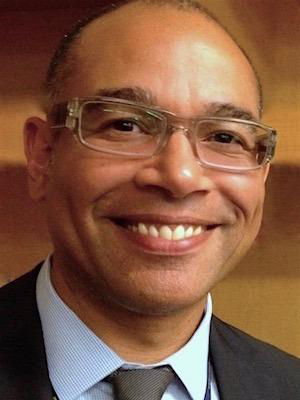 Nigel Melville合作论文数Stephen M. Ross School of Business, University of Michigan-Ann Arbor1
 Susan M. Resnick合作论文数Laboratory of Behavioral Neuroscience, National Institute on Aging, National Institutes of Health1
 Ronald Ramirez合作论文数Business School, University of Colorado Denver1Allan M. Mohrman合作论文数1Karl Weber合作论文数1Andrew W. Savitz合作论文数1Cortlandt Cammann合作论文数1Ramkrishnan V. Tenkasi合作论文数Center for Organization Development, Loyola University1
 James E. Sorensen合作论文数1
 Alec Levenson合作论文数1
 Paul S. Adler合作论文数School of Business, University of Southern California1
 Jay Conger合作论文数Marshall School’s Center for Effective Organizations, University of Southern California1




