Los enfoques tradicionales de direccion de proyectos ponen el acento en la planificacion a largo plazo y se centran en la estabilidad a la hora de gestionar los riesgos. Hoy en dia, sin embargo, los directores de proyectos complejos suelen combinar los metodos tradicionales con metodos �agiles� para obtener una mayor flexibilidad (y mejores resultados)
To improve spatial resolution, positron emission tomography (PET) systems are being developed with finer detector elements. Unfortunately, using a smaller crystal size increases intercrystal Compton scatter and X-ray escape crosstalk, causing positioning errors that fan lead to degradation of image contrast, We investigated the use of extremely thin (less than or equal to 300 mu m) lead strips for passive shielding of this intercrystal crosstalk. Using annihilation gamma rags and small (2- and 3-mm wide) Bismuth Germanate (EGO) crystal detectors in coincidence, crosstalk studies were performed with either two small adjacent crystals [(one-dimensional) (1-D)] or one crystal inside a volume of BGO [(two-dimensional) (2-D)]. The fraction of Compton scattered events from one crystal into an adjacent one was reduced, on average, by a factor of 3.2 (2.2) in the 1-D experiment and by a Factor of 3.0 (2.1) in 2-D one, with a 300 (150)-mu m-thick lead strip in between the crystals end a 300-700-keV energy window in bath crystals. We could not measure a reduction in bismuth X-ray crosstalk with the use of lead septa due to the production of lead X-rays of similar energy, The full-width at half-maximum (FWHM) of the coincident point-spread function (CPSF) was not significantly different For the 1- and 2-D studies, with or without the different septa in place, However, the FWTM was roughly 20% smaller with the 300-mu m lead shielding in place, These results indicate that intercrystal crosstalk does not affect the positioning resolution at FWHM, but does affect the tails of the CPSF. Thus, without introducing any additional dead area, an insertion of very thin lead strips can reduce the extent of positioning errors, Reducing the intercrystal crosstalk in a high-resolution BET detector array could potentially improve tomographic image contrast in situations where intercrystal crosstalk plays a significant role in event mispositioning.
A prototype small area scintillation camera capable of imaging both gammas and betas by use of inter-changeable detector front ends was characterized. In the camera's application, patients are injected with tumor seeking radiopharmaceuticals before surgery, during surgery the body of tumor is removed, and the residual tumor is located with gamma or beta imaging probes. Common elements of both types of camera include: (1) a 2-3 meter long fiber optic bundle, consisting of 19 sets of groups of three 0.9 mm diameter multiclad fibers that allow a flexible optical connection to the scintillator in addition to electrical isolation of the patient from the electronics, (2) fibers are connected to a Multi-Channel Photomultiplier (MC-PMT) which has 64 parallel channels, (3) the parallel PMT outputs feed a resistive divider network and an i-V converter/line driver network with gain adjust adjustments, producing balanced +X, -X, +Y, and -Y outputs for analog image signals, (4) four ADCs connected to a Macintosh PC for digitizing and displaying the image. The beta camera utilized a 0.5 mm thick by 1.25 cm diam. CaF2(Eu) scintillation crystal coupled to 19 2-mm diameter multiclad optical fibers, which are in turn coupled by a longer fiber bundle to the MC-PMT. The crystal is coupled to fibers through a diffusing light guide ensuring adequate distribution of scintillation light among fibers. Image signals are directly histogrammed and displayed after Anger logic computations are performed on analog signals. The gamma camera concept was tested with 3 mm thick continuous crystals and matrices of CsI(TI) as the system front end with the same fiber optic coupling as the beta camera, and data processings analogous to the beta camera. With the matrices of crystals, a configuration which used a light diffuser between the matrix and fiber optics was evaluated. The beta imaging probe produced images with 0.6 mm FWHM resolution and a flood field uniformity of +/- 15%. The continuous crystal imaging probe gave intrinsic resolutions of 1.4 +/- 0.2 mm FWHM at 122 keV. Flood field images, made with the diffuser between fiber optics and discrete crystals, completely resolved the 1 x 1 mm(2) elements Intrinsic resolution as measured by a line spread function was 0.92 +/- 0.03 mm FWHM.
A Monte Carlo technique has been developed to simulate and correct for the effect of Compton scatter in 3-D acquired PET whole body imaging. The method utilizes the attenuation corrected and normalized, 3-D reconstructed image volume as the source intensity distribution for a photon-tracking Monte Carlo simulation. It is assumed that the number of events in each pixel of the image represents the isotope concentration at that location in the body. The history of each annihilation photon's interactions in the scattering media is followed. The edges and average attenuation coefficients of the various scattering media are determined using a segmented image volume derived from a short transmission scan. The sinograms for the scattered and unscattered photon pairs are generated in a simulated 3-D PET acquisition. The calculated scatter contribution is used to correct the original data set. The method is general and can be applied to any scanner configuration or geometry. In its current form the simulation requires 20 hours on a Sparc10 when every pixel in a 89-plane, 128/spl times/128 pixel, 3-D acquired (CTI 961, two bed positions) image volume is sampled, and roughly 1 hour when 16 pixels (4/spl times/4) are grouped as a single pixel. Here, the authors present results of the scatter correction method using a 3-D acquired human study of the thorax as input.
The work presented evaluates the statistical characteristics of regional bias and expected error in reconstructions of real positron emission tomography (PET) data of human brain fluoro-deoxiglucose (FDG) studies carried out by the maximum likelihood estimator (MLE) method with a robust stopping rule, and compares them with the results of filtered backprojection (FBP) reconstructions and with the method of sieves. The task of evaluating radioisotope uptake in regions-of-interest (ROIs) is investigated. An assessment of bias and variance in uptake measurements is carried out with simulated data. Then, by using three different transition matrices with different degrees of accuracy and a components of variance model for statistical analysis, it is shown that the characteristics obtained from real human FDG brain data are consistent with the results of the simulation studies.< >
Future improvement in PET will likely be the result of the development of devices to circumvent limitations on resolution imposed by one crystal/photomultiplier (PMT) detector systems. Three types of systems are in some stage of development: (1) multiple crystals coupled to multiple PMTs in such a manner that simple digital logic codes identify crystals of interaction, (2) single or multiple crystals coupled to multiple PMTs in such a manner that analog logic systems identify crystals of interaction, and (3) small solid-state photosensors which either identify crystals of interaction with timing by the PMT or completely replace the PMT. The value of the various types of detectors must be considered in terms of the type of measurement that is to be performed. Factors that must be considered are the distribution of the radioisotope in the field-of-view, the amount of activity that may be injected because of dose considerations and the size of the structures to be imaged.
Recognizing that the quality of images obtained by application of the Maximum Likelihood Estimator (MLE) to Positron Emission Tomography (PET) and Single Photon Emission Tomography (SPECT) appears to be substantially better than those obtained by conventional methods, we have started to develop methods that will facilitate the necessary research for a good evaluation of the algorithm and may lead to its practical application for research and routine tomography. We have found that the non-linear MLE algorithm can be used with pixel sizes which are smaller than the sampling distance, without interpolation, obtaining excellent resolution and no noticeable increase in noise. We have studied the role of symmetry in reducing the amount of matrix element storage requirements for full size applications of the algorithm and have used that concept to carry out two reconstructions of the Derenzo phantom with data from the ECAT-III instrument. The results show excellent signal-to-noise (S/N) ratio, particularly for data with low total counts, excellent sharpness, but low contrast at high frequencies when using the Shepp-Vardi model for probability matrices.
The ECAT III has a unique data collection system in which all events are collected under the control of a 125 MHz clock. On each bank of 32 detectors (16 banks of 32 per ring) events are time encoded relative to the master clock and also encoded as to whether or not they are single events, nearest neighbor, triple or more than triple events. The ECAT III was designed primarily with a view towards imaging the heart. The gantry both rotates about the vertical axis and tilts about the horizontal axis to allow the optimum imaging angle of the heart. The patient opening is 65 cm in diameter to allow these motions. The initial experience with the ECAT III in imaging phantoms, animals, and man is described.
The use of detector arrays in PET has been proposed and studied as a economical means of obtaining very high resolution images. The properties of detector arrays for use in high resolution PET scanners were investigated. Analytical approximations and Monte Carlo simulations were used to design detector arrays consisting of six to eight crystals coupled to two photomultipliers to allow identification of the individual crystals. Arrays of 2.85 mm thick crystals of Bismuth Germanate (BGO), Gadolinium Orthosilicate (GSO), and Barium Fluoride (BaF2) were examined. The effect of interdetector materials such as lead, and plastic on positioning accuracy was tested. Assembled arrays of six 2.85 mm thick BG0 crystals yielded line spread function FWHMs of 2.4 to 3.2 millimeters. The limiting resolution of detector arrays was found to be defined by the scintillation light yield of the crystals, the light gathering efficiency of the detector arrays, and the fraction of interdetector scatter.
The Neuro-ECAT scanner is a positron emission tomograph designed for high resolution cross-sectional imaging of the adult human head, or the complete torso of a child or small animal. The Neuro-ECAT scanner performs both rectilinear and tomographic scans, in both transmission and emission modes. There are three detector planes, producing five images. Each detector plane contains 88 bismuth germanate detectors, arranged in an octagonal array of 11 detectors per bank. Retained and electrically operated shadow shields provide two choices of reconstructed tomographic resolution, nominally 8.0 and 10.5 mm. Interplane septa, also retained and electrically operated, may be inserted between the detector planes for low noise, highly quantitative measurements, or moved aside for high efficiency scanning of low activity levels. The paper presents the Neuro-ECAT scanner design criteria and a description of the scanner. Data from phantom studies are presented to illustrate system performance.
Shared Voyage is about four remarkable projects: the Advanced Composition Explorer (NASA), the Joint Air-to-Surface Standoff Missile (U.S. Air Force), the Pathfinder Solar-Powered Airplane (NASA), and the Advanced Medium Range Air-to-Air Missile (U.S.Air Force). Each project is presented as a case study comprised of stories collected from key members of the project teams. The stories found in the book are included with the purpose of providing an effective learning source for project management, encouraging the unlearning of outdated project management concepts, and enhancing awareness of the contexts surrounding different projects. Significantly different from project concepts found in most project management literature, Shared Voyage highlights concepts like a will to win, a results-oriented focus, and collaboration through trust. All four project teams researched in this study applied similar concepts; however, they applied them differently, tailoring them to fit the context of their own particular projects. It is clear that the one best way approach which is still the prevailing paradigm in project management literature should be replaced by a new paradigm: Even though general project management principles exist, their successful application depends on the specifics of the situation.
 Michael E. Phelps合作论文数Department of Molecular and Medical Pharmacology, University of California, Los Angeles36
 Magnus Dahlbom合作论文数University of California19
 David E. Kuhl合作论文数16Martin P. Tornai合作论文数16
 Heinrich R. Schelbert合作论文数Department of Molecular and Medical Pharmacology, University of California Los Angeles13
 Demetrios Sarantites合作论文数Department of Chemistry, College of Arts & Sciences, Washington University in St. Louis11Lawrence R Macdonald合作论文数11
 John Mazziotta合作论文数Department of Molecular and Medical Pharmacology, David Geffen School of Medicine, University of California;Brain Mapping Center, University of California, Los Angeles10Anthony R. Ricci合作论文数7
 Simon R. Cherry合作论文数Department of Biomedical Engineering, College of Engineering, University of California, Davis7
 Markus Schwaiger合作论文数Bavarian Academy of Sciences and Humanities;TranslaTUM;Interdisciplinary Central Institute for Translational Cancer Research, Technical University of Munich6Jan S. Iwanczyk合作论文数6Eugene Veklerov合作论文数Online ISSN 1460-2059 - Print ISSN 1367-4803 Copyright © 2006 Oxford University Press Oxford Journals Oxford University Press6Jorge Llacer合作论文数5BE Patt合作论文数5
 William R. Hendee合作论文数Medical College of Wisconsin4
 Henry N. Wagner合作论文数The Johns Hopkins Medical Institutions4William R. Kennedy合作论文数4
 Joanna Fowler合作论文数Biology Department, Brookhaven National Laboratory4
 Alfred P. Wolf合作论文数Department of Chemistry, Brookhaven National Laboratory4Vartan Ghazarossian合作论文数4Joseph H. Skom合作论文数4Ira R. Friedlander合作论文数4
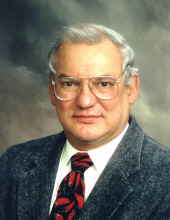 Ronald Jack Jaszczak合作论文数Department of Radiology, Duke University4
 Michel Matthew Ter Pogossian合作论文数Mallinckrodt Institute of Radiology, Washington University4William T. Mcgivney合作论文数4George M. Bohigian合作论文数4
 Amy C. McAdam合作论文数Goddard Space Flight Center, National Aeronautics and Space Administration;Goddard Space Flight Center, National Aeronautics and Space Administration3
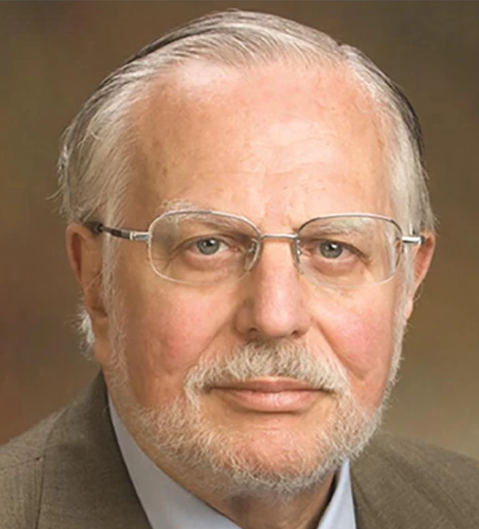 Robert A. Zimmerman合作论文数Pediatric Neuroradiology, Children’s Hospital of Philadelphia;Perelman School of Medicine, University of Pennsylvania3
 Thomas Sharp合作论文数Department of Geological Sciences;Arizona State University;Department of Geological Sciences, Arizona State University3
 Abass Alavi合作论文数Department of Radiology, University of Pennsylvania3Martin Janecek合作论文数3
 Derek A Bruce合作论文数3S. C. Huang合作论文数3Yuko Yamaguchi合作论文数3Freek J. Beekman合作论文数3
 Carl Hoh合作论文数Department of Radiology, University of California, San Diego3Scott T. Grafton合作论文数3Joel H. Greenberg合作论文数3Ralph P. Harvey合作论文数3Nizar A. Mullani合作论文数3




