The recent and increasing interconnection of industrial systems with information technologies creates a new paradigm in which new challenges arise. Being able to provide an explanation when accidents and attacks strike the system is one of them. This article presents an event model designed to provide useful and relevant information for diagnosis of safety and security events. We provide a means for system experts to model elementary events that are automatically recombined in complex and complete scenarios. We specifically focus on the ability to represent countermeasures and sequences of events, recurrent problems in the literature. We also introduce a means to precisely measure the wear of components, an important feature for the model to obtain accurate values. We showcase the use of our model for diagnosis purposes on a cyber-physical system testbed.
A challenge is to develop cyber-physical system scenarios that reflect the diversity and complexity of real-life cyber-physical systems in the research questions that they address. Time-bounded collaborative events, such as hackathons, jams and sprints, are increasingly used as a means of bringing groups of individuals together, in order to explore challenges and develop solutions. This paper describes our experiences, using a science hackathon to bring individual researchers together, in order to develop a common use-case implemented on a shared CPS testbed platform that embodies the diversity in their own security research questions. A qualitative study of the event was conducted, in order to evaluate the success of the process, with a view to improving future similar events.
Using a secret password or a PIN (Personal Identification Number) code is a common way to authenticate a user. Unfortunately this protection does not resist an attacker that can eavesdrop on the user (shoulder surfing attack). The Human Semantic Authentication (HSA) protocol proposes a solution against this attack. The main idea is to have concept passwords and to propose images that the user must correctly select in order to authenticate. A concept can be represented by different pictures, so one observation is not enough to retrieve the secret. In this paper, the security/efficiency trade-off in the HSA protocol is evaluated. A probabilistic approach is used. Under the assumption that the picture/concept database is known to the attacker, we show that HSA is barely more resistant to shoulder surfing attacks than a PIN code. More precisely we show that the probability to retrieve the secret concept password increases rapidly with the number of observations. Moreover the constraints on the size of the picture/concept database are very difficult to satisfy in practice.
Diagnosing accidental and malicious events in an industrial control system requires an event model with specific capacities. Most models are dedicated to either safety or security but rarely both. And the latter are developed for objectives other than diagnosis and therefore unfit for this task. In this paper, we propose an event model considering both safety and security events, usable in real-time, with a probabilistic measure of on-going and future events. This model is able to replace alerts in the context of more global scenarios, including with reinforcements or conflicts between safety and security. The model is then used to provide an analysis of some of the security and safety events in the Taum Sauk Hydroelectric Power Station.
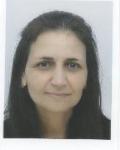 Nora Cuppens-Boulahia合作论文数Institut Mines-TELECOM3
 Simon Foley合作论文数Department of Computer Science,;Computer Science,;University College3
 Stephane Grunenwald合作论文数2Thomas Clédel合作论文数2Raphael M. J. Larsen合作论文数IMT Atlantique2Alexandre Kabil合作论文数CNRS, UMR 6285, IMT Atlantique, UBL,Lab STICC, Brest, France2
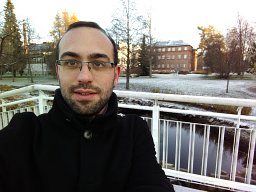 Jose Rubio Hernan合作论文数Univ Paris Saclay, CNRS, Telecom SudParis, SAMOVAR, Evry, France2Vivien M. Rooney合作论文数2
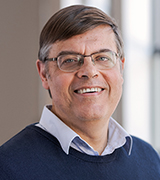 Frédéric Cuppens合作论文数Room: M-3103
Polytechnique Montreal2
Frédéric Cuppens合作论文数Room: M-3103
Polytechnique Montreal2 Fabien Autrel合作论文数ONERA-CERT2Kirsten Vanhulst合作论文数1Hélène Le Bouder合作论文数1Mariem Graa合作论文数1Jean-Louis Lanet合作论文数Inria DirDRI and senior research associate in the Everest team at INRIA Sophia-Antipolis1Youssef Laarouchi合作论文数Université de Toulouse1Samuel Dubus合作论文数1
 Gaël Thomas合作论文数Universite Pierre et Marie Curie in the Regal Team of Inria and Lip61




