We study the behaviour of the rescaled minimal subtree containing the origin and K random vertices selected from a random critical (sufficiently spread-out, and in dimensions d > 8) lattice tree conditioned to survive until time ns, in the limit as n goes to infinity. We prove joint weak convergence of various quantities associated with these subtrees under this sequence of conditional measures to their counterparts for historical Brownian motion. We also show that when K is sufficiently large the entire rescaled tree is close to this rescaled skeleton with high probability, uniformly in n. These two results are the key conditions used in [5] to prove that the simple random walk on sufficiently spread-out lattice trees (conditioned to survive for a long time) converges to Brownian motion on a super-Brownian motion (conditioned to survive). The main convergence result is established more generally for a sequence of historical processes converging to historical Brownian motion in the sense of finite dimensional distri- butions and satisfying a pair of technical conditions. The conditions are readily verified for the lattice trees mentioned above and also for critical branching random walk. We expect that it will also apply with suitable changes to other lattice models in sufficiently high dimensions such as oriented percolation and the voter model. In addition some forms of the second skeleton density result are already established in this generality.
We show that local times of super-Brownian motion, or of Brownian motion indexed by the Brownian tree, satisfy an explicit stochastic differential equation. Our proofs rely on both excursion theory for the Brownian snake and tools from the theory of superprocesses.
Super-tree random measures (STRMs) were introduced by Allouba, Durrett, Hawkes and Perkins as a simple stochastic model which emulates a superprocess at a fixed time. A STRM ν arises as the a.s. limit of a sequence of empirical measures for a discrete time particle system which undergoes independent supercritical branching and independent random displacement (spatial motion) of children from their parents. We study the connectedness properties of the closed support of a STRM (supp(ν)) for a particular choice of random displacement. Our main results are distinct sufficient conditions for the a.s. total disconnectedness (TD) of supp(ν), and for percolation on supp(ν) which will imply a.s. existence of a non-trivial connected component in supp(ν). We illustrate a close connection between a subclass of these STRM's and super-Brownian motion (SBM). For these particular STRM's the above results give a.s. TD of the support in three and higher dimensions and the existence of a non-trivial connected component in two dimensions, with the three-dimensional case being critical. The latter two-dimensional result assumes that p_c(ℤ^2), the critical probability for site percolation on ℤ^2, is less than 1-e^-1. (There is strong numerical evidence supporting this condition although the known rigorous bounds fall just short.) This gives evidence that the same connectedness properties should hold for SBM. The latter remains an interesting open problem in dimensions 2 and 3 ever since it was first posed by Don Dawson over 30 years ago.
We prove that the rescaled historical processes associated to critical spread-out lattice trees in dimensions d>8 converge to historical Brownian motion. This is a functional limit theorem for measure-valued processes that encodes the genealogical structure of the underlying random trees. Our results are applied elsewhere to prove that random walks on lattice trees, appropriately rescaled, converge to Brownian motion on super-Brownian motion.
We show that a space-time rescaling of the spatial Lamba-Fleming-Viot process of Barton and Etheridge converges to super-Brownian motion. This can be viewed as an extension of a result of Chetwynd-Diggle and Etheridge (2018). In that work the scaled impact factors (which govern the event based dynamics) vanish in the limit, here we drop that requirement. The analysis is particularly interesting in the biologically relevant two-dimensional case.
We show that if $\partial\mathcal{R}$ is the boundary of the range of super-Brownian motion and dim denotes Hausdorff dimension, then with probability one, for any open set $U$, $\partial\mathcal{R}\cap U\neq\emptyset$ implies $$\text{dim}(U\cap\partial\mathcal{R})=\begin{cases} 4-2\sqrt2\approx1.17&\text{ if }d=2\\ \frac{9-\sqrt{17}}{2}\approx 2.44&\text{ if }d=3. \end{cases}$$ This improves recent results of the last two authors (arxiv:1711.03486) by working with the actual topological boundary, rather than the boundary of the zero set of the local time, and establishing a local result for the dimension.
We investigate the scaling limit of the range (the set of visited vertices) for a general class of critical lattice models, starting from a single initial particle at the origin. Conditions are given on the random sets and an associated "ancestral relation" under which, conditional on longterm survival, the rescaled ranges converge weakly to the range of super-Brownian motion as random sets. These hypotheses also give precise asymptotics for the limiting behaviour of the probability of exiting a large ball, that is for the extrinsic one-arm probability. We show that these conditions are satisfied by the voter model in dimensions d ≥ 2 , sufficiently spread out critical oriented percolation and critical contact processes in dimensions d > 4 , and sufficiently spread out critical lattice trees in dimensions d > 8 . The latter result proves Conjecture 1.6 of van der Hofstad et al. (Ann Probab 45:278-376, 2017) and also has important consequences for the behaviour of random walks on lattice trees in high dimensions.
The multiplicative weights method is an algorithm for the problem of prediction with expert advice. It achieves the optimal regret asymptotically if the number of experts is large, and the time horizon is known in advance. Optimal algorithms are also known if there are exactly two, three or four experts, and the time horizon is known in advance. In the anytime setting, where the time horizon is not known in advance, algorithms can be obtained by the “doubling trick”, but they are not optimal, let alone practical. No minimax optimal algorithm was previously known in the anytime setting, regardless of the number of experts. We design the first minimax optimal algorithm for minimizing regret in the anytime setting. We consider the case of two experts, and prove that the optimal regret γ√t/2 is at all time steps t, where γ is a natural constant that arose 35 years ago in studying fundamental properties of Brownian motion. The algorithm is designed by considering a continuous analogue of the regret problem, which is solved using ideas from stochastic calculus. This is the extended abstract of the paper. The full paper can be found in [arXiv:2002.08994].
If $X(t,x)$ is the density of one-dimensional super-Brownian motion, we prove that $\text{dim}(\partial\{x:X(t,x)>0\})=2-2\lambda_0\in(0,1)$ a.s. on $\{X_t\neq 0\}$, where $-\lambda_0\in(-1,-1/2)$ is the lead eigenvalue of a killed Ornstein-Uhlenbeck process. This confirms a conjecture of Mueller, Mytnik and Perkins who proved the above with positive probability. To establish this result we derive some new basic properties of a recently introduced boundary local time and analyze the behaviour of $X(t,\cdot)$ near the upper edge of its support. Numerical estimates of $\lambda_0$ suggest that the above Hausdorff dimension is approximately $.224$.
We show that the Hausdorff dimension of the boundary of $d$-dimensional super-Brownian motion is $0$, if $d=1$, $4-2\sqrt2$, if $d=2$, and $(9-\sqrt{17})/2$, if $d=3$.
We give a sucient condition for tightness for convergence of rescaled critical spatial structures to the canonical measure of super-Brownian motion. This condition is formulated in terms of the r-point functions for r = 2;:::; 5. The r-point functions describe the expected number of particles at given times and spatial locations, and have been investigated in the literature for many high-dimensional statistical physics models, such as oriented percolation and the contact process above 4 dimensions and lattice trees above 8 dimensions. In these settings, convergence of the nite-dimensional distributions is known through an analysis of the r-point functions, but the lack of tightness has been an obstruction to proving convergence on path space. We apply our tightness condition rst to critical branching random walk to illustrate the method as tightness here is well-known. We then use it to prove tightness for suciently spread-out lattice trees above 8 dimensions, thus proving that the measure-valued process describing the distribution of mass as a function of time converges in distribution to the canonical measure of super-Brownian motion. We conjecture that the criteria will also apply to the other statistical physics models cited above.
We use the connection between bond percolation and SIR epidemics to establish lower bounds for the critical percolation probability in $2$ and $3$ dimensions as the range becomes large. The bound agrees with the conjectured asymptotics for the long range critical probability, refines results of M. Penrose, and complements results of van der Hofstad and Sakai in dimensions greater than $6$.
Motivated by Girsanov's nonuniqueness examples for SDEs, we prove nonuniqueness for the parabolic stochastic partial differential equation (SPDE)partial derivative u/partial derivative t = Delta/2 u(t, x) + vertical bar u(t, x)vertical bar(gamma) W(t, x), u(0, x) = 0Here W is a space time white noise on R x R. More precisely, we show the above stochastic PDE has a nonzero solution for 0 < y < 3/4. Since u(t, x) = 0 solves the equation, it follows that solutions are neither unique in law nor pathwise unique. An analogue of Yamada Watanabe's famous theorem for SDEs was recently shown in Mytnik and Perkins [Probab. Theory Related Fields 149 (2011) 1-96] for SPDE's by establishing pathwise uniqueness of solutions topartial derivative u/partial derivative t = Delta/2 u(t, x) + sigma (u(t, x))W(t, x)if a is Holder continuous of index gamma > 3/4. Hence our examples show this result is essentially sharp. The situation for the above class of parabolic SPDE's is therefore similar to their finite dimensional counterparts, but with the index 3/4 in place of 1/2. The case gamma = 1/2 of the first equation above is particularly interesting as it arises as the scaling limit of the signed mass for a system of annihilating critical branching random walks.
We consider measure-valued processes Xt that solve the following martingale prob- lem: For a given initial measure X0, and for all smooth, compactly supported test functions ϕ, Xt(ϕ) = X0(ϕ) + 1 Z t 2 ) ds. Such processes arise as scaling limits of SIR epidemic models. We show that there exist critical values θc(d) ∈ (0,∞) for dimensions d = 2,3 such that if θ > θc(d), then the solution survives forever with positive probability, but if θ < θc(d), then the solution dies out in finite time with probability 1. For d = 1 we prove that the solution dies out almost surely for all values of θ. We also show that in dimensions d = 2,3 the process dies out locally almost surely for any value of θ, that is, for any compact set K, the process Xt(K) = 0 eventually.
We prove a complete convergence theorem for a class of symmetric voter model perturbations with annihilating duals. A special case of interest covered by our results is the stochastic spatial Lotka-Volterra model introduced by Neuhauser and Pacala [Ann. Appl. Probab. 9 (1999) 1226-1259]. We also treat two additional models, the "affine" and "geometric" voter models.
We consider particle systems that are perturbations of the voter model and show that when space and time are rescaled the system converges to a solution of a reaction diffusion equation in dimensions $d \ge 3$. Combining this result with properties of the PDE, some methods arising from a low density super-Brownian limit theorem, and a block construction, we give general, and often asymptotically sharp, conditions for the existence of non-trivial stationary distributions, and for extinction of one type. As applications, we describe the phase diagrams of three systems when the parameters are close to the voter model: (i) a stochastic spatial Lotka-Volterra model of Neuhauser and Pacala, (ii) a model of the evolution of cooperation of Ohtsuki, Hauert, Lieberman, and Nowak, and (iii) a continuous time version of the non-linear voter model of Molofsky, Durrett, Dushoff, Griffeath, and Levin. The first application confirms a conjecture of Cox and Perkins and the second confirms a conjecture of Ohtsuki et al in the context of certain infinite graphs. An important feature of our general results is that they do not require the process to be attractive.
We give a sufficient conditions for uniqueness inlaw for the stochastic partial differential equation$$\frac{\partial u}{\partial t}(x,t)=\tfrac12 \frac{\partial^2 u}{\partial x^2}(x,t)+A(u(\cdot,t)) \dot W_{x,t},$$where $A$ is an operator mapping $C[0,1]$ into itself and $\dot W$ isa space-time white noise. The approach is to first prove uniquenessfor the martingale problem for the operator$$\mathcal{L} f(x)=\sum_{i,j=1}^\infty a_{ij}(x) \frac{\partial^2 f}{\partial x^2}(x)-\sum_{i=1}^\infty \lambda_i x_i \frac{\partial f}{\partial x_i}(x),$$where $\lambda_i=ci^2$ and the $a_{ij}$ is a positive definite boundedoperator in Toeplitz form.
We prove pathwise uniqueness for solutions of parabolic stochastic pde's with multiplicative white noise if the coefficient is Hölder continuous of index γ > 3/4. The method of proof is an infinite-dimensional version of the Yamada–Watanabe argument for ordinary stochastic differential equations.
We study the stochastic spatial model for competing species introduced by Neuhauser and Pacala in two spatial dimensions. In particular we confirm a conjecture of theirs by showing that there is coexistence of types when the competition parameters between types are equal and less than, and close to, the within types parameter. In fact coexistence is established on a thorn-shaped region in parameter space including the above piece of the diagonal. The result is delicate since coexistence fails for the two-dimensional voter model which corresponds to the tip of the thorn. The proof uses a convergence theorem showing that a rescaled process converges to super-Brownian motion even when the parameters converge to those of the voter model at a very slow rate.
 Richard F. Bass合作论文数Department of Mathematics;University of Connecticut;Department of Mathematics, University of Connecticut8
 Martin Thomas Barlow合作论文数Department of Mathematics, University of British Columbia8
 Leonid Mytnik合作论文数Faculty of Data and Decision Sciences, Technion – Israel Institute of Technology6
 J. Theodore Cox合作论文数Syracuse University;University of British;Syracuse University, University of British6
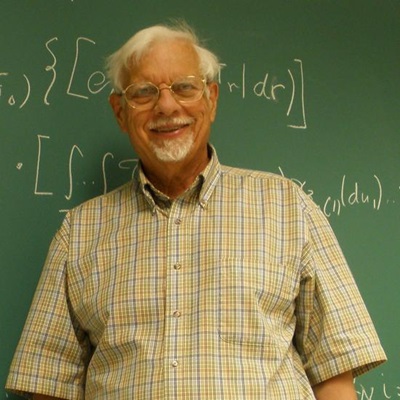 Donald A. Dawson合作论文数Carleton University4
 S. James Taylor合作论文数3
 Steven N. Evans合作论文数Department of Statistics, University of California, Berkeley2Klaus Fleischmann合作论文数2
 Maria Gordina合作论文数Department of Mathematics, University of Connecticut2Achim Klenke合作论文数2Richard Durrett合作论文数1
 Takashi Kumagai合作论文数1British Columbia合作论文数1
 Jean Francois Le Gall合作论文数Institut de Mathématique d'Orsay, University of Paris-Sud1U. British Columbia合作论文数1Jean Le Gall合作论文数1Robert Dalang合作论文数1Madison Wisconsin U.合作论文数1
 Alexander Teplyaev合作论文数Department of Mathematics;University of Connecticut;Department of Mathematics, University of Connecticut1




