Secondary calcite, silica and minor amounts of fluorite deposited in fractures and cavities record the chemistry, temperatures, and timing of past fluid movement in the unsaturated zone at Yucca Mountain, Nevada, the proposed site of a high-level radioactive waste repository. The distribution and geochemistry of these deposits are consistent with low-temperature precipitation from meteoric waters that infiltrated at the surface and percolated down through the unsaturated zone. However, the discovery of fluid inclusions in calcite with homogenization temperatures (T-h) up to similar to 80 degrees C was construed by sonic scientists as strong evidence for hydrothermal deposition. This paper reports the results of investigations to test the hypothesis of hydrothermal deposition and to determine the temperature and timing of secondary mineral deposition. Mineral precipitation temperatures in the unsaturated zone are estimated from calcite- and fluorite-hosted fluid inclusions and calcite 5180 values, and depositional timing is constrained by the Pb-207/U-235 ages of chalcedony or opal in the deposits. Fluid inclusion T-h from 50 samples of calcite and four samples of fluorite range from similar to 35 to similar to 90 degrees C. Calcite delta O-18 values range from similar to 0 to similar to 22 parts per thousand (SMOW) but most fall between 12 and 20 parts per thousand. The highest T-h and the lowest delta O-18 values are found in the older calcite. Calcite T-h and delta O-18 values indicate that most calcite precipitated from water with delta O-18 values between - 13 and - 7 parts per thousand, similar to modern meteoric waters.Twenty-two Pb-207/U-235 ages of chalcedony or opal that generally postdate elevated depositional temperatures range from similar to 9.5 to 1.9 Ma. New and published Pb-207/U-235 and Th-230/Uages coupled with the T-h values and estimates of temperature from calcite delta O-18 values indicate that maximum unsaturated zone temperatures probably predate similar to 10 Ma and that the unsaturated zone had cooled to near-present-day temperatures (24 - 26 degrees C at a depth of 250 m) by 2 - 4 Ma. The evidence of elevated temperatures persisting in ash flow tuffs adjacent to parent calderas for as much as similar to 8 Ma is a new finding, but consistent with thermal modeling. Simulations using the HEAT code demonstrate that prolonged cooling of the unsaturated zone is consistent with magmatic heat inputs and deep-seated (sub-water table) hydrothermal activity generated by the large magma body similar to 8 km to the north that produced the 15 - 11 Ma ash flows and ash falls that make up Yucca Mountain. The evidence discussed in this and preceding papers strongly supports unsaturated zone deposition of the secondary minerals from descending meteoric waters. Although depositional temperatures reflect conductive (and possibly vapor-phase convective) heating of the unsaturated zone related to regional magmatic sources until perhaps 6 Ma, depositional conditions similar to the present-day unsaturated zone have prevailed for at least the past 2 - 4 Ma. Published by Elsevier Ltd.
This chapter presents an introduction to the volume Melt Inclusions in Volcanic Systems: Methods and Problems, stemming from the study: Volcanic Systems—Melt Inclusions, Methods, Applications, and Problems, held in Seiano (Sorrento Peninsula), from 26–30 September 2002. Silicate melt inclusions have been actively studied for nearly 150 years, although most of the early studies were simply descriptive, with little or no interpretation of their significance in terms of geological processes. During this same period, a parallel but much more intensive study was under way of aqueous inclusions. In contrast with the study of silicate melt inclusions, the aqueous inclusion studies almost immediately began to be interpreted, yielding data on many geological and economically important processes, first on the temperatures of hydrothermal ore-formation, and then on the compositions of the long-gone fluids that were actively involved in many environments. Similar studies of melt inclusions can, in theory, yield a similar wealth of information on the origin, nature, and evolution of the fluid (melt) that was trapped, and the processes that took place in the past.
Individual natural fluid inclusions in quartz were selected for non-destructive microprobe analysis by synchrotron X-ray fluorescence (SXRF) and proton-induced X-ray emission (PIXE) in order to compare and contrast the compositions of porphyry-type ore forming brines and two types of ocean crustal brines. The inclusions contained brines with high salt concentrations (typically 20–40 wt.% total), and one or more daughter crystals. The X-ray and proton beams produced detectable characteristic X-rays for many elements and allowed the quantification of concentrations for many elements with atomic number Z>14.Fluid inclusions associated with the core of the Bingham, UT, porphyry-Cu(Mo) deposit contain NaCl brines that also contain (element, typical range in ppm): K, 12,000–100,000; Ca, ≤17,000; Mn, ≤8000; Fe, ≤120,000; Cu, ≤8000; Zn, ≤5000; Br, ≤2000. These values are in good agreement with published estimates, and results from SXRF and PIXE experiments are generally consistent. The Bingham fluid compositions closely resemble brines from the porphyry-Mo(Cu) deposit at Questa, NM.Inclusions from two suites of oceanic plutonic rock samples gave PIXE results consistent with published SXRF analyses from other inclusions in the same samples. New inclusion analyses from the Mathematician Ridge locality indicate the NaCl brines also contain, on average (element, ppm): K, 3500; Ca, 35,000; Mn, 4900; Cu, 400; Zn, 200; Br, 1000. New inclusion analyses from the Oceanographer Transform locality indicate NaCl brines that also contain, on average: K, 37,000; Ca, 35,000; Mn, 10,000; Cu, ≤400; Zn, 2200; Br, 1000. These values are calculated on the assumption that Fe in the inclusions is 50,000 ppm. Compared to continental ore forming brines, the oceanic brines have higher Ca and lower K and Cu concentrations.
Saline fluid inclusions (FI) trapped at close to the temperature of final solidification of a granitic melt occur in rocks from Bingham, Utah, Ascension Island, mid-Atlantic Ocean, and St. Austell, Cornwall. Slightly lower temperature FI occur at Butte, Montana. Argon, Kr, and Xe were extracted from FI by laser microprobe decrepitation of minute portions of the samples after neutron irradiation (along with synthetic FI of known composition), and measured in a low blank, high sensitivity, pulse-counting mass spectrometer. Results enable measurement of Cl, K, Br, and I simultaneously with Ar-36, Ar-40, Kr-84, and Xe-129, in approximately 10(-7) cc of fluid, the contents of a single spherical inclusion approximately 57 mum in diameter.Average K/Cl in Bingham and St. Austell FI are approximately 0.25 and approximately 0.15, respectively, broadly consistent with the composition of fluids equilibrated with rocks at temperatures close to the eutectic in the granite system (400-600-degrees-C and 0.5-2 Kb). Within-sample variations in K/Cl are significant and may be a result of exsolution of fluids from magmas over a range of temperatures and/or pressures. Halogen ratios are confined to a narrow range, with I/Cl and Br/Cl in Bingham, Ascension, and some Butte FI approximately 1 - 8 x 10(-5) and 1 - 3 x 10(-3), respectively, probably evidence of a common source of salinity, presumably part of the Earth's mantle. A component of salinity derived from continental crust may be indicated by higher I/Cl and lower Br/Cl in St. Austell FI. Radiogenic Ar-40 produced in situ from K in FI after trapping is usually insignificant. Ar-40e is defined as Ar-40 in excess of the amounts attributable to atmospheric gases and that produced by decay of K in FI. Variations in Ar-40e/Cl in Bingham, Ascension, and St. Austell FI are greater than can be explained by just different Cl concentrations in FI, (typically between approximately 5 x 10(-7) and 8 x 10(-6)), probably because Ar and Cl have been fractionated within these systems by outgassing of a magma in the interval between exsolution of different FI generations. Concentrations of Ar and Kr-84 in most Bingham, Ascension, and St. Austell FI are approximately 2 orders of magnitude greater than in most lavas and granites, with Kr-84/Ar-36 ranging between approximately 0.015 and approximately 0.08, grossly consistent with the composition of fluids exsolved from magmas. Several distinct fluid types are present at Butte: (1) rare ''magmatic'' FI having halogen and noble gas abundances similar to Bingham and Ascension and (2) abundant FI having Ar-36 and Kr-84 concentrations similar to air-saturated fresh waters, with slightly lower Br/Cl than FI at Bingham and Ascension (approximately 5 - 10 x 10(-4)) and relatively high Ar-40e/Cl (approximately 1 x 10(-5) and 2.8 x 10(-5). Mixing prior to trapping between fluid derived from magmas and meteoric water that acquired Ar-40e plus some halogens by interaction with country rocks is the most likely origin of most Butte FI.
Liquid plus vapour inclusions of CO2 are widespread in plagioclase microphenocrysts in small tholeiitic intrusions and tephra of the Moeraki and adjacent areas of northeast Otago, New Zealand. They imply the presence of immiscible CO2 droplets in the magma at depths of about 7–14 km. Their presence within 5 μm of the edges of microphenocrysts as little as 35 μm thick and 118 μm long indicates minimal feldspar crystal growth during the final ascent and quenching of the magma. Delicate branching clusters of lath-like microphenocrysts escaped disruption during this ascent. Such CO2 inclusions are a potential source of ‘excess argon’ perturbing K−Ar age determinations.
Calcite vein and vug fillings at four depths (130-314m), all above the present water table in USW G-1 bore hole at Yucca Mountain, Nevada, contain primary fluid inclusions with variable vapor/liquid raitos: Most of these inclusions are either full of liquid or full of vapor. The liquid-filled inclusions show that most of the host calcite crystallized from fluids at <100{degrees}C. The vapor-filled inclusions provide evidence that a separate vapor phase was present in the fluid during crystallization. Studies of these vapor-filled inclusions on the microscope crushing stage were interpreted in an earlier paper as indicating trapping of an air-water-CO{sub 2} vapor phase at ``<100{degrees}C``. Our new studies reveal the additional presence of major methane in the vapor-filled inclusion, indicating even lower temperatures of trapping, perhaps at near-surface temperatures. They also show that the host calcite crystals grew from a flowing film of water on the walls of fractures open to the atmosphere, the vapor-filled inclusions representing bubbles that exsolved from this film onto the crystal surface.
Log in or Register Subscribe to journalSubscribe Get new issue alertsGet alerts Enter your Email address: Wolters Kluwer Health may email you for journal alerts and information, but is committed to maintaining your privacy and will not share your personal information without your express consent. For more information, please refer to our Privacy Policy. Subscribe to eTOC Secondary Logo Journal Logo All Articles Images Videos Podcasts Blogs Advanced Search Toggle navigation Subscribe Register Login Articles & Issues Current IssuePrevious IssuesPublished Ahead-of-Print Collections Editorials of Laura Weiss Roberts, MD, MAAM Last PageAddressing Race and Racism in Medical EducationArtificial Intelligence and Academic MedicineClimate Change Education and Sustainability in Academic MedicineThe Role of Academic Medicine in Firearm Injury PreventioneBooksView All For Authors Submit a ManuscriptInformation for AuthorsLanguage Editing ServicesAuthor Permissions Journal Info About the JournalAbout the AAMCJournal MastheadSubmit a ManuscriptAdvertising InformationSubscription ServicesReprints and Back IssuesClassified AdsRights and PermissionsFor ReviewersFor MediaFor Trainees All Articles Images Videos Podcasts Blogs Advanced Search
An inductively coupled plasma-mass spectrometer (ICP-MS) is used to determine rare ear-th element (REE) abundances in fluid inclusions. Quartz concentrates from the Bingham porphyry Cu-Mo deposit, Utah, USA, and from a quartz vein in brecciated amphibolite dredged from the Mathematician Ridge, an abandoned spreading center in the eastern Pacific, were prepared by a modified crush-leach method. Leachates and solutions from acid digestion of quartz residue from leaching were analyzed by ICP-MS, using conventional sample introduction. The results demonstrate that the crush-leach method, followed by ICP-MS analysis of leachates, is effective for REE determination.Chondrite-normalized REE patterns for the Bingham samples are light rare earth element (LREE) enriched, with a small negative Eu anomaly, and the pattern for the Mathematician Ridge sample is nearly flat, with a positive Eu anomaly.
Tubes, 3-10-mu-m in diameter and up to 3 mm long, and linear arrays of spherical and crystallographically faceted fluid inclusions, 5-35-mu-m in diameter, were produced in single crystals of San Carlos olivine (Fo89) annealed in the presence of CO2 and CO2-H2O fluids at 2-3 GPa and 1200-1400-degrees-C in a piston-cylinder apparatus utilizing NaCl-BN sample assemblies. Experiments conducted under identical conditions in the same apparatus utilizing NaCl + pyrex + alumina sample assemblies did not produce tubes or fluid inclusions. Subsequent oxidation of one specimen to reveal the dislocation substructure showed that inclusions that can be traced to tubes in the process of necking down and linear inclusion arrays (representing healed tubes) are connected by single and multiple curvilinear dislocations. These observations suggest that the tubes formed on growth dislocations that existed in the olivine crystals prior to annealing. The formation of tubes is sensitive to chemical environment, and the growth rate of tubes is dependent on temperature. The tubes are interpreted to be etch tunnels, based on their similarity to etch tunnels produced in synthetic and natural quartz by HF etching and hydrothermal treatment. The most commonly accepted origin for etch tunnels in quartz is that growth dislocations segregate impurities (H or Al) that locally enhance the solubility of the crystal in the fluid. It appears that etch tunnels in olivine are produced by a similar mechanism.
After a brief review of recent work on melt inclusions in diamond and in normal magmatic environments, the nature of the fluid-inclusion evidence for various stages of magmatic immiscibility is summarized.
The chemical composition of fluid inclusions trapped within the marine-dominated Permian evaporite sequence of the Palo Duro Basin, Texas, departs significantly from that expected in the evolution of seawater through evaporative concentration and mineral precipitation. The origin of these fluids is evaluated in the context of the sedimentary and diagenetic environments in which the halites evolved. The petrography and fabric show that many of the halites escaped advanced recrystallization, suggesting that the fluids entrapped in such samples are original brines. The seawater-derived brine-pool and diagenetic brines from which the halites precipitated were modified as a result of fluctuations in water level on an evaporite flat and of a complex hydrological system through which seawater was fed into the basin and refluxed. The ionic ratios between Ca, Mg and SO4 are influenced by dolomitization and associated reactions of interstitial brines with carbonates adjacent to the halite beds. Formation and subsequent dissolution of efflorescent evaporite crusts that are not in equilibrium with subaqueously precipitated evaporites shift the ratios of Mg, Na, K, and Cl to Br away from the expected path of evaporative seawater concentration. Syndepositional alteration of clay and feldspar minerals probably also occurred, but these effects cannot be evaluated from the present data.The variability and complexity of brine evolution within an uncomplicated evaporite setting, such as that of the Palo Duro Basin, has important implications for interpretation of the origin and history of evaporite-influenced brines in other basins. Laboratory evaporation experiments and analyses of salt pan brines only serve as a basic reference for the evaporation path of seawater; they ignore the early diagenetic processes, and hence taken alone are inadequate analogs for ancient marine evaporite environments.
In measurements of the noble gases in additional samples of diamonds from the Argyle and Ellendale lamproites in Western Australia we have failed to encounter any neon-rich stones such as showed solar-like isotopic compositions in earlier work. No neon was detected above the relatively high blank levels in our glass apparatus. White and brown diamonds showed no differences in noble gas content, nor did samples segregated by the color of long-wave UF fluorescence. The rare gas patterns in the 1.2 Ga Argyle pipe are largely consistent with implanted 3He, 4He, and fissiogenic Xe from U/Th in the matrix rock in which the diamonds have been stored for so long. These implanted species are absent in diamonds from the much younger (~20 Ma) Ellendale pipe. We give implantation formulae for several models of inhomogeneously distributed U/Th. Differences in 3He content between pipe and alluvial Argyle samples are consistent with expected cosmogenic production in the latter. An expanded data base for helium and carbon isotopic data on the same samples supports a negative [4He]-δ13C correlation seen earlier in work from our group, but if the Argyle samples, which contain light carbon, are corrected for implanted 4He-δ13C, the correlation is considerably weakened. We no longer see an earlier 3He4He-δ13C correlation.
This paper summarizes the development of the major qualitative, semiquantitative, and quantitative methods for the determination of the chemical and isotopic composition of fluid inclusions in minerals (excluding melt inclusions), and some of their limitations and applications. Emphasis is placed on the present state of the art and on some of the possibilities for improvements in the future.
Nuclear wastes present the earth scientist with a host of serious and extremely long-term (and expensive) environmental problems. Only one aspect — the temporary storage and ultimate disposal sites for the most concentrated products of nuclear fission, the high-level nuclear waste (HLNW) — has been given much attention. Environmental threats of various magnitudes, from both high- and low-level nuclear wastes, occur at many stages in the production of nuclear energy, from the uranium mine through to the permanent disposal site. All, however, require evaluation of the geological factors before any intelligent stand can be taken. The informed earth-science teacher can have a tremendous impact on public discussions of these socially important questions, and can also use this knowledge to improve the image of earth science as a practical educational pursuit, in the minds of both the students and the public.
This paper presents arguments against the statement made by Koeberl et al. (1989) to the effect that various differences between the quartz of the three quartz pebbles from the Roter Kamm impact crater (Namibia) and the quartz of the pegmatites present in the basement rocks of this crater can be best interpreted as evidence that the pebbles were formed (or 'recrystallized') by a post-impact hydrothermal system. Arguments are presented that suggest that the three quartz pebbles are, most likely, fragments of a preimpact vein quartz of hydrothermal origin.
An external beam (avg diam 20 mu m) of protons from a 4.0-MV Van de Graaff accelerator has been used to excite, simultaneously, characteristic X-rays and gamma rays from a wide range of elements contained in individual, unopened, fluid inclusions in doubly polished mineral plates. We report qualitative and semiquantitative compositional data obtained using the proton-induced X-ray (PIXE) and gamma-ray (PIGE) emission techniques for selected, near-surface (10-40 mu m deep) inclusions from three major, well-studied ore deposits.Proton-induced X-ray emission analysis of numerous low-salinity, CO 2 -bearing inclusions in quartz from the Panasqueira wolframite-quartz vein system, Portugal, did not detect Na, Cl, or K, presumably because of X-ray attenuation, whereas proton-induced gamma-ray emission analysis revealed Na in all inclusions. The gamma-ray spectrum yielded by an inclusion containing a daughter or accidentally trapped crystal resembling muscovite confirmed the presence of F, Na, and Al; and several X-ray spectra recorded K, Ti, Mn, Fe, Cu, Zn, Rb, and Sn.Proton-induced X-ray emission analyses of multiphase fluid inclusions in quartz from a molybdenite-rich veinlet in the core of the Bingham, Utah, porphyry Cu(-Mo) deposit confirmed the presence of the S, Ca, Cl, K, and Fe, expected from the occurrence of anhydrite, sylvite, and hematite daughter crystals. Quantification of the abundances of the lighter elements was subject to considerable error, but the data permit reasonable estimates of several heavier elements: Mn, 1,700; Fe, 28,000; Cu, 700; Zn, 1,800; Pb, 700; and Br, 200 (all in ppm).Two fluid inclusions were examined in secondary spodumene from the Tanco, Manitoba, rare element pegmatite: both contained a highly birefringent daughter crystal initially assumed to be the new mineral diomignite (Li 2 B 4 O 7 ). The proton-induced gamma-ray emission spectra were compared to those obtained from Li 2 B 4 O 7 sealed within SiO 2 glass capillaries. Boron was clearly detected in the capillaries but not in two large daughter crystals, one of which contains major amounts of Ca (tens of wt %) and is tentatively identified as calcite.Although these data are preliminary and mainly qualitative, they demonstrate that the combined proton-induced X-ray and gamma-ray emission method has great potential for fluid inclusion studies. Considerable improvements in instrumentation and techniques for fluid inclusion analysis are anticipated, as are more accurate determinations through precise standardization employing synthetic inclusions of known composition.
 P. W. Weiblen合作论文数22Paul W. Weiblen合作论文数6Harvey E Belkin合作论文数U.S. Geological Survey, US Geological Survey6HE BELKIN合作论文数4
 Everett Gibson合作论文数Department of Chemistry. Douglass College, Rutgers University4
 Masahiko Honda合作论文数Research School of Earth Sciences, College of Science, The Australian National University3
 Lewis Ashwal合作论文数School of Geosciences, University of the Witwatersrand3DA Vanko合作论文数2J. H. Reynolds合作论文数2Joseph F. Whelan合作论文数2Paul B Barton合作论文数U.S. Geological Survey2Philip M Bethke合作论文数2
 Steven Clark Bergman合作论文数Department of Geological and Geophysical Sciences, Princeton University2GJ ROSASCO合作论文数2WE CAMERON合作论文数1k marti合作论文数1TN TINGLE合作论文数1RO RYE合作论文数1B DEVIVO合作论文数1richard d warner合作论文数1sc ruppel合作论文数1jeffrey l warner合作论文数1r w jr baumgardner合作论文数1DJ HENRY合作论文数1Av Heyl合作论文数1r j finley合作论文数1Bj Skinner合作论文数1T.C. Gustavson合作论文数1Rl Bassett合作论文数1JH SIMMONS合作论文数1D. T. Vaniman合作论文数1A. Martin合作论文数1
 Roberta L. Rudnick (罗伯塔·鲁德尼克)合作论文数Department of Earth Science, College of Letters and Science, University of California, Santa Barbara1
 Jan D. Miller合作论文数University of Utah1
 Pascal Philippot合作论文数Institut de Physique du Globe de Paris, Universite Paris Diderot;Synchrotron SOLEIL;Centre National de la Recherche Scientifique1Stephen R. Sutton合作论文数1
 Klaus Keil合作论文数School of Ocean and Earth Science and Technology, University of Hawai'i at Manoa1A.J. Anderson合作论文数1
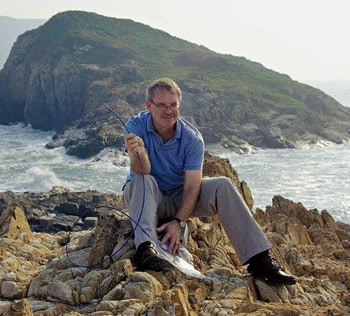 Euan G. Nisbet (Euan Nisbet)合作论文数Department of Earth Sciences, Royal Holloway University of London1
 David London合作论文数Mewbourne College of Earth and Energy, School of Geosciences, The University of Oklahoma1Lawrence T Larson合作论文数1
 Leonid A. Neymark合作论文数S.M. Stoller Corp., c/o US Geological Survey1X.-P. Ma合作论文数1
 Brian D. Marshall合作论文数US Geological Survey1
 Stephen E. Haggerty合作论文数Department of Geosciences, College of Natural Sciences, University of Massachusetts, Amherst1Peter M Bell合作论文数1J. L. Warner合作论文数1P.J. Aruscavage合作论文数1
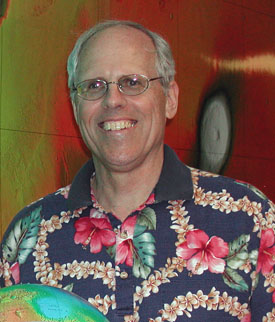 G. Jeffrey Taylor合作论文数Hawai‘i Institute of Geophysics and Planetology, School of Ocean and Earth Science and Technology, University of Hawai‘i at Manoa1




