Particle accelerators play an essential role in the field of medical applications. A large variety of systems is in use for diagnostic purposes, such as the production of radioactive tracers for imaging or x-ray radiography. The dominant application, however, is related to the treatment of cancer patients. This article puts emphasis on cancer treatment, presenting the status and developments of the corresponding technical systems, and gives a brief overview of the biophysical properties and medical aspects of these treatments.
Die zur Zeit im Aufbau befindliche Ionentherapieanlage HICAT an der Universitätsklinik Heidelberg wird die erste klinische Bestrahlungsanlage für Schwerionen in Europa sein. Ihre Kapazität soll die Behandlung von 1000 Patienten pro Jahr ermöglichen. Der Einsatz verschiedener Ionensorten von Protonen bis Sauerstoff unter identischen Bedingungen soll die Frage nach der am besten geeigneten Teilchensorte in Abhängigkeit von der Indikation klären. Ein Synchrotron beschleunigt die Teilchen auf Energien, die wasseräquivalenten Reichweiten von 2 cm bis 30 cm entsprechen. Um die günstige Tiefendosisverteilung von Ionen bestmöglich zu nutzen, wird das intensitätsgesteuerte Rasterscanverfahren eingesetzt. Ein weltweites Novum ist die geplante Schwerionengantry. Die Anlage soll 2006 fertiggestellt sein.
The ion beam therapy facility HICAT presently under construction at the Heidelberg University Clinic will be the first clinical irradiation facility for heavy ions in Europe. Its capacity should enable the treatment of 1000 patients per year. The use of different ion species ranging from protons to oxygen under identical conditions should clarify the question of which particle species is best suited in terms of indication. A synchrotron will accelerate the particles to energies corresponding to water-equivalent ranges from 2 cm to 30 cm. An intensity-controlled raster scanning technique will be used to optimize the use of the favorable depth dose distribution of ions. The planned heavy-ion gantry will be the first world-wide. The facility should be complete in 2006.
The HICAT project is a Heavy Ion accelerator for light ion Cancer Treatment to be built for the clinics in Heidelberg, Germany. It consists of a 7 MeV/u linac, a compact synchrotron and three treatment places, one of them equipped with a 360 degree gantry beam-line. The facility will implement the intensity controlled raster-scanning technique that was developed and successfully demonstrated at GSI with over 100 patients at present. In order to produce the beams with the characteristics requested by the treatment sequencer, the accelerator must operate on a pulse-to-pulse basis with different settings. This concept imposes strict and challenging demands on the operation of the accelerators and hence the control system of the facility. The control system should be developed, installed and maintained by and under the complete responsibility of an industrial system provider, using a state-of-the-art system and wide-spread industrial components wherever possible. The presentation covers the status of the project and the requirements on the control system.
At the Heavy Ion Research Institute GSI in Darmstadt an experimental cancer treatment program with a five years duration has been developed. A new method for cancer treatment with ions is applied, using rasterscan method in addition to an active pulse to pulse variation of ion beam properties, including the energy, intensity and focusing. An overview of this Cancer Therapy Project is presented, that covers both accelerator aspects to provide the required beam variations within a short time and the installations at the treatment place for rasterscan control. In addition to a description of the technical design (control-hard- and software) experimental results will be shown, containing the achieved beam properties and measurements of rasterscan performance.
 Thomas Haberer合作论文数Heidelberger Ionenstrahl-Therapiezentrum, Universitätsklinikum Heidelberg;ohann Wolfgang Goethe-Universität Frankfurt am Main;GSI11
 Marius Pavlovic合作论文数Department of Vascular Surgery, Maribor Teaching Hospital3
 E. Badura合作论文数3hansgeorg essel合作论文数2poppensiecker klaus合作论文数2badura eugen合作论文数2D. Schardt合作论文数2
 Peter Spiller合作论文数2Gerhard Kraft合作论文数2Peter Heeg合作论文数2K. Poppensieker合作论文数2ralf fuchs合作论文数1klaus poppensieker合作论文数1B. Schlitt合作论文数1Joerg Pawelke合作论文数1Michael Scholz合作论文数1
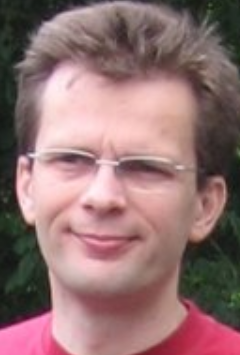 Rainer Hinz合作论文数Division of Informatics, Imaging and Data Sciences, School of Health Sciences, Faculty of Biology, Medicine and Health, The University of Manchester1Alonso Jose R合作论文数1
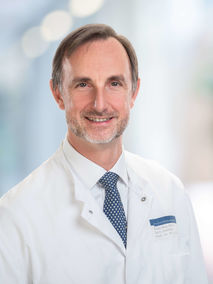 Jürgen Debus合作论文数Universitätsklinikum Heidelberg;Nationales Centrum für Tumorerkrankungen;Heidelberger- Ionenstrahl- Therapiezentrum;Deutschen Krebsforschungszentrum;Radiologischen Klinik und Poliklinik, Universität Heidelberg1Jens Klabunde合作论文数1
 Ulrich Ratzinger合作论文数1
 A. Dolinskii合作论文数1W. Kraft-Weyrather合作论文数1Wolfgang Enghardt合作论文数1Ute Linz合作论文数1




