John Tyberg was born in Grantsburg, Wisconsin, USA on May 4, 1938. He died in Calgary, Alberta, Canada, on April 10, 2022 after a brief illness. John obtained a PhD in 1967 and an MD in 1972, both from the University of Minnesota, and did postdoctoral studies at Harvard and Peter Bent Brigham Hospital. He subsequently worked at the Cedars-Sinai Medical Center in Los Angeles and the Cardiovascular Research Institute at the University of California (San Francisco), before moving to the University of Calgary in 1981 as Professor in the Departments of Cardiac Sciences and Physiology and Biophysics. He was subsequently appointed as a Scientist of the Alberta Heritage Foundation for Medical Research, an appointment he held for more than 20 years. He is survived by his wife, Dr Naomi Anderson, his daughter Anna de Tombe, 2 grandsons, Philip and Jack de Tombe (of whom he was very proud) and 2 brothers, Rodney and James Tyberg. John was a quiet, humble man who obtained great joy from mentoring his students and fellows, and from his love for literature, history, and music.
Tandis que 2008 entre dans l’histoire, il convient de reflechir a l’annee et de commenter la situation du Journal. L’annee a ete difficile et a comporte de nombreux defis, mais comme toujours, de bonnes choses se sont egalement produites. Eldon R Smith Dans le milieu des revues scientifiques, il faut toujours attendre un an pour connaitre notre rendement de l’annee precedente. Alors, comment nous en sommes-nous sortis en 2007 ? C’est l’annee la plus chargee que nous ayons vecue au Journal canadien de cardiologie, avec une importante augmentation du nombre de soumissions. Cependant, comme je l’ai souligne dans les numeros precedents, cette augmentation des soumissions ne s’est pas associee a une diminution suffisante des taux d’acceptation pour maintenir le delai moyen souhaite entre l’acceptation d’un article et sa d’etre publies a augmente. De plus, notre editeur affronte aussi un defi, car le revenu de publication total est limite. Puisque la viabilite commerciale du Journal canadien de cardiologie (comme celle de la plupart des revues scientifiques) depend des revenus de publication, il fallait agir. Ainsi, comme nous l’avions annonce il y a un an, en 2008, nous avons fait passer le nombre de publications de 14 a 12. Nous devions egalement limiter le nombre de pages publiees par numero. De toute evidence, ces deux decisions ont complique la situation pour ce qui est du nombre d’articles en attente d’etre publies et du delai avant la publication. Cependant, nous avons adopte plusieurs strategies pour regler ces problemes. D’abord, nous avons commence a accepter les soumissions de rapports de cas et d’images en cardiologie afin de les publier en ligne et d’accroitre le nombre d’articles scientifiques dans chaque numero. Nous avons egalement offert aux auteurs dont le rapport de cas ou l’image en cardiologie avait deja ete accepte de les publier en ligne (malheureusement, ils ne sont pas nombreux a avoir accepte notre invitation). Nous avons egalement exige des frais de soumission, ce qui semble avoir eu l’effet anticipe de reduire le nombre de soumissions. Enfin, plus recemment, nous avons commence a offrir aux auteurs d’articles acceptes de publier ces articles en ligne et d’y donner libre acces. Nous evaluerons cette initiative au cours des prochains mois. Nous voulons tous que les articles acceptes fassent partie des publications citees le plus rapidement possible. Je m’excuse aupres de tous les auteurs qui attendent plus de six mois (notre objectif etabli) apres l’acceptation finale pour que leur article soit publie. Alors, que s’est-il passe en 2008 ? Nous avons subi une diminution du nombre d’articles soumis et avons continue de reduire le taux d’acceptation. Notre facteur d’impact de citations en 2007 a augmente et a atteint le taux le plus eleve jamais enregistre, et j’ai raison de croire qu’il augmentera encore en 2008. Qui plus est, ce n’est pas simplement parce que nous avons publie moins d’articles, mais c’est aussi un reflet du nombre constant et eleve de citations. J’ai l’impression que nous continuons d’attirer des articles de meilleure qualite, ce qui fait que l’avenir s’annonce bien. Nous devons relever le defi a court terme de reduire notre arriere d’articles et travaillons a y parvenir. Comme toujours, je suis redevable a bien des gens qui travaillent avec efficacite a s’assurer que le Journal fonctionne. Toutefois, personne n’est plus important que les reviseurs qui permettent la selection des meilleurs travaux a publier. La liste complete des reviseurs pour 2008 figure ailleurs dans ce numero. Je tiens a remercier chacun d’eux du fond du cœur ! Il est egalement important d’effectuer les revisions rapidement. Nous visons transmettre notre premiere decision aux auteurs dans les 30 jours suivant la soumission. Nous ne respectons pas cet objectif, mais le temps median avant de rendre une decision est de 40 jours, ce qui se compare bien avec les autres revues scientifiques. Vous trouverez ci-dessous une liste des reviseurs qui ont effectue leur revision et l’ont soumise en une journee. C’est un record remarquable, et certains de ces reviseurs paraissent sur cette liste annee apres annee. Merci ! C’est aussi en cette periode que nous remercions les membres du comite de redaction qui ont termine leur mandat et que nous souhaitons la bienvenue a ceux qui ont ete nommes par la Societe canadienne de cardiologie pour un mandat de trois ans. J’ai hâte de travailler avec les nouveaux membres du comite pour poursuivre l’amelioration du Journal. L’annee qui s’annonce sera ma derniere a titre de redacteur en chef du Journal canadien de cardiologie. Nous sommes actuellement a la recherche de quelqu’un pour me remplacer. J’espere que cette personne sera prete a entreprendre une periode de chevauchement en juillet 2009. J’ai toujours ressenti que c’etait un enorme privilege que d’etre redacteur en chef du Journal canadien de cardiologie et c’est une fonction qui, sans aucun doute, me manquera. Mais 13 ans, c’est long, et le Journal tirera profit de nouveaux yeux et de sang neuf. Enfin, je profite de l’occasion pour souhaiter une annee 2009 sous le signe du bonheur et de la sante a nos lecteurs et a tous ceux qui ont collabore au succes du Journal. En 2008, les personnes suivantes ont effectue une revision dans la journee suivant la demande. Quelle realisation remarquable ! Nous leur en savons gre. Sandeep Aggarwal John Boyd Jeff Burton Jonathan Choy Richard Cook Francois Dagenais Hisham Dokainish Hank Duff* Thomas Forbes Jacques Genest Jr Anne Gillis Steven Grover Jeff Healey Robert Hegele Padma Kaul Iqwal Mangat Evangelos Michelakis Randy Moore Andrew Pipe Christopher Simpson Donald Smyth John Tyberg Andrew Warren David Waters
The 2008 Canadian Journal of Cardiology Symposium was held at the Canadian Cardiovascular Congress in Toronto on October 26, 2008, in collaboration with the Libin Cardiovascular Institute of Alberta. This annual Symposium is supported by the Pulsus Group Inc – the publisher of the Journal – and by the Canadian Cardiovascular Society. The subject of the 2008 Symposium was on recent advances in risk prediction, a subject of great importance to cardiovascular health and disease. We are pleased to make these excellent presentations available to readers of the Journal. The ability to predict risk for and from cardiovascular disease is increasingly important for several reasons. Perhaps foremost among these is the need to determine individual risk to better plan investigation and management with the greatest accuracy and safety for patients and lowest costs for the health care system. This will be even more important as personalized medicine becomes more widespread. However, we also need the ability to predict risk for public health planning. In Canada, this will require improved information systems to provide the population profile so that risk can be predicted to better inform population health planning. And finally, we need new predictors of risk that are modifiable in response to therapy – such markers do not only serve to identify populations for inclusion in clinical trials of new therapies, but can also serve as surrogate outcomes to decrease the need for ever increasing clinical trial size and cost. Our ability to predict risk is actually quite limited. Although risk scores are available to assess individual cardiovascular risk, these are neither very sensitive nor specific. Therefore, there is an urgent need for new and improved predictors. Ideally, these markers will be simple to measure, reproducible, highly sensitive and specific with excellent positive and negative predictive value. We have a significant way to go to achieve this goal. But progress is being made with increasing numbers of genomic, proteomic and metabolomic markers being identified as potential markers of risk. Dr Bruce McManus (pages 9A–14A) provided an excellent summary of this subject at the Symposium and reviewed the rigorous process required to validate newly identified markers before they can be widely used. One of the promising markers of risk for atherosclerosis is endothelial dysfunction. Dr Todd Anderson (pages 15A–20A) provided an objective overview of the current evidence that this marker will be useful to identify those likely to develop disease, but also pointed out the additional research needed to prove validity. Perhaps one of the greatest challenges we face is predicting which patients with myocardial infarction are likely to go on to experience sudden death, a mechanism that causes the death of approximately 40,000 Canadians each year. Dr Derek Exner (pages 21A–27A) described recent work that utilizes various data extraction approaches from electrocardiographic recordings that, together, might prove useful in this regard. Dr Exner is heading a new clinical trial that will help determine whether such analyses can be useful in the selection of patients to receive an implanted defibrillator. The final speaker at the Symposium was Dr Merril Knudtson (pages 29A–36A) who utilized his vast experience with the APPROACH database to assess risk for acute coronary events. This review emphasizes the value of explicit risk assessment particularly to identify the patient group most likely to benefit from a specific therapeutic approach. Overall, this was an excellent Symposium, and was very well attended. It obviously addressed subjects of considerable interest to attendees. The papers in this Supplement will serve to bring the insights of the speakers and their colleagues to the readers of The Canadian Journal of Cardiology.
Acute decompensated heart failure is the most common cause of hospitalization for patients older than 65 years of age. Although treatment of this condition has improved over the past two decades, the specific approach to patients in the acute setting has not evolved in the same way. A patient facing acute decompensation is experiencing a serious medical condition that is associated with a poor prognosis. In addition, acute decompensated heart failure results in significant costs to the health care system. Significant morbidity and mortality are associated with patients who are readmitted within a year of the first hospitalization. Because of this important problem, further research on improving the prognosis for this condition is warranted. The present article will focus on the risk factors associated with acute decompensation and the importance of this condition, both on prognosis and economics.
The present supplement contains papers based on the presentations at the outstanding Canadian Journal of Cardiology (CJC) Symposium held at the Canadian Cardiovascular Congress in Quebec City in October 2007. The CJC Symposium is an annual plenary session at the Canadian Cardiovascular Congress, cosponsored by the Canadian Cardiovascular Society and Pulsus Group Inc, publisher of the Journal. The format that has evolved uniquely features Canadian science; each year, the symposium has a subject focus and is held in collaboration with a Canadian research institution with expertise in that specific area of research. One of the four speakers, however, usually comes from another Canadian institution. In 2007, the focus of the symposium was on abdominal obesity and the metabolic syndrome. An obvious Canadian centre of excellence with international recognition is the Quebec Heart Institute at the Universite Laval – the Institute also happened to be celebrating its 50th anniversary in 2007. The symposium was co-chaired by Dr Jean-Pierre Despres, whose paper entitled “Abdominal obesity: The cholesterol of the 21st century?” is the first manuscript in this supplement. The second paper, also from the Quebec Heart Institute, is authored by Dr Paul Poirier and is entitled “Targeting abdominal obesity in cardiology: Can we be effective?” The third paper, entitled “Abdominal obesity and the metabolic syndrome: A surgeon’s perspective”, is by Dr Patrick Mathieu, a clinician scientist who is a cardiac surgeon at the Institute in Quebec. Dr Robert Ross from Queen’s University in Kingston, Ontario, completed the excellent group of speakers at the symposium and his paper entitled “Is weight loss the optimal target for obesity-related cardiovascular disease risk reduction?” completes this supplement. The CJC Symposium was very well attended, with excellent content; the papers in this supplement to the Journal will serve as a valuable overview on this important subject area. We greatly appreciate the collaboration of exceptional faculty from the Quebec Heart Institute and of Dr Robert Ross, who have made this supplement possible.
As defined by the Office of Research Integrity of the US Department of Health and Human Services (1), research misconduct means fabrication, falsification or plagiarism in proposing, performing or reviewing research, or in reporting research results. Perhaps the most common form of misconduct encountered – or at least recognized – is that of plagiarism. Plagiarism is the appropriation of another person’s ideas, processes, results or words without giving appropriate credit (1). One usually thinks of plagiarism in science as publishing phrases, sentences or passages (without attribution) that were previously published by someone else. Many times, plagiarized passages are taken from the ‘classic’ article on the subject or from a standard textbook. Why individuals committing this misconduct neglect to reference the original source of the material has always been a mystery to me. Indeed, in some instances, the lack of citation may represent an honest mistake, and is therefore not misconduct. But when articles contain a number of plagiarized passages – even whole paragraphs – without attribution and having the passage in question enclosed in quotation marks, it becomes more difficult to accept the ‘honest mistake’ explanation. At The Canadian Journal of Cardiology, we have recognized only two examples of blatant plagiarism in the past 10 years. How many instances have gone unrecognized is unknown, but I suspect that others will come to light over time. It is important to recognize that the most likely means of detecting plagiarism is through the efforts of the expert peer reviewers who happen to recognize a particular passage and check the rest of the paper. Plagiarism may also be detected during the process of systematic reviews of a particular subject, something that often does not occur for many years after publication of the paper in question. Finally, accidental recognition of plagiarism, also sometimes many years after publication, offers some expectation that this dishonest activity will eventually be detected. Eldon R Smith More recently, attention has been given to self-plagiarism. This occurs when an author publishes a paper with passages or paragraphs that the same author has previously published, but without attribution. Here, the definitions are more difficult. How many of us have published an article and used text describing methods that were the same as, or nearly identical to, those contained in one of our previous papers using the same techniques? Is it misconduct to use sentences or passages that you have created and published elsewhere? Although the lines of distinction are less clear, there is agreement that there should be attribution with citation to the earlier journal article. Into this mix enters the phenomenon of duplicate publication. If an author publishes the same article twice, he or she is guilty not only of the misconduct of duplicate publication, but also of plagiarism; this time, the author has plagiarized himself or herself. Unfortunately, such blatant misconduct is not rare. A recent example was discussed on the World Association of Medical Editors listserve, wherein an author published the same paper twice in the same journal, but separated by two years’ time. It is difficult to understand how this can be interpreted as an honest error. It was just called to our attention that a paper published in the Journal in early 1999 was published in another medical journal approximately six months later. Interestingly, the papers came from different institutions and two different countries, but a common author in both papers was also the corresponding author for the second publication. So this is a case of duplicate publication with many passages and whole paragraphs plagiarized. Thus, it is also a case of self-plagiarism. We are currently investigating this issue and will, in cooperation with the other journal, deal with it in a public way. This will likely involve notification of the offending persons’ institutions, the coauthors, as well as publicly withdrawing at least one of the papers, and any other measures we deem appropriate when the investigation is complete. Plagiarism is a serious and common form of misconduct in research and in other aspects of academia. The solution is simple in most cases – attribution. Obviously, attribution is not a solution when a student has plagiarized the work of others for an essay submitted as the student’s own. But for literature that is submitted to peer-reviewed periodicals, work from the minds of others must be acknowledged. It does not mean that it is improper to build on the work of others, just that the contribution of the originator be recognized and the original publication be referenced.
The present supplement contains papers based on the content of the second annual Canadian Journal of Cardiology (CJC) Symposium held at the Canadian Cardiovascular Congress (CCC) in Montreal, Quebec, on October 23, 2005. The annual CJC Symposium is jointly sponsored by the Canadian Cardiovascular Society and Pulsus Group Inc, the publisher of the Journal, and in 2005 was presented in collaboration with the Montreal Heart Institute (MHI). The CJC Symposium has been established as an annual plenary session at the CCC to highlight important topics in cardiovascular medicine while featuring excellence in Canadian research. Beginning in 2005, the symposium is offered in collaboration with a Canadian centre – although not all of the speakers will necessarily come from that centre. For the 2005 CJC Symposium, it seemed natural to feature the MHI, Canada’s senior heart institute, which had just celebrated 50 years of excellence. The MHI has a rich tradition of exceptional patient care services, as well as outstanding research contributions. The Institute is respected internationally particularly for its many contributions to clinical research in the surgical and medical management of ischemic heart disease. These traditions continue as the Institute enters its second 50 years. For the 2005 CJC Symposium, we chose to focus on current and future challenges in cardiology. There are many such challenges despite the numerous advances of the past two decades, with none greater than the issue of developing better means to prevent progression, or cause regression, of coronary atherosclerosis. Dr Jean-Claude Tardif led off the symposium with a discussion of the demonstrated effects of statins in slowing atherosclerosis progression and perhaps promoting some regression, which, importantly, has translated into fewer cardiovascular events. Dr Tardif also reviewed some of the early results with approaches to increase levels of high density lipoprotein cholesterol and speculated on the potential for combinations of these approaches. Although Dr Tardif acknowledged the importance of these and other new pharmacological approaches, he reminded us of the increasing burden of atherosclerosis as a result of lifestyle choices and how we must continue (actually increase) our efforts to address these issues with our patients. Dr Pierre Theroux reviewed current challenges with acute coronary syndromes and pointed out the requirements for better algorithms for risk stratification, particularly the need to include markers of the activity status of the atherosclerotic process. From the viewpoint of pathophysiology, Dr Theroux focused on our deficient knowledge concerning the factors that determine why a plaque destabilizes, why some lesions are so thrombogenic and why the prognosis in some patients is impaired well beyond the acute phase. Dr Theroux also dealt with the need for new therapeutic approaches to this common clinical problem, particularly for improved antithrombotics and effective approaches to immune modulation. The most common arrhythmia, and the one that continues to challenge our therapeutic approaches, is atrial fibrillation. Dr George Wyse acknowledged that the major problem continues to be an incomplete understanding of the pathophysiology of this arrhythmia; therefore, therapeutic approaches continue to be empirical. An important modulating factor in the genesis of atrial fibrillation is inflammation, although therapeutic approaches to this issue have not yet been established. Dr Wyse also discussed the importance of structural and electrical remodelling, as well as genetic factors, to the genesis of atrial fibrillation and speculated on the potential of therapeutic options to address these factors. In a review of the therapeutic approaches currently used, Dr Wyse recognized the challenges and opportunities associated with each approach. The final presentation was by Dr Jean-Lucien Rouleau, who addressed the therapeutic challenges associated with chronic heart failure. Both the incidence and the prevalence of heart failure have been increasing, and, despite many advances in therapies, this remains a major challenge to health care systems. Dr Rouleau reviewed the surgical approaches to the management of heart failure, with a particular focus on coronary artery bypass grafting (CABG) and surgical ventricular restoration. There is a need for new studies to compare bypass surgery with current pharmacological management in heart failure patients, especially in patients in whom myocardial viability has been demonstrated. The Surgical Treatment for Ischemic Heart Failure (STICH) trial is an example of such a study in which CABG will be compared with pharmacological therapy; the study will also determine whether CABG and ventricular restoration surgery combined is better than CABG alone. The large attendance at the 2005 CJC Symposium and the spirited discussion period confirmed that the speakers addressed important questions, and were able to clarify the challenges and opportunities for these important cardiovascular problems. We thank each of the speakers for their participation, and certainly appreciate that they and their co-authors have provided these manuscripts so that their insights are available to a wider audience.
 John Tyberg合作论文数Department of Cardiac Sciences, Cumming School of Medicine, University of Calgary;Department of Physiology and Pharmacology, Cumming School of Medicine, University of Calgary20
 Israel Belenkie合作论文数13Iris Kingma合作论文数5Rozsa Sas合作论文数4
 Otto A. Smiseth合作论文数Division of Cardiovascular and Pulmonary Diseases, Oslo University Hospital3
 Dante Manyari合作论文数3Michael A. Frais合作论文数3Sheng-Jing Dong合作论文数2Adrian P. Crawley合作论文数2David B. Fraser合作论文数2Scott-Douglas N W合作论文数2Guillermo Torre-Amione合作论文数2Rafael Beyar合作论文数2
 Joseph Ross Mitchell合作论文数Alberta Machine Intelligence Institute;Medicine Dept, Faculty of Medicine & Dentistry, University of Alberta;Alberta Health Services2B. Milan Horáček合作论文数2Robert N. Anderson合作论文数2Terrence J. Montague合作论文数2John H. MacGregor合作论文数1John W. Purdy合作论文数1Jh Macgregor合作论文数1Vincent J B Robinson合作论文数1Ma Frais合作论文数1Dr Redwood合作论文数1Jv Tyberg合作论文数1O Smiseth合作论文数1Se Epstein合作论文数1J Tyberg合作论文数1M Frais合作论文数1G Wyse合作论文数1I Kingma合作论文数1Mitchell Jamie R合作论文数1Petrank, Y.F.合作论文数1
 Teresa M Kieser合作论文数1Wolf Hermann K合作论文数1Beresford P合作论文数1ter Keurs Henk E D J合作论文数1
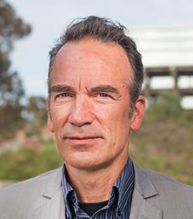 Elliot McVeigh合作论文数Department of Biomedical Engineering, Jacobs School of Engineering, University of California, San Diego1
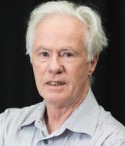 Henry Duff合作论文数Libin Cardiovascular Institute, The University of Calgary1Rosa Dani合作论文数1L.Brent Mitchell合作论文数1Peter G. Guerra合作论文数1Gerard Guiraudon合作论文数London Health Science Center1Peter E. Dresel合作论文数1Gerald A. Klassen合作论文数1David R. Redwood合作论文数1Pentii M. Rautaharju合作论文数1D. Manyari合作论文数1Gary W. Burggraf合作论文数1




