This paper addresses the enforcement of Disturbance String Stability (DSS) in connected autonomous vehicle platoons subject to asynchronous communication, sampling, and quantization in case of a constant time headway spacing policy. Building on a mesoscopic control framework, we design digital controllers that guarantee DSS despite external disturbances and device limitations. Simulation results demonstrate the effectiveness of the proposed approach.
In this paper we consider a pair of interconnected, nondeterministic and metric finite state systems and address a control problem where controllers are designed for enforcing local specifications expressed in terms of regular languages, up to a desired accuracy. The control architecture considered is decentralized, that is each controller can only communicate with the corresponding plant. Since plant systems are interconnected, the part of the specification that can be enforced on one system depends on the part that can be applied on the other one. We show how this dependency can be formalized in terms of equilibria, by extending game theory to the present framework. We introduce notions of equilibria, Nash equilibria and dominant equilibria. When controlled plants are at an equilibrium, they satisfy a part of their specification; when they are at a Nash equilibrium, deviation of each plant from its control strategy may correspond to a loss in terms of the part of specification enforced; when they are at a dominant equilibrium, there is no other equilibrium where plants can achieve larger parts of the corresponding specifications. A characterization of these notions is derived and checkable conditions are discussed. An example in the context of multi-agent systems with shared resources is also included. (c) 2025 The Author(s). Published by Elsevier Ltd. This is an open access article under the CC BY license (http://creativecommons.org/licenses/by/4.0/).
This paper introduces a novel approach for controlling heterogeneous vehicle platoons with connected autonomous vehicles using digital controllers and macroscopic information sharing. The proposed method achieves practical and disturbance string stability despite asynchronous measurements, quantization effects, and redundant information exchange, while offering improved robustness against uncertainties and noise. Simulations illustrate the performances of the proposed controller.
This work aims to analyze different aspects of security for a network of two agents in a decentralized framework. Mainly, it deals with two concerns: attack detection and localization. Agents and Attacker are modeled by finite state machines. Agents are interconnected via output feedback composition and share their output information through vulnerable communication channels. Attacker can act in the communication channels between the agents. Using the composed model, necessary and sufficient conditions are developed to ensure the detectability and localizability of the attacked channel. A numerical example is also included at the end of the paper.
The inspiration for this work is the rising possibility of cyber attacks, making security a critical problem in many applications. This work addresses two key problems related to the security of a Finite State Machine (FSM): attack detection and localization. A composition of nominal plant and the attacker FSM is developed to analyze different security aspects, under actuator attacks, and necessary and sufficient conditions are developed for attack detection. In some cases, the intruder can make replacements in the sensor or actuator channel. From the security perspective, it is important to identify the attacked channel. The term localization is used, to detect the attacked channel, and necessary and sufficient conditions are provided that ensure localization.
In this letter, we consider a network of nondeterministic and metric finite state systems and address a control problem where local controllers are designed for enforcing local specifications expressed in terms of regular languages up to desired accuracies. The control architecture considered is decentralized, that is each controller can only communicate with the corresponding plant. Necessary and sufficient conditions are found and control strategies derived. Checkable sufficient conditions are also proposed. An illustrative example is presented.
In this paper, we propose a new piecewise constant feedback for string-stability of a platoon under sampled and quantized measurements. The design is based on a mesoscopic approach and is carried out over the sampled-data model associated to each vehicle. The proposed feedback ensures string-stability in the practical sense independently of the effect of sampling and quantization. Simulations show the effectiveness of the results.
In many applications, security is a serious issue due to the high risk of cyber-attacks. An adversary can cause severe damage by providing wrong information about the system and consequently leading the controller to perform incorrectly. Detecting any malicious activity is necessary to cover up its negative effects and make the system operate reliably. In this paper, we propose a new approach to analyze security and diagnosability of a Finite-state machine (FSM) under multiple attacks. Different kinds of attacks are modeled by an FSM and the composition of the nominal and attack model can express all the effects of possible attacks on the given system. We define different concepts of security and give conditions under which detectability of the attacks is possible. Moreover, diagnosability of an FSM affected by multiple attacks is addressed, and the special case of critical observability under attack is characterized. Note to Practitioners —Nowadays, cyber-physical systems (CPSs) are being widely used in industry and the extensive use of communication networks by CPSs raises the concern of vulnerability to malicious attacks. Therefore, it is a major challenge to detect the attack specifically when multiple attacks might launch on different sensors or communication channels. These facts motivate us to investigate the attack detectability properties of a system modeled by Finite State Machines (FSMs). To this end, we consider one of the well-known types of cyber-attacks which can inject, replace or remove output information in the communication network, called the man-in-the-middle attack. This may also be modeled by an FSM. In this paper, we provide a good understanding of the security level of a system under this powerful kind of attack, which can provide better insight into the weaknesses and strengths of the system before designing a supervisor. In some applications e.g. in air traffic control, the designer needs to detect if a state belongs to a “critical set”, i.e. a set of dangerous or unsafe states. As a second important contribution of the paper, we investigate under which conditions this is possible even if the system is under attack. An extension to the more general property of diagnosability is illustrated.
In this paper, motivated by wide applications of observers in analyzing different properties of Finite State Machines (FSM), we propose a decomposition technique into subobservers and show how its use can reduce the computational cost of checking properties of FSM that need the design of an observer. We define the notion of total indistinguishability and use the notion of critical observability for the design of the sub-observers. Switching observers are introduced which are constructed by appropriately switching among the set of sub-observers, thereby allowing a traditional observer to be replaced by sub-observers. The methodology is applied to check opacity. An example is also presented to illustrate the results.
Nowadays, the integration of smart systems within the modern industrial scenario is a continuously growing paradigm. Computer Numerical Control (CNC) machinery can heavily benefit from the introduction of Artificial Intelligence (AI) based monitoring applications. In this paper, we present an industrial condition and fault prevention monitoring system for CNC tools. The developed system is the result of an industrial project aimed at realizing a multi-purpose machine which is currently in pre-commercial stage. The results of this work represent the base platform for the further commercial development, which will be carried on from the industrial partners in accordance with clients feedbacks and specifications. This work presents the hardware architecture of the system, the web-based monitoring platform for remote management, and the AI framework used for fault monitoring. The multi-purpose machine is equipped with accelerometer units to monitor the vibration in multiple points of the structure. The control unit of the machine is connected to the sensing nodes and is used to communicate the actual machine state to a remote web platform. The accelerometric data are analyzed through an AI algorithm to perform fault detection. The fault detection algorithm was trained with the measurements performed on the machine under controlled environment faulty operation. The Internet of Things (IoT) based architecture has proven to be effective to facilitate the supervision of the machining processes, and the AI-based classification shows good classification performances for the fault detection tests.
The observability property as defined in Chap. 6 requires the exact discrete state reconstruction in finite time. In the first part of this chapter, we focus specifically on this particular aspect and define the class of current location observable H-systems, that is H-systems for which the current location, i.e. the current discrete state, can be identified after a finite number of steps, either independently from the continuous evolution, or by using also the continuous evolution. The characterization of current location observability for H-systems requires the notion of critical observability, already introduced for FSMs. Then conditions such that an H-system is observable are given, with some results depending on the linearity of the involved dynamics, and hence specific for the class of LH-systems. Finally, we present an approach for reducing the complexity of the verification process, consisting in finding a system that is "equivalent" to the original one with respect to the property that we want to verify but that is "simpler" to analyze.
Rockfall phenomena are caused by the exposure of rock masses to weather and erosion. Over time, a rock or boulder can become unstable and fall along a slope. To monitor these gravitative elements, several methodologies based on sensor networks have been developed in recent times; among these we find geotechnical monitoring Wireless Sensor Network (WSN). The flexibility of these structures makes them a well-suited solution. In this paper, a multi-technological rockfall-oriented WSN is presented; this system is composed of several Long Range (LoRa) based sensors that retrieve various geotechnical parameters, along with other cellular based nodes for rock impact monitoring. Sensors of different technologies are integrated in the network to obtain a wider spectrum of monitored events in order to enable a complete observation possibility for the status of the rock formations. The entire system follows an Internet of Things (IoT) scheme, where data is accessible anytime from an online platform. The experimental system is installed in the locality of San Demetrio Ne' Vestini, Italy, in particular at the Grotte di Stiffe site.
Hybrid systems' observability involves both the discrete structure and the continuous dynamics of the system, but it is not a simple extension of the same concept established for discrete state systems and for standard dynamic systems, because of the interaction between discrete and continuous components. In this chapter, we define observability for an H-system as the property of exactly reconstructing the discrete as well as the continuous current state of the system from the observed input and output information. Some examples then illustrate the given definitions and in particular how the hybrid nature of the system affects the observability properties.
In this chapter, we refer to the discrete structure of the H-system to extend the diagnosability properties illustrated in Chap. 4 . In particular, in addition to the delay required for the detection of a critical state, some additional parameters are introduced, which represent the precision of the delay estimation and the duration of a possible initial transient where the properties are not satisfied or are not required to hold. This general framework allows a precise comparison with the observability and diagnosability definitions existing in the literature.
In this chapter, we refer to the discrete structure of the H-system to define and characterize observability, diagnosability, and predictability of a Finite State Machine (FSM). Observability corresponds to the reconstruction of the system's discrete state, while diagnosability and predictability correspond to the possibility of determining the past and the future occurrence, respectively, of some particular states, on the basis of the observations. Observability, diagnosability, and predictability are defined with respect to a critical set, i.e. a set of discrete states representing a set of interests, for example a set of faults, or an unsafe set. Those properties are characterized in terms of set membership. In addition, the diagnosability conditions provide an estimation of the delay required for the detection of a critical state, while the predictability conditions provide an upper bound for the prediction horizon.
In this chapter, H-systems are defined and their expressive power is discussed with respect to other formalisms, such as Impulsive Systems and Piecewise-Affine (PWA) systems. Some illustrative examples of H-systems are also presented.
In this chapter, some properties of the Finite State Machine $$M=\left( Q,Q_{0},Y,h,E\right) $$ defined in Eq. (2.5), which abstracts the dependence of the discrete dynamics of $$\mathcal {H}$$ from its continuous evolution, are analyzed. In particular, we introduce the notions of Strongly connected components, Persistent states, and Traps. Then, several transformations of the FSM are illustrated, which preserve the relevant information needed to check observability properties of the H-system.
In this chapter, LH-systems with full discrete state information are considered. We have shown in Chap. 9 that observability as defined in Chap. 6 can be characterized in terms of finite time convergence to zero of all the trajectories with infinite time duration of an appropriate LH-system associated with the given one. However, verifying this condition may be difficult in general. More easily checkable conditions can be obtained with a relaxation of the observability definition, by requiring the continuous state reconstruction not for all possible switching times but for almost all switching times.
In an H-system, both continuous outputs and discrete outputs are in general available. In this chapter, we focus on how continuous and discrete information can be combined to obtain an H-system having only purely discrete outputs. Such a system will be shown to be useful in giving conditions for the observability of the given H-system. Similarly, for diagnosability and predictability. The case where only continuous information is available follows as a special case.
 Maria Domenica Di Benedetto合作论文数University of L'Aquila56
 Giordano Pola合作论文数Department of Electrical Engineering and Computer Science;University of L'Aquila;Poggio di Roio;Department of Electrical Engineering and Computer Science, University of L'Aquila42
 Maria D. Di Benedetto合作论文数Department of Electrical Engineering39
 Alessio Iovine合作论文数19G. Pola合作论文数15Paolo Caravani合作论文数12
 Gabriella Fiore合作论文数Department of Electrical Engineering and Computer Science, University of L'Aquila8L Berardi合作论文数7
 Gilney Damm合作论文数Laboratoire Syst "6MD Di Benedetto合作论文数5
 Marco Mirabilio合作论文数Dept Informat Engn Comp Sci & Math, Univ Aquila5Davide Pezzuti合作论文数5
 Stefano Di Gennaro合作论文数Department of Information Engineering, Computer Science and Mathematics, Universita degli Studi dell'Aquila5Guerino Giancola合作论文数4
 C. (Claudio) De Persis合作论文数Engineering and Technology Institute Groningen, Faculty of Science and Engineering, University of Groningen4
 Stefano Battilotti合作论文数Dipartimento di Informatica e Sistemistica, Univ. La Sapienza4
 Mattia Ragnoli合作论文数Department of Industrial and Information Engineering and Economics, University of L’Aquila3
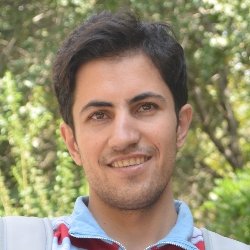 Mohammad Fakhroleslam合作论文数Faculty of Chemical Engineering, Tarbiat Modares University3
 Gianluca Barile合作论文数Univ Aquila, Dept Ind & Informat Engn & Econ, I-67100 Laquila, Italy3
 Mattia Mattioni合作论文数Dipartimento Ingn Informat Automat & Gest Ruberti, Univ Roma La Sapienza3
 Hassan Abdullah Khalid合作论文数3
 Concettina Buccella合作论文数University of L'Aquila;DigiPower Srl3
 Alberto Isidori合作论文数Department of Computer, Control and Management Engineering, University of Rome3
 Maria Gabriella Di Benedetto合作论文数Department of Information Engineering, Electronics and Telecommunications, Faculty of Engineering, University of Rome La Sapienza3
 Vincenzo Stornelli合作论文数Department of Industrial and Information Engineering and Economics, Università degli Studi dell'Aquila3
 Paolo d'Alessandro合作论文数3
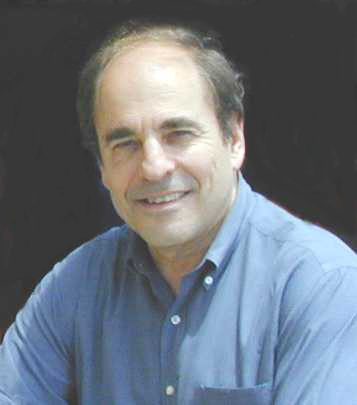 A Stephen Morse合作论文数Department of Electrical Engineering, School of Engineering and Applied Science, Yale University3
 Sabah Benamane Siad合作论文数3
 Carlo Cecati合作论文数Dipartimento Di Ingegneria E Scienze Dell'informazione E matematica, University of L'Aquila3
 Paolo Esposito合作论文数2AL Juloski合作论文数2Tommaso Masciulli合作论文数2
 Lilia Galai-Dol合作论文数2
 Jamal Daafouz合作论文数Universite de Lorraine2
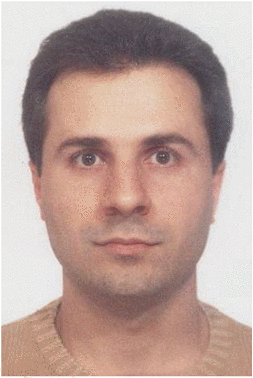 Marco Pratesi合作论文数2
 Shohreh Fatemi合作论文数Chemical Engineering Department, University of Tehran2
 Laurentiu Hetel合作论文数ecole centrale de lille2
 Pierdomenico Pepe合作论文数Dipartimento di Ingegneria e scienze dell'informazione e matematica, Università degli Studi dell ' Aquila2
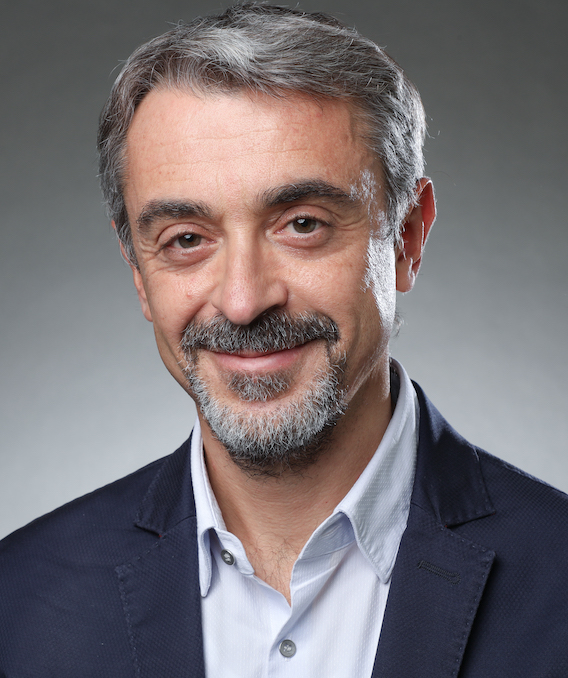 Giancarlo Ferrari Trecate合作论文数Institut de Génie Mécanique, École Polytechnique Fédérale De Lausanne2A. Petriccone合作论文数2Paolo D'Alessandro合作论文数2
 Nicola Sciarra合作论文数Department of Earth Sciences, University ‘G. D’Annunzio’ of Chieti2Giovanni Girasole合作论文数2
 Alessandro D'Innocenzo合作论文数Center of Excellence DEWS, University of L'Aquila2
 Ramin Bozorgmehry Boozarjomehry合作论文数Department of Chemical and Petroleum Engineering, Sharif University of Technology2
 Mikael Johansson合作论文数School of Electrical Engineering and Computer Science, KTH Royal Institute of Technology2
 Vincent D. Blondel合作论文数School of Engineering, Catholic University of Louvain2J. Vainauskiene合作论文数1C. Rosignoli合作论文数1




